
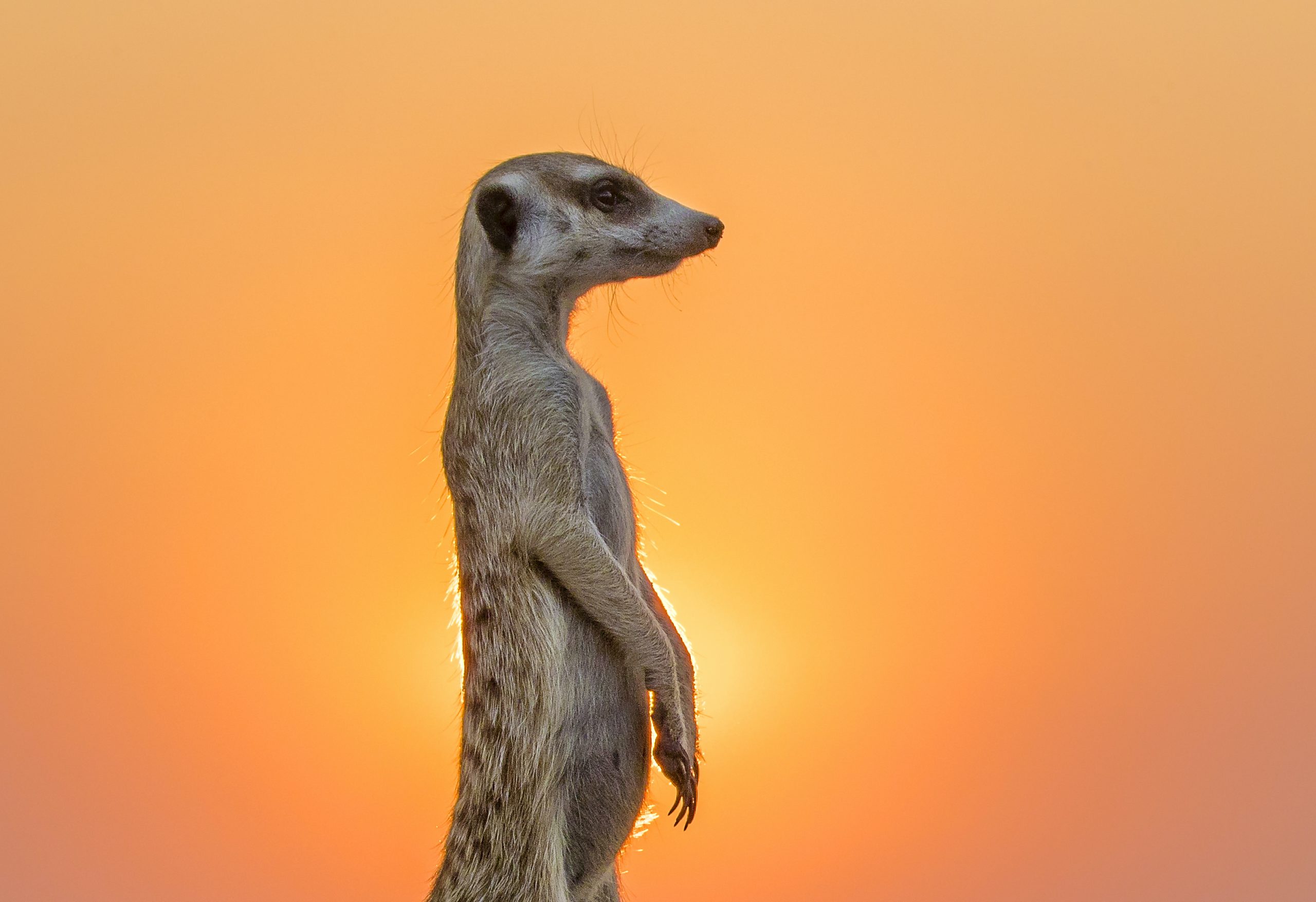
Photograph by Klein & Hubert
Story by Sarah Gilman
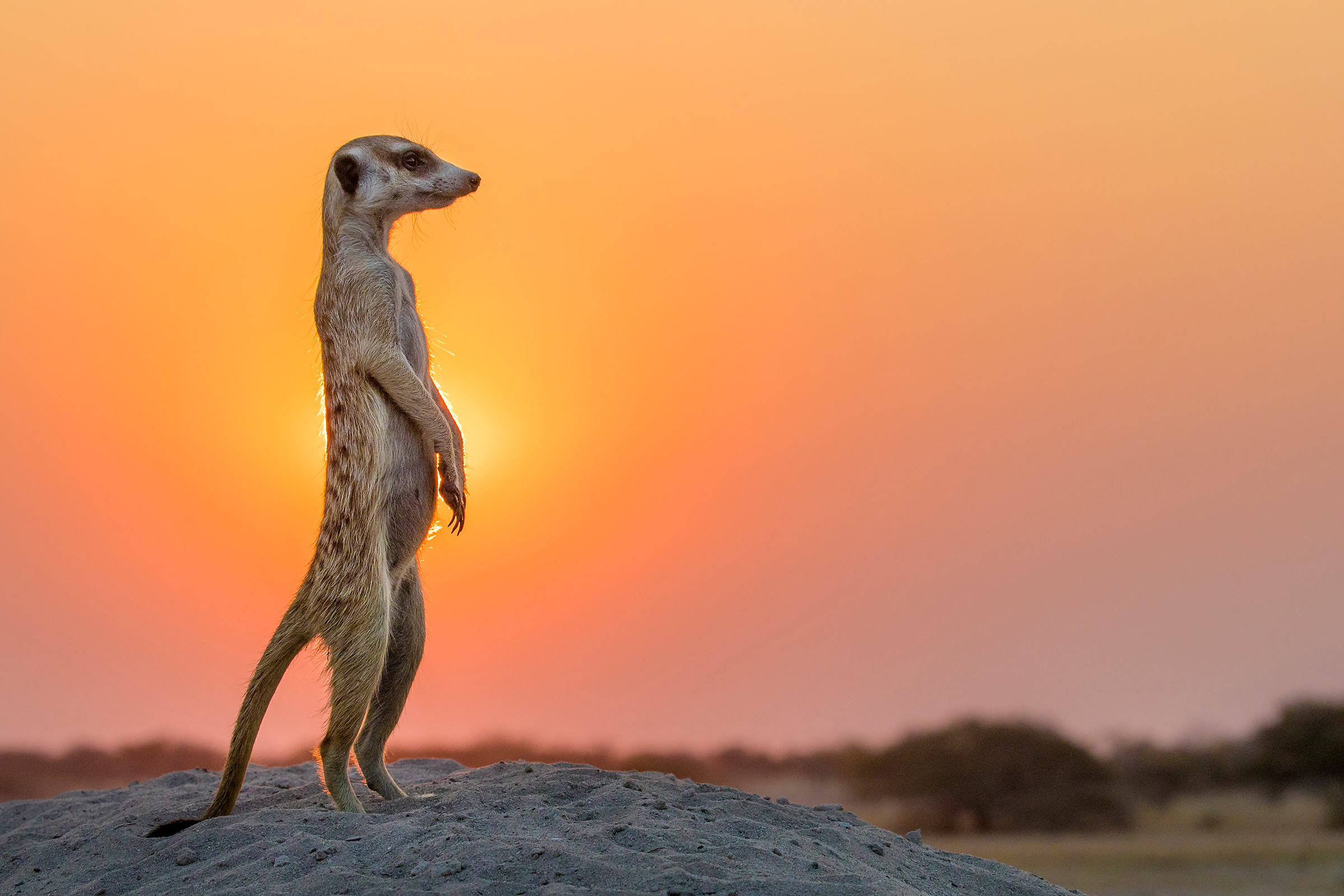
Animals must be resourceful to survive in Botswana’s harsh Kalahari Desert. For meerkats (Suricata suricatta), that means looking out for one another. These social members of the mongoose family live in cooperative family units, called “mobs,” that can number up to 50 adults and pups. When meerkats forage for grubs, termites, scorpions, poisonous millipedes, and other invertebrates, they do so together. Periodically, one stands sentinel on a higher point to scan for threats, adopting a posture similar to that of the meerkat captured in this image by wildlife photographers Marie-Luce Hubert and Jean-Louis Klein.
When a sentinel spies something of concern, it musters its versatile voice to protect the mob. Meerkats are among the most vocal of all mammal species. Their range of some 30 types of calls includes one that specifically warns their brethren of the approach of a ground predator, like a jackal (Canis mesomelas), while another indicates that a raptor like a tawny or martial eagle (Aquila rapax or Polemaetus bellicosus) is flying overhead. Meerkats have yet another call that warns of snakes or rival meerkats, summoning the mob to gather and fight the foe, rather than flee to the nearest burrow. Meerkats can even signal the relative urgency of a threat—their voices more harmonic if the threat is low, and harsher and louder if high.
But they don’t chat only in times of distress. Meerkats also keep track of each other’s locations with a special call while roaming, for example. And each morning, members of a meerkat mob will gather together to face the sun and murmur “sunning calls,” which they carefully sequence to avoid interrupting one another, almost like a conversation.
That might sound warm and fuzzy, but meerkat cooperation arises from what researchers have dubbed a “despotic” reproductive arrangement. As with social insects like bees, a single meerkat “queen” dominates breeding behavior within the mob and forces subordinate meerkats, many of them her offspring, to help raise her pups rather than having their own. She enforces her reign with aggression driven by testosterone levels that surge past male meerkat levels when she is pregnant—viciously competing for food, attacking and sometimes evicting other females, and killing their pups, should they have any. Research led by Christine Drea through Duke University has even shown that this aggression can pass from the queen to her pups, who maintain their place in the hierarchy by acting, in the words of a Duke press release, like “spoiled little brats.”
Considering that a queen meerkat may have as many as three to four litters per year over 10 years, that’s a lot of entitlement for her subordinates to bear. Interestingly, though, the despotic system also seems to put a serious strain on the queen. Dominant meerkat females tend to have significantly more intestinal parasites than their subordinate mobsters. While that could simply be because they have more contact with other meerkats, what with all the tussling they do to maintain power, it could also be the result of a more insidious actor that can deplete anyone’s immune system: stress.
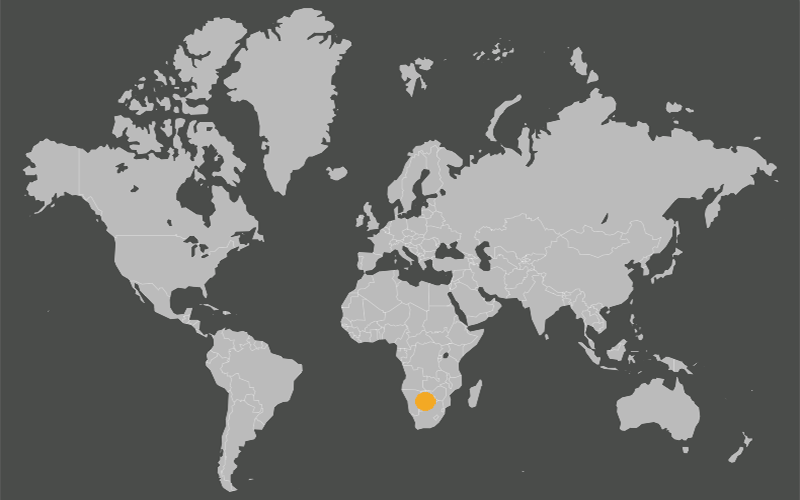
Kalahari Desert, Botswana
Hi, I’m Dave, the executive director of bioGraphic. (And that’s my dog, Finn.) Thanks for taking the time to read this story.
Stories like this simply don’t get produced without financial support from readers like you. bioGraphic is not backed by a private company or owned by a billionaire. It’s an independent, nonprofit magazine. And one-quarter of our annual budget comes directly from reader donations.
We need your support more than ever, as governments slash funding for conservation and scientific research, placing even more ecosystems and wildlife at risk around the world. At bioGraphic, we’re steadfastly shining a light on the threats to our planet’s incredible biodiversity. And we’re showcasing the hard work of people bravely taking action to protect at-risk species.
bioGraphic publishes environmental reporting that you can’t find anywhere else: deeply researched, trustworthy stories that are also beautiful and captivating to read. We offer an antidote to reader apathy and doom-and-gloom news by revealing the wonders of the natural world and focusing on real solutions to big problems. When you finish a bioGraphic story, we want to leave you feeling informed, delighted, and inspired.
We don’t run ads or hide our stories behind a paywall. The readers who generously support bioGraphic allow our work to remain free for everyone.
Will you help us keep telling these crucial stories?

Authors


Related Articles
The Big Picture 2025
From the beautiful to the bizarre, this annual photographic showcase shines a light on some of our planet’s most breathtaking species and places.
The Big Picture 2024
From the beautiful to the bizarre and breathtaking, this photographic showcase of life on Earth shines a light on some of our planet’s most amazing species and places.
The Big Picture 2023
From the beautiful to the bizarre and breathtaking, this photographic showcase of life on Earth shines a light on some of our planet’s most amazing species and places.