
Leonid Gorobets hovered anxiously over his computer screen. With his body tucked between two wooden cabinets for safety, he scanned the catalog of imaged specimens, noting what was missing and which collections he might take photos of next—once it was safe. Then another bomb hit. As the ground rocked under Kyiv’s National Museum of Natural History, Gorobets was thankful for the distraction of his work.
When Russia invaded Ukraine in 2022, he says, “rockets fell a few hundred meters from the museum.” The explosives only damaged some of the windows. But as the war drags on, “the risk of our specimens being damaged is high,” says Gorobets, a paleontological researcher at the museum.
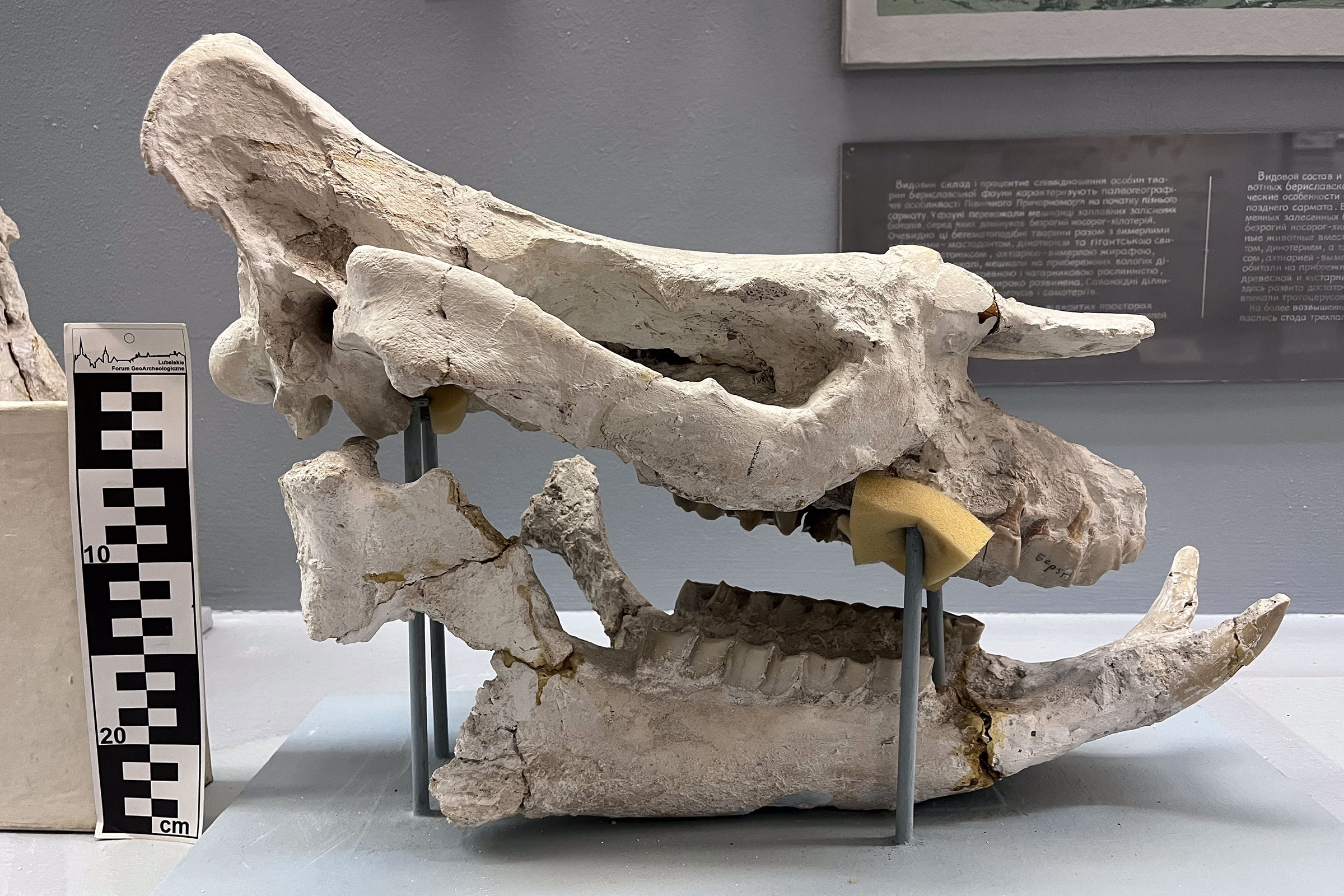
For the past four years, Gorobets and other staff have been racing to protect and create digital records of the unique and valuable specimens housed in the museum’s natural history collections. Specimens like the skull of a Chilotherium sarmaticum, which is the only known evidence of an extinct species of hornless rhinoceros.
“This skull is basically one of the most important Chilotherium specimens currently existing in Europe,” says Panagiotis Kampouridis. A paleontologist from Germany’s University of Tübingen Eberhard Karls, Kampouridis recently discovered the skull’s scientific significance to the evolutionary history of the rhinoceros.
The skull is a clue to better understanding the genus Chilotherium, Kampouridis adds, “which actually represents the last hornless rhino group that existed in Europe.”
Members of the genus Chilotherium lived in the Late Miocene, from 11.63 to 5.33 million years ago, and they ranged from Eastern Europe to East Asia. Although their time on Earth was relatively short, the myriad Chilotheriums composed one of the most diverse genera of rhinoceros to have ever existed. The skull of Chilotherium sarmaticum may provide crucial information about this rapid evolution and help explain how and when these hornless rhinos migrated westward across Eurasia.
But with the conflict ongoing, it’s too dangerous for Kampouridis and other international researchers to travel to Kyiv to study the skull in person. And because the site where it was unearthed in the 1950s—in southern Ukraine along the Dnipro River—is in an active war zone, the experts also can’t search for another specimen.
So to preserve the skull and other artifacts, and to make them more accessible to scientists around the world, staff at the Kyiv museum have been hurriedly digitizing their collections and uploading them online. Yet with limited space and resources, Gorobets and others are being forced to make hard decisions about which samples should be digitized first, knowing that at any point everything could disappear.
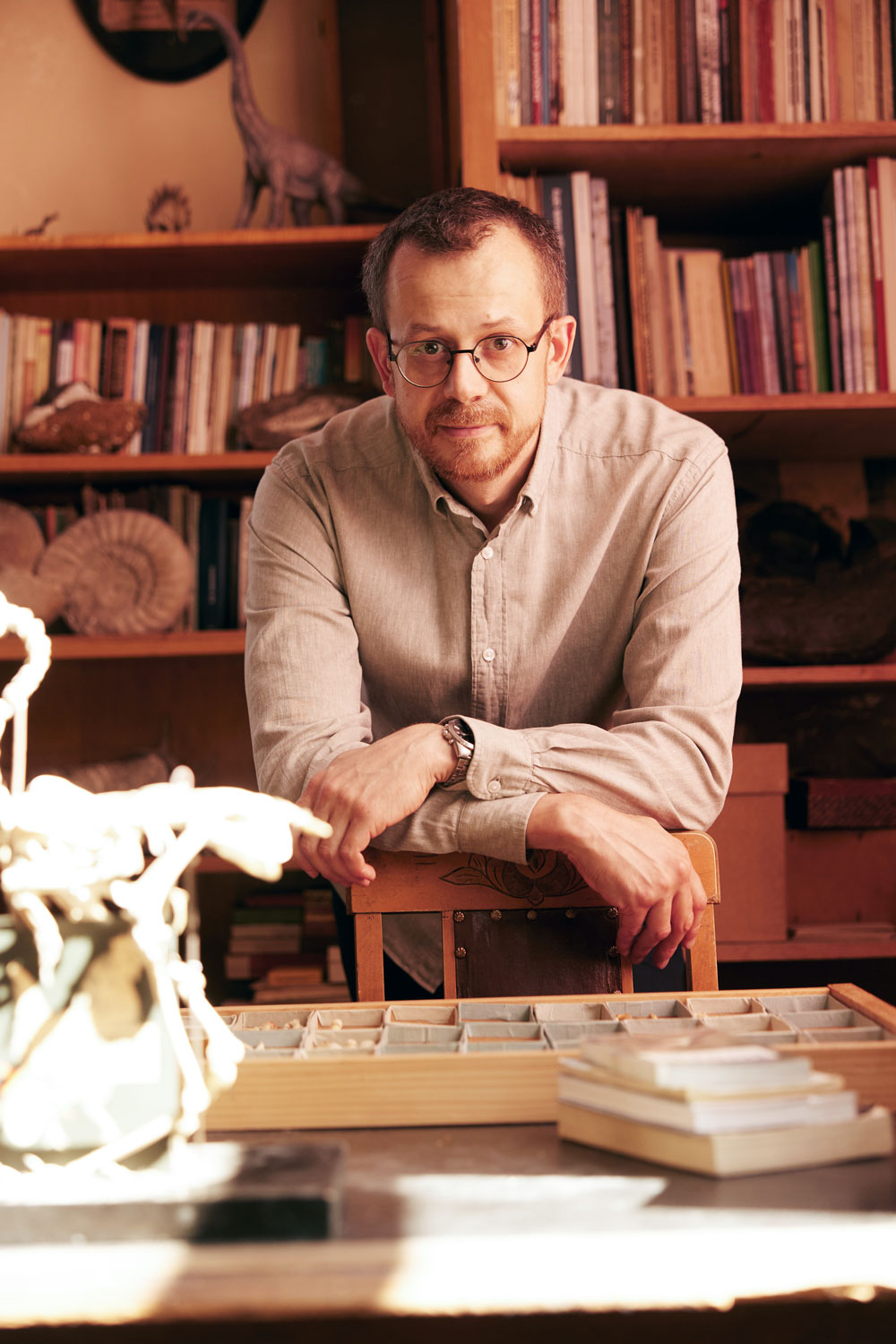
While it may sound simple, photographing the thousands of artifacts housed at the museum is a long and painstaking process. Capturing detailed three-dimensional scans of large specimens, like the Chilotherium skull, is particularly difficult, as they require a variety of scans to complete the entire digital image. It’s also much more difficult to shield these objects, since they would require a much larger fireproof safe for protection than something like the skeleton of a small songbird would. Even with the proper space and equipment, moving these large specimens from one spot to another also poses risks.
Technical challenges aside, one of the most difficult parts of the work is finding the motivation and support to continue.
“In the conditions of war, the irreverence of scientific research is felt especially acutely,” says Tatiana Nikirsa, a researcher at the Chernivtsi Regional Museum of Local Lore in Chernivtsi, Ukraine. “It is not uncommon to hear, ‘Who needs your research when people are dying?’’’
Nikirsa says it’s a daily struggle to decide whether she should continue her work or devote time to volunteering with the war effort.
Maybe, says Nikirsa, Ukrainians would be better off if they sent their precious historical artifacts abroad. “I still have not been able to determine for myself what is better: to give a certain collection for safekeeping to some peaceful, civilized country,” she says, “or to keep and use it in my country, but with the threat of losing it.”
Whatever they choose, the reality is that over the long arc of history, special collections like those preserved in museums have had an outsize influence on our understanding of the natural world. Scientific research of museum collections has advanced scientists’ understanding of everything from how war changes landscapes to how we can prepare for future pandemics. And as history has shown time and again—whether it was the millions of artifacts consumed by a fire that tore through Brazil’s National Museum in 2018 or the countless cultural sites destroyed during Syria’s 13-year civil war that only ended in 2024—once these relics are gone, they cannot be replaced.
Some of the artifacts most in need of preservation are the so-called type specimens—priceless, irreplaceable objects that represent an entire species—like the rhino skull.
“They are the anchor to the species,” says Barbara Kennedy, the botany collection manager at the Bishop Museum in Honolulu, Hawai‘i. “If you lose the type specimen,” Kennedy says, that’s it. “An expert would have to come in and find another specimen that most closely fits the description of the original, or go out and collect more.”
But when the type specimen is also the only specimen, as is the case for the Chilotherium skull, the loss is even more significant. Without the skull itself, all that would remain of this species in our collective memory would be a description.
That is, unless Gorobets and his colleagues can finish digitizing the Kyiv museum’s collection. “Or in the best case,” Gorobets adds, “for Russia to stop the war.”
Related Articles

How Much Plastic Does it Take to Kill a Seabird?
For the first time, researchers uncover how eating plastic trash may impact seabirds at the population level.

Shrimp Shell Slurry to the Rescue?
A new, multistep chemical process can turn bits of organic waste into “carbon-negative” fuel, food, and construction material.
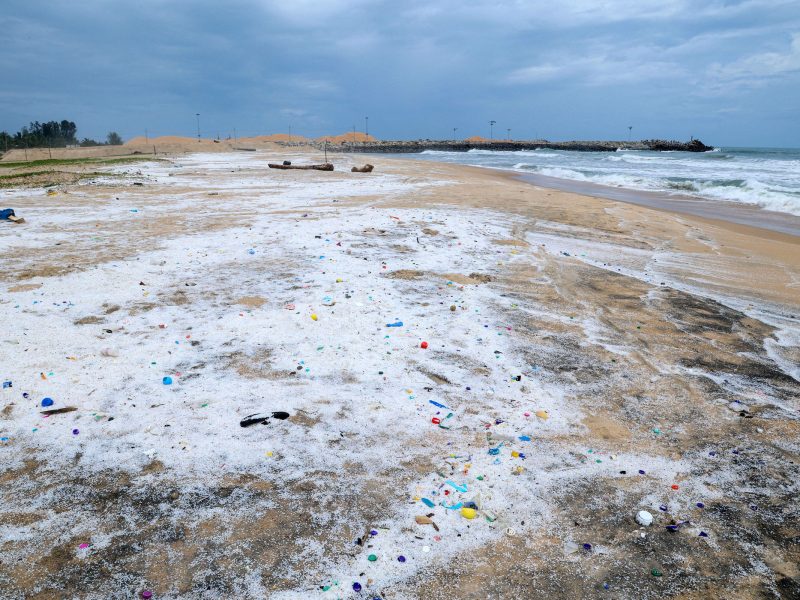
No One Knows How to Handle Nurdle Spills
A year after a shipwreck flooded India’s beaches with tiny plastic pieces, scientists fear the environmental damage has just begun.
