
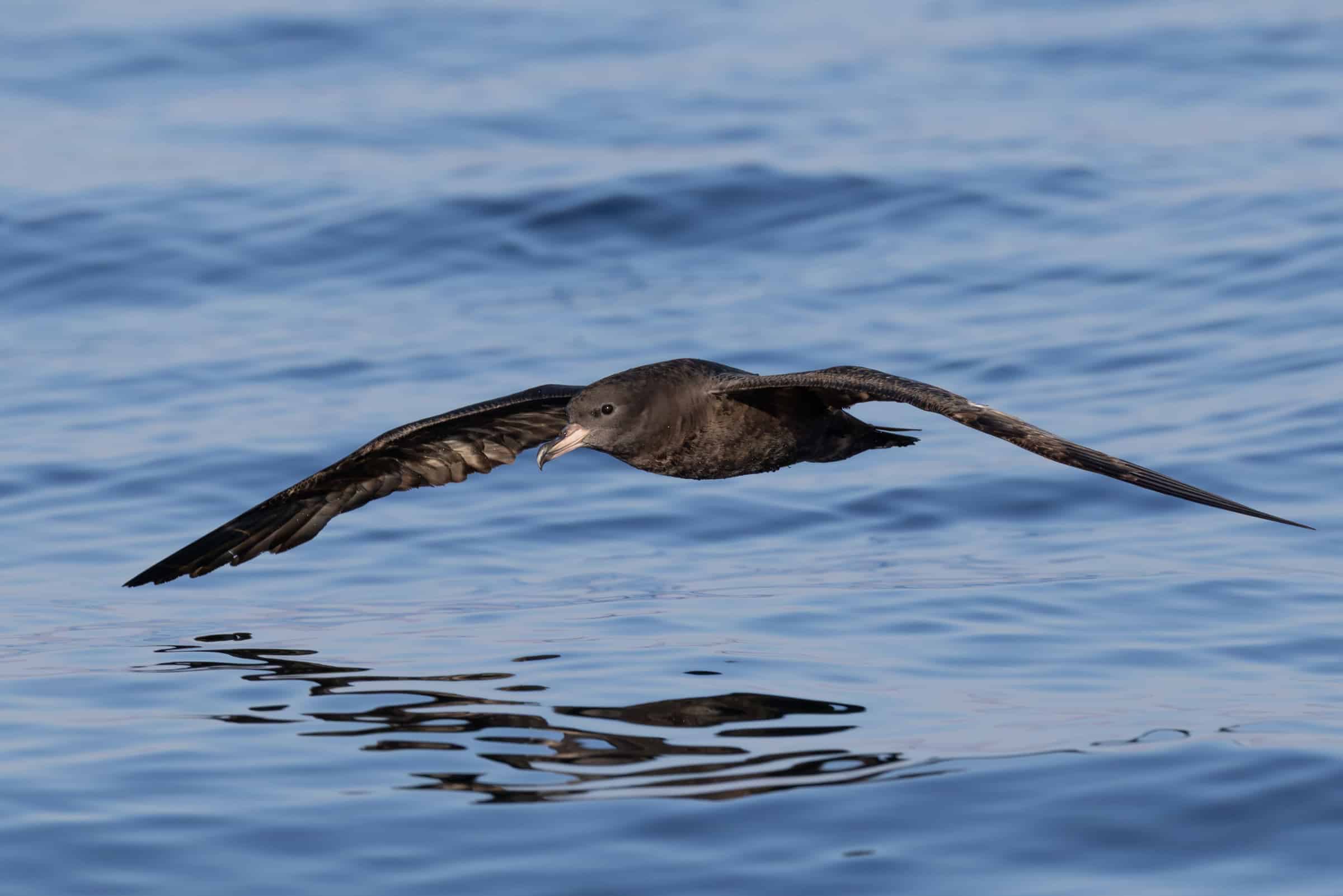
Pick up a sable shearwater on Lord Howe Island, Australia, and you might hear a crunch. That sound used to be rare, says Alex Bond, who has spent the past 15 years handling live seabirds as part of his work analyzing the health impacts of plastic pollution on the isle’s roaming seabirds. Now, he hears it every year. “It’s entirely the plastic in their stomach,” says Bond, a conservation biologist and principal curator of birds at the United Kingdom’s Natural History Museum. “You can feel it through their body wall.”
Plastic is a scourge to ocean life generally and to sable shearwaters—also known as flesh-footed shearwaters, or Ardenna carneipes—in particular. Seabirds who gobble up even a few of the trillions of bite-size plastic chunks bobbing in the waves can suffer organ failure, neurodegenerative decline, or “plasticosis,” a disease that scars their stomach lining and limits their nutrient intake. Until recently, however, there’s been limited data on how plastic pollution affects birds’ overall survival. Now, new research quantifies how much plastic it might take to kill a sable shearwater—and how our trash is impacting species at the population level.
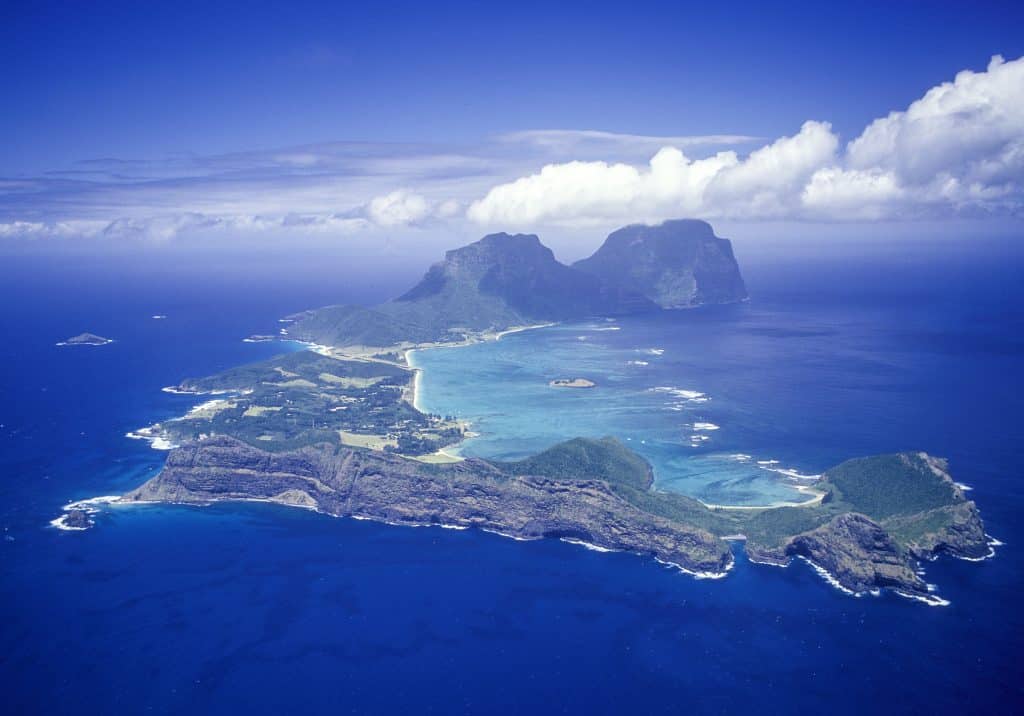
To home in on these numbers, Bond and marine ecologist Jennifer Lavers traveled to Lord Howe Island to measure how much plastic sable shearwater chicks were eating. Then the team identified which ones returned to the colony six years later as breeding adults.
The volcanic island is home to a declining population of 22,000 breeding pairs with few natural predators. This makes it an ideal spot for measuring how plastic—instead of the sharks, rats, and gulls that prey on sable shearwaters at their other nesting sites across Australia and New Zealand—might be killing the birds. Bond, Lavers, and their team began by attaching identifiable rings to the legs of shearwater chicks around the time that their parents stopped feeding them but before the chicks left the island for fishing grounds off the coasts of Australia, Japan, and New Zealand. This precise timing meant that when researchers pumped the birds’ stomachs, they found mostly indigestible plastic rather than food. “It’s very rare that we steal someone’s dinner,” Bond jokes.
The team found that up to a fifth of chicks had eaten more than one gram (0.04 ounces) of plastic regurgitated by their parents—unidentifiable fragments, usually, but also a wealth of bottle caps and balloon clips. The maximum recorded was 67.4 grams (2.4 ounces), made up of 644 individual plastic fragments. That’s the equivalent of an average American human man walking around with 9.86 kilograms (21.7 pounds) of plastic in his stomach.
Six years later, when the sable shearwaters returned to Lord Howe Island, the team found that birds who had eaten the most plastic as chicks tended not to come back as adults. The shearwaters had likely died at sea, perhaps because the plastic in their stomachs had inflicted damage before it was pumped out. Though it’s impossible to ascertain whether the missing birds were eaten by predators, died from natural causes, or perished from plastic-related health impacts, the team found that if chicks ingested just 0.5 grams of plastic—about the weight of a pencil eraser—they were 12 percent less likely to return. Birds who ate more than 5 grams (about the weight of a quarter) were seldom seen again.
Precisely why sable shearwater parents feed their chicks so much plastic also remains a mystery, though Bond speculates that it could be because the adults mistake it for their normal diet of fish and squid. “When plastic floats around in the ocean, it accumulates a biofilm,” he explains. “That gives off the same chemical signal as a tasty dinner.”
For Erin Murphy, an ecologist and manager of ocean plastics research for the US nonprofit Ocean Conservancy, the study is the first she’s seen that tries to assess the long-term havoc plastic wreaks on the recruitment of a given species. Seabirds are a great object for study in this regard, Murphy says, because “they have faster metabolisms and respond to pollutants more quickly than other species might.” In that sense, she adds, they’re a great indicator of the wider impacts of plastics pollution on oceanic ecosystems.
The research has also left the ecologist wanting more. “Are we seeing similar things for other species of seabirds or other marine species?” Murphy asks. “If we’re talking about critically endangered species, which we know ingest plastic and die from plastics at high rates as well, is this something that’s really pushing them closer to extinction?”
Murphy is optimistic that public interest in curbing plastics pollution is growing. Bond is more equivocal. Progress on an international treaty mitigating marine plastic pollutants has been slow, he says, and even if every policy lever capable of preventing plastic from being dumped in the ocean were pulled, marine plastic would continue accumulating beyond the end of this decade. These chunks “don’t disappear; they just fragment into smaller and smaller pieces,” he adds. Some of the many shards he’s plucked out of shearwater vomit include balloon clips manufactured by a company that closed over 40 years ago.
Even so, Bond refuses to lose heart. Resolving this problem requires scientists to continue documenting the real harm plastics cause to marine ecosystems. “If there’s a chance that something could help, you’ve got to do it,” says Bond. If that means pumping bottle caps out of seabirds, dead or alive, for the rest of his career, he says, “that’s still worth doing.”
Hi, I’m Dave, the executive director of bioGraphic. (And that’s my dog, Finn.) Thanks for taking the time to read this story.
Stories like this simply don’t get produced without financial support from readers like you. bioGraphic is not backed by a private company or owned by a billionaire. It’s an independent, nonprofit magazine. And one-quarter of our annual budget comes directly from reader donations.
We need your support more than ever, as governments slash funding for conservation and scientific research, placing even more ecosystems and wildlife at risk around the world. At bioGraphic, we’re steadfastly shining a light on the threats to our planet’s incredible biodiversity. And we’re showcasing the hard work of people bravely taking action to protect at-risk species.
bioGraphic publishes environmental reporting that you can’t find anywhere else: deeply researched, trustworthy stories that are also beautiful and captivating to read. We offer an antidote to reader apathy and doom-and-gloom news by revealing the wonders of the natural world and focusing on real solutions to big problems. When you finish a bioGraphic story, we want to leave you feeling informed, delighted, and inspired.
We don’t run ads or hide our stories behind a paywall. The readers who generously support bioGraphic allow our work to remain free for everyone.
Will you help us keep telling these crucial stories?

Author

Related Articles
Trees as Public Health Infrastructure
New research shows that meeting tree canopy goals could prevent more than 67,000 premature deaths in the United States.
A Mite on a Bee on a Ship on the Sea Spells Trouble
Pollinator pathogens are spreading through international trade, threatening both agriculture and wild ecosystems.
When it Comes to Frog Sex, Teamwork Makes the Dream Work
New science on gray foam-nest tree frogs hints at the evolutionary benefits of multiple sexual partners.