
Produced by Kaitlyn Kraybill-Voth
To see a Spanish translation of this video, visit bioGraphic’s YouTube channel.
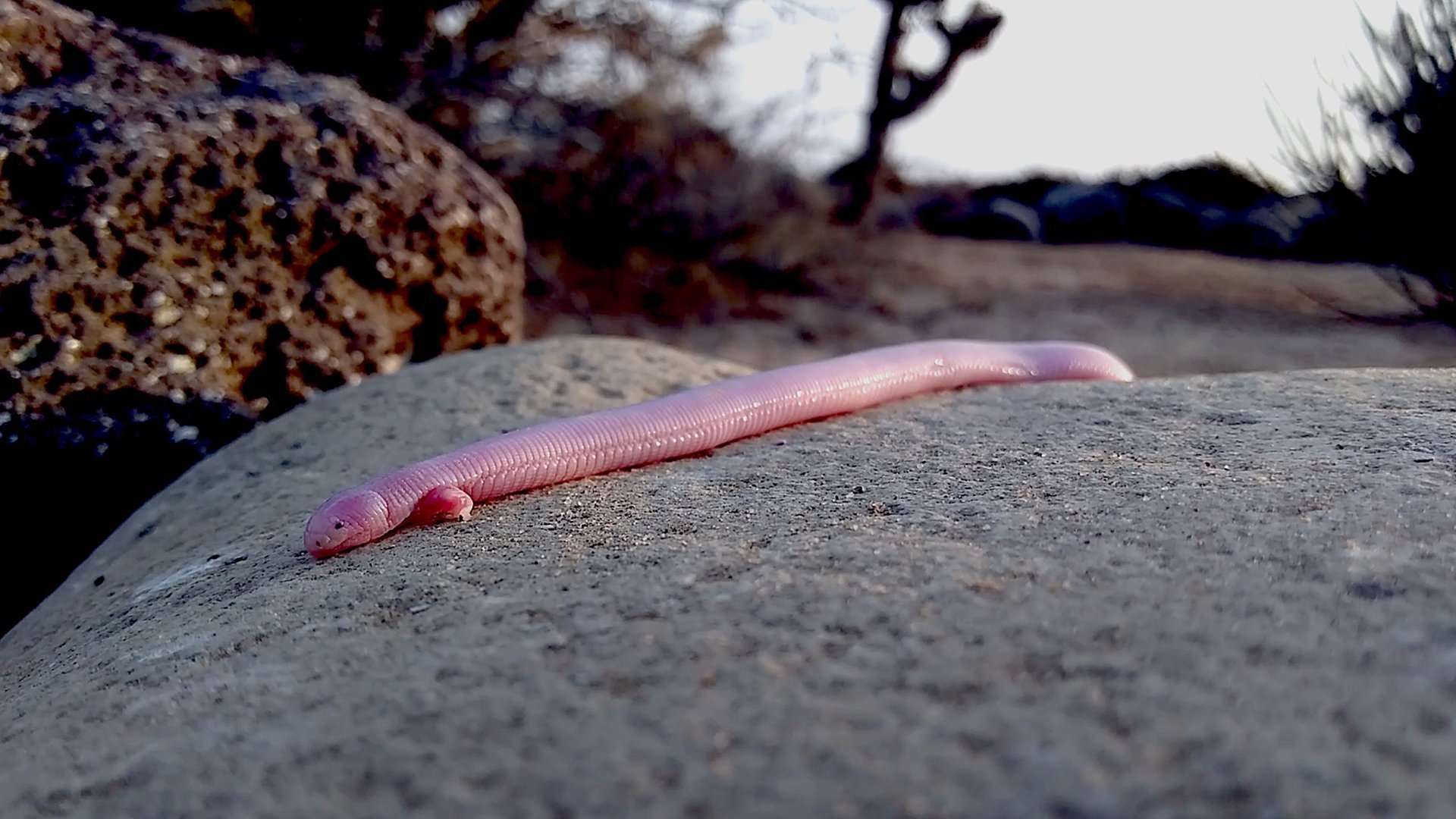
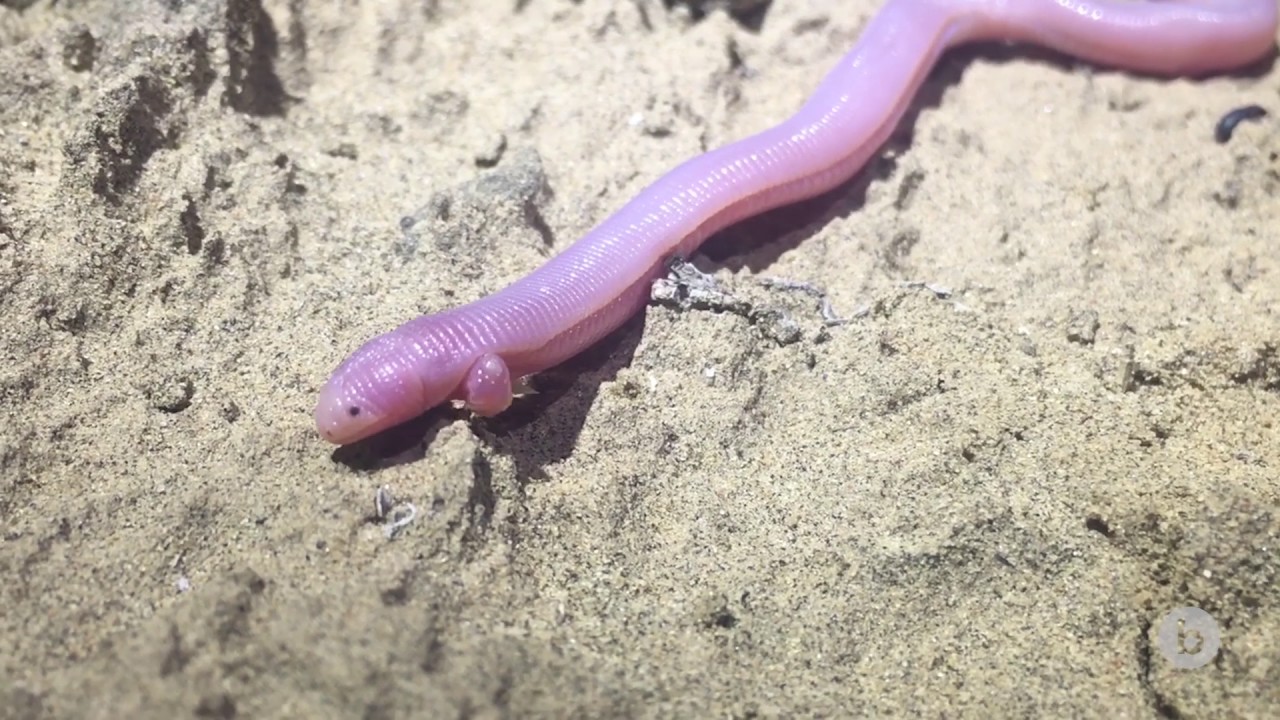
Scanning the desert landscape of Mexico’s Baja Peninsula, few people would imagine what crawls beneath the surface. Bright pink, with rudimentary eyes and just two limbs, Mexican mole lizards (Bipes biporus) look more like giant earthworms than reptiles. And like earthworms, these strange-looking creatures spend the vast majority of their lives burrowing underground. As a result, they go largely unnoticed—and underappreciated for the important role they play in this environment.
Mexican mole lizards are members of a group of nearly 200 mostly limbless, burrowing lizards known as Amphisbaenia. Only this species and two others in the genus Bipes still have small front limbs. Amphisbaenians can be found in many parts of the world, including Central and South America, Africa, southern Europe, and the Middle East. Mexican mole lizards, however, live only in Baja, sandwiched between the Gulf of California and the Pacific Ocean, where they are thought to have been isolated from closely related species on mainland Mexico for some 20 million years.
Mexican mole lizards tunnel through sand, loose soil, and leaf litter with their small but powerful limbs. Their diet consists of a wide variety of prey, from earthworms and insects to arachnids and small lizards—essentially anything they can catch and swallow. While their eyes are greatly reduced compared to most lizards, a massive bone in their middle ear allows the surprisingly fierce predators to detect vibrations in the ground and track their prey. Only rarely do mole lizards surface, either after a rain or under cover of darkness as they search for food. This particular individual was caught (and released) by scientists from the Islands and Seas conservation group, who were using pitfall traps (open buckets buried up to the rim) to sample invertebrates near Baja’s Scorpion Bay.
Although Mexican mole lizards are seldom seen, surveys in the 1970s by scientists from UC Berkeley and the California Academy of Sciences revealed that the species is actually quite abundant throughout Baja. In fact, based on these studies most experts think the species may be the most common reptile in the region. While little is known about the Mexican mole lizard’s life history and behavior, the species’ abundance and the unusual niche it fills as an underground predator suggest that it’s a critical member of the region’s food web.

San Juanico, Baja California Sur, Mexico
Hi, I’m Dave, the executive director of bioGraphic. (And that’s my dog, Finn.) Thanks for taking the time to read this story.
Stories like this simply don’t get produced without financial support from readers like you. bioGraphic is an independent non-profit—we’re not backed by a private company or owned by a billionaire. One-quarter of our budget comes directly from reader donations.
bioGraphic publishes environmental reporting that you can’t find anywhere else: deeply researched, trustworthy stories that are also beautiful and captivating to read. Right now, we need your help to raise $30,000 by October 2. Every dollar will go directly to more crucial reporting projects.
Around the world, governments are slashing funding for conservation and scientific research, placing even more ecosystems and wildlife at risk. At bioGraphic, we’re steadfastly shining a light on the threats to our planet’s incredible biodiversity. And we’re showcasing the hard work of people bravely taking action to protect at-risk species.
bioGraphic offers an antidote to apathy and doom-and-gloom news by revealing the wonders of the natural world and focusing on real solutions to big problems. When you finish a bioGraphic story, we want to leave you feeling informed, delighted, and inspired.
We don’t run ads or hide our stories behind a paywall. The readers who generously support bioGraphic allow our work to remain free for everyone.
We reached our goal, but there’s time left. Will you help us smash our original goal and reach a new goal of $30,000 by October 2?

Related Articles

Lens of Time: Witch Hazels Take Flight
Investigating the mechanics of seed dispersal in an unusual shrub in eastern North America has revealed that some plants have powers of propulsion equal to the planet’s fastest animals.
Lens of Time: A Watershed in Motion
Where does our water come from, how do the variations in its flow affect the ecosystems it feeds, and how can time-lapse photography help land managers understand and protect this valuable resource?
Lens of Time: Tiny Fliers
As ubiquitous as flight may be in the natural world, it turns out not all flying creatures approach the feat in quite the same way.
