
Produced by Katie Garrett
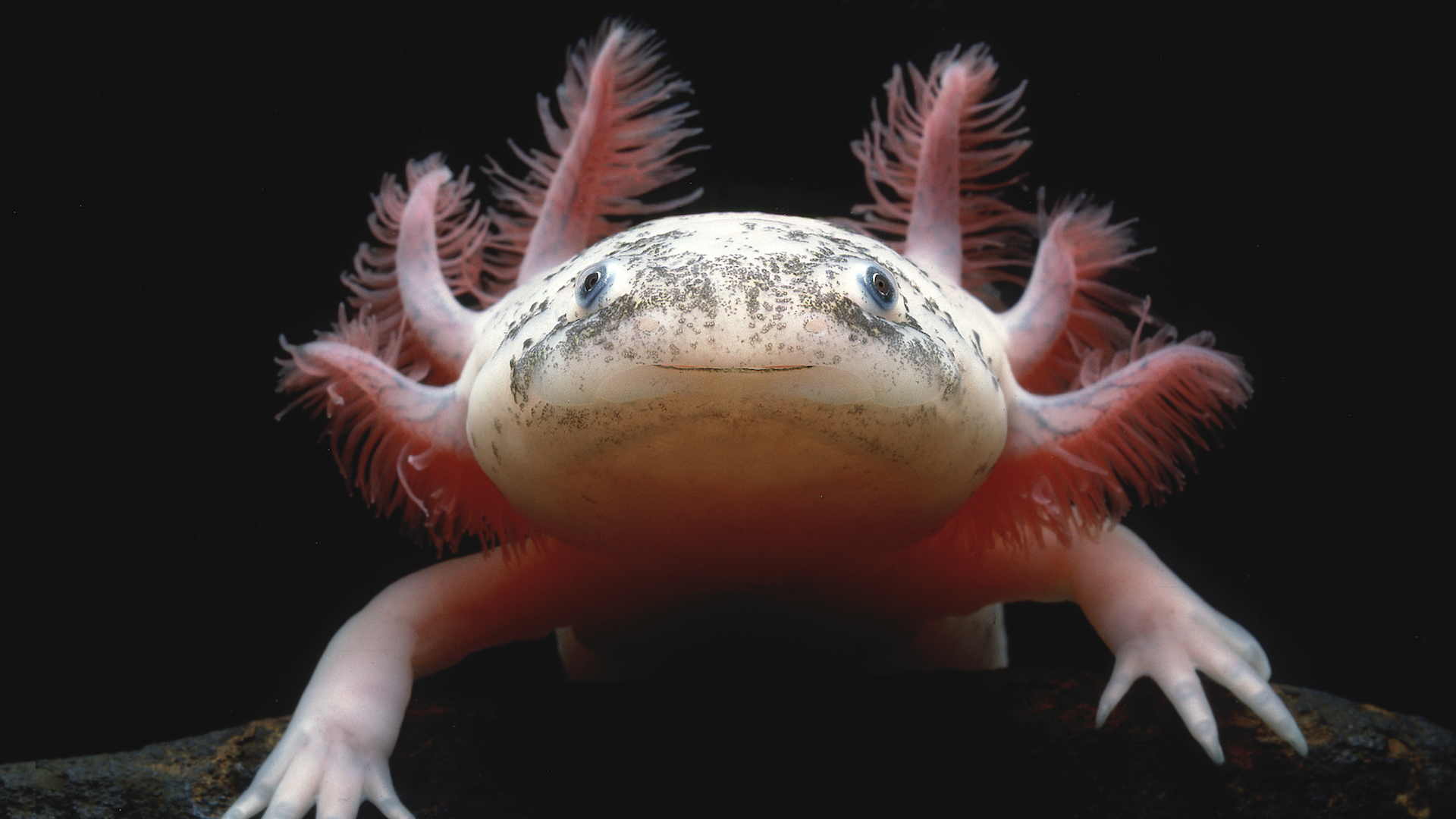
Iconic salamanders that live exclusively in Mexico City’s Xochimilco lake complex, axolotls (Ambystoma mexicanum) are remarkable for a number of reasons. While most salamanders spend part of their adulthood on land, axolotls live permanently underwater and retain their larval features—including their feathery external gills—throughout their lives. There, they grow to lengths of up to 30 centimeters (12 inches), preying on aquatic insects, worms, tadpoles, crustaceans, and small fish. Thanks to their unique physiology and ability to regrow severed limbs, axolotls have been treasured by both the ancient Aztecs, who considered them to be descendants of an important deity, and modern scientists, who have used them as lab models to study everything from tissue regeneration to cancer. However, the species is now critically endangered in the wild, suffering from the triple threat of habitat destruction, pollution, and the introduction of non-native predatory fish. It is also a canary in the coal mine for an ecosystem in extreme distress. In this short film, join Luis Zambrano and Cristina Barros from the National Autonomous University of Mexico (UNAM) to see how some of Mexico City’s biologists, anthropologists, and traditional farmers are responding to this crisis, working to restore the habitat that is necessary not just for axolotls to survive in the wild, but also for the region’s human populations to thrive.
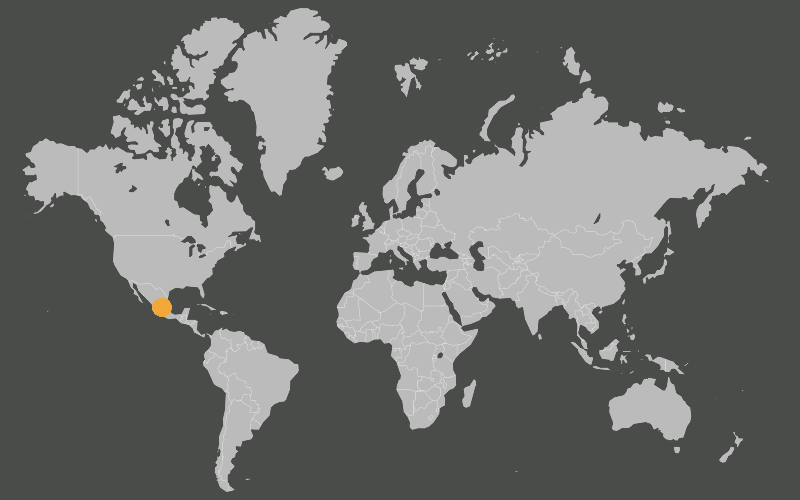
Mexico City, Mexico
Hi, I’m Dave, the executive director of bioGraphic. (And that’s my dog, Finn.) Thanks for taking the time to read this story.
Stories like this simply don’t get produced without financial support from readers like you. bioGraphic is not backed by a private company or owned by a billionaire. It’s an independent, nonprofit magazine. And one-quarter of our annual budget comes directly from reader donations.
We need your support more than ever, as governments slash funding for conservation and scientific research, placing even more ecosystems and wildlife at risk around the world. At bioGraphic, we’re steadfastly shining a light on the threats to our planet’s incredible biodiversity. And we’re showcasing the hard work of people bravely taking action to protect at-risk species.
bioGraphic publishes environmental reporting that you can’t find anywhere else: deeply researched, trustworthy stories that are also beautiful and captivating to read. We offer an antidote to reader apathy and doom-and-gloom news by revealing the wonders of the natural world and focusing on real solutions to big problems. When you finish a bioGraphic story, we want to leave you feeling informed, delighted, and inspired.
We don’t run ads or hide our stories behind a paywall. The readers who generously support bioGraphic allow our work to remain free for everyone.
Will you help us keep telling these crucial stories?

Author
Related Articles
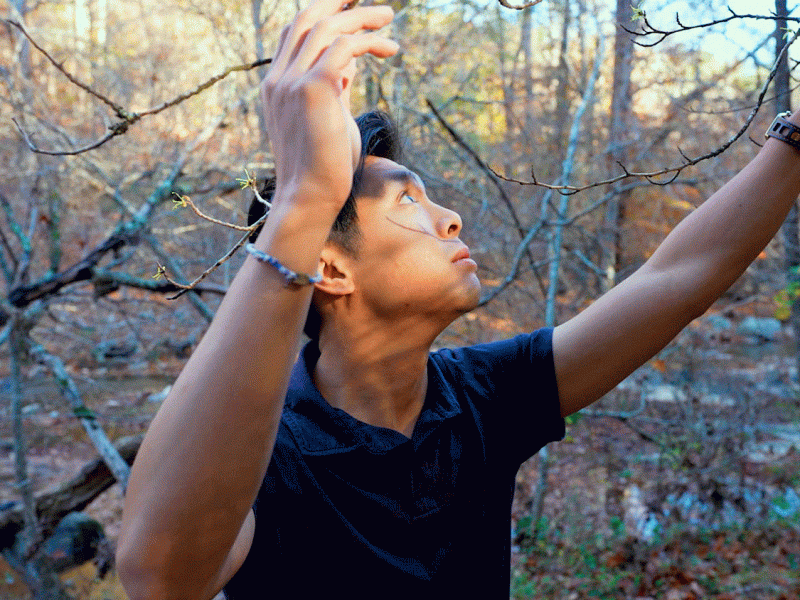
Lens of Time: Witch Hazels Take Flight
Investigating the mechanics of seed dispersal in an unusual shrub in eastern North America has revealed that some plants have powers of propulsion equal to the planet’s fastest animals.
Lens of Time: A Watershed in Motion
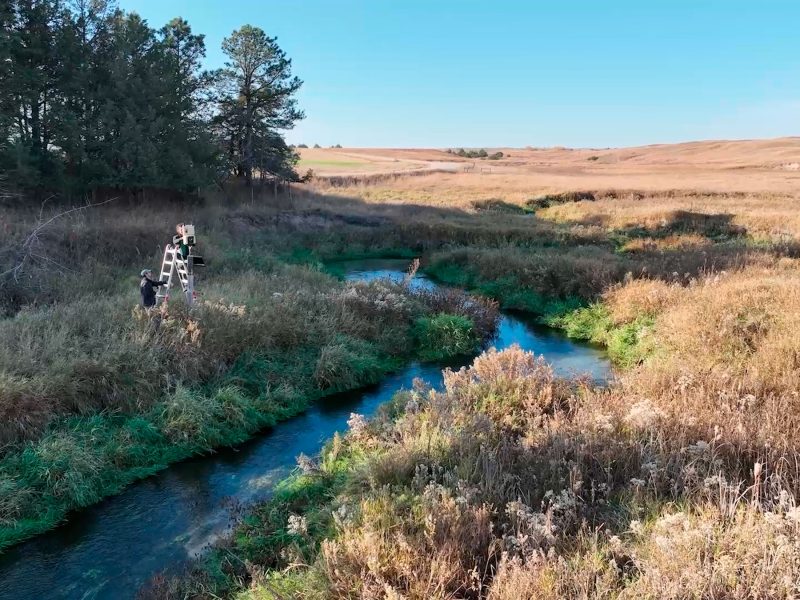
Where does our water come from, how do the variations in its flow affect the ecosystems it feeds, and how can time-lapse photography help land managers understand and protect this valuable resource?
Lens of Time: Tiny Fliers
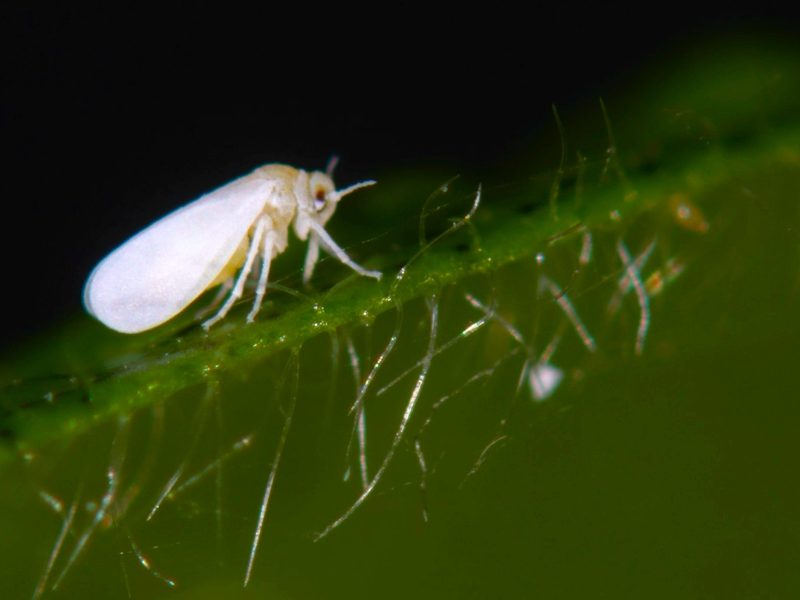
As ubiquitous as flight may be in the natural world, it turns out not all flying creatures approach the feat in quite the same way.