
Produced by Greg Asner
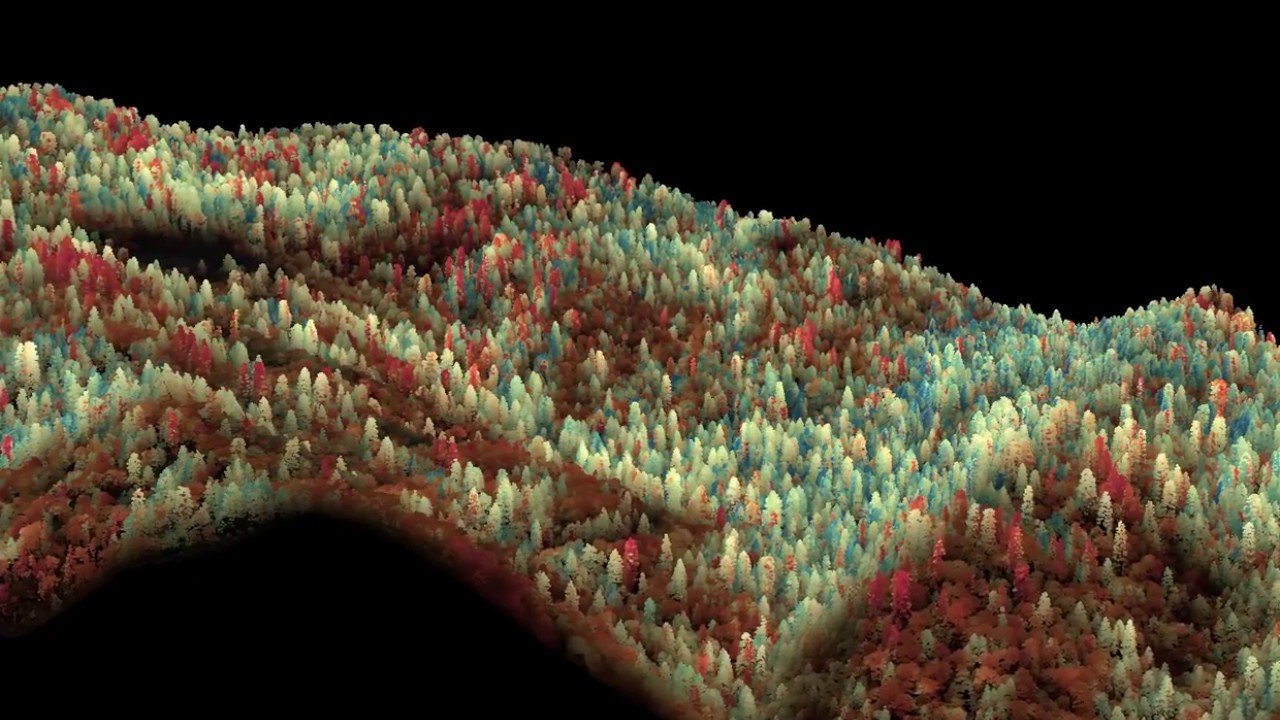
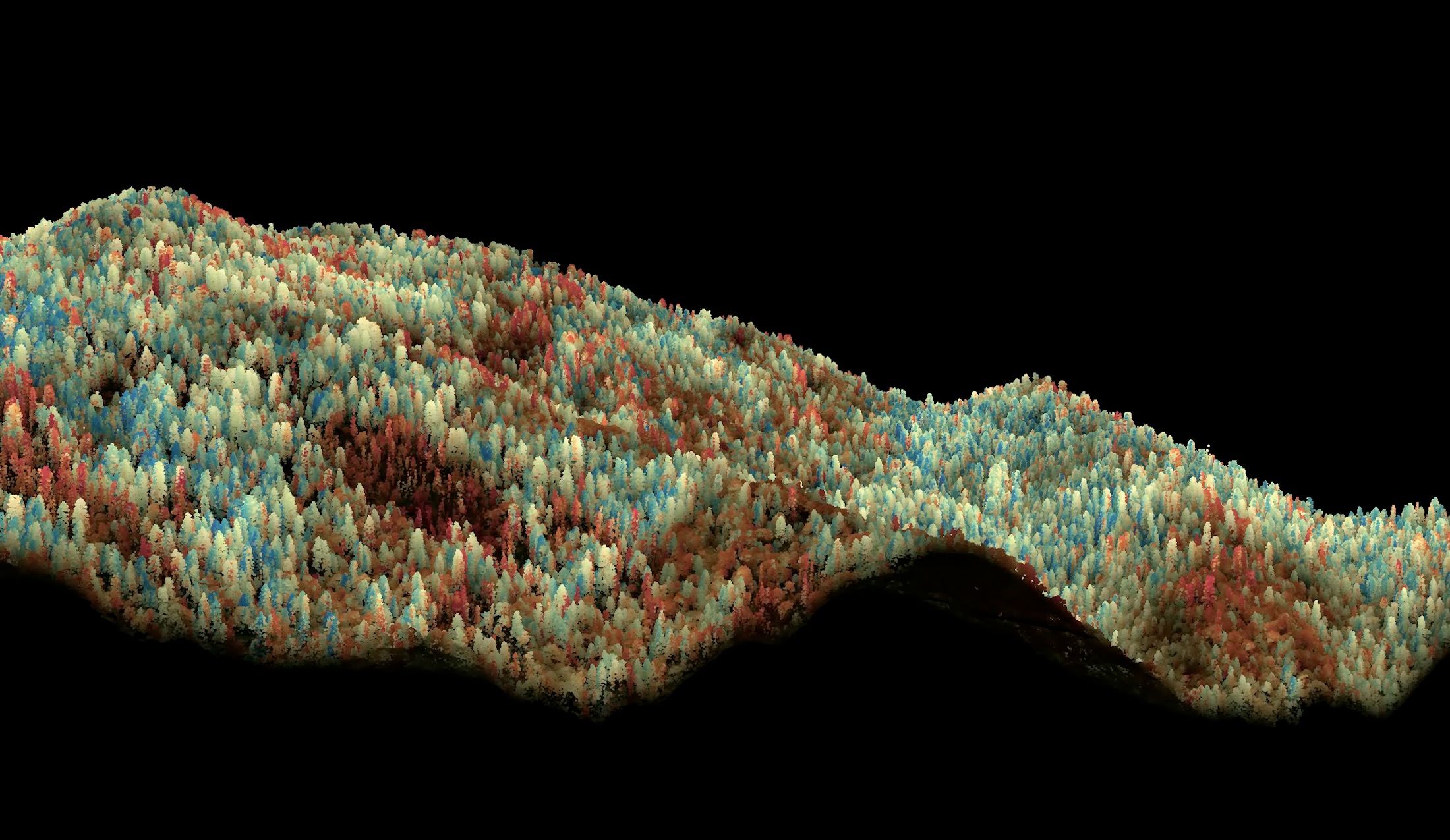
Since 2011, the punishing, millennial-scale drought in California has done far more than turn lawns brown and raise water bills—it has also taken a severe toll on forests, killing more than 100 million trees and stressing tens of millions to the point that they might not survive another dry year. Scientists are able to tally these recent and imminent losses thanks to a high-tech flying laboratory operated by the Carnegie Airborne Observatory, which uses laser-guided spectroscopy to measure water loss in forest canopies.
The resulting data is color-coded as you might expect—the trees that appear blue are taking in the most water, while the trees that appear orange and red have been hit hardest by the drought. In this visualization of a forest in Sequoia National Park in August 2015, it’s possible to see that many giant sequoias (Sequoiadendron giganteum) are still relatively well hydrated. But others—especially those on the steepest slopes where water tends to run off most quickly—appear a deep shade of red, a clear sign that they are severely stressed by the drought conditions.
According to CAO founder Greg Asner, giant sequoia trees are faring relatively well compared to other California trees, including sugar pines (Pinus lambertiana) and black oaks (Quercus kelloggii). However, even these ancient giants—which have weathered many past droughts—are beginning to show signs of stress. Datasets like this are some of the best tools that forest managers have at their disposal as they attempt to safeguard these iconic trees for future generations. By prescribing burns in the most severely impacted areas to reduce competition for water from shrubs and smaller trees, they may be able to help the remaining sequoias access enough water to survive.
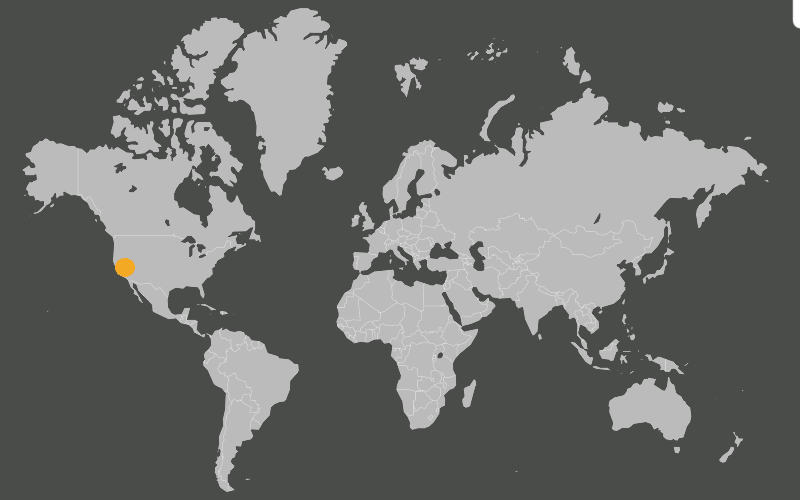
Sequoia National Park, California
Hi, I’m Dave, the executive director of bioGraphic. (And that’s my dog, Finn.) Thanks for taking the time to read this story.
Stories like this simply don’t get produced without financial support from readers like you. bioGraphic is not backed by a private company or owned by a billionaire. It’s an independent, nonprofit magazine. And one-quarter of our annual budget comes directly from reader donations.
We need your support more than ever, as governments slash funding for conservation and scientific research, placing even more ecosystems and wildlife at risk around the world. At bioGraphic, we’re steadfastly shining a light on the threats to our planet’s incredible biodiversity. And we’re showcasing the hard work of people bravely taking action to protect at-risk species.
bioGraphic publishes environmental reporting that you can’t find anywhere else: deeply researched, trustworthy stories that are also beautiful and captivating to read. We offer an antidote to reader apathy and doom-and-gloom news by revealing the wonders of the natural world and focusing on real solutions to big problems. When you finish a bioGraphic story, we want to leave you feeling informed, delighted, and inspired.
We don’t run ads or hide our stories behind a paywall. The readers who generously support bioGraphic allow our work to remain free for everyone.
Will you help us keep telling these crucial stories?

Related Articles
Lens of Time: Witch Hazels Take Flight
Investigating the mechanics of seed dispersal in an unusual shrub in eastern North America has revealed that some plants have powers of propulsion equal to the planet’s fastest animals.
Lens of Time: A Watershed in Motion
Where does our water come from, how do the variations in its flow affect the ecosystems it feeds, and how can time-lapse photography help land managers understand and protect this valuable resource?
Lens of Time: Tiny Fliers
As ubiquitous as flight may be in the natural world, it turns out not all flying creatures approach the feat in quite the same way.