
Photograph by Wim van den Heever
Story by Katie Jewett
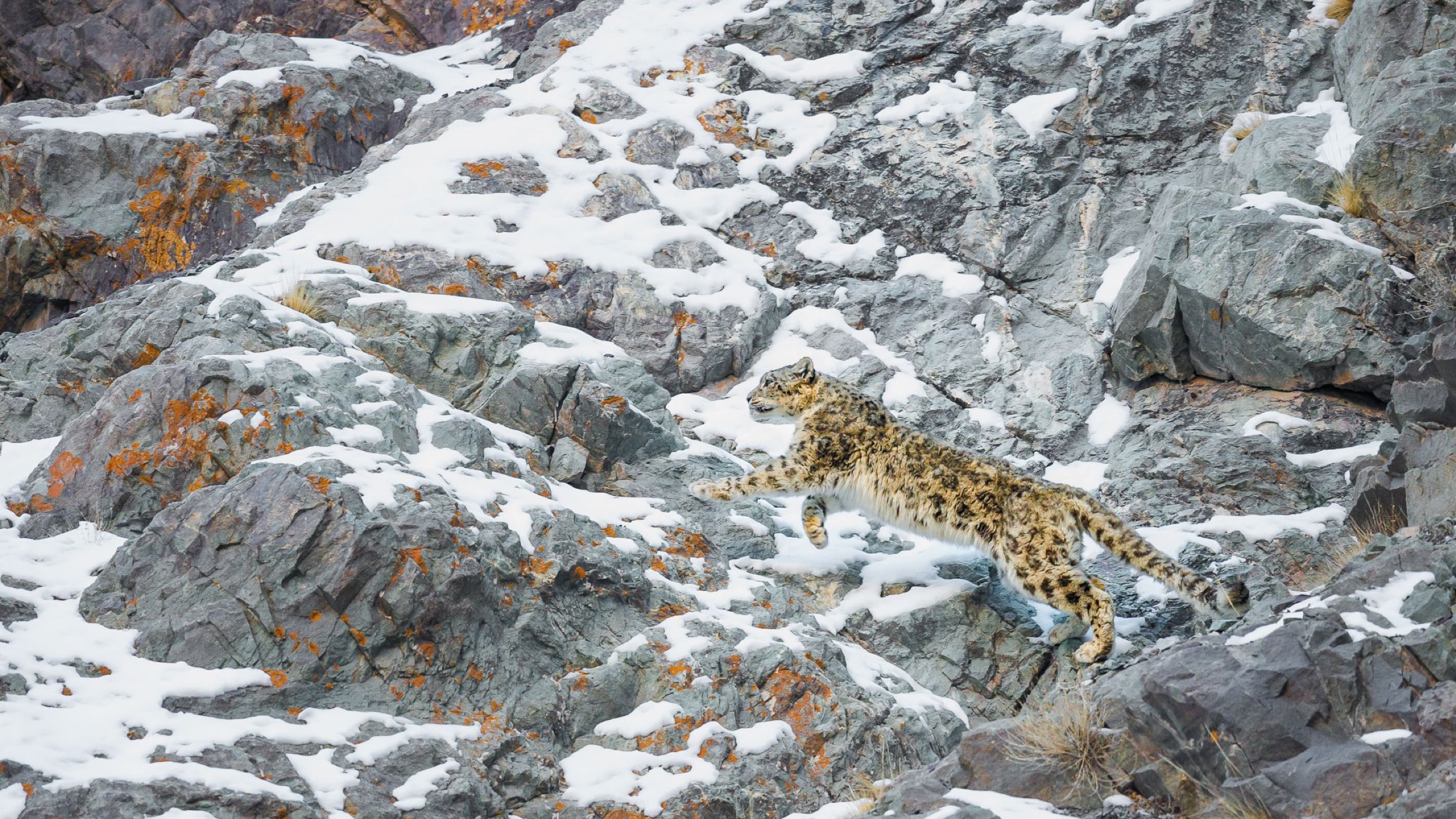
As daylight gives way to icy evening shadows, a snow leopard (Panthera uncia) rises from its perch and bounds across a rocky crag in India’s Hemis National Park. These solitary predators are well-adapted to their often-snowy, vertical, and barren habitat. Large paws keep them from sinking into deep snow, while long tails—nearly equal to the animal’s body length—help them balance along narrow ledges and ridge-tops. The cat’s dense fur keeps it warm in freezing temperatures, and the pattern of its coat breaks up the contours of its body, enabling it to blend almost perfectly into the landscape as it silently stalks its prey.
Although the snow leopard’s range stretches across the high mountains of much of Central Asia—from Afghanistan and northern India to Mongolia and China—the species’ numbers hover between just 4,000 and 6,500 individuals. As top predators in one of the harshest and least-productive rangeland habitats in the world, the cats are naturally rare. Their primary natural prey species, ibex (Capra sibirica) and blue sheep (Pseudois nayaur), are simply not numerous enough to support large populations of the large cats.
Human encroachment has made an already-challenging environment even more so. Threats to snow leopards include poaching—of the cats and their prey—and reduction in prey numbers due to competition with livestock. While some leopards have taken to supplementing their diets with sheep and goats, this has only increased the number of cats killed by local herders trying to protect their flocks. The multibillion-dollar cashmere industry has recently increased these pressures, as high prices for the prized wool encourages herders to increase livestock production. In an effort to protect the cats from this growing list of threats, governments of the twelve countries included in the species’ range have pledged to secure at least 20 populations of breeding-age snow leopards by 2020.
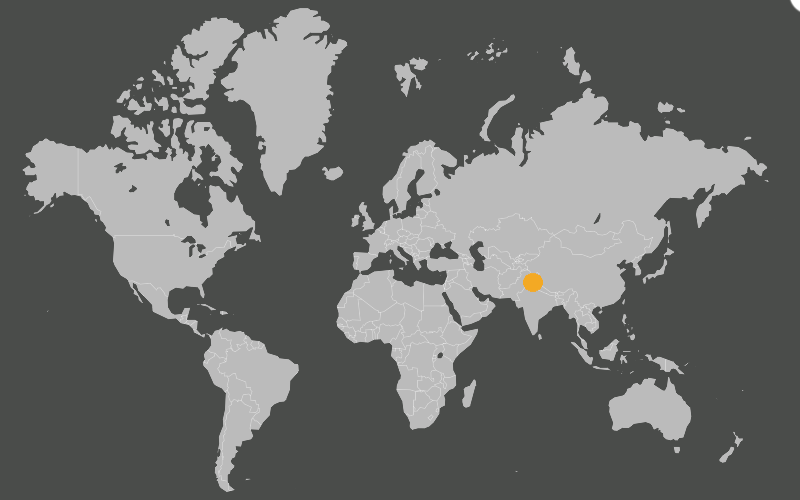
Hemis National Park, Ladakh, India
Hi, I’m Dave, the executive director of bioGraphic. (And that’s my dog, Finn.) Thanks for taking the time to read this story.
Stories like this simply don’t get produced without financial support from readers like you. bioGraphic is not backed by a private company or owned by a billionaire. It’s an independent, nonprofit magazine. And one-quarter of our annual budget comes directly from reader donations.
We need your support more than ever, as governments slash funding for conservation and scientific research, placing even more ecosystems and wildlife at risk around the world. At bioGraphic, we’re steadfastly shining a light on the threats to our planet’s incredible biodiversity. And we’re showcasing the hard work of people bravely taking action to protect at-risk species.
bioGraphic publishes environmental reporting that you can’t find anywhere else: deeply researched, trustworthy stories that are also beautiful and captivating to read. We offer an antidote to reader apathy and doom-and-gloom news by revealing the wonders of the natural world and focusing on real solutions to big problems. When you finish a bioGraphic story, we want to leave you feeling informed, delighted, and inspired.
We don’t run ads or hide our stories behind a paywall. The readers who generously support bioGraphic allow our work to remain free for everyone.
Will you help us keep telling these crucial stories?

Author

Related Articles
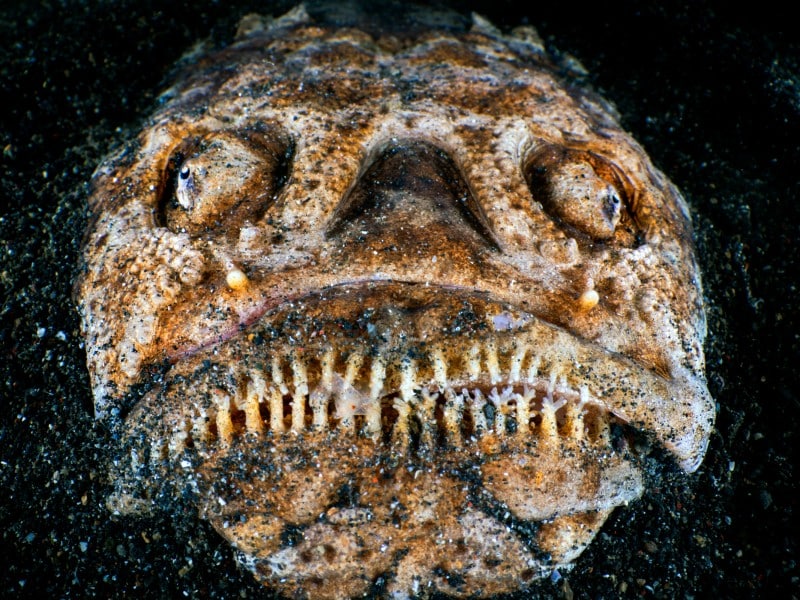
Burial at Sea
The whitemargin stargazer’s ghoulish, upturned face allows the fish to bury its body in sand and nearly disappear—while watching for its next unsuspecting meal.
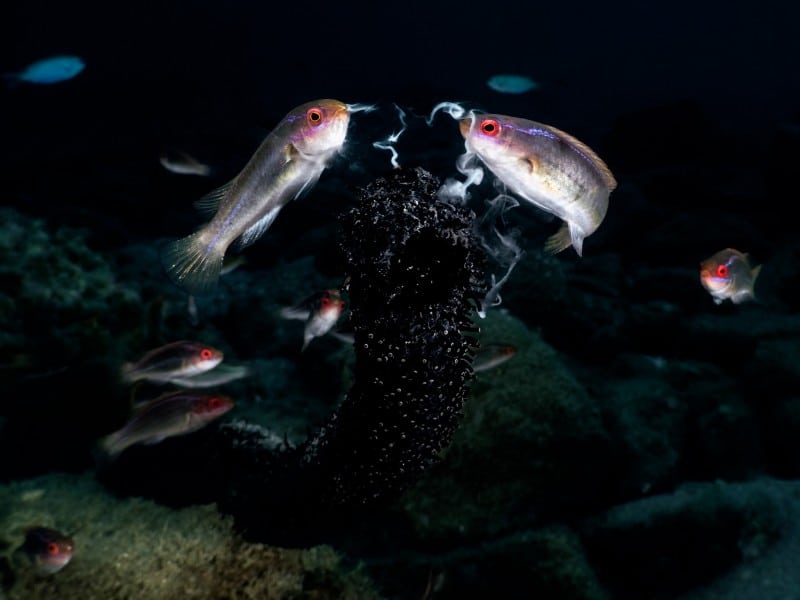
Milt Meal
Marine creatures will do almost anything for a meal—including feasting on the sperm and eggs of spawning invertebrates.
The Art of the Catch
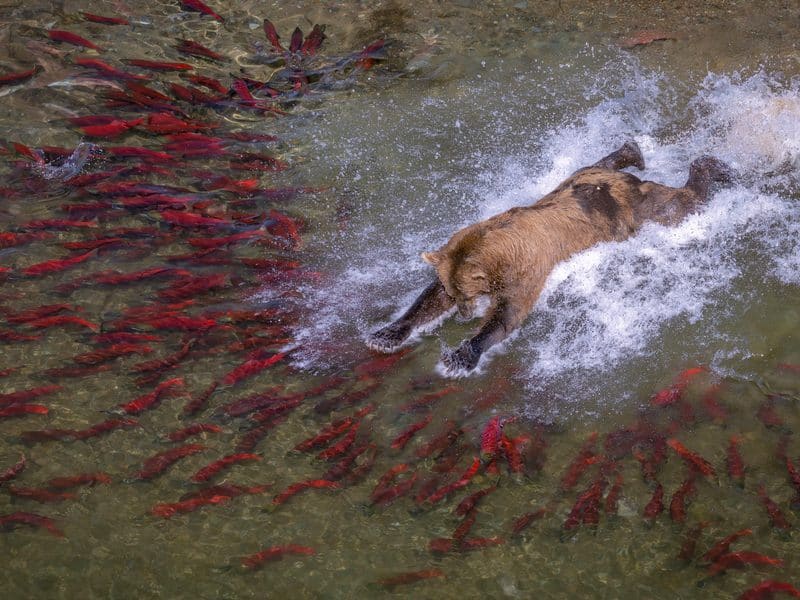
To bulk up for winter hibernation, Alaska’s brown bears employ a range of techniques for snaring salmon.