
Milt Meal
Marine creatures will do almost anything for a meal—including feasting on the sperm and eggs of spawning invertebrates.
Photograph by Tony Wu
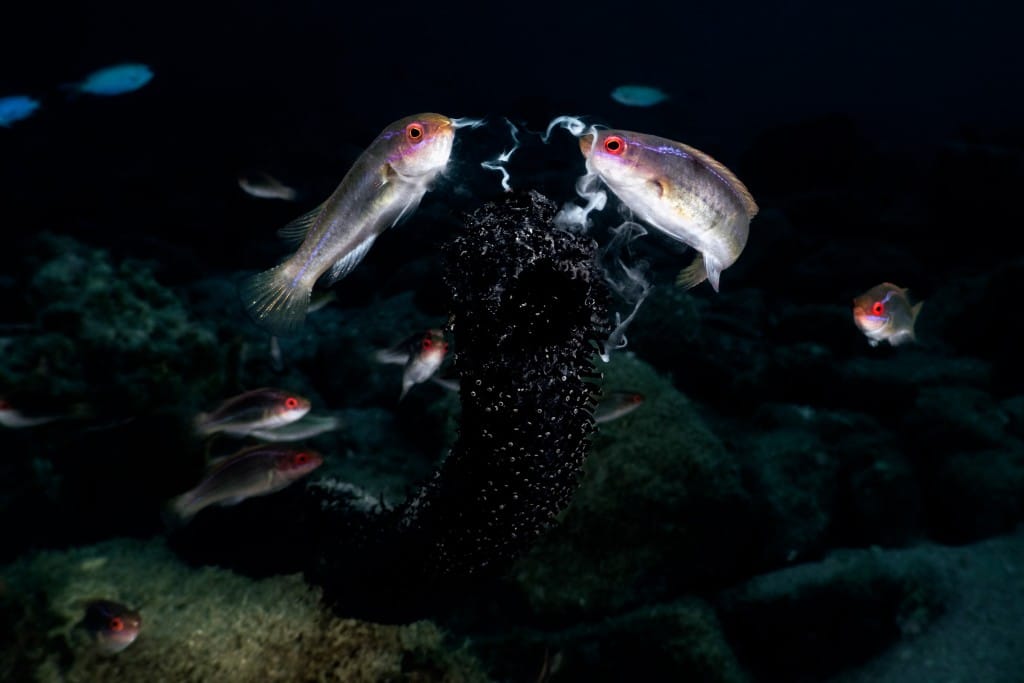
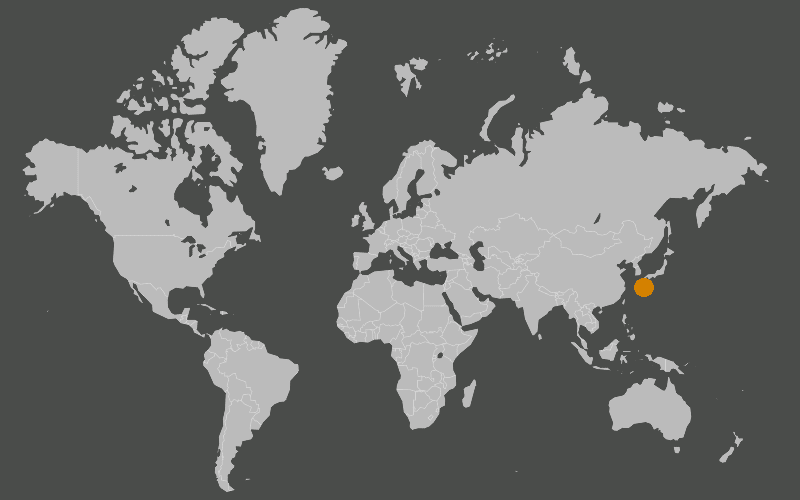
Feeding opportunities in the ocean can be fleeting, so it pays to snag a meal when one presents itself. In this case, two threadfin wrasses (Cirrhilabrus temminckii) take the opportunity to feed on the milt of a black sea cucumber (Holothuria leucospilota) as it spawns in a shallow reef off the coast of southern Japan.
This male sea cucumber is broadcast spawning, a reproductive strategy used by many marine invertebrates. It’s a bit like an email bomb, but instead of blasting millions of inboxes with spam, male and female sea cucumbers almost simultaneously release masses of sperm and eggs into the water column. The swirling soup of gametes increases the odds that at least some eggs will be fertilized and go on to produce the next generation.
This approach to sex is not a random act. Synchronized spawning is triggered by a range of cues; the most powerful external forces include water temperature, light intensity, daylight hours, lunar cycle, tidal flux, and even the amount of food in the water.
Whatever the cue—which varies between species and even among populations of the same species—this sea cucumber was stimulated to spawn and released a gelatinous thread of sperm from a single pore near its mouth. This chemical love letter with its accompanying pheromones would have triggered nearby females to begin releasing their eggs as well.
Many reef fishes besides wrasses feast on the gametes of spawning invertebrates. The synchronized release of eggs and sperm also benefits suspension feeders like sea anemones and barnacles, and a large spawn can spur food webs into overdrive. One of the most stunning examples is the feeding frenzy that breaks out on Australia’s Great Barrier Reef when corals spawn en masse in synchronicity and reef fishes gorge on the gametes.
When sea cucumbers aren’t distracted by sex, they are busy at work as the reef’s earth movers. They hoover up sediment using the 20 oral tentacles with branched tips surrounding their mouth, and sieve out any organic matter, defecating the rest. As they proceed, sea cucumbers promote decomposition and reduce the organic load—that is, dead stuff—on the seabed.
Despite not remotely resembling a threadfin wrasse or any other fish, the black sea cucumber is sometimes referred to as the white threads fish. But it’s not because of threads of sperm coming from the animal’s anterior end. If threatened, some sea cucumbers, including Holothuria leucospilota, eject a mass of white threads called the Cuvierian organ from their anus. When the glass noodle-like tubules hit the water, they lengthen and become highly adhesive. They repel and sometimes ensnare potential predators, allowing the sea cucumber time to squeeze within the coral or under a rock to escape.
Unlike the nutritious threads of milt, these potentially deadly white threads are one reef meal that wrasses will pass by.
Hi, I’m Dave, the executive director of bioGraphic. (And that’s my dog, Finn.) Thanks for taking the time to read this story.
Stories like this simply don’t get produced without financial support from readers like you. bioGraphic is not backed by a private company or owned by a billionaire. It’s an independent, nonprofit magazine. And one-quarter of our annual budget comes directly from reader donations.
We need your support more than ever, as governments slash funding for conservation and scientific research, placing even more ecosystems and wildlife at risk around the world. At bioGraphic, we’re steadfastly shining a light on the threats to our planet’s incredible biodiversity. And we’re showcasing the hard work of people bravely taking action to protect at-risk species.
bioGraphic publishes environmental reporting that you can’t find anywhere else: deeply researched, trustworthy stories that are also beautiful and captivating to read. We offer an antidote to reader apathy and doom-and-gloom news by revealing the wonders of the natural world and focusing on real solutions to big problems. When you finish a bioGraphic story, we want to leave you feeling informed, delighted, and inspired.
We don’t run ads or hide our stories behind a paywall. The readers who generously support bioGraphic allow our work to remain free for everyone.
Will you help us keep telling these crucial stories?

Related Articles
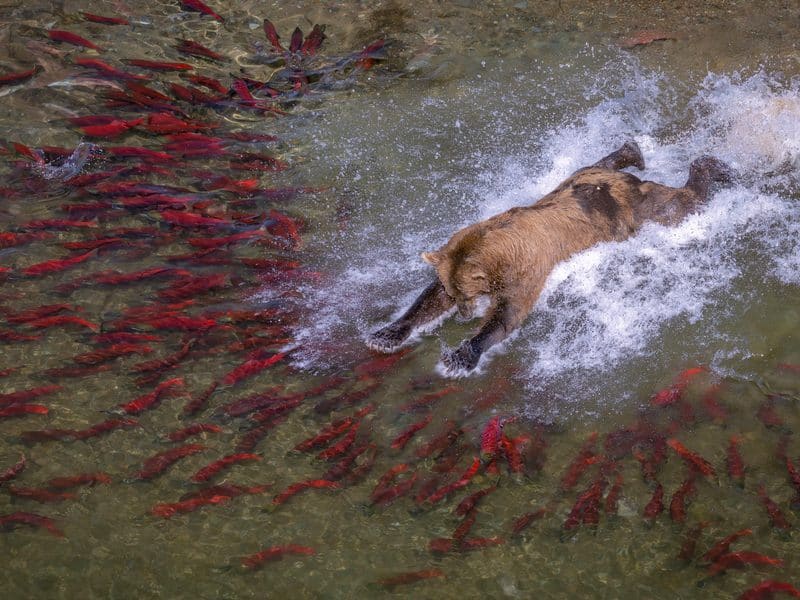
The Art of the Catch
To bulk up for winter hibernation, Alaska’s brown bears employ a range of techniques for snaring salmon.
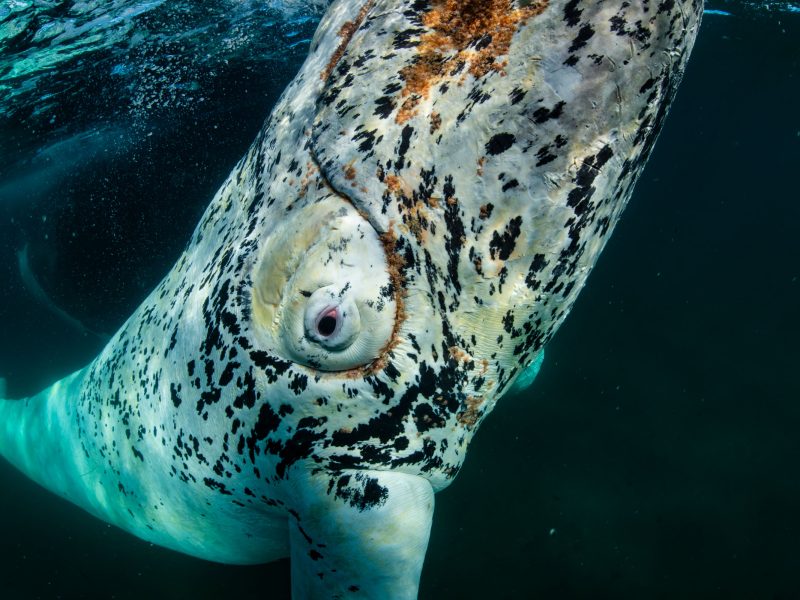
The Wonder of a Pale Whale
A curious calf with an atypical birthday suit is a good sign for southern right whales.
Saying “Ah!” at the Shrimp Spa
On coral reefs, an army of tiny cleaners eat their clients’ parasites, food particles, and dead skin, boosting biodiversity in the process.