
Burial at Sea
The whitemargin stargazer’s ghoulish, upturned face allows the fish to bury its body in sand and nearly disappear—while watching for its next unsuspecting meal.
Photograph by Alex Mustard
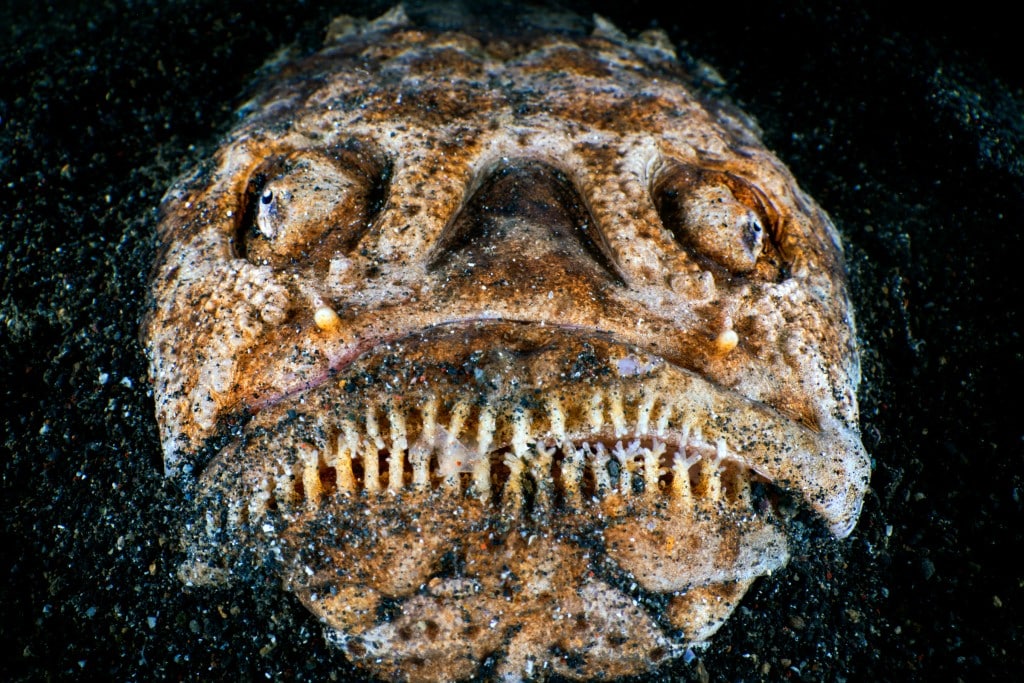
An orange glow appears in the darkness. It’s dim at first, then grows brighter as a group of children dressed as mermaids, bumblebees, and superheroes moves closer. Eventually, the children can make out a face, then a head, illuminated from within, perched on a neighbor’s doorstep. Like its centuries-old predecessors, the carved pumpkin is a lantern, meant to draw attention to itself and guide a path through the darkness.
In contrast, the whitemargin stargazer (Uranoscopus sulphureus), despite its striking resemblance to the iconic Halloween symbol, takes a different approach. One of about 50 species in the stargazer family (Uranoscopidae), the fish’s primary life strategy is to go unnoticed by both would-be predators and unwitting prey: to disappear into sandy, often shallow ocean bottoms and wait for the next life-or-death moment.
But disappearing in an environment with very little structure—nothing but sand or mud and the occasional tuft of seaweed—is no mean feat. Burial is really the only option, and for this, the stargazer is well suited. The fish’s large pectoral fins help it burrow into the ocean floor in mere seconds, and the venomous spines just above those fins deter predator attacks from above. The fringes, or cirri, around the stargazer’s mouth, which look a bit like a jack-o’-lantern’s crooked teeth, also keep sand out while the fish burrows. And unlike most fish, the stargazer’s eyes, nostrils, and mouth are positioned near the top of its head, which allows the fish to see, breathe, and be ready to snatch prey while the rest of its body remains out of sight. This unique morphology lends the fish its common—and rather poetic—name, because it’s nearly always looking up toward the night sky.
The stargazer’s ghoulish appearance, hidden watchfulness, and venomous spines are enough to send shivers through those who have seen the fish in the tropical waters of the Pacific and Indian Oceans, where it lives at depths ranging from just a couple of meters to many hundreds of meters below the surface. It has been described as a “nightmare,” and that’s from the perspective of a human, who has nothing to fear unless they should step on one. For a cardinalfish or porcelain crab, however, the stakes are much higher. One moment, you might be cruising over the seafloor looking for a bite of food. In the next, you cease to exist.

Hi, I’m Dave, the executive director of bioGraphic. (And that’s my dog, Finn.) Thanks for taking the time to read this story.
Stories like this simply don’t get produced without financial support from readers like you. bioGraphic is not backed by a private company or owned by a billionaire. It’s an independent, nonprofit magazine. And one-quarter of our annual budget comes directly from reader donations.
We need your support more than ever, as governments slash funding for conservation and scientific research, placing even more ecosystems and wildlife at risk around the world. At bioGraphic, we’re steadfastly shining a light on the threats to our planet’s incredible biodiversity. And we’re showcasing the hard work of people bravely taking action to protect at-risk species.
bioGraphic publishes environmental reporting that you can’t find anywhere else: deeply researched, trustworthy stories that are also beautiful and captivating to read. We offer an antidote to reader apathy and doom-and-gloom news by revealing the wonders of the natural world and focusing on real solutions to big problems. When you finish a bioGraphic story, we want to leave you feeling informed, delighted, and inspired.
We don’t run ads or hide our stories behind a paywall. The readers who generously support bioGraphic allow our work to remain free for everyone.
Will you help us keep telling these crucial stories?

Authors

Related Articles
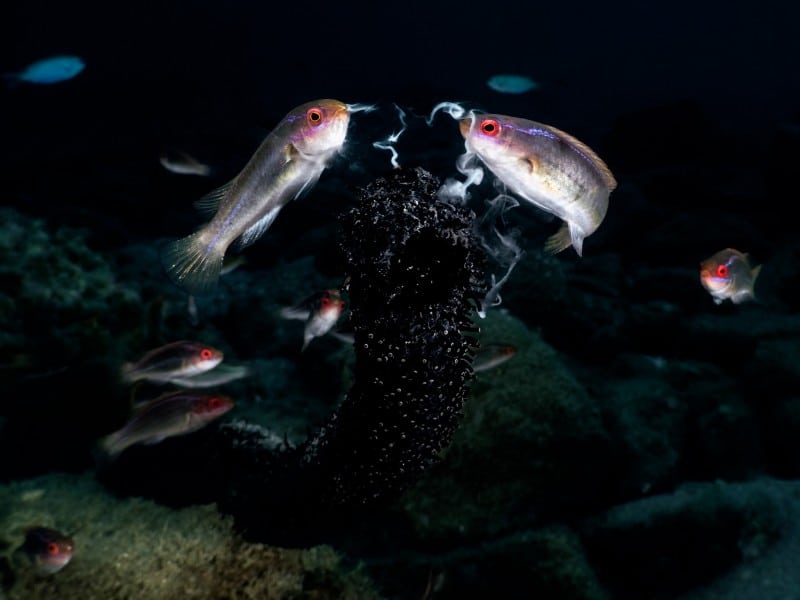
Milt Meal
Marine creatures will do almost anything for a meal—including feasting on the sperm and eggs of spawning invertebrates.
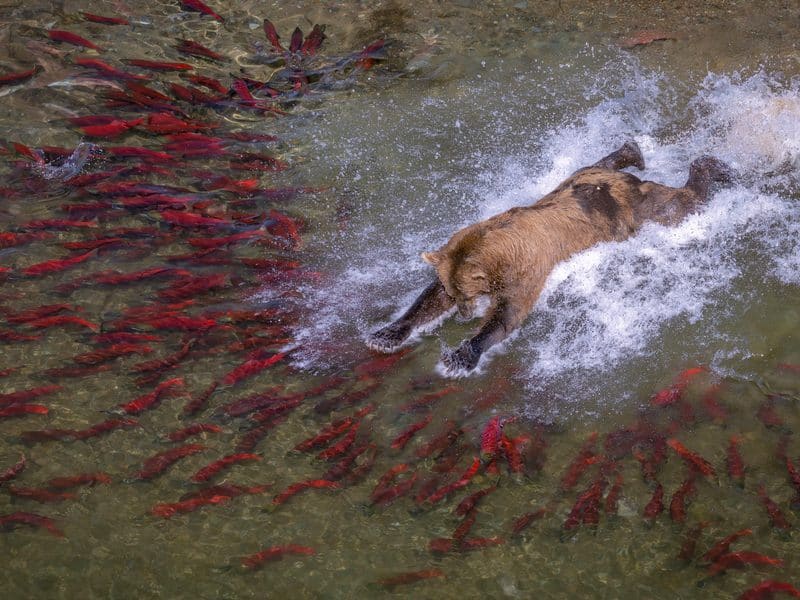
The Art of the Catch
To bulk up for winter hibernation, Alaska’s brown bears employ a range of techniques for snaring salmon.
The Wonder of a Pale Whale
A curious calf with an atypical birthday suit is a good sign for southern right whales.