
Photograph by Markus Varesvuo
Story by Sophie Hartley
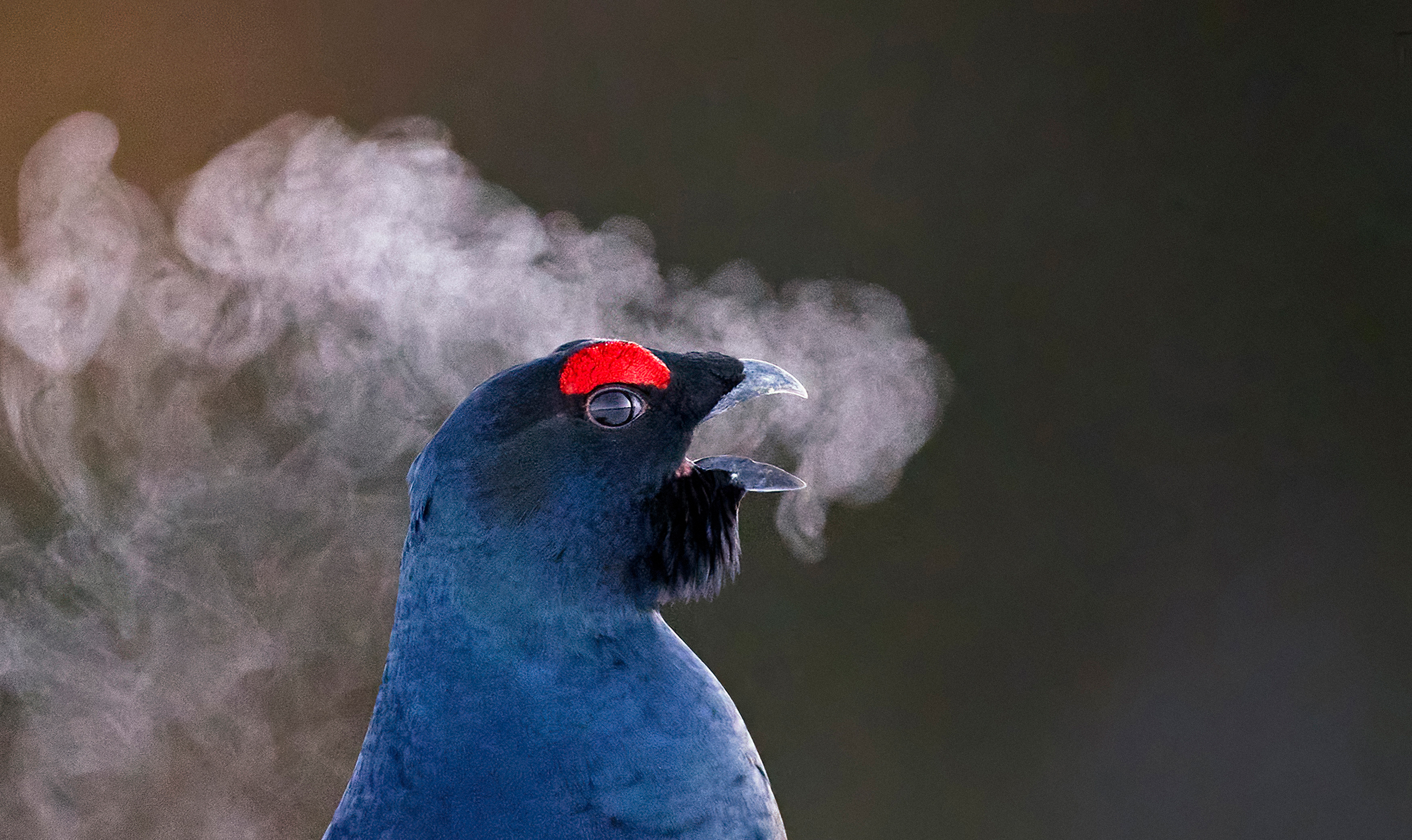
With a throaty hiss, this black grouse (Lyrurus tetrix) is trying to intimidate his competition—a nearby male inching toward his breeding territory in frosty Kuusamo, Finland. Potential mates are watching, and the stakes are high. This bachelor must hiss, call, kick, and dance to garner even a slim chance of mating with a hen.
When it’s not mating season, black grouse can be found pecking around patchy forests from the northern United Kingdom to northeastern China. The large birds, which can grow up to nearly two feet in height, prefer woody forests and adjacent grasslands, habitats abundant with berries, buds, and tree needles. In winter, the grouse keep warm by digging into the snow to create a well-insulated, igloo-like burrow; in spring, males fly to open clearings. There, the mating rituals begin, hens winging in to watch as the cocks scrap for territory and attention.
The gatherings, called leks, top out at around 40 birds. The most sought-after breeding ground lies at the center of the lek, and only the sturdiest males are likely to win it.
The territorial pageants usually play out in three acts: First, two males stand face to face, peering at one another across a few feet of cold earth, hissing and making a bubbling “rookoo” sound. Then they dance, puffing their chests and tailfeathers, traipsing around each other in haphazard circles. Sometimes, these displays of strength will be enough to shoo a rival away. But if neither competitor stands down, they will lurch toward each other and fight. “They will pluck out feathers. They will peck at each other,” says Carl Soulsbury, an evolutionary ecologist at the University of Lincoln, who notes that actual injuries are quite rare. “Most of it is low-level squabbling.”
The grouse flap and kick until one bird finally backs down. A few dominant males typically banish all challengers—in smaller leks, it may be only one—winning the central territory and the right to mate with multiple hens. Most males depart the lek dejected and unmated, their tattered plumage reflecting the toll of the competition.
Black grouse aren’t listed as endangered, but the species has declined throughout most of its range, seeing steep drops in the UK and Central Europe, with more gradual declines in Scandinavia. While predation is a factor—the birds are a prize catch for forest predators like goshawks, foxes, and human hunters—a recent review of scientific literature suggests that habitat loss and fragmentation play a major role in those declines. Many peat bogs and moorlands, where leks take place, were drained and destroyed in the 20th century, and grouse now live in smaller populations, which makes it harder for the birds to breed. Researchers argue that more work must be done to monitor flocks, restore peatlands, and manage predators in order to curb the declines—and to ensure that the yearly pageants of hissing, puffing, dancing, and tussling continue for generations to come.

Kuusamo, Finland
Authors


Related Articles
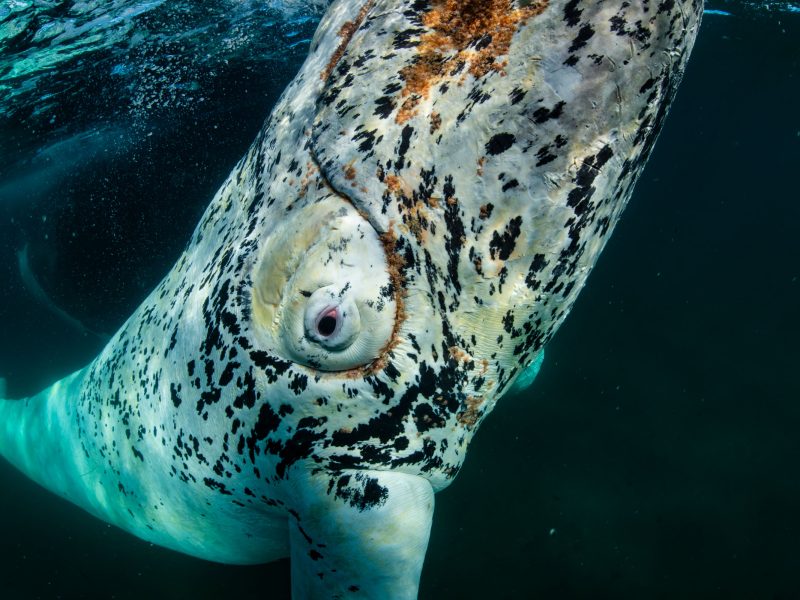
The Wonder of a Pale Whale
A curious calf with an atypical birthday suit is a good sign for southern right whales.
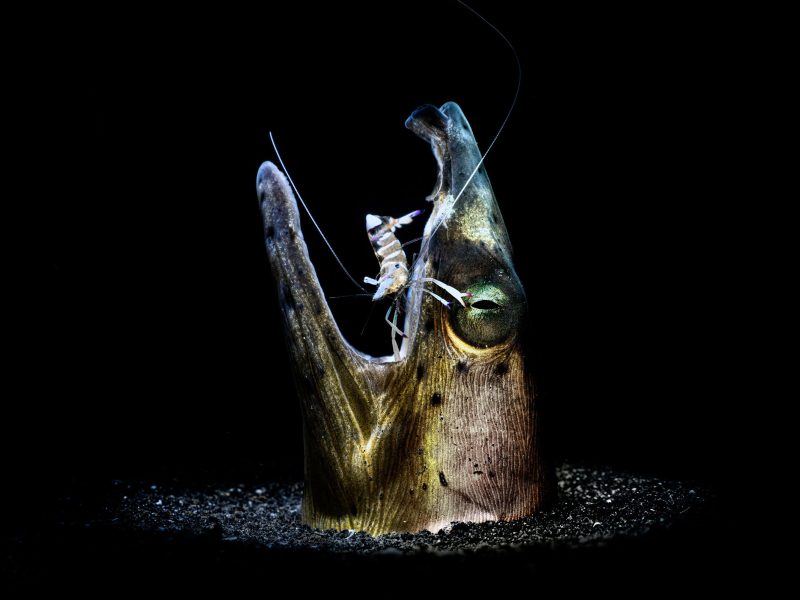
Saying “Ah!” at the Shrimp Spa
On coral reefs, an army of tiny cleaners eat their clients’ parasites, food particles, and dead skin, boosting biodiversity in the process.

Friends or Foes?
A flatworm and a sea squirt mingle in the tropical waters of West Papua, offering a glimpse into the complexity of interspecies relationships.