
Pulling Their Weight
Beneath the jungle’s colorful canopy, armies of ants clear dead material and keep ecosystems running smoothly.
Photograph by Roman Willi
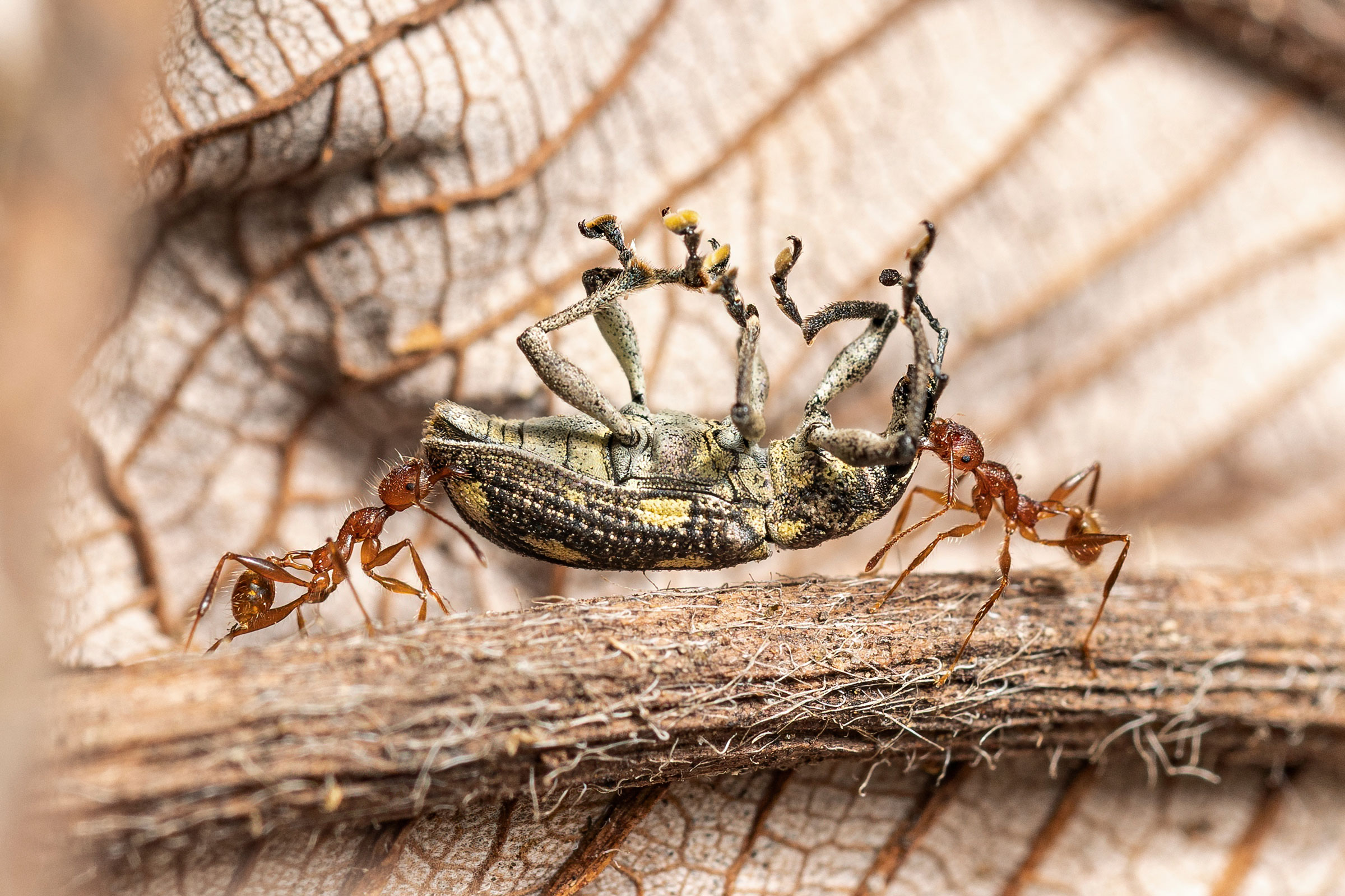
Costa Rica’s rainforests are typically painted in vibrant hues, with flamboyant flowers, jewel-toned birds, and neon tree frogs. Yet beneath this colorful palette is a carpet of decaying leaves, and beneath the dull leaf litter are innumerable creatures whose contribution to the visual feast above goes largely unappreciated: ants.
More than 900 species and subspecies of ants (family Formicidae) crawl, skitter, and climb through Costa Rican ecosystems, comprising up to 25 percent of the terrestrial biomass here and in other tropical forests. Though most individuals weigh less than a grain of rice, they together keep the rainforest running smoothly. Ants feed a variety of wildlife, churn up soil, change the soil’s chemistry, and clear dead plants, animals, and insects. Microbes and other invertebrates also help with decomposition, but one study suggests that ants remove more than half of all dead material that falls to rainforest floors. Other research shows that leafcutter ants mow down so much vegetation that they alter forests’ architecture, creating gaps in the canopy. Ants from a single nest can harvest up to two metric tons (2,200 pounds) of leaves annually.
Ants’ own bodies—particularly their ability to carry heavy loads—play a role in this aptitude for ecosystem engineering. Their “necks” and mandibles have a unique physiology, with one type of muscle fiber that allows for quick, spring-loaded snapping so explosive it can kill small prey instantly or propel an ant backward, away from danger. Another bestows ants with sustained force for carrying heavy loads. Combined with specialized biomechanics that researchers are still studying, this anatomy lets some ant species lift more than 5,000 times their body weight—equivalent to an adult human hoisting two Statues of Liberty with only their head and neck.
While most visitors to the rainforest are drawn to colorful landscapes and charismatic megafauna, photographer Roman Willi seeks creepy crawly denizens like ants. When he spotted these two near Monteverde, Costa Rica, carrying a dead weevil (family Curculionoidae), he paused to photograph the industrious duo before they disappeared once more into the leaf litter.
Hi, I’m Dave, the executive director of bioGraphic. (And that’s my dog, Finn.) Thanks for taking the time to read this story.
Stories like this simply don’t get produced without financial support from readers like you. bioGraphic is an independent non-profit—we’re not backed by a private company or owned by a billionaire. One-quarter of our budget comes directly from reader donations.
bioGraphic publishes environmental reporting that you can’t find anywhere else: deeply researched, trustworthy stories that are also beautiful and captivating to read. Right now, we need your help to raise $20,000 by October 2. Every dollar will go directly to more crucial reporting projects.
Around the world, governments are slashing funding for conservation and scientific research, placing even more ecosystems and wildlife at risk. At bioGraphic, we’re steadfastly shining a light on the threats to our planet’s incredible biodiversity. And we’re showcasing the hard work of people bravely taking action to protect at-risk species.
bioGraphic offers an antidote to apathy and doom-and-gloom news by revealing the wonders of the natural world and focusing on real solutions to big problems. When you finish a bioGraphic story, we want to leave you feeling informed, delighted, and inspired.
We don’t run ads or hide our stories behind a paywall. The readers who generously support bioGraphic allow our work to remain free for everyone.
Will you help us raise $20,000 by October 2?

Related Articles
The Wonder of a Pale Whale
A curious calf with an atypical birthday suit is a good sign for southern right whales.
Saying “Ah!” at the Shrimp Spa
On coral reefs, an army of tiny cleaners eat their clients’ parasites, food particles, and dead skin, boosting biodiversity in the process.
Friends or Foes?
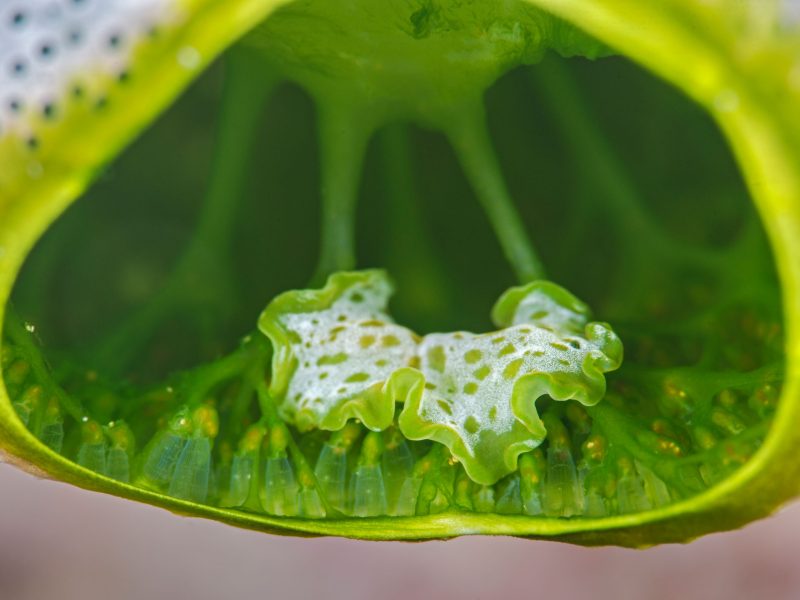
A flatworm and a sea squirt mingle in the tropical waters of West Papua, offering a glimpse into the complexity of interspecies relationships.
