
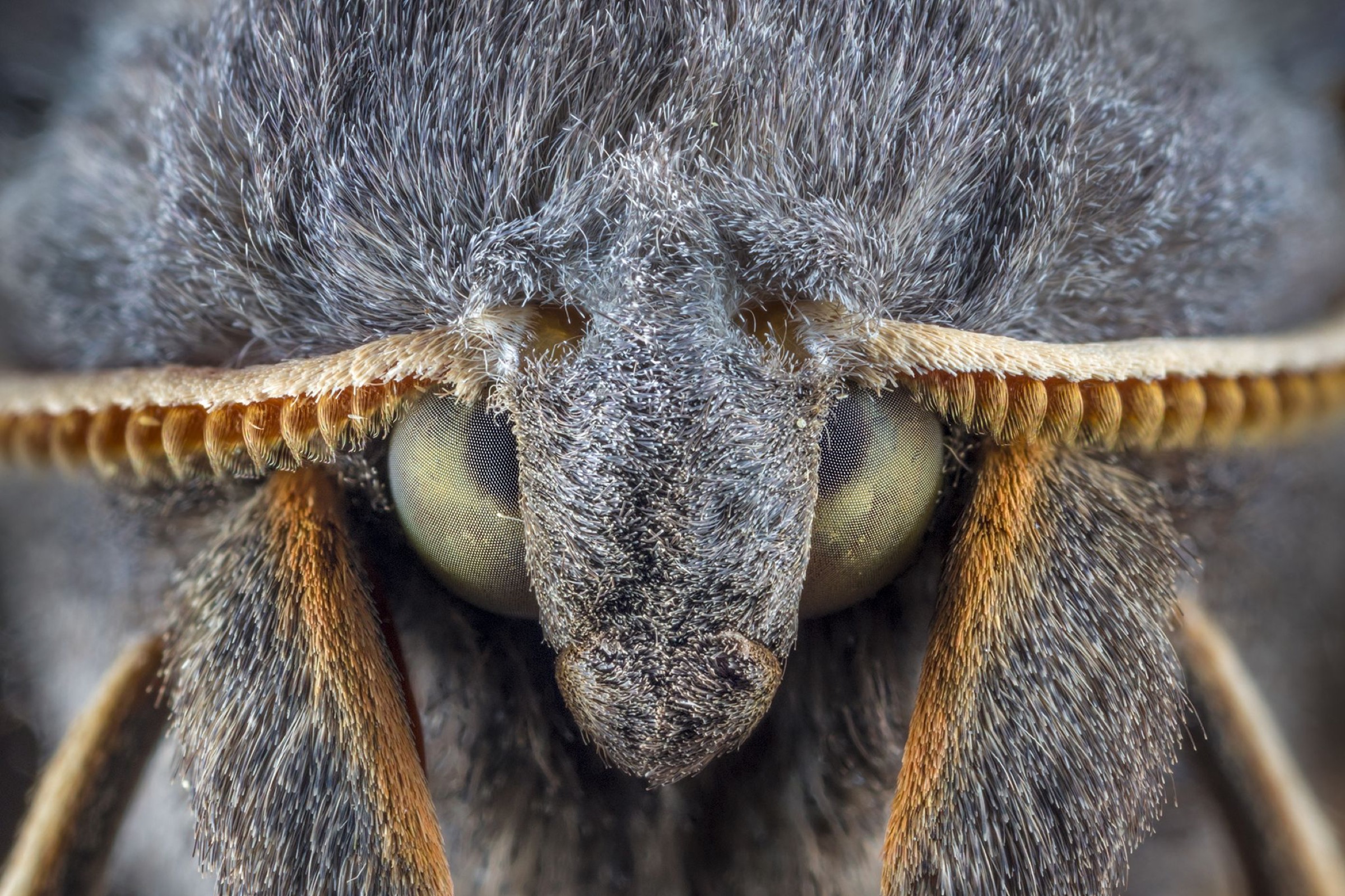
Photograph by Alex Hyde
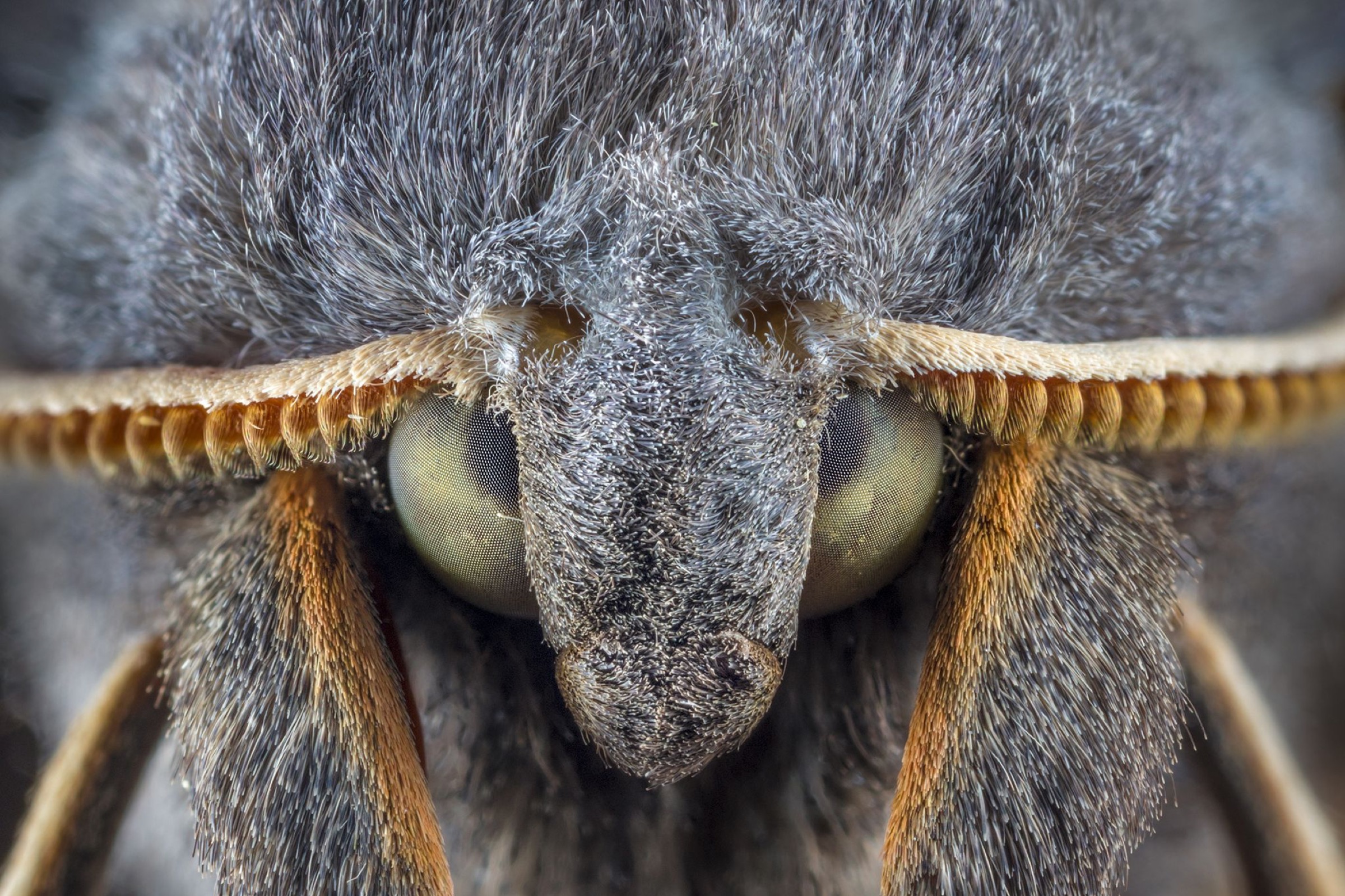
The poplar hawkmoth (Laothoe populi) derives its name from the tree species on which it depends for survival. Females lay their eggs on the underside of poplar leaves in the spring. After emerging, the yellow-green larvae then feed on, and blend in with, the young, tender host leaves. By fall, when the moths have transformed into adults, their pale brown wings—which can span nearly four inches—blend into the dried bunches of poplar leaves that rustle around them.
But the subtle hues hide a surprise. Tucked beneath the overlap of the leaf-like front and back wings is a brilliant rust-colored spot, which scientists think functions to startle or distract hungry predators long enough for the moth to make its escape. While the hawkmoth has to avoid being eaten, it doesn’t waste time looking for its own meals. In fact, the adult lacks mouth parts altogether, so eating is impossible. Instead, it focuses on the singular purpose of its short life: reproduction.
“This head-on portrait of a male poplar hawkmoth reveals his big bushy antennae, packed with chemoreceptors to help him track down the distinctive pheromone signals given off by a female,” says photographer Alex Hyde. Each of the hairs on the antennae is covered with pores that sense chemicals in the air and send messages to the moth’s brain. Males’ featherlike antennae have far more hairs than females’—in some species, five times as many. This increased surface area gives the males a better chance of smelling the faint chemical signature of a female wafting on the breeze, which is important since it’s up to the males to find mates.
The poplar hawkmoth is common throughout the United Kingdom, including in Hyde’s Derbyshire backyard, where he found this one resting one morning after its flurry of nighttime activity.

Derbyshire, England
Hi, I’m Dave, the executive director of bioGraphic. (And that’s my dog, Finn.) Thanks for taking the time to read this story.
Stories like this simply don’t get produced without financial support from readers like you. bioGraphic is not backed by a private company or owned by a billionaire. It’s an independent, nonprofit magazine. And one-quarter of our annual budget comes directly from reader donations.
We need your support more than ever, as governments slash funding for conservation and scientific research, placing even more ecosystems and wildlife at risk around the world. At bioGraphic, we’re steadfastly shining a light on the threats to our planet’s incredible biodiversity. And we’re showcasing the hard work of people bravely taking action to protect at-risk species.
bioGraphic publishes environmental reporting that you can’t find anywhere else: deeply researched, trustworthy stories that are also beautiful and captivating to read. We offer an antidote to reader apathy and doom-and-gloom news by revealing the wonders of the natural world and focusing on real solutions to big problems. When you finish a bioGraphic story, we want to leave you feeling informed, delighted, and inspired.
We don’t run ads or hide our stories behind a paywall. The readers who generously support bioGraphic allow our work to remain free for everyone.
Will you help us keep telling these crucial stories?

Author

Related Articles
Milt Meal
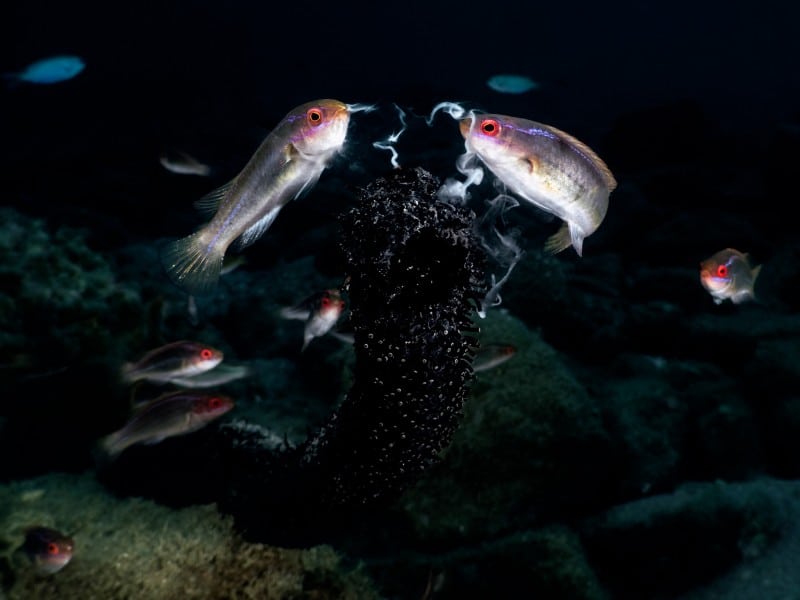
Marine creatures will do almost anything for a meal—including feasting on the sperm and eggs of spawning invertebrates.
The Art of the Catch
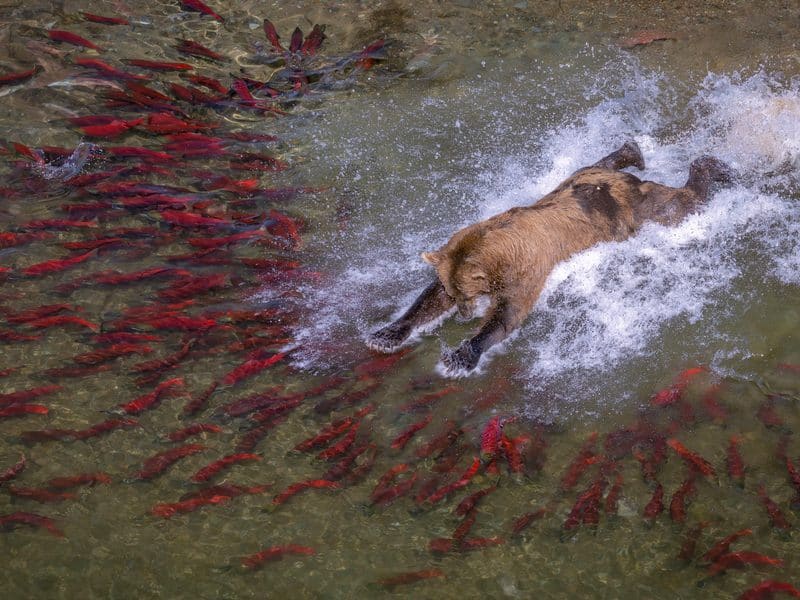
To bulk up for winter hibernation, Alaska’s brown bears employ a range of techniques for snaring salmon.
The Wonder of a Pale Whale
A curious calf with an atypical birthday suit is a good sign for southern right whales.