
An Eye for a Fly
The black caiman is one of the Amazon’s fiercest predators, but against this tiny nuisance it’s defenseless.
Photograph by Karine Aigner
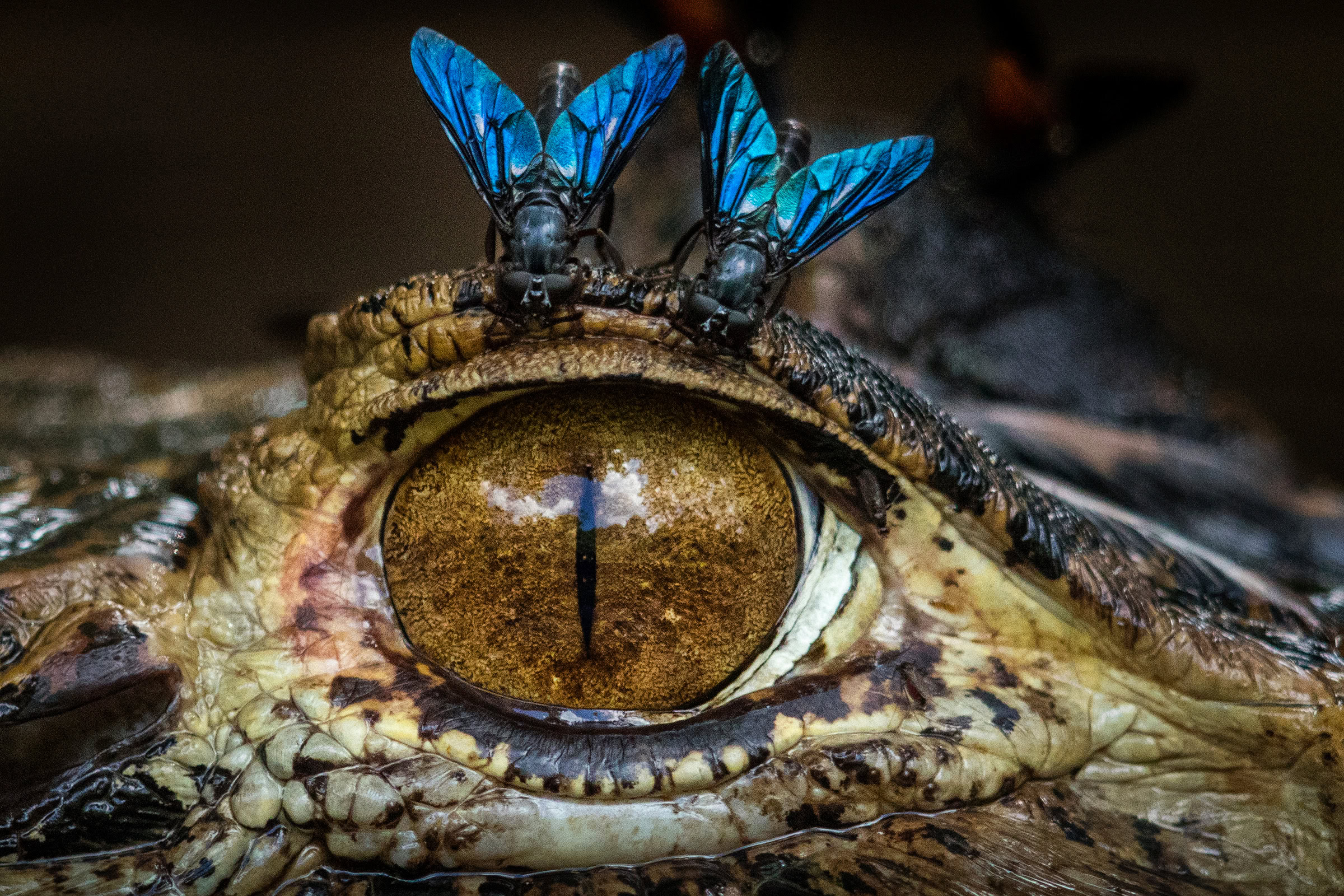
The black caiman (Melanosuchus niger) is an intimidating sight. To the many prey species it devours, from catfish to capybaras, this South American reptile is a swimming, walking terror — stalking the rivers, lagoons, and flooded savannas of the Amazon River basin with ruthless efficiency. Found from eastern Ecuador and Peru to northern Brazil and southern Guyana, the black caiman is named for its inky-black-to-charcoal skin, with lighter bands around its lower jaw and tail. One of six caiman species, it is the largest member of the alligator family, measuring up to five meters (16 feet) long and weighing in at 350 kilograms (770 pounds). It’s an apex predator, with few competitors.
But for all its ferocious mojo, the black caiman is defenseless against an unlikely foe: the horse fly, that scourge of human outings worldwide. The flies suck blood from the soft tissue around the reptile’s eyes. But the caiman pictured above “did not make any effort to evade the flies,” says photographer Karine Aigner, who witnessed the scene while boating through Ecuador’s Yasuní National Park.
Those large eyes lie atop the reptile’s head, allowing this nocturnal hunter to sneak up on prey in the water. The caiman’s thick, dark body and long, strong snout, which sports up to 76 razor-sharp teeth, remain hidden beneath the surface until the moment it strikes.
Caimans aren’t always on the hunt: During the dry season, between September and December, depending on the location, they’re also breeding. Males mate with several different females, which lay clutches of 30 to 60 eggs in mound-shaped nests of dirt, sticks, and leaves. Several moms-to-be typically build their nests near one another, close to a body of water. Jaguars, lizards, monkeys, and even humans have a taste for caiman eggs, so the mothers keep close watch over the nest. Once the eggs hatch, after two or three months of incubation, the hatchlings form pods, still guarded by their mothers. Hatchlings from different clutches might also join forces in the pods to bolster the group’s defenses.
Black caimans once had far more dangerous foes to contend with than bloodthirsty horse flies and other jungle predators. For most of the 20th century, they were widely hunted for their valuable hides, which were turned into shoes, handbags, and other leather items. By the 1970s, black caiman numbers had plummeted, and in 1982, the International Union for Conservation of Nature listed the reptiles as endangered. Thanks to new protections throughout much of their range, such as bans on the hunting and sale of black caiman products, local patrols against poachers, and the creation of wildlife reserves in caiman habitat, the species bounced back in the decades that followed. In 2000, when the IUCN conducted its most recent assessment, caiman populations had recovered enough to be downlisted as a “species of lower risk.” Today, black caimans are still hunted illegally in some countries, but a bigger threat to the species may now be the loss of their Amazon habitat to logging and expanding agriculture.
Hi, I’m Dave, the executive director of bioGraphic. (And that’s my dog, Finn.) Thanks for taking the time to read this story.
Stories like this simply don’t get produced without financial support from readers like you. bioGraphic is not backed by a private company or owned by a billionaire. It’s an independent, nonprofit magazine. And one-quarter of our annual budget comes directly from reader donations.
We need your support more than ever, as governments slash funding for conservation and scientific research, placing even more ecosystems and wildlife at risk around the world. At bioGraphic, we’re steadfastly shining a light on the threats to our planet’s incredible biodiversity. And we’re showcasing the hard work of people bravely taking action to protect at-risk species.
bioGraphic publishes environmental reporting that you can’t find anywhere else: deeply researched, trustworthy stories that are also beautiful and captivating to read. We offer an antidote to reader apathy and doom-and-gloom news by revealing the wonders of the natural world and focusing on real solutions to big problems. When you finish a bioGraphic story, we want to leave you feeling informed, delighted, and inspired.
We don’t run ads or hide our stories behind a paywall. The readers who generously support bioGraphic allow our work to remain free for everyone.
Will you help us keep telling these crucial stories?

Authors


Related Articles
Milt Meal
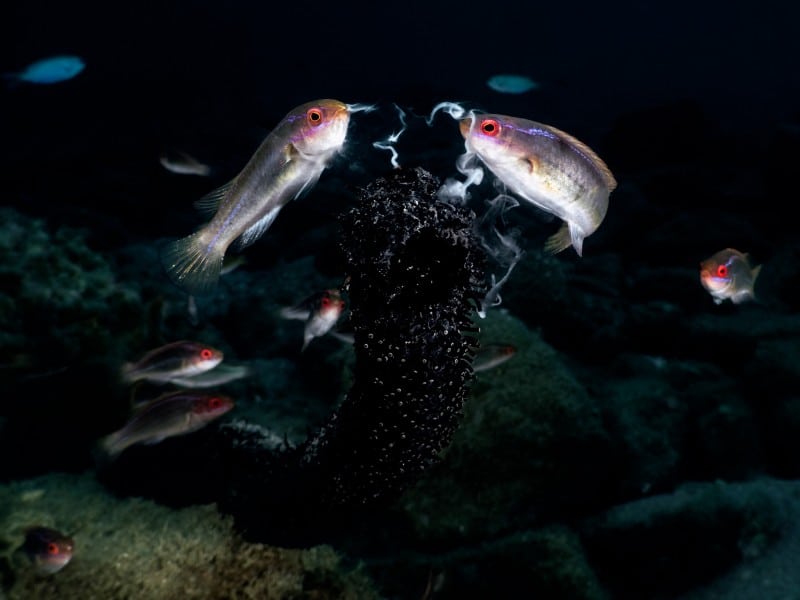
Marine creatures will do almost anything for a meal—including feasting on the sperm and eggs of spawning invertebrates.
The Art of the Catch
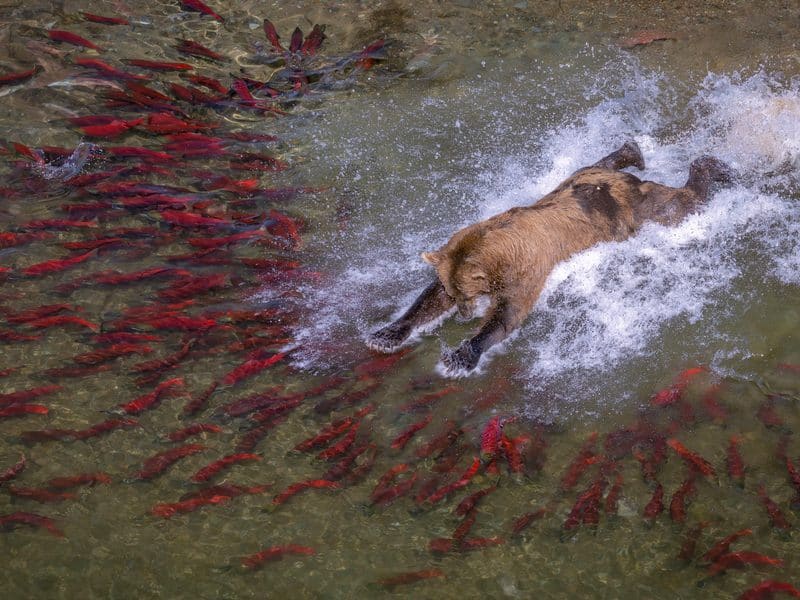
To bulk up for winter hibernation, Alaska’s brown bears employ a range of techniques for snaring salmon.
The Wonder of a Pale Whale
A curious calf with an atypical birthday suit is a good sign for southern right whales.