
The Wonder of a Pale Whale
A curious calf with an atypical birthday suit is a good sign for southern right whales.
Photograph by Tui De Roy

In Golfo Nuevo, Argentina, a young southern right whale (Eubalaena australis) sidles up to Tui De Roy’s camera for a closer look. De Roy spent several days snorkeling under permit in the shallow lagoon, where the curious newborn sometimes came so close—even nudging De Roy at times, like a behemoth baby testing the boundaries of play—that the photographer had to back up to get a decent image. The calf’s mother, who hovered nearby, “was surprisingly chill,” says De Roy.
Most southern right whales are black with white patches on their bellies or backs, but roughly five percent are born the reverse: white with black splotches. Due to genetics, the pale whales have fewer melanocytes, or melanin-producing cells in skin that give living things color. They also have smaller melanosomes, the structures inside the melanocytes where pigment is made. Over time, their luminous skin mellows to gray.
The cause of the orange crusts rimming the young whale’s eye and clustered on its head is cyamids, or “whale lice.” These particular lice are found only on southern right whales and attach themselves to calves almost from birth. They colonize callosities—rough patches of skin akin to calluses on our hands and feet that the whales are born with—and eventually accumulate in great mounds. The lice don’t seem to harm healthy whales and benefit from a constant source of food—whale skin—and a secure, if mobile, home.
And southern right whales are mobile indeed. Golfo Nuevo is one of three bays along Península Valdés that southern right whales migrate to in the austral winter to give birth and mate. Pregnant females begin arriving around May, and calves are born from June through October. Then the whales travel to zooplankton-rich summer feeding grounds in the South Atlantic and Southern Oceans. It’s an extraordinary journey for food. A recent study tracked a satellite-tagged mother and her calf traveling 18,087 kilometers (11,239 miles) over six months from Península Valdés and back again.
As of 2009, the circumpolar population of southern right whales, which includes animals from Argentina, Australia, and South Africa, was about 13,600. That’s down from an estimated pre-whaling high of over 70,000. That this species survives at all is a conservation success story. Their name has literal roots—beginning in the 1700s, whalers declared them the “right whale” to hunt. When rendered, the whales’ thick blubber produced high quality oil, and lots of it. And the animals traveled slowly, close to shore, and floated when dead. By the 1920s, just 300 or so southern right whales remained; they were finally protected internationally in 1935.
Threats are ever-present: vessel strikes, entanglement, illegal whaling, and even kelp gulls that peck skin and blubber off the whales’ backs, which can fatally wound juveniles. Although the 2009 analysis estimated that the population was growing at about 7 percent a year, more recent research shows that increase slowing, likely because impacts from climate change are affecting food availability.
Every new individual that joins the population, like this curious baby, is a cause for celebration. As it nurses on blubber-building milk—cetacean milk is about 30 to 50 percent fat—the calf will grow from just under a metric ton at birth to a whopping 6 metric tons or more at three months, packing on 150 kilograms (330 pounds) every day during the first few weeks of life. Such growth may seem larger than life, but it’s a small step toward rebuilding the population, one whale at a time.

Hi, I’m Dave, the executive director of bioGraphic. (And that’s my dog, Finn.) Thanks for taking the time to read this story.
Stories like this simply don’t get produced without financial support from readers like you. bioGraphic is not backed by a private company or owned by a billionaire. It’s an independent, nonprofit magazine. And one-quarter of our annual budget comes directly from reader donations.
We need your support more than ever, as governments slash funding for conservation and scientific research, placing even more ecosystems and wildlife at risk around the world. At bioGraphic, we’re steadfastly shining a light on the threats to our planet’s incredible biodiversity. And we’re showcasing the hard work of people bravely taking action to protect at-risk species.
bioGraphic publishes environmental reporting that you can’t find anywhere else: deeply researched, trustworthy stories that are also beautiful and captivating to read. We offer an antidote to reader apathy and doom-and-gloom news by revealing the wonders of the natural world and focusing on real solutions to big problems. When you finish a bioGraphic story, we want to leave you feeling informed, delighted, and inspired.
We don’t run ads or hide our stories behind a paywall. The readers who generously support bioGraphic allow our work to remain free for everyone.
Will you help us keep telling these crucial stories?

Authors


Related Articles
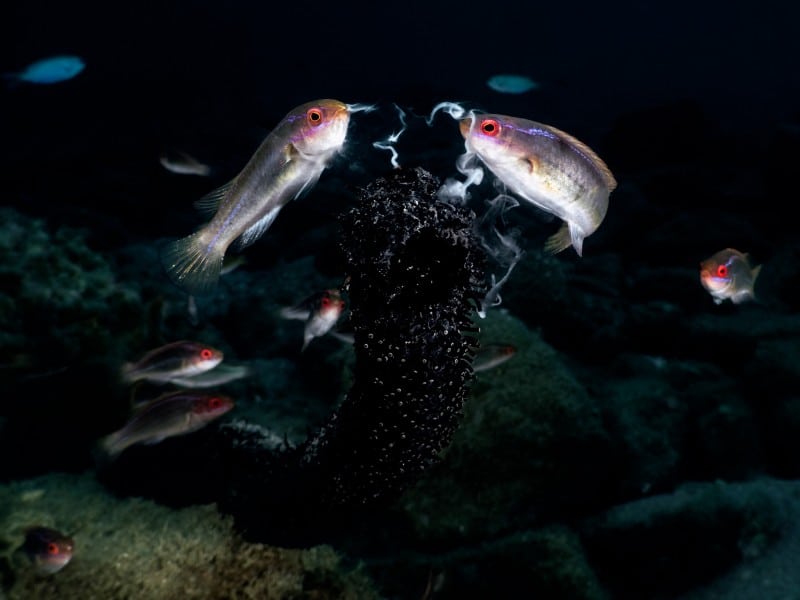
Milt Meal
Marine creatures will do almost anything for a meal—including feasting on the sperm and eggs of spawning invertebrates.
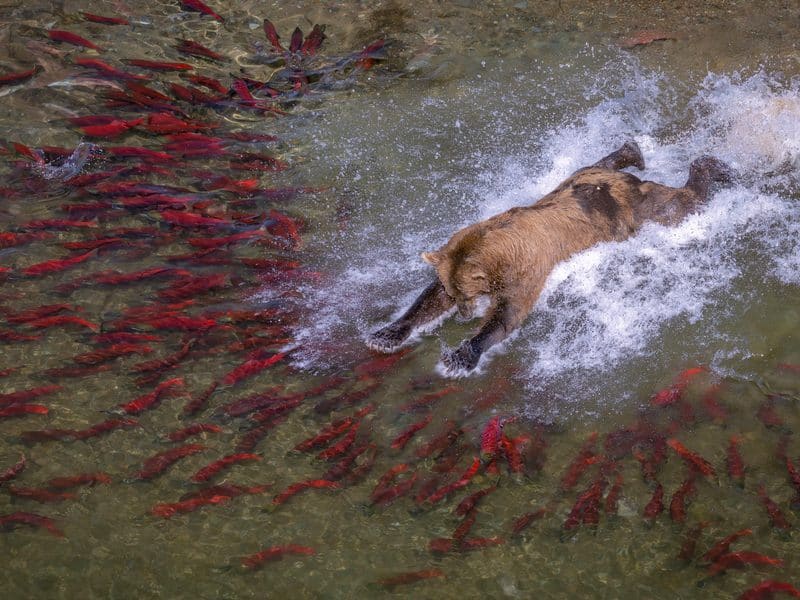
The Art of the Catch
To bulk up for winter hibernation, Alaska’s brown bears employ a range of techniques for snaring salmon.
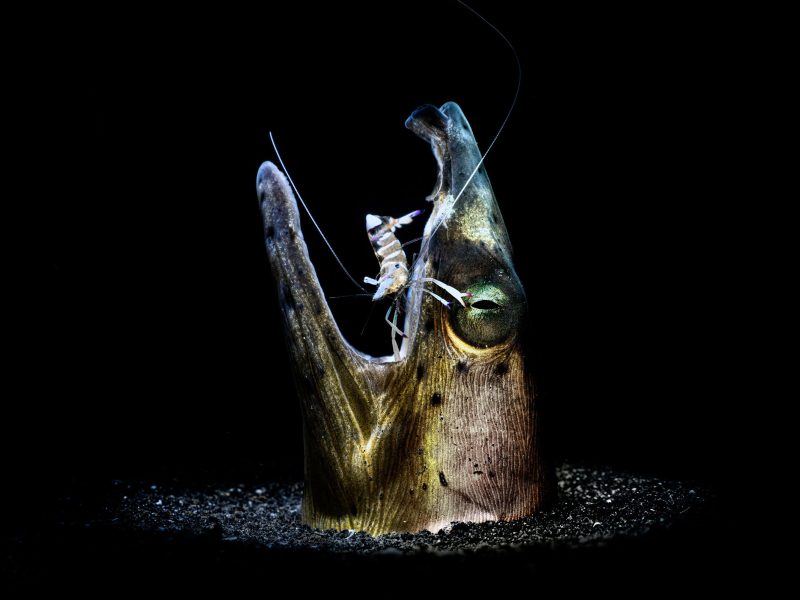
Saying “Ah!” at the Shrimp Spa
On coral reefs, an army of tiny cleaners eat their clients’ parasites, food particles, and dead skin, boosting biodiversity in the process.