
This story was supported by a reporting grant from the Institute for Journalism & Natural Resources.
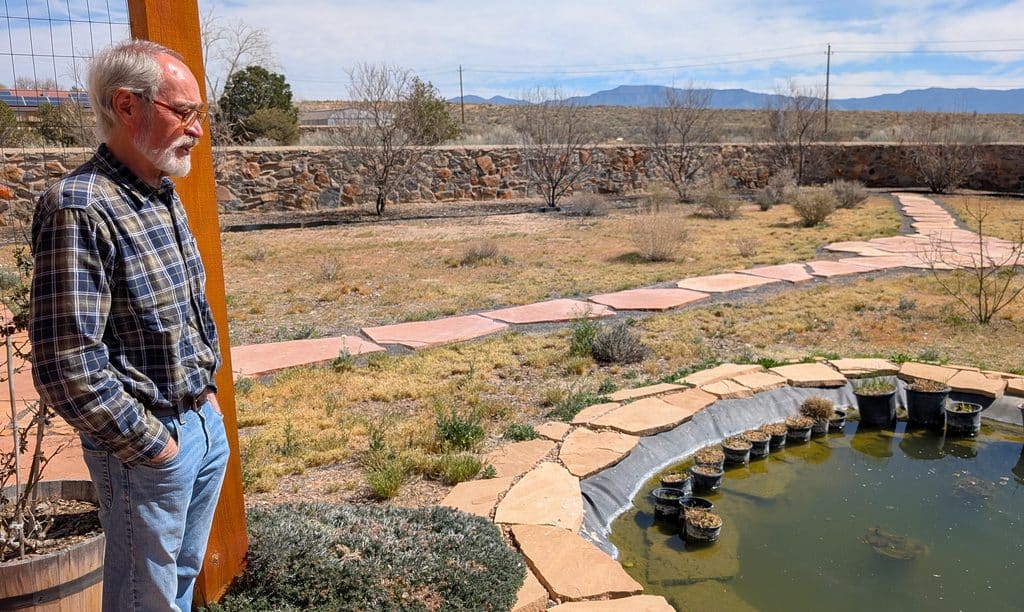
Douglas Tave likes to tell anyone who asks that there’s nothing special about the fish he has spent 20 years trying to save. “There is nothing special about the silvery minnow,” Tave repeats to me from the brown leather recliner in his desert home outside Albuquerque, New Mexico. “We get this question all the time.”
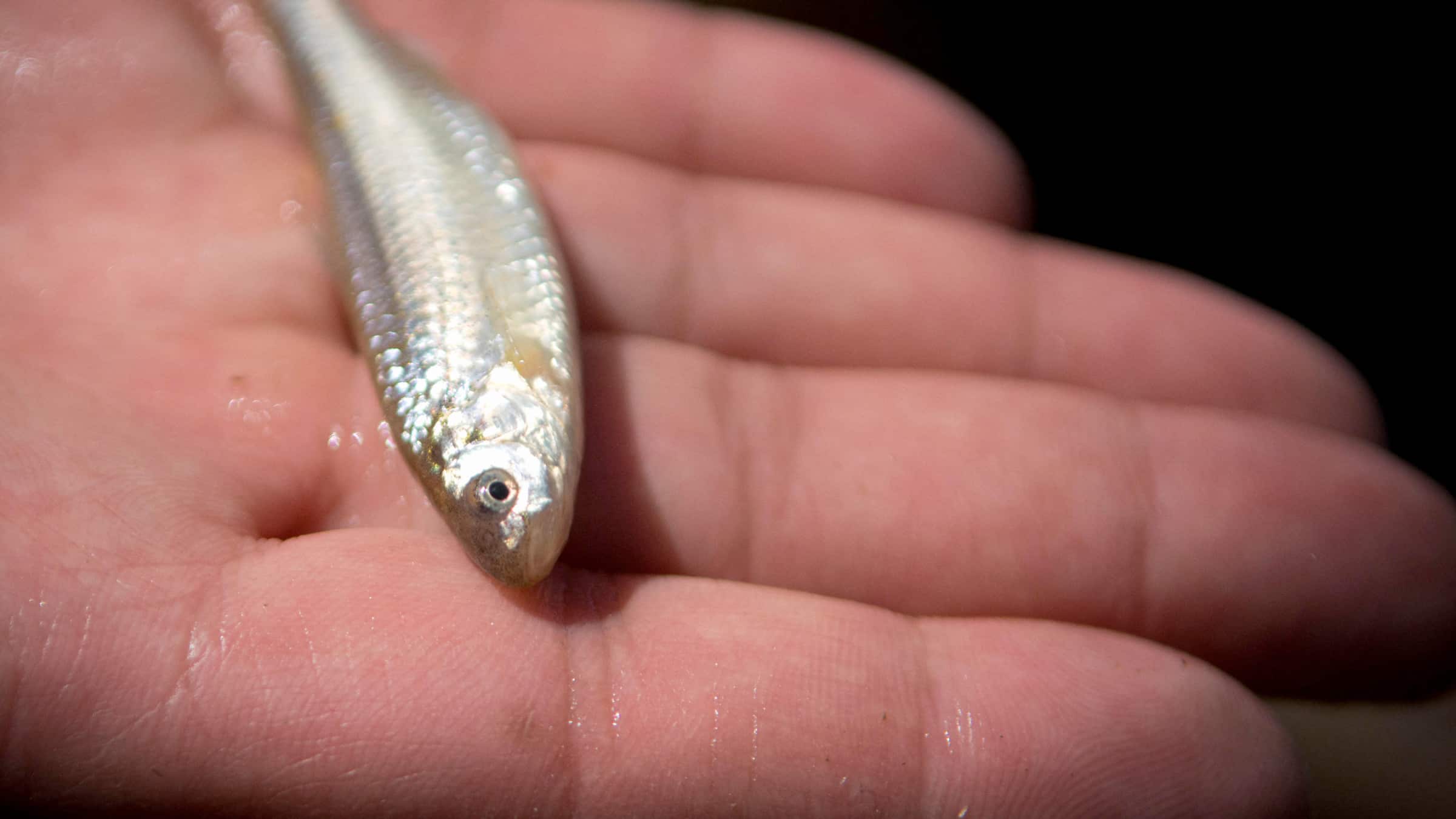
The Rio Grande silvery minnow (Hybognathus amarus) is a freshwater fish about the length of your pinky that has been stalled on the federal endangered species list since 1994. It is neither a symbiotic partner of another creature, nor an ecologically important parasite. It is not an apex predator in the river. Nor is it an irreplaceable prey. The silvery minnow isn’t even the only fish of its size in the Middle Rio Grande watershed, Tave tells me matter-of-factly. And it sure as hell isn’t the only endangered species there either. The New Mexico meadow jumping mouse, the southwestern willow flycatcher, and the Mexican wolf have all historically dwindled in the Albuquerque area. But Tave is a fish aquaculturist. He has studied fish hatcheries since the 1980s. And beneath the nonchalance is a rebellious humor seasoned by decades of championing controversial scientific ideas in state government.
“All you do is write papers that cause trouble!” someone once told him. That comment turned into the epigraph of a textbook he wrote called Conservation Aquaculture. “That’s the whole point of doing science,” he says. “It rocks the boat. It makes people think differently.” Now, he hopes that same mentality can help him nudge this unremarkable fish—and others like it—off of endangered species lists. And he aims to do so via a realization that’s only gained traction over the past decade or two: Fish can acquire the knowledge for how best to survive in a human-altered world. We just have to let them.
There may not be much that’s special about the silvery minnow, but they are tenacious. Close to 20 species of similar minnows once swam the Great Plains rivers, which includes the Rio Grande. For at least the past 50 years, the fish have suffocated under the twin pressures of drought and development. The phantom shiner and bluntnose shiner went extinct last century. The silvery minnow is hanging on.
The minnow’s endangered listing immediately sparked a long legal battle between New Mexico and the federal government. State officials worried that federal intervention to save the fish would cut the amount of water available for farms and cities, so they proposed funding silvery minnow conservation themselves. This is where the fish’s story gets interesting.
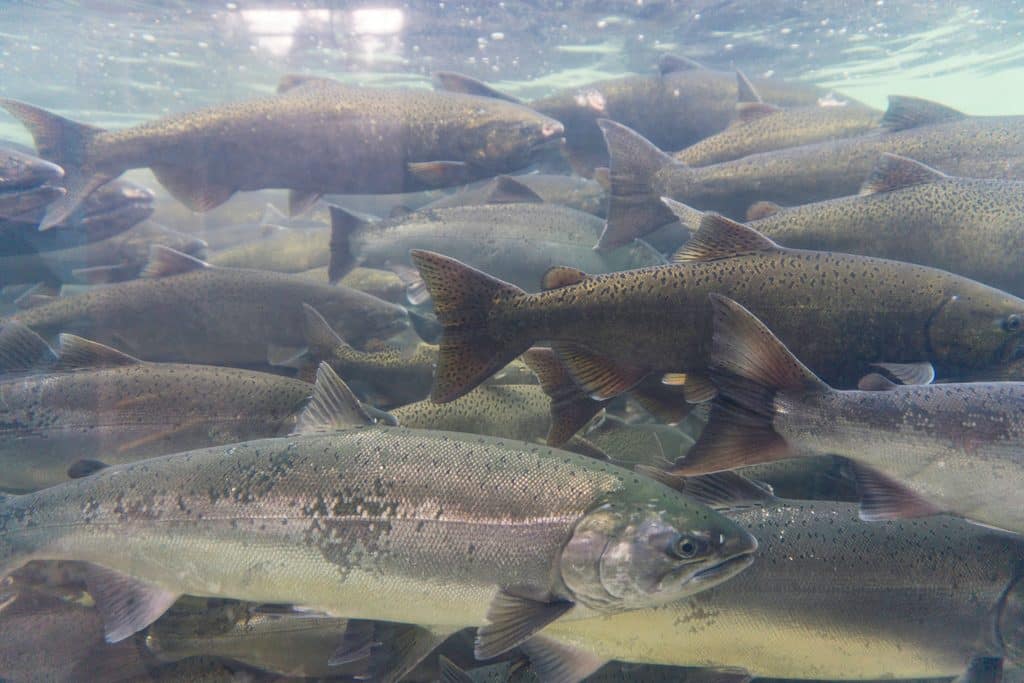
When wild fish populations dwindle, the standard recourse is to breed more in a hatchery and then restock rivers with truckloads of captive-raised fish. This is how governments replenish salmon and trout by the billions. It’s conservation as a numbers game. But over the past few decades, researchers have learned that numbers lie. Agencies spend millions of dollars breeding fish, but sometimes fewer than one in 20 hatchery fish survive after they’re released into the wild.
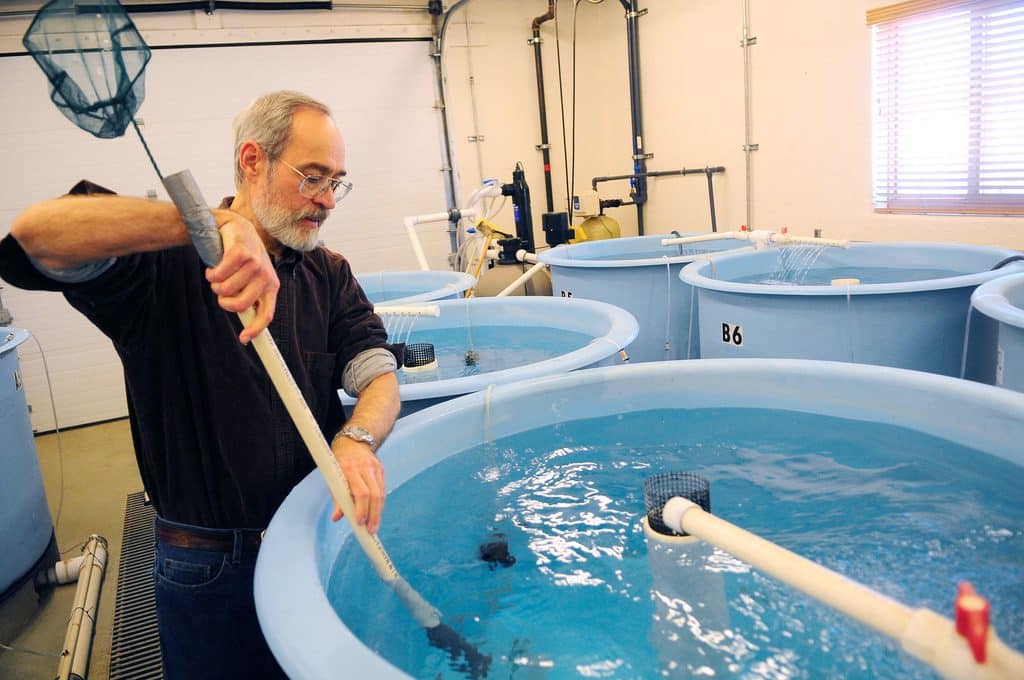
“We don’t raise other animals on a farm and then reintroduce them into the wild as if they are wild animals,” says Alison Hutson, who has comanaged the silvery minnow program for New Mexico’s Interstate Stream Commission with Tave since 2014, until he retired in 2021. Yet for fish, people seem to assume that they retain some innate survival skills, even in an environment that seems almost custom designed to make them duller, dumber, and unfit for the challenges of life in the wild.
In traditional hatcheries, fish are packed together and fed all the food they need, in an environment free of predators. “Your goal is to have a high survival rate,” Tave says. “And that causes all kinds of domestication issues.” The fishes’ bodies and brains change shape. Once released, they often don’t know how to eat or how to not get eaten. They have no street smarts.
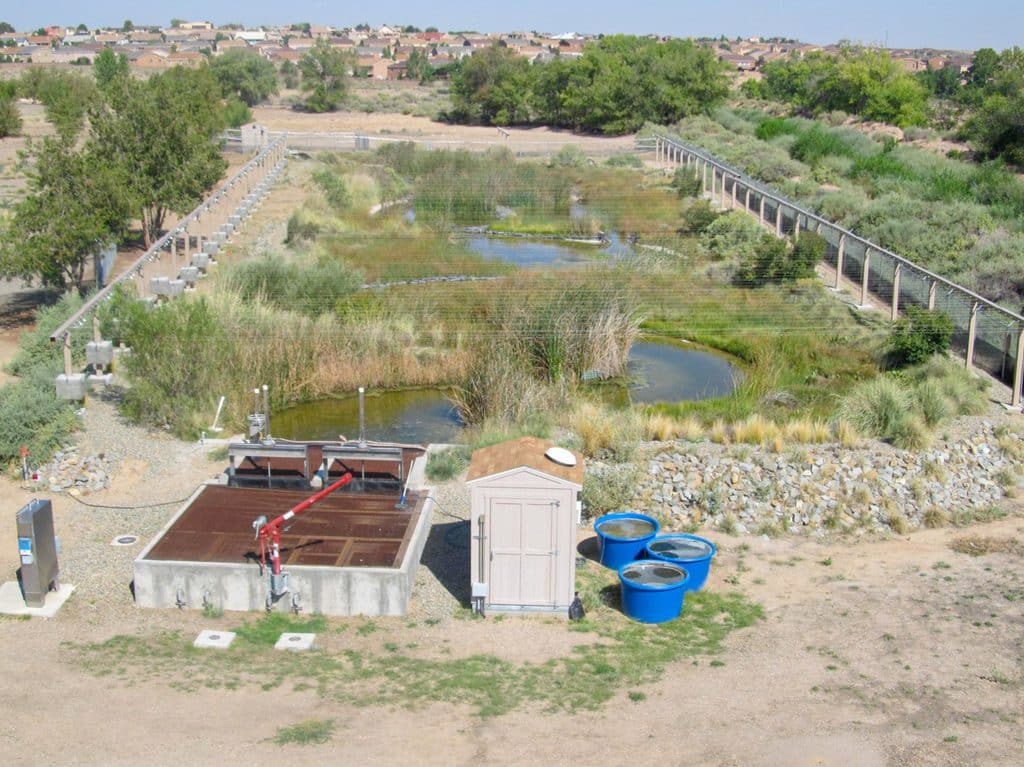
So 20 years ago, on a small desert lot in the nearby town of Los Lunas, Tave and a small team dug a channel into the pale earth and planted native marsh plants around the dry depressions of five ponds. The meandering waterway that winds 140 meters (460 feet), connecting the ponds, is designed to mimic the nearby Rio Grande River, the silvery minnow’s habitat. The simulated river—which holds about as much water as 15 backyard swimming pools—would be a second camp and an experimental hatchery for the endangered fish. It cost US $1.7 million to design and build; it’s the only known hatchery of its kind that replicates a natural river and is dedicated to saving the silvery minnow.
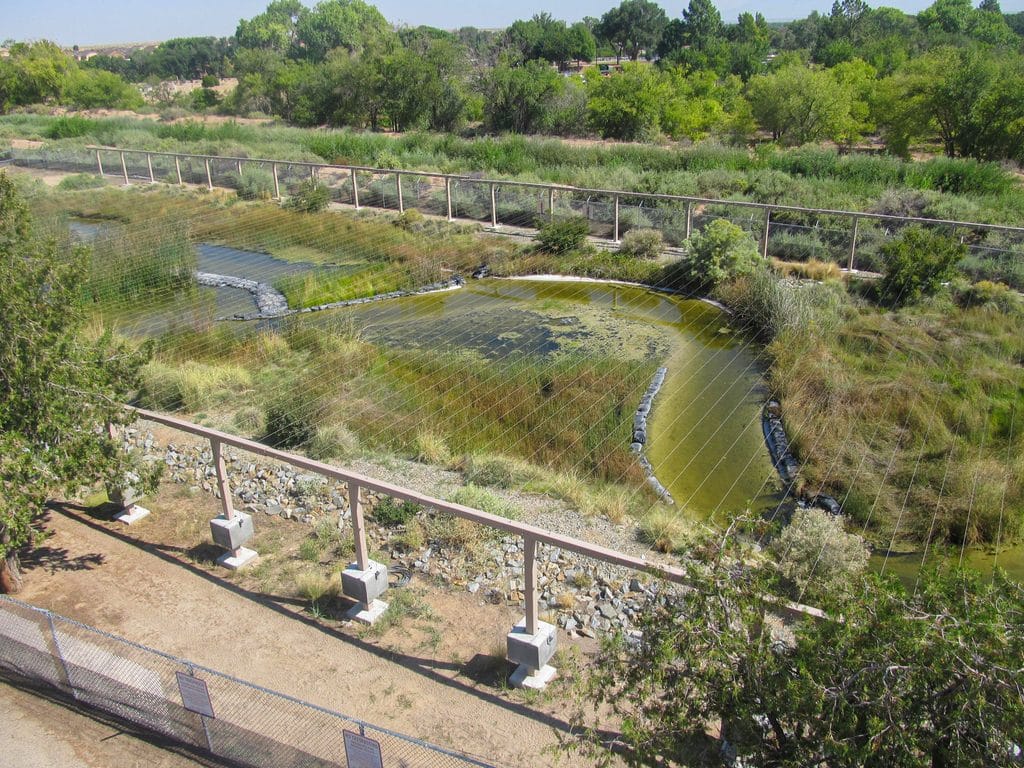
Tave built the hatchery with the Interstate Stream Commission based on ideas he had read in scientific papers about naturalistic fish rearing. Ideas based on ecology and evolution “that were so inherently sensible.” After construction was completed, Tave hired Hutson straight out of graduate school to help manage the project: a “refugium,” where silvery minnows could develop in captivity just as they would in the wild. While traditional hatcheries raise fish in plastic tanks or concrete vats, Tave and Hutson’s refugium promised native vegetation, a wild diet, and a snaking, dynamic aquatic world. The first silvery minnows entered its ponds and stream in 2010.
This is part of a quiet revolution in fish conservation that’s happening not just in New Mexico but across the continent. As scientists uncover why captivity makes fish too stressed, too bold, too helpless, and too trusting, each pearl of wisdom is helping them craft better environments in which to raise captive fish to avoid such dysfunction. The Los Lunas refugium was borne from this unlearning.
Most hatchery environments differ starkly from the wild sights, smells, and social structures fish evolved to inhabit, says Christopher Kopack, a biologist with the Washington Department of Fish and Wildlife who while at Colorado State University studied how hatchery environments affect the brains of fish. The refugium is different, Kopack says: “It actually mimics a real river. … It’s really cool.”
The quest to prioritize fish quality over quantity is not without obstacles. But progress is helping make a new case for how to rescue fish that face extinction.
Photograph by ZUMA Press/Alamy Stock Photo
Around the same time that Tave built the silvery minnow refugium in New Mexico, new research from Oregon was challenging how endangered steelhead trout and other salmonids were managed. State fisheries managers had wondered for years whether hatcheries eroded the fitness of these fish, “but nobody had ever really tested it,” says Mike Blouin, the evolutionary biologist who led a 2007 study on the issue. The team had cataloged adult trout swimming to a dam on the Hood River and found that fewer descendants of captive-bred trout made it to the dam than expected. They estimated, based on years of DNA data, that steelheads born and raised in captivity were about 40 percent less likely to reproduce than their wild kin. The carefree environment meant to save them seemed to sabotage them.
“Pretty much everything domesticates when you start raising it in the human environment,” Blouin says. “When it comes to fish, it just happens blisteringly fast.”
Hatcheries favor the bold. Fish who thrive in captivity are those who quickly pounce on the pellets and flakes that hatchery fish are fed. “But in the wild that gets you eaten,” Blouin says. Wild fish need to know when to cower, how to forage cleverly for insects and other live prey, and how to avoid predators.
Culum Brown, an expert on fish intelligence at Macquarie University in Australia, points out another alarming maladaptive behavior. “When you look at the stomach contents of many of these fishes when they’re released, they’re going around eating stones and things that look like the artificial pellets that they’ve been exposed to from a young age,” he says. “And when they see live food, they’re actually scared of it.”
Brown has studied how fish learn—both individually and in groups—since the 1990s. In 2003, he demonstrated that Atlantic salmon will target live prey deep underwater just by observing fellow salmon through a clear acrylic wall. His work in the United Kingdom, Finland, Canada, Japan, and other countries has infused wild knowledge, like the fear of predators, into captive fish in the hope that they’ll survive after release, an approach known as “life skills training.”
People tend to think of fish as “little floating pretty things” to watch in an aquarium or home fish tank, Brown says. “But, just like a cat or a dog, if you spent the time, you can train your guppies.”
Blouin’s steelhead research came at a time when biologists were awakening to long overlooked complexities of fish behavior. Brown’s life skills training spread ideas of fish cognition into fish management, and early concepts of a conservation hatchery meandered into the imaginations of Tave, Hutson, and other biologists. As each raise their local endangered species to try to save them, they reckon with the indelible fingerprints that captivity stamps into each fish’s biology. The sights, smells, and surroundings of captivity are known to morph individual fish’s bodies and brains—in some cases leading fish to develop smaller brains than they would in their more complex native habitats.
Photograph by Douglas Tave, used with permission of the New Mexico Interstate Stream Commission
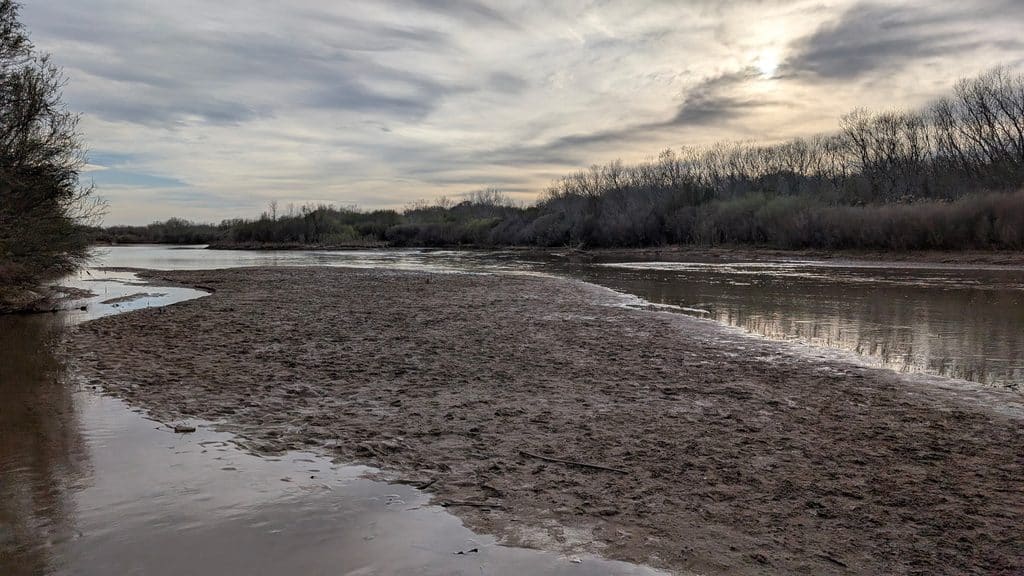
The Middle Rio Grande cuts straight through Los Lunas as it rushes south from the Cochiti dam above Albuquerque to the Chihuahuan Desert. When I arrive—on a blinding 32-degrees-Celsius (90-degrees-Fahrenheit) day in March—the river sulked halfway beneath its usual level.
“This is not the time when we usually get drier,” Hutson tells me upon meeting in her cottage-like office beside the refugium, wearing transition lenses and a large visor.
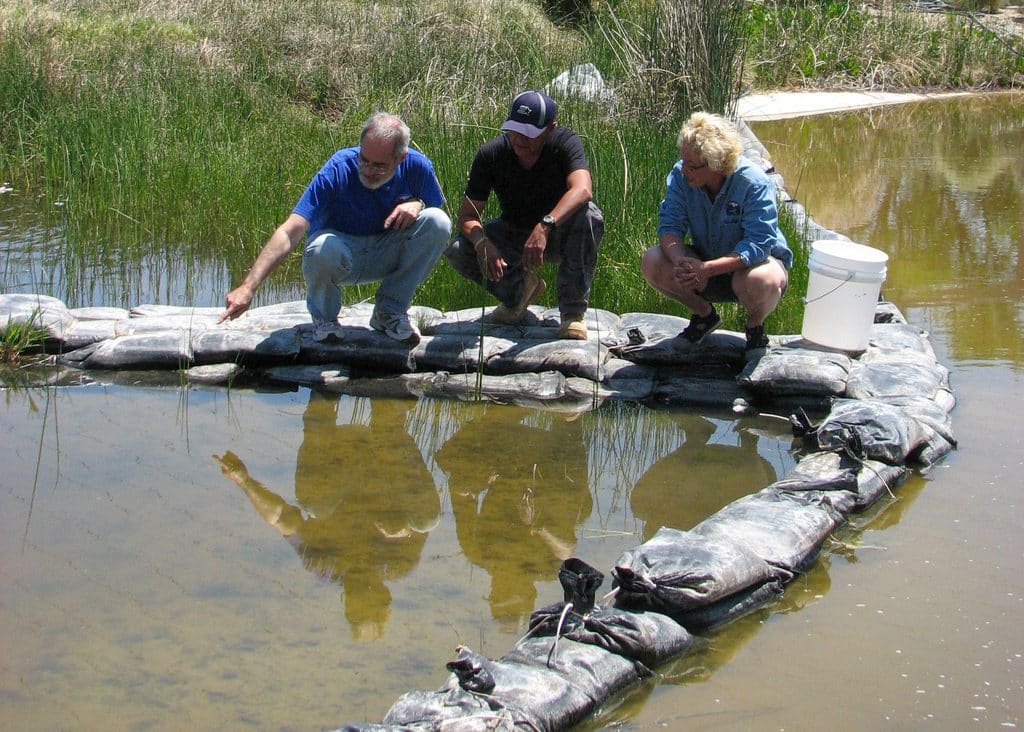
The replica river has been empty since November. Hutson has spent the winter and spring offseason yanking cattails and other plants that have grown in the dry riverbed in advance of the team refilling the river and repopulating it with the juveniles of adult fish that were raised from eggs collected in the wild. As we walk the perimeter of the silvery minnows’ summer camp, Hutson points out special features: grasses; microalgae (the silvery minnows native choice of food); “and then these wires up here.”
The team installed thick metal wires across the width of the refugium to protect their endangered minnows from great blue herons, which treat hatcheries like buffets. The coddling ends there, though. Overhead wires don’t shield the fish from smaller predators, like the belted kingfisher, so this design helps preserve the silvery minnows’ healthy fear of predators. When a kingfisher perches on the wires overhead, the silvery minnows swim away. Sometimes they clear out from 20 percent of the refugium’s length to avoid swimming beneath just one looming bird, Tave and Hutson reported in 2018.
Fish will quickly glean all sorts of information from each other, says Matthew Lovett-Barron, a University of California, San Diego neurobiologist who works with schooling fish. Fish infer danger. “If I see everyone running down a city street in one direction,” he says. “I don’t have to see Godzilla myself.”
Brown’s behavioral experiments have also trained fish to fear predators through their sense of smell. He has paired extracts from fish skin—which contains odors that trigger innate fear—with a neutral cue that the fish learn to associate with danger.
Without such training, fish may remain helplessly naive. When fed flakes and raised in traditional tanks, for instance, silvery minnows swim willingly to the surface. They even swim to human fingers, expecting food. But in the refugium, silvery minnows graze near the bottom as they do in the Rio Grande, rarely skimming the surface. “I would stand with my back to the sun, and use my hands to make a bird shadow go across the school. And the school would explode,” Tave says. When startled by human presence, a school of 400 young minnows would dart for cover in the shallow waters beside native sedge and rush.
What Tave and Hutson’s work has shown is that raising captive fish in a naturalized environment encourages complex behaviors, like foraging and social interaction that fish use to survive. Refugium-raised fish, for instance, learn to coordinate to swim in groups over a barrier, a fish trick that confers hydrodynamic advantage in a real river. The Los Lunas project has demonstrated that minnows retain innate behaviors, but that these traits atrophy if a hatchery ignores them. The team doesn’t have long-term tracking data showing that retaining wild-like behaviors significantly boosts fish survival. But Tave and Hutson both remain confident that their approach works. It just makes sense.
“In all these conservation programs, they wipe out thousands or even millions of years of ecology and evolution in one captive breeding program,” says Trevor Pitcher, an evolutionary ecologist at the University of Windsor in Ontario. Wildlife managers typically fixated on the number of fish a hatchery produces, but “nobody seemed to care about quality.”
Pitcher, like Tave and Hutson, does care about quality. He studies salmon and lake sturgeon, and is an expert on redside dace, a small, endangered freshwater fish native to southern Ontario and parts of the north-central United States. Once iconic, and numerous, only remnant populations survive in Ontario’s urban streams. For 15 years, Pitcher has raised redside dace in his lab in hopes of one day helping them repopulate their native waters. And for 15 years, he and his team have learned how to do that without stripping captive fish of their survival skills. Those skills begin at the mating stage. Early in his career, the “mating” process at salmon hatcheries disturbed him: Humans squeezed sperm from a few select males onto eggs collected from females—far from natural mate choice. The practice taught him what not to do with redside dace.
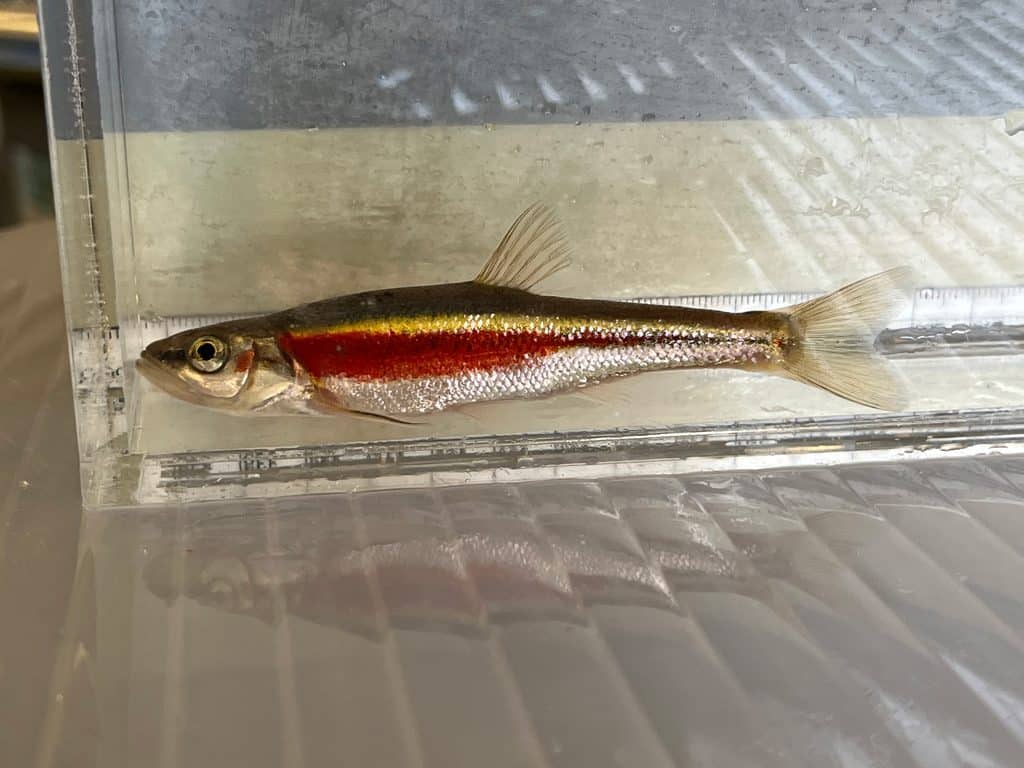
Redside dace have charmingly wide eyes and upturned mouths. They sometimes develop deep burgundy scales with an iridescent gold stripe. “If they lived in the Amazon, [David] Attenborough would have done a documentary on them already. But they have the misfortune of living in Ohio and Toronto,” says Andy Turko, a fish biologist with the University of Guelph in Ontario and a former postdoc in Pitcher’s lab. Also, dace only flash their brightest color when it’s time to mate. And for many years, nobody knew how to get these little fish in the mood.
As with silvery minnows, Pitcher realized that redside dace need time around other species, something they only experience in the wild. Pitcher couldn’t even get the fish to breed without another species nearby, because the procreation strategy of redside dace is to hijack the nests of a larger, plentiful minnow, called the creek chub.
So his team also bred the creek chub in the dace tanks, but that wasn’t arousing enough, so to speak. Week after week, Pitcher’s student Ashley Watt tuned the tank conditions, dialing the temperature up and down, tinkering with the lights, “trying to infuse mother nature back into the captive training,” Pitcher says.
Then in 2022, four years after Watt’s first attempts, her tinkering paid off in the form of a bright crimson band. One or two dace males swam beside a larger and darker female. The three paused. In an instant, the fish simultaneously ejected their sexual ambitions into the gravel beneath: a microscopic downpour of eggs and sperm. For the first time ever, endangered redside dace were conceived naturally in captivity. “It’s the first time I ever saw tears in my grad student’s eyes after four years of trying,” Pitcher says. Over the next five years, he and his team will use these lessons to help the Canadian government begin reintroducing redside dace to streams outside of Toronto.
The libidinous dace—like the fearful silvery minnows—revealed a beacon of wild wisdom. In the process of capturing these wild quirks in captivity, scientists are finding new lessons that may help save these fish and other species.
Video by Ashley Watt
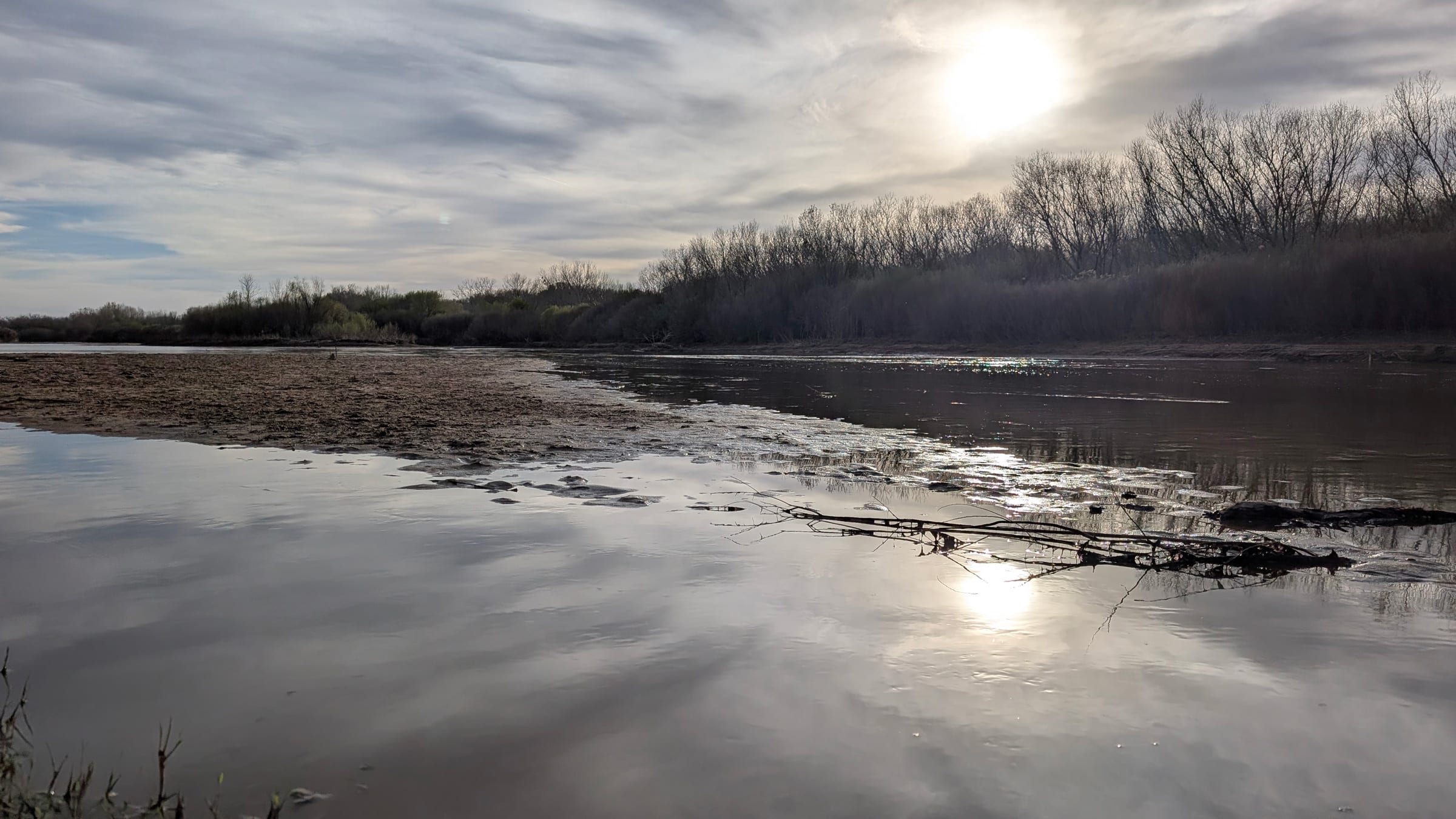
Silvery minnows need such lessons to survive in pockets of the river that even their most meticulous human guardians cannot control. Before leaving the refugium, Hutson recommends that I visit a spot nearby to observe the actual Rio Grande. Just a short drive away, the river snakes beneath an overpass marking the original path of the historic Route 66. An overgrown trail leads through cottonwood trees from the parking lot of Riverside Park to a riverbank dense with gummy silt that molds around my feet like plaster.
It reminds me of something that Tave told me over the phone before I traveled here, about how silvery minnows dive into the mud to avoid getting caught. “Let me tell you, these guys are Houdinis,” he says. Some people claim that they burrow down to wait out dry spells, then reemerge. It’s a myth, but silvery minnows do live their lives according to the river’s rhythms.
Much of this region used to flood with regularity. Not anymore. A century ago, the government began to tamp down the river’s natural dynamism with dams, fearing the destruction that floods can bring. Levees disconnected the river from floodplains without anyone knowing how that might affect its aquatic life.
In the early 2010s, government fish managers approached Tave and his team at the refugium with a request: Can you figure out where silvery minnows spawn? Biologists were debating: Do the minnows lay eggs in the always-wet path of the stream, or in floodplains that come and go? Tave and Hutson were uniquely equipped to test both cases since they could inundate the refugium on demand and create floodplain conditions.
They were stunned by how clear their results were: Silvery minnows preferred to spawn in the pseudo-floodplains. Tave and Hutson repeated their experiment the following year and found the same effect.
“We were dancing around like a couple of little kids out there,” Tave recalls. “We were so happy.”
When the thrill of discovery faded, an unnerving aftertaste surfaced. The results suggested one of the reasons this fish is endangered is the erasure of floodplains and destroyed habitat. “What’s so important about the Rio Grande silvery minnow? Nothing. They’re not important,” Tave repeated again. “What they are is the proverbial canary in the coal mine. The fact that they’re in danger tells us something is wrong with the river.”
Each endangered fish faces a unique story. But habitat loss has emerged as a theme for Ontario’s redside dace, as well.
The collapse of redside dace in Ontario is a crisis of many culprits. One theory was that winter road salt was making streams too salty. But experiments exposing redside dace to saltier waters didn’t yield evidence to back that up. What about heat? Stream temperatures in and around Toronto have crept higher with climate change, urban heat island effects, and a void of native vegetation and shade. Yet water temperature alone was “far from a smoking gun” in experiments, Turko says. Instead, he thinks a confluence of water conditions and structural changes may be what’s lethal. Urban development can gum up nesting sites and winter refuges, or straighten natural stream bends that support the lives of little fishes.
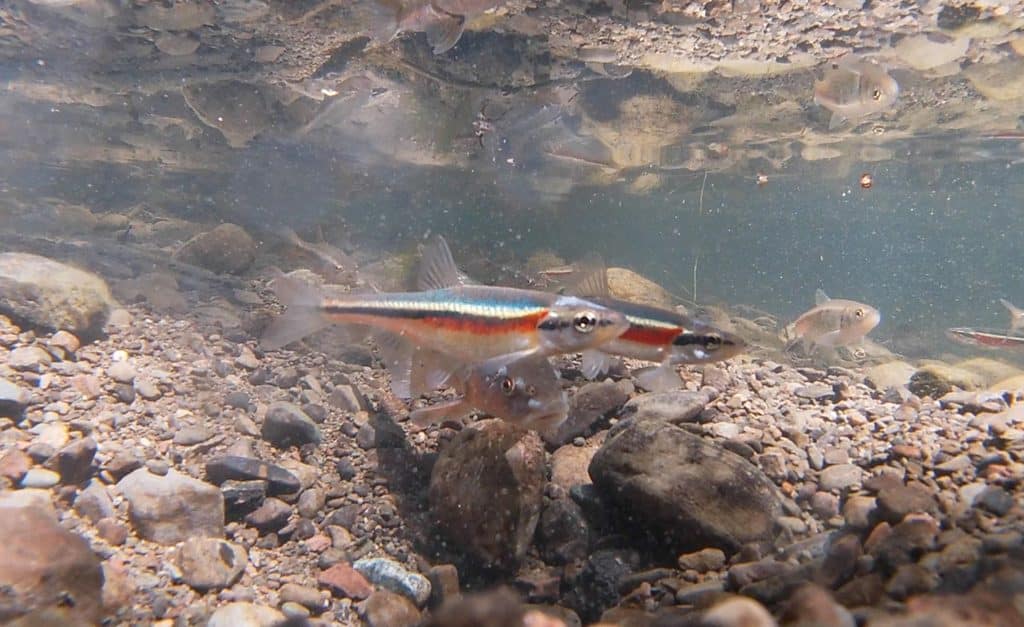
With both redside dace and silvery minnows, studies in captivity are helping blueprint how to sustain the fish by sustaining their habitat. Restoring floodplains can help silvery minnows spawn; restoring natural vegetation protects valuable mustering points. In Ontario, stormwater ponds retain runoff similarly to floodplains, keeping streams from getting too hot, too dirty, and too disturbed by a large rush of water. Turko also imagines adding woody debris to streams to keep them meandering, rather than straight.
“My dream for this is not to be releasing redside dace every year,” he says. “To get redside dace to a restored habitat and then let them do their thing.”
Doing so will require careful rearing and training, but also careful release. While visiting an Atlantic salmon hatchery, Pitcher recalls staff lamenting that birds were quickly killing restocked fish upon release. “When I looked at their fish, I said, that’s because your fish are bright green,” Pitcher says. Many fish develop to visually match their surroundings, a sort of camouflage called crypsis. Raise salmon in a green tank, they’ll appear more green. But if there’s a mismatch between their tank environment and their natural habitat, predators pick them off with ease.
When Pitcher returned to his lab, he began wallpapering salmon fish tanks with colors and scenes that match the stones and backdrop of the river where they’ll eventually be released. Going one step further, Pitcher’s team recently experimented with “soft” releasing of Atlantic salmon and lake sturgeon, where fish can acclimate in cages submerged in their new stream to minimize the shock from captivity to transport to the wild. Soft release appears to reduce that stress and may improve survival, Pitcher says, and even give salmon time to adjust their color.
When Pitcher’s team reintroduces redside dace to Ontario’s streams in five to 10 years, stocking fish won’t be enough to bring the population back. Nor will restoring their habitat. But stringing together these elements—smarter fish in a safer home—gives their team hope. And Los Lunas offers a preview of how that hope may be challenged.
Photograph by Douglas Tave, used with permission of the New Mexico Interstate Stream Commission
Although the Los Lunas team has released silvery minnows for a decade and a half, Hutson is not sure whether she’ll ever manage to prove that refugium fish survive better in the Rio Grande than those restocked from elsewhere. The fish are small, elusive, and hard to track—generally only living one or two years in the wild.
And they’re outnumbered by a standard stocking program. The refugium only produces about 10,000 fish per year. The recovery program must therefore depend on larger, more traditional hatcheries that produce at least 10 times more. In 2024, state and federal managers released 210,000 hatchery-reared silvery minnows into the river.
“Without the captive breeding and augmentation program, the silvery minnow would most likely be extinct in the wild,” says Megan Osborne, a biologist with the University of New Mexico who tracks their genetic diversity in the river. Osborne says hatcheries have prevented a catastrophic narrowing of the gene pool. Since silvery minnows time their spawning with snowmelt, wild populations collapse in dry years. Captive breeding extends a second chance to some genetic lineages that might disappear in a violent drought. But it’s a modest solution: Drought still erodes the number and diversity of fish that biologists bring into hatcheries.
Virtually all silvery minnows in the Middle Rio Grande likely have a hatchery-raised ancestor.
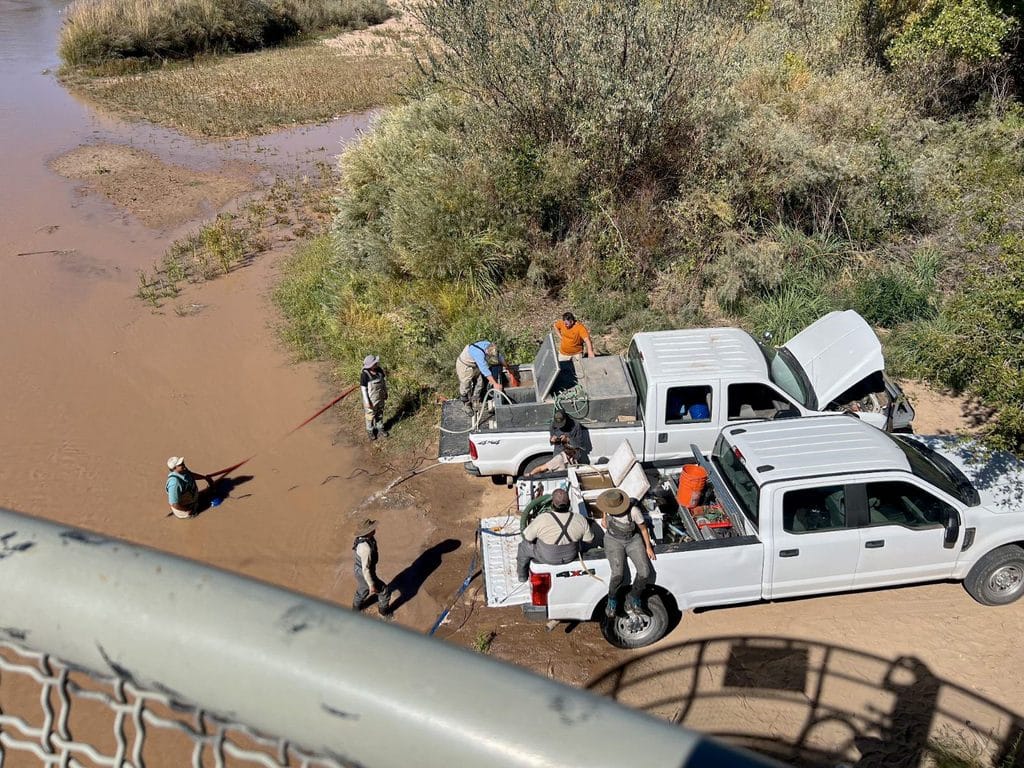
One of the other hatcheries, an environmental education center called ABQ BioPark, raises up to 50,000 minnows per year, and sometimes more. Patrick Horley, curator of aquatic conservation there, says they balance aquaculture practices that avoid domestication with producing as many healthy fish as possible. They try to retain wild traits as much as their quantities allow. Their minnows choose their own mates in groups of 10 males and 10 females, a concrete tank mimics shallow pools and faster river flow, and the fish only spend one generation in captivity.
Horley considers the Los Lunas team a valuable counterpart. Quantity remains the official priority because the Rio Grande’s water levels are so unpredictable. Last year, Horley’s team collected 46,000 wild eggs to bring into their hatchery. Some years they get none.
“It’s great to teach your fish to be wild, but there’s no teaching them how to survive when there’s no water,” Horley says, conceding that the state’s water woes will persist. He worries that droughts—more frequent and extreme in the past 20 years—will continue to decimate populations that he and others in the recovery program work hard to cultivate. “It’s hard. It’s depressing.” Climate change has made it harder for Tave and Hutson to make their case for prioritizing naturalistic hatcheries over numbers.
“Mother Nature has a wicked sense of humor. You can’t out-think Mother Nature. She changes the rules on you constantly,” Tave says. “At one point it really looked like we were going to do a good job, and then, boom, you get no water. We know what we can do to make it work. Mother Nature’s just not cooperating.”
Tave tries to not let this daunting threat sap his optimism. He hopes biologists will adapt the Los Lunas refugium’s blueprints to save—and learn from—different freshwater fish elsewhere. “We have to persevere. We don’t have any choice. This is the environment we inherited,” Tave says.
But, of course, there is a choice: whether to reckon with environmental change, or not. We can choose to believe our environment will always support us—sparing us from lethal disasters, feeding us, and providing enough water. Or we may study nature’s cues to unlearn the habits now threatening our survival. We too can learn to swim into a wild, uncertain future.
Photograph by Max Levy
Hi, I’m Dave, the executive director of bioGraphic. (And that’s my dog, Finn.) Thanks for taking the time to read this story.
Stories like this simply don’t get produced without financial support from readers like you. bioGraphic is not backed by a private company or owned by a billionaire. It’s an independent, nonprofit magazine. And one-quarter of our annual budget comes directly from reader donations.
We need your support more than ever, as governments slash funding for conservation and scientific research, placing even more ecosystems and wildlife at risk around the world. At bioGraphic, we’re steadfastly shining a light on the threats to our planet’s incredible biodiversity. And we’re showcasing the hard work of people bravely taking action to protect at-risk species.
bioGraphic publishes environmental reporting that you can’t find anywhere else: deeply researched, trustworthy stories that are also beautiful and captivating to read. We offer an antidote to reader apathy and doom-and-gloom news by revealing the wonders of the natural world and focusing on real solutions to big problems. When you finish a bioGraphic story, we want to leave you feeling informed, delighted, and inspired.
We don’t run ads or hide our stories behind a paywall. The readers who generously support bioGraphic allow our work to remain free for everyone.
Will you help us keep telling these crucial stories?

Author

Related Articles
Without USAID, Guatemala’s Forest Stewards Search for Sustainability
Communities in the Maya Biosphere Reserve are figuring out new ways to fund their work and protect their forest after losing key funding.
No Strings Attached
A new fishery in California shows how ropeless crab traps can prevent whales from becoming entangled in fishing lines.
Trial by Fire
In the burn-scarred mountains of Southern California, a team of biologists fights to help an imperiled frog.