
This story was produced by The Xylom and co-published with Dialogue Earth. It is reprinted here with permission.
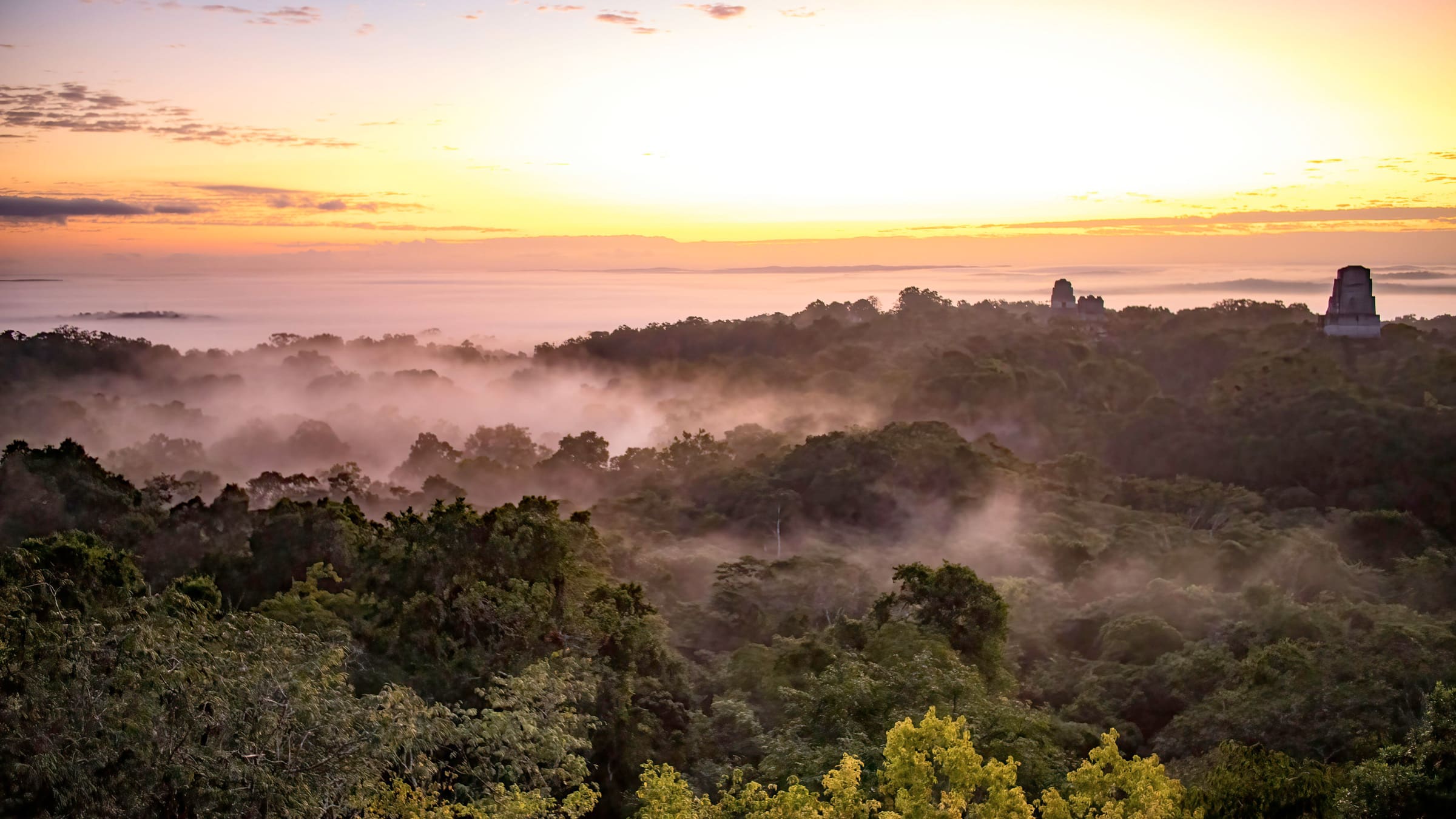
In the heart of Guatemala’s Maya Biosphere Reserve, day breaks over the village of Carmelita. Sunlight pokes through the swaying sapodilla trees as roosters begin to crow. Machetes in hand, residents head into the community forest.
Despite its humble visage, this little settlement in Petén, the northernmost department of Guatemala, has long been one of global conservation’s success stories. For over two decades, people in Carmelita have sustainably harvested timber, honey, and other forest products while managing nearly 55,000 hectares (approximately 136,000 acres) within the biosphere reserve.
Under a government agreement struck in 1994, large parts of Guatemala’s forests are leased to local communities through “community concessions” such as Carmelita. These custodians monetize forest products under a sustainable management plan created in conjunction with Guatemala’s national conservation agency, the National Council of Protected Areas (CONAP). The community concessions within the Maya Biosphere Reserve have collectively protected approximately 484,000 hectares (1.2 million acres) of ecologically important forest, while adjacent lands have been rapidly deforested.
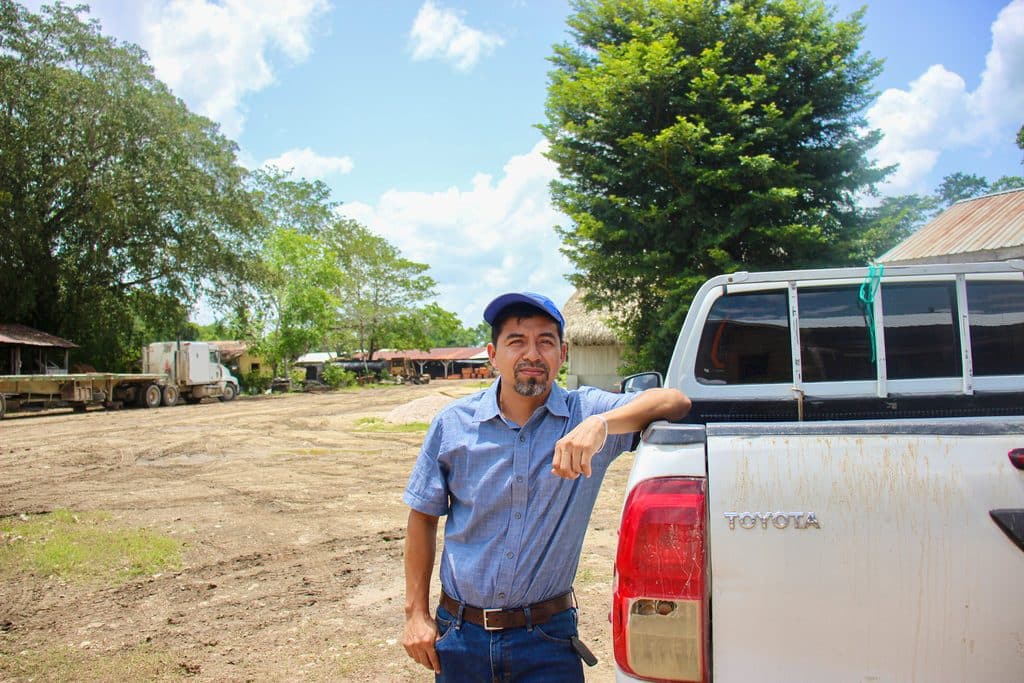
“It’s like a garden,” says Jesús Barrera, Carmelita’s legal representative. “You prune it, and it becomes more beautiful. That’s how the forest is.”
Since the Maya Biosphere Reserve was established in 1990, the United States Agency for International Development (USAID) has been a crucial constant. It has financed everything from forestry equipment and timber mills to technical assistance for mitigating wildfires.
But the conservation story has taken a troubling political turn. A month after assuming office for the second time, U.S. President Donald Trump froze nearly all international support from USAID in February 2025.
“USAID has been an important ally of the forest model since the beginning,” says Julio Javier Madrid, coordinator of the Petén Forest Communities Association (ACOFOP). “We saw that the resources reached the places where they were needed.”
There are a dozen community concessions within the reserve that have relied on international aid for decades. With USAID’s retreat and peak fire season only months away, they face an increasingly uncertain future.
Photo by Nicolas Scibelli
Fire has long been a part of the land within the reserve. Traditional forms of slash-and-burn agriculture have been practiced here across generations of Mayan civilizations for thousands of years.
But increasingly erratic dry seasons, coupled with the rapid expansion of cattle ranching across Petén over the past century, have caused forests to burn at alarming rates. Some 27,000 hectares (66,718 acres) of protected land burn in Guatemala every year on average. This number balloons during El Niño years.
“Fire has generated the most wear on us,” says Estuardo Miguel Julian Díaz, treasurer of one of the reserve’s community concessions, the Cruce a la Colorada Integrated Forestry Association. “It’s been difficult to control them.”
USAID helped build a network of government agencies, NGOs, and community concessions dedicated to tracking and preventing fires. This includes satellite monitoring, community fire patrols, centralized management of approved burns, and hundreds of kilometers of fire breaks. Experts say this has led to fewer fires occurring in community-managed areas in comparison to the reserve’s buffer zone.
“The withdrawal of USAID was [at] a very critical moment,” says CONAP coordinator Sergio Balan.
The funding disappeared after the reserve’s worst fire season in decades, when resources were already stretched exceptionally thin. Over 230,000 hectares (568,342 acres) of protected land burned in Petén in 2024.
“The state no longer had resources because that fire season was severe, and the available resources for fire prevention and firefighting had already been exhausted,” Balan says.
Illegal land invasions driven by cattle ranching have expanded in the reserve over the past year, particularly along what CONAP calls the “Carmelita route,” a degraded landscape under active restoration. Ranchers sometimes light fires to clear land for their animals.
“Before, there were many fires, but they affected relatively small areas,” Balan says. “Now land invasions have increased, and the affected territories have become much larger.”
Without the resources to counter these invasions, Balan says fires have expanded into previously unaffected areas.
The cuts have forced changes to response mechanisms. Madrid says ACOFOP now has to wait for official confirmation of a fire before deploying resources to fight it.
As El Niño strengthens ahead of January’s fire season, the reserve could face its greatest challenge yet. “Our situation now is that we have to do more with fewer resources,” says Madrid.
Photo by Nicolas Scibelli
At ACOFOP, many are unsure whether they still have jobs. In February 2025, when the U.S. halted its international aid efforts, ACOFOP’s staff salaries were being paid directly with USAID funds, Madrid explains.
ACOFOP lost around US $375,000 in annual funding, which immediately led to the cancellation of a $60,000 project involving a community honey collection center. This would have provided the reserve’s apiculturists with better access to international markets and increased revenue, according to Madrid.
Rainforest Alliance, an international NGO that supported community concessions in the reserve for decades with USAID’s support, has been hit equally hard. Since 2023, Rainforest Alliance has funded community projects through its Prosperous and Resilient Landscapes (PRL) project. USAID had allocated up to $6 million of funding to cover the project until 2028. Instead, funds expired in September 2026.
“International cooperation had always been very timely on critical issues,” says Jorge Cruz, who manages Rainforest Alliance’s Petén office.
The sudden loss of USAID funding does not ring a death knell, but some projects still rely heavily on external aid for community development and landscape restoration.
“The newer concessions definitely require more attention,” Cruz says. “They need to be strengthened; the concession model needs to be reinforced again.”
Photo by Nicolas Scibelli
In Carmelita, business is still booming.
An on-site mill and carpentry center enables the concession to sell furniture and refined wood for better prices; sales in national and international markets account for about 70 percent of the concession’s annual income.
The concession also earns income from xate, the leaves of an ornamental palm prized by international florists for bouquets and wedding decorations, as well as chicle, the raw material in chewing gum, which comes from sapodilla trees. Carmelita is also expanding its apiculture business; it currently has 138 honey-producing hives. Tourism is a revenue booster, drawing thousands of visitors every year.
“Carmelita has reached a stage where it’s self-sustaining,” Barrera says. “We have (had) ups and downs like fluctuations in timber prices, but we continue operating.”
Other concessions are still learning.
About 30 minutes down the road from Carmelita, Cruce a la Colorada Integrated Forestry Association’s (AFICC) concession has struggled with encroachment by illegal cattle ranchers and deforestation linked to land conflicts. AFICC lacks the rich mahogany reserves that help sustain Carmelita’s operations.
AFICC has focused on restoration since 2021, with most of the work funded by Rainforest Alliance’s PRL project. The funding ended in September.
“Next year will be very difficult,” says Samuel Quixchan, a Rainforest Alliance technician who works closely with AFICC. “We will only be able to continue maybe 20 percent of the work.”
AFICC is working to follow Carmelita’s model by developing alternative income streams, a process that will require sustained investment.
“Today the restoration work is fine, but [it] is going to come to an end,” says AFICC treasurer Miguel Julian. “What are the people going to do [after]?”
Photo by Nicolas Scibelli
Despite its mixed and often controversial results, can REDD+, the international carbon payments framework, offer a lifeline to the reserve?
In December 2025, the reserve’s flagship carbon reduction project, GuateCarbon, received its first REDD+ payment for 1.1 million tonnes of avoided carbon emissions through reduced deforestation. It represented a sigh of relief for communities looking to offset USAID funding cuts.
Years of red tape and legal questions over land ownership delayed the project. It took a decade after the project’s verification in 2014 for GuateCarbon to sell its first tranche of REDD+ credits in 2025. The project has yet to sell any carbon credits through voluntary markets, which would enable individuals and organizations to offset their emissions. It is an area that the project’s manager, Sergio Guzman, knows is leaving money on the table.
“It’s a success story in terms of procedures, processes, and learning,” Guzman says. “But it’s also a failed story because those voluntary standard tonnes are still sitting there.”
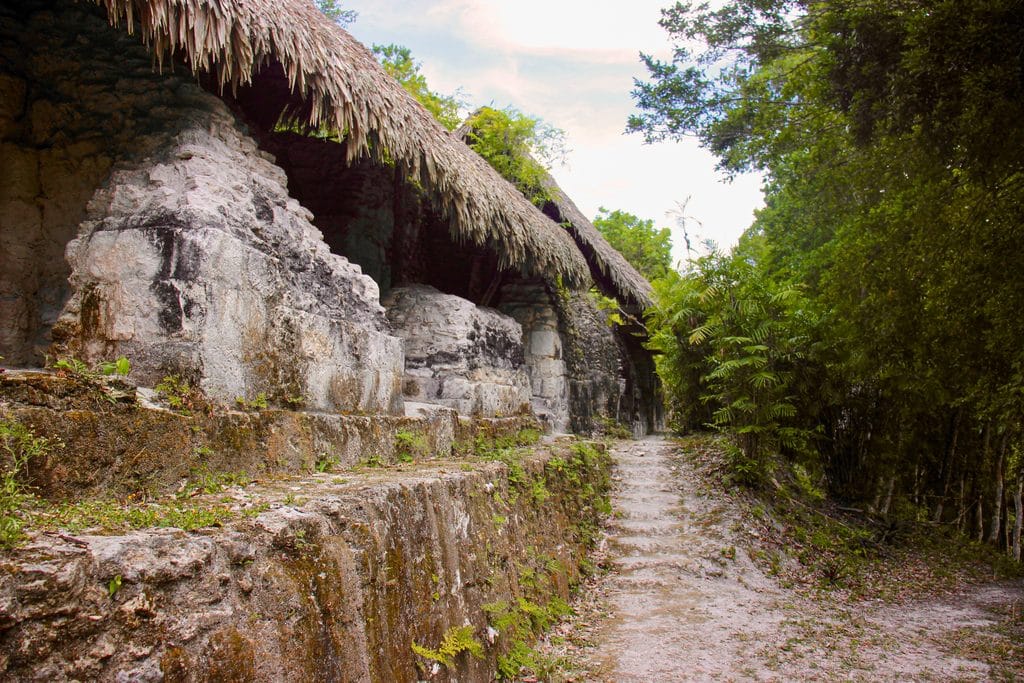
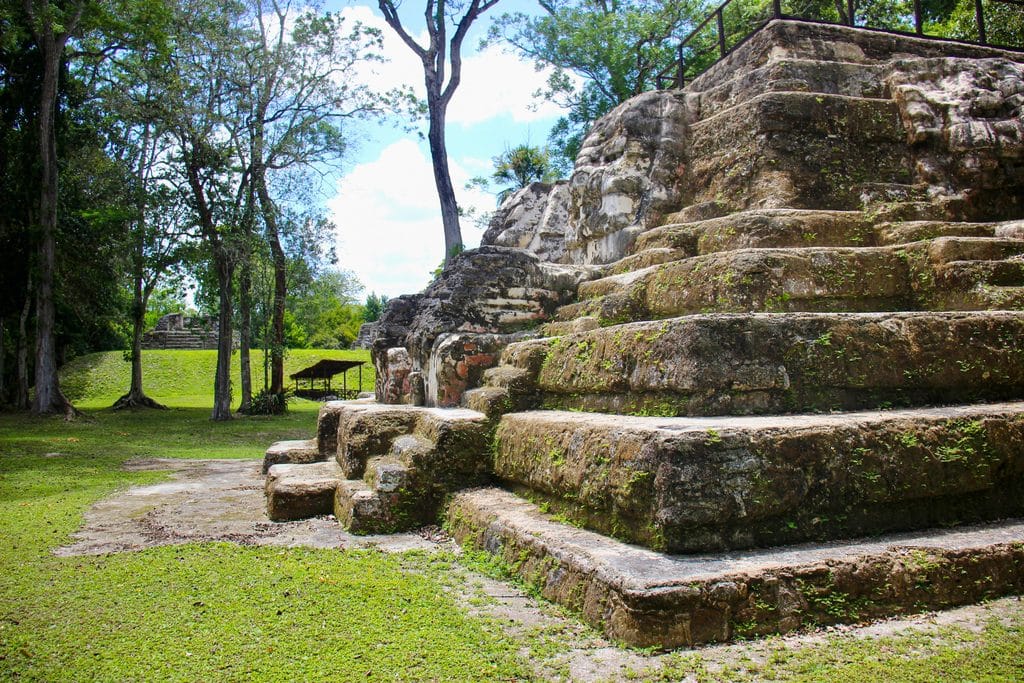
Each concession received $3.6 million from the first REDD+ tranche, channeled toward strengthening their social, production, and protection components. ACOFOP also received around $700,000 for administering the project, while the government received $1.1 million.
In Uaxactún, another concession in the reserve, its president Mavil Barrientos says GuateCarbon funds have been crucial for fire prevention, covering salaries and other expenses. AFICC used the funds to purchase an all-terrain vehicle to better monitor fires.
Unlike USAID’s contributions, however, new buyers must regularly be found for GuateCarbon’s credits, itself a difficult task involving time and negotiation.
The Maya Biosphere Reserve was created on the idea that the communities living within the forest were its best-equipped custodians. USAID’s support and decades of investment helped build that. The question is no longer whether communities can protect one of the world’s most important tropical forest ecosystems. It is whether they can do so without one of their biggest financial backers.
As far as Guzman is concerned, “we need to create a way to maintain sustainability ourselves.”
Photo by Nicolas Scibelli
Hi, I’m Dave, the executive director of bioGraphic. (And that’s my dog, Finn.) Thanks for taking the time to read this story.
Stories like this simply don’t get produced without financial support from readers like you. bioGraphic is not backed by a private company or owned by a billionaire. It’s an independent, nonprofit magazine. And one-quarter of our annual budget comes directly from reader donations.
We need your support more than ever, as governments slash funding for conservation and scientific research, placing even more ecosystems and wildlife at risk around the world. At bioGraphic, we’re steadfastly shining a light on the threats to our planet’s incredible biodiversity. And we’re showcasing the hard work of people bravely taking action to protect at-risk species.
bioGraphic publishes environmental reporting that you can’t find anywhere else: deeply researched, trustworthy stories that are also beautiful and captivating to read. We offer an antidote to reader apathy and doom-and-gloom news by revealing the wonders of the natural world and focusing on real solutions to big problems. When you finish a bioGraphic story, we want to leave you feeling informed, delighted, and inspired.
We don’t run ads or hide our stories behind a paywall. The readers who generously support bioGraphic allow our work to remain free for everyone.
Will you help us keep telling these crucial stories?

Author
Related Articles
No Strings Attached
A new fishery in California shows how ropeless crab traps can prevent whales from becoming entangled in fishing lines.
Trial by Fire
In the burn-scarred mountains of Southern California, a team of biologists fights to help an imperiled frog.
Ethiopia’s Grand Tree-Planting Plan
Efforts to restore lost forests often fail, but Ethiopians are betting big: planting billions of saplings to revive habitat, regenerate soil, and stabilize the land.