
Conch Charisma
There is more than meets the googly eye with these highly prized sea snails.
Photograph by Alex Mustard
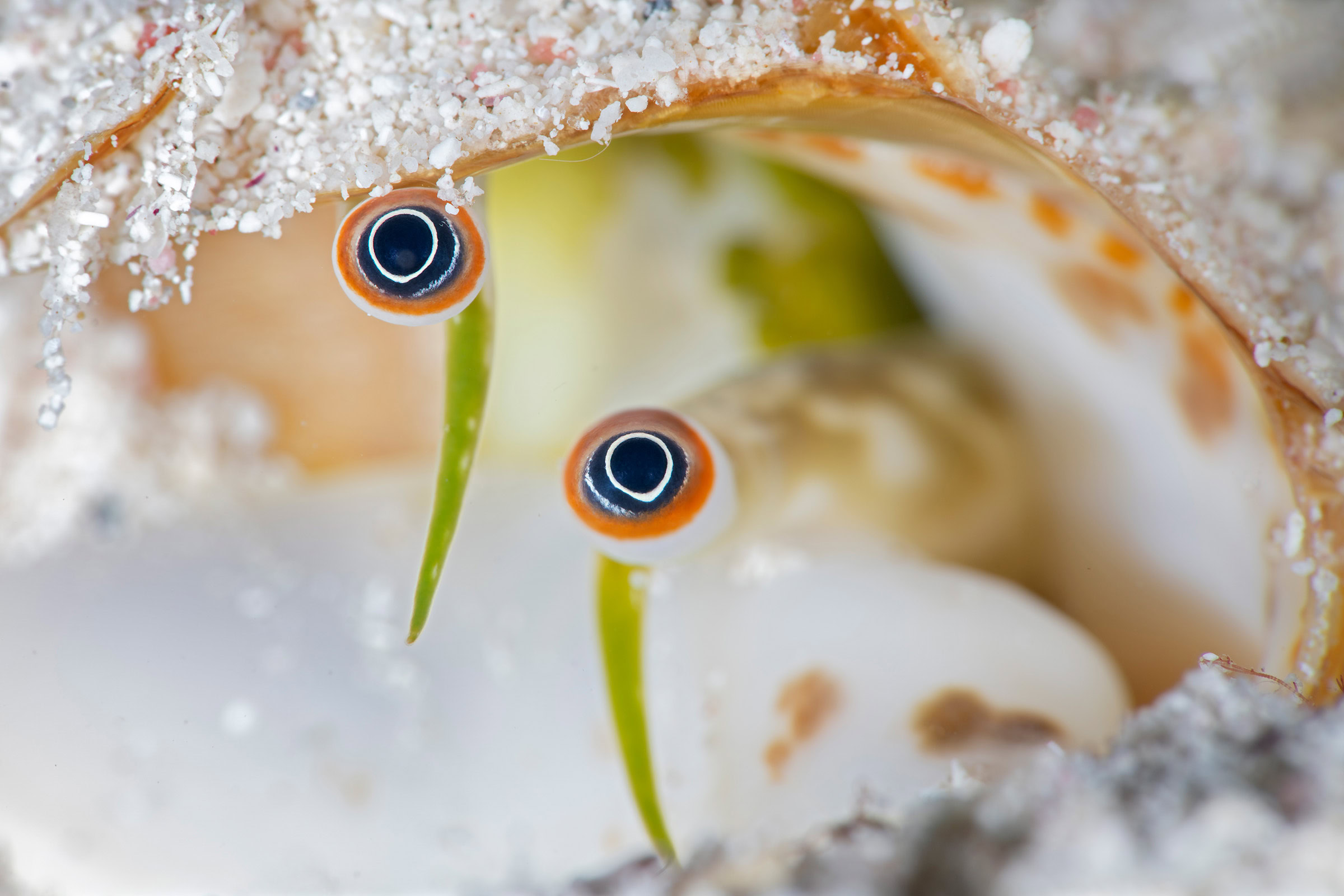
These little eyes might look googly and discombobulated, but they perform an important service for the conch they’re attached to. This conch, a large sea snail found on shallow ocean floors, is observing nearby marine life—and photographer Alex Mustard—from its sandy burrow off the coast of Grand Cayman. At least six species of true conchs (family Strombidae) are known to live in the western Atlantic, ranging from southern Florida to northern South America. (The carnivorous horse conch resides in a different family.) The particular species is not clear from this photograph, but conchs have been known to wiggle their eye stalks independently, peering in two different directions at once.
Some scientists think that there’s more to conchs’ eyestalks than meets, well, the eye. The green antennae extending below the eyes might be able to detect chemical trails, helping conchs find food or potential mates. But no one knows for sure, because there has been little research into many details of conch biology. The mollusks do, however, have a few diehard fans—among them Allan Stoner, chief scientist at Community Conch, a nonprofit aiming to protect conchs in the Caribbean. “They’re just snails,” he says. “But they do have a little charisma!”
Young conchs typically move at night, after hungry predators like loggerhead turtles have turned in for the day. Peeking an eye or two out of their shells from their sand-flat or seagrass hideaways, they propel themselves by planting one hard, narrow claw—called an operculum—into the sand and pushing off to hop across the ocean floor. Some conchs can travel up to 100 meters a day, covering home ranges as big as 150 acres. When danger looms, conchs pull tightly inside their shells, using the operculum to create an almost impenetrable barrier.
Conchs grow their own shells, secreting proteins and calcium carbonate from their fleshy upper bodies that harden over time to form protective, and quite beautiful, exoskeletons. When queen conchs reach sexual maturity at three-and-a-half or four years old, their shells stop growing longer, and the sturdy lip at the shell’s opening thickens. (Because the lip is an important indicator of age, it can also be used as a guide for sustainable harvesting, with thin lips indicating that conchs are too young to be harvested). The patterns on conch shells are unique to each species: Hawkwing conchs (Lobatus raninus) bear hazel-brown markings. Milk conchs (Macrostrombus costatus) grow shells with a shiny pearl hue. Queen conchs (Aliger gigas) grow shells of electric pink and vibrant orange—shells so famous they occupy a prominent spot on the Bahamian coat of arms.
Conchs are not only culturally significant in the Caribbean region, but also economically vital, with fisheries generating millions of dollars per year and supporting the livelihoods of thousands of households. They are also increasingly scarce: the queen conch was listed as threatened by the U.S. Fish and Wildlife Service in February 2024. Wildlife officials are assessing ways to educate local fisherman to protect conch populations and ensure a future for one of the area’s most iconic, prized, and quirky sea creatures.
Hi, I’m Dave, the executive director of bioGraphic. (And that’s my dog, Finn.) Thanks for taking the time to read this story.
Stories like this simply don’t get produced without financial support from readers like you. bioGraphic is not backed by a private company or owned by a billionaire. It’s an independent, nonprofit magazine. And one-quarter of our annual budget comes directly from reader donations.
We need your support more than ever, as governments slash funding for conservation and scientific research, placing even more ecosystems and wildlife at risk around the world. At bioGraphic, we’re steadfastly shining a light on the threats to our planet’s incredible biodiversity. And we’re showcasing the hard work of people bravely taking action to protect at-risk species.
bioGraphic publishes environmental reporting that you can’t find anywhere else: deeply researched, trustworthy stories that are also beautiful and captivating to read. We offer an antidote to reader apathy and doom-and-gloom news by revealing the wonders of the natural world and focusing on real solutions to big problems. When you finish a bioGraphic story, we want to leave you feeling informed, delighted, and inspired.
We don’t run ads or hide our stories behind a paywall. The readers who generously support bioGraphic allow our work to remain free for everyone.
Will you help us keep telling these crucial stories?

Authors


Related Articles
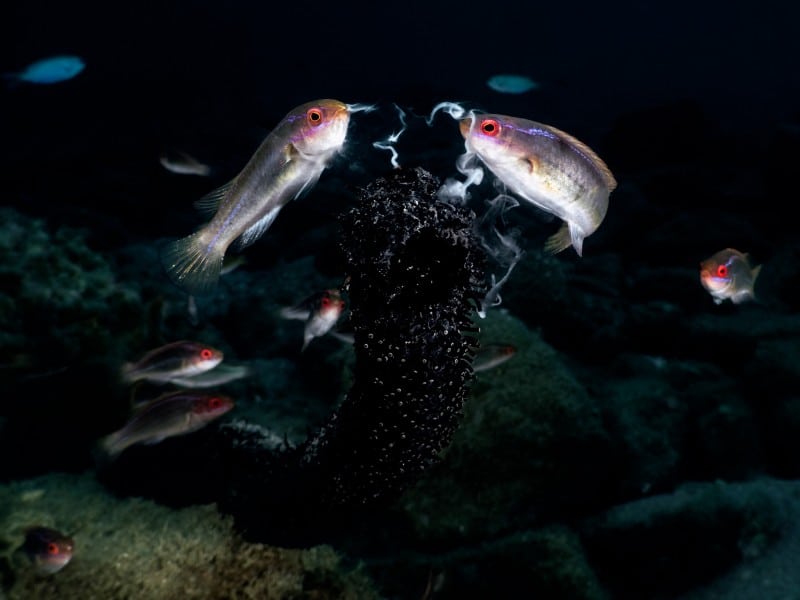
Milt Meal
Marine creatures will do almost anything for a meal—including feasting on the sperm and eggs of spawning invertebrates.
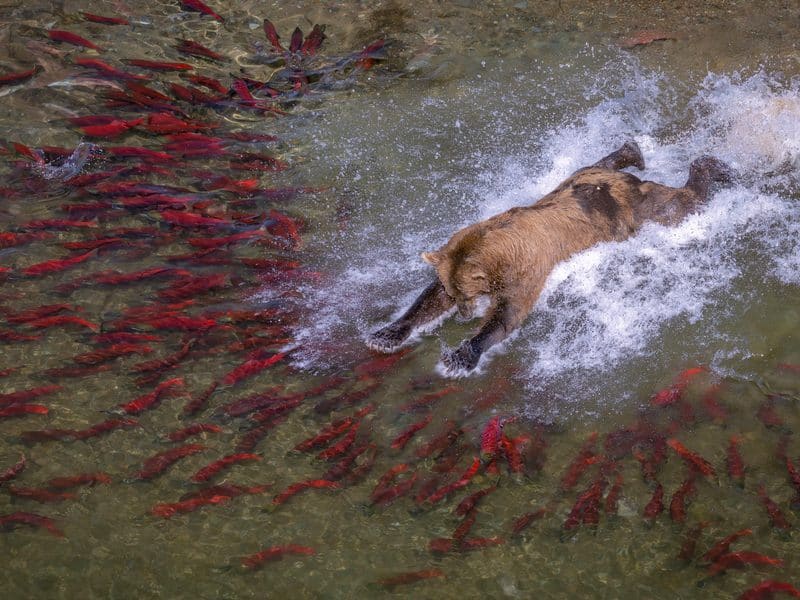
The Art of the Catch
To bulk up for winter hibernation, Alaska’s brown bears employ a range of techniques for snaring salmon.
The Wonder of a Pale Whale
A curious calf with an atypical birthday suit is a good sign for southern right whales.