
Photograph by Danny Green
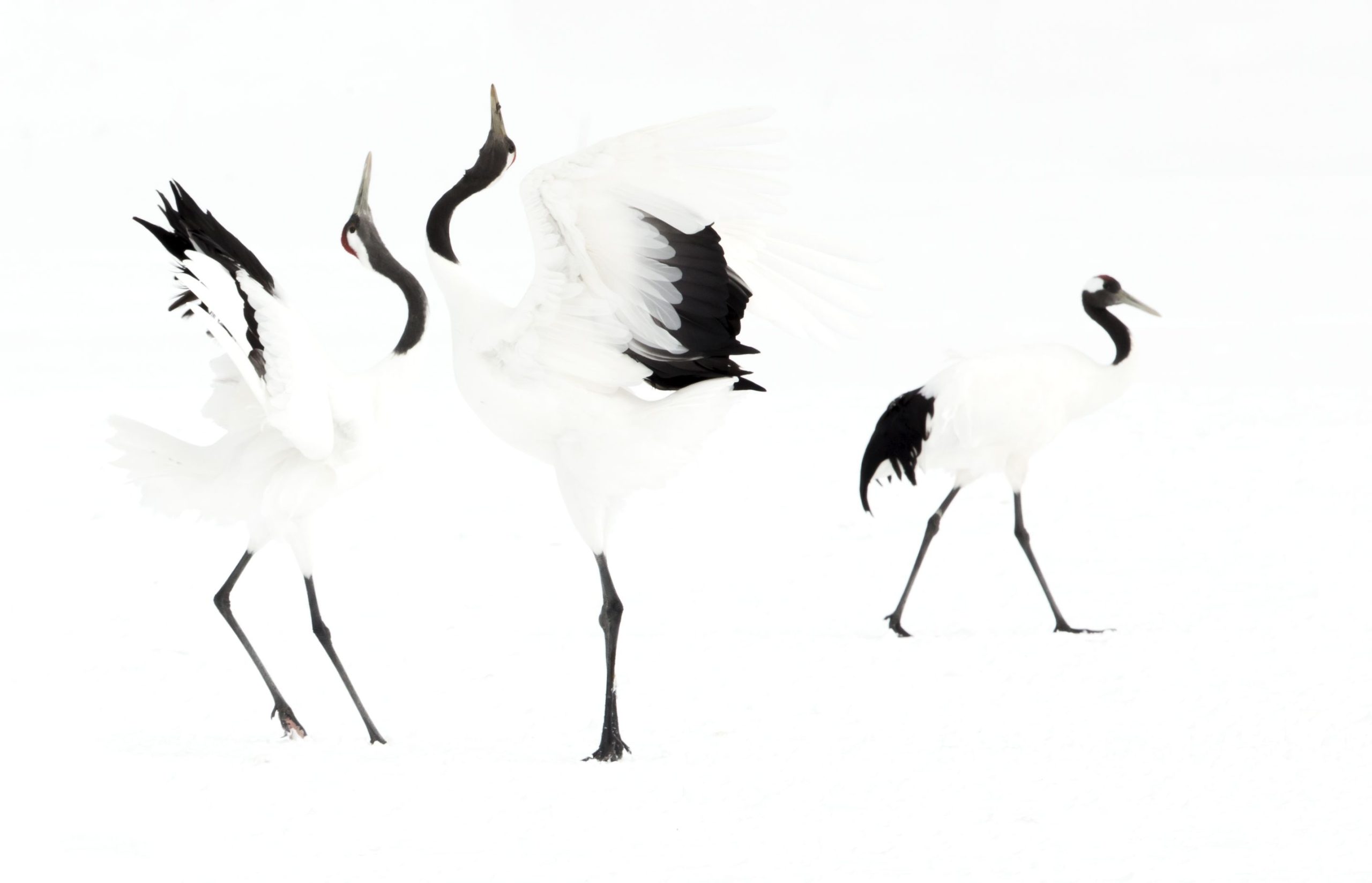
What’s the secret to maintaining a monogamous relationship for the long haul? For red-crowned cranes, anyway, the answer can be found on the dance floor. Regarded as symbols of both longevity and fidelity, red-crowned cranes (Grus japonensis) can live for up to 40 years in the wild, and they typically mate for life. To establish and nurture their long-term pair bonds, the birds regularly perform a synchronized courtship dance that is famous for its picturesque postures and balletic leaps.
While this fancy footwork helps to improve the odds of reproductive success between mates, it isn’t enough to ensure the longevity of the species. Across their breeding grounds in Russia, northeast China, Mongolia, and Japan’s island of Hokkaido, red-crowned cranes are threatened by the rapid disappearance and degradation of the wetlands that once supplied them with plentiful food and safe nesting sites. Today, these birds—classified as Endangered by the International Union for Conservation of Nature—are among the rarest avian species in the world.
On the eastern side of Hokkaido, however, a group of famers have demonstrated that hope is indeed a thing with feathers. A century ago, red-crowned cranes were thought to be locally extinct in Japan. Then, in the 1920s, islanders discovered a handful of birds nesting in the remote Kushiro marshes, and they began providing food for the cranes each winter. Eventually, Hokkaido’s population of red-crowned cranes began to recover. While the birds still face an uncertain future (the marshlands where they nest continue to shrink, and the birds are increasingly dependent on humans for food), the resident population of red-crowned cranes now totals more than a thousand individuals. Toward the end of winter each year, the cranes reward their caretakers by gathering in open fields to stage one of nature’s most elegant ensemble numbers—a graceful and athletic display in which each pair of birds prepares for breeding season with an elaborate pas de deux.

Hokkaido, Japan
Hi, I’m Dave, the executive director of bioGraphic. (And that’s my dog, Finn.) Thanks for taking the time to read this story.
Stories like this simply don’t get produced without financial support from readers like you. bioGraphic is not backed by a private company or owned by a billionaire. It’s an independent, nonprofit magazine. And one-quarter of our annual budget comes directly from reader donations.
We need your support more than ever, as governments slash funding for conservation and scientific research, placing even more ecosystems and wildlife at risk around the world. At bioGraphic, we’re steadfastly shining a light on the threats to our planet’s incredible biodiversity. And we’re showcasing the hard work of people bravely taking action to protect at-risk species.
bioGraphic publishes environmental reporting that you can’t find anywhere else: deeply researched, trustworthy stories that are also beautiful and captivating to read. We offer an antidote to reader apathy and doom-and-gloom news by revealing the wonders of the natural world and focusing on real solutions to big problems. When you finish a bioGraphic story, we want to leave you feeling informed, delighted, and inspired.
We don’t run ads or hide our stories behind a paywall. The readers who generously support bioGraphic allow our work to remain free for everyone.
Will you help us keep telling these crucial stories?

Related Articles
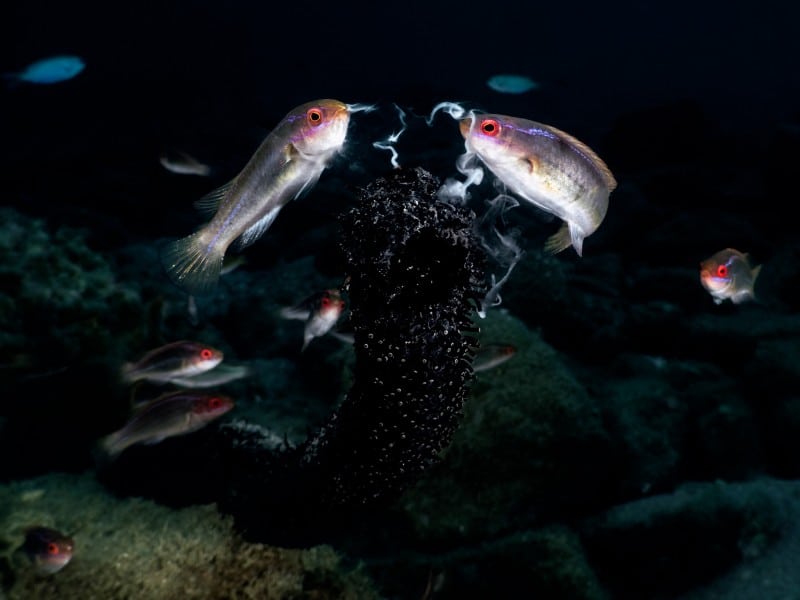
Milt Meal
Marine creatures will do almost anything for a meal—including feasting on the sperm and eggs of spawning invertebrates.
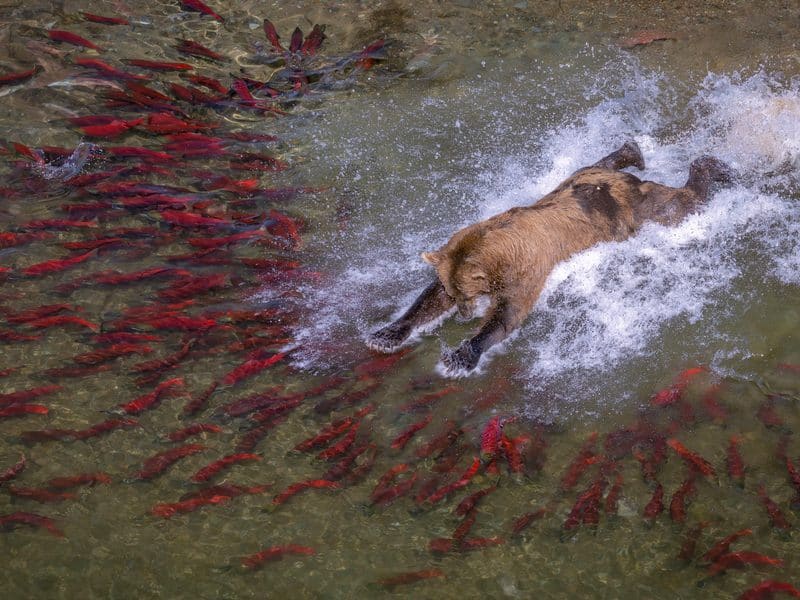
The Art of the Catch
To bulk up for winter hibernation, Alaska’s brown bears employ a range of techniques for snaring salmon.
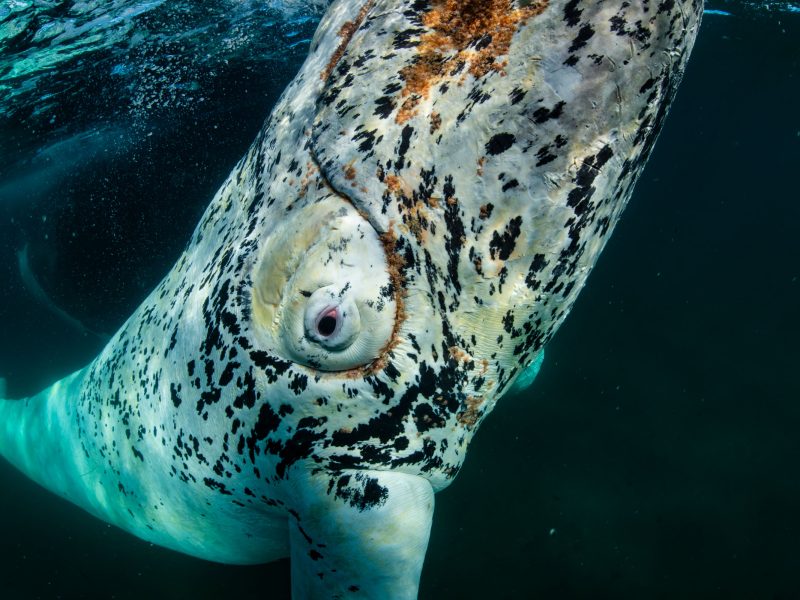
The Wonder of a Pale Whale
A curious calf with an atypical birthday suit is a good sign for southern right whales.