
Photograph by Sam Hobson
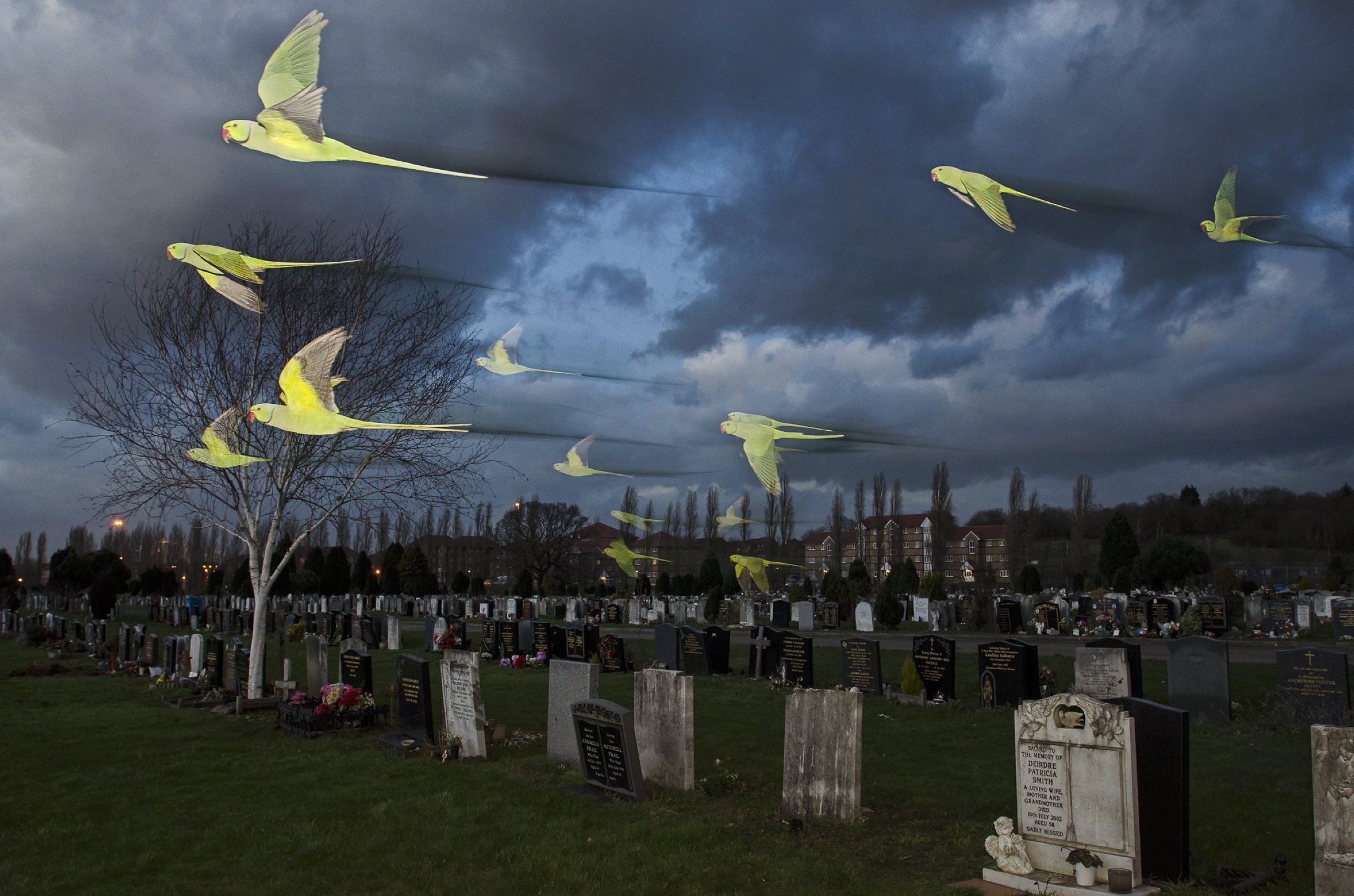
Ring-necked parakeets (Psittacula krameri) are aliens in the English landscape. Escapees from captivity, these Afro-Asian birds have become so numerous in the country’s Southeast region that today they are seen as pests by many residents. Highly social and competitive for resources, they’re known to overwhelm the feeders of bird enthusiasts, and they regularly outcompete native birds for nest cavities. Despite their unfavorable reputation and negative ecological impacts, photographer Sam Hobson wanted to depict the parakeets in a more positive and beautiful light by capturing the spectacle of these brightly colored birds flying in to a roost in the heart of London. He located a large winter roost in an old cemetery and identified the flight paths the birds used most regularly. Then, as dusk fell and the parakeets began to stream past in shrill groups, he set up his camera with a wide-angle lens and long exposure, and then fired the shutter repeatedly. With a burst of flash at the end to capture their ghostly trails, Hobson highlighted the contrast between these otherworldly immigrants and the city they call home.
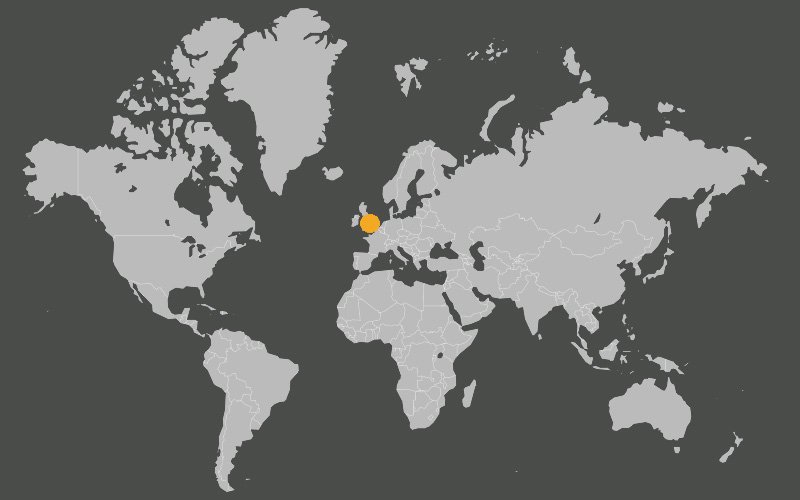
London, England
Hi, I’m Dave, the executive director of bioGraphic. (And that’s my dog, Finn.) Thanks for taking the time to read this story.
Stories like this simply don’t get produced without financial support from readers like you. bioGraphic is not backed by a private company or owned by a billionaire. It’s an independent, nonprofit magazine. And one-quarter of our annual budget comes directly from reader donations.
We need your support more than ever, as governments slash funding for conservation and scientific research, placing even more ecosystems and wildlife at risk around the world. At bioGraphic, we’re steadfastly shining a light on the threats to our planet’s incredible biodiversity. And we’re showcasing the hard work of people bravely taking action to protect at-risk species.
bioGraphic publishes environmental reporting that you can’t find anywhere else: deeply researched, trustworthy stories that are also beautiful and captivating to read. We offer an antidote to reader apathy and doom-and-gloom news by revealing the wonders of the natural world and focusing on real solutions to big problems. When you finish a bioGraphic story, we want to leave you feeling informed, delighted, and inspired.
We don’t run ads or hide our stories behind a paywall. The readers who generously support bioGraphic allow our work to remain free for everyone.
Will you help us keep telling these crucial stories?

Related Articles
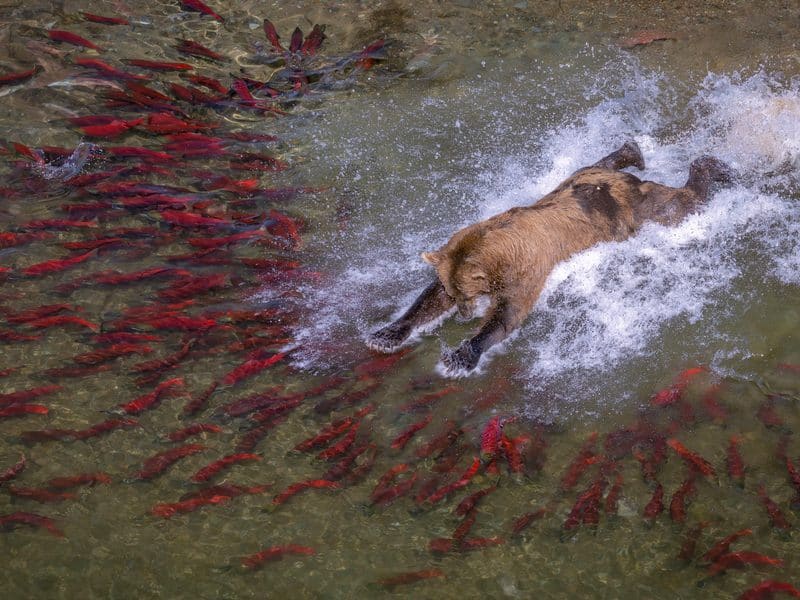
The Art of the Catch
To bulk up for winter hibernation, Alaska’s brown bears employ a range of techniques for snaring salmon.
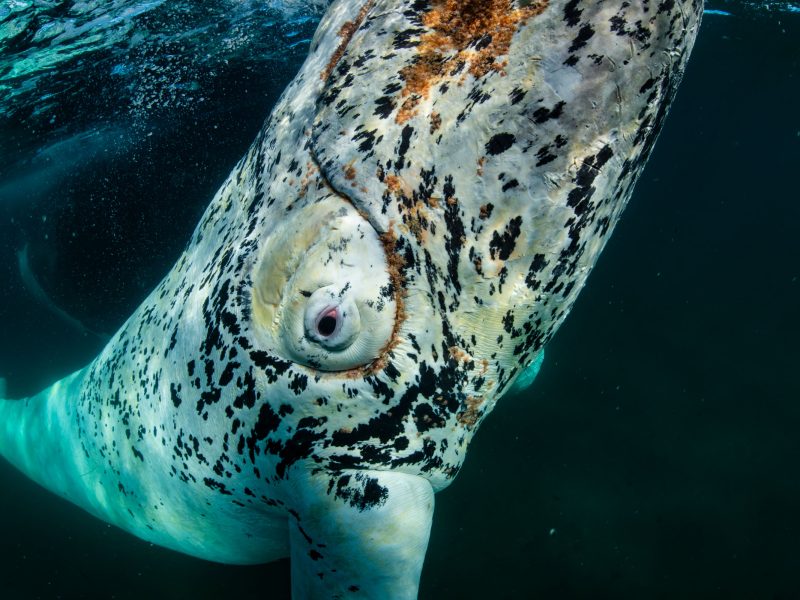
The Wonder of a Pale Whale
A curious calf with an atypical birthday suit is a good sign for southern right whales.
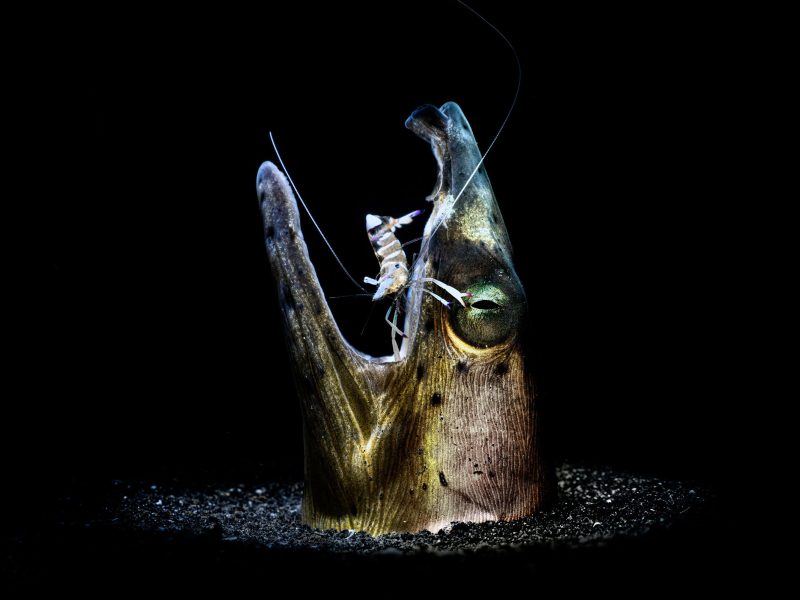
Saying “Ah!” at the Shrimp Spa
On coral reefs, an army of tiny cleaners eat their clients’ parasites, food particles, and dead skin, boosting biodiversity in the process.
