
Friends or Foes?
A flatworm and a sea squirt mingle in the tropical waters of West Papua, offering a glimpse into the complexity of interspecies relationships.
Photograph by Alex Mustard
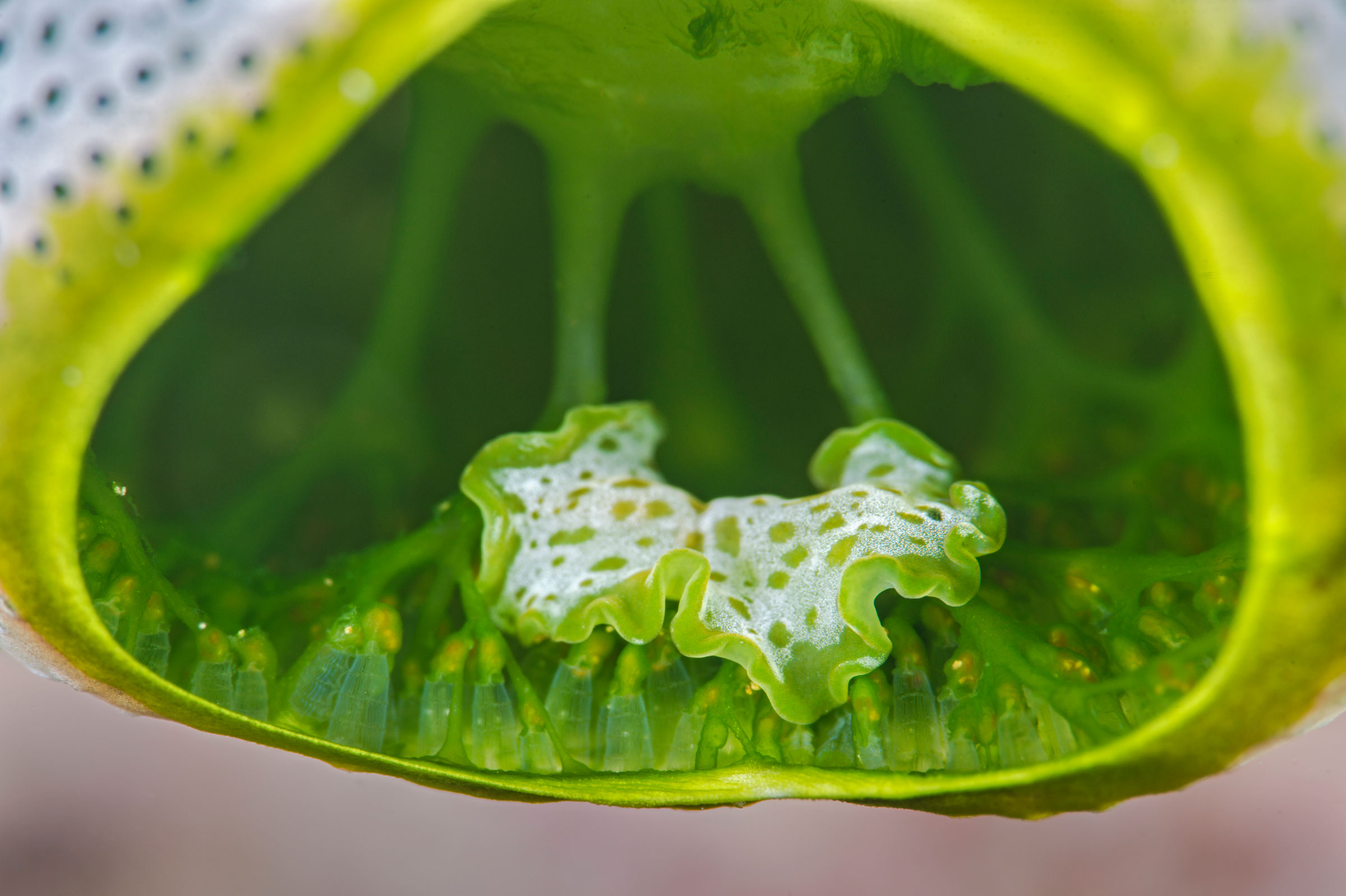
Photographer and marine biologist Alex Mustard was diving among the reefs ringing Raja Ampat, in the Indonesian province of West Papua, when he spotted a green-and-white colony of tunicates, also known as sea squirts. Some 2,300 species of these spongy, urn-shaped invertebrates live across the world’s oceans, sucking in seawater, eating plankton, and “squirting” the water back out. Green barrel sea squirts (Didemnum molle), like the one in Mustard’s photo, enjoy a mutually beneficial relationship with one particular type of plankton—blue-green algae, which gives the sea squirts their neon hue.
The tunicates absorb the algae into their tissues, sheltering it and producing a sort of sunscreen that protects the algae from ultraviolet rays. In exchange, the algae gives its host sugar—a byproduct of photosynthesis—to supplement its diet. Because algae photosynthesize, the color of sea squirt colonies varies by depth: Those closer to the sun at the water’s surface are brighter green than those found deeper in the ocean.
But algae isn’t the only guest visiting this golf ball-sized sea squirt. The ruffled creature at the opening of the sea squirt’s siphon is a type of flatworm (Cycloporus sp.). And unlike the algae, the flatworm may be an unwelcome visitor.
Scientists have found other flatworms from the Cycloporus genus preying on sea squirts, sneaking in through the tunicate’s siphon and slurping up the internal organs until there’s nothing left but an empty husk. Larger predators like fish tend to avoid tunicates, so hanging out with a sea squirt could have the added benefit of protecting this flatworm from bigger predators, Mustard says.
Still, because the relationship between the species Mustard photographed hasn’t been studied, it’s hard to know whether the duo are foes, friends, or perhaps a little of both. Chris Mah, a marine scientist and taxonomist, says that, in general, interactions between marine invertebrates are poorly understood. But the near-perfect color match between the sea squirt and flatworm suggests the two do enjoy some kind of close relationship. Nudibranchs are known to absorb color from the tunicates they eat, and Mah says it’s possible that flatworms could do the same.
The color was also what caught Mustard’s eye. Raja Ampat is home to “the most vibrant expression of coral reefs in the world,” the photographer says. Yet even among such kaleidoscopic richness, the bright hue of the tunicate colony stood out—both for its beauty and its reminder of all we’ve yet to learn about the intricacies of underwater ecosystems.

Hi, I’m Dave, the executive director of bioGraphic. (And that’s my dog, Finn.) Thanks for taking the time to read this story.
Stories like this simply don’t get produced without financial support from readers like you. bioGraphic is not backed by a private company or owned by a billionaire. It’s an independent, nonprofit magazine. And one-quarter of our annual budget comes directly from reader donations.
We need your support more than ever, as governments slash funding for conservation and scientific research, placing even more ecosystems and wildlife at risk around the world. At bioGraphic, we’re steadfastly shining a light on the threats to our planet’s incredible biodiversity. And we’re showcasing the hard work of people bravely taking action to protect at-risk species.
bioGraphic publishes environmental reporting that you can’t find anywhere else: deeply researched, trustworthy stories that are also beautiful and captivating to read. We offer an antidote to reader apathy and doom-and-gloom news by revealing the wonders of the natural world and focusing on real solutions to big problems. When you finish a bioGraphic story, we want to leave you feeling informed, delighted, and inspired.
We don’t run ads or hide our stories behind a paywall. The readers who generously support bioGraphic allow our work to remain free for everyone.
Will you help us keep telling these crucial stories?

Authors

Related Articles
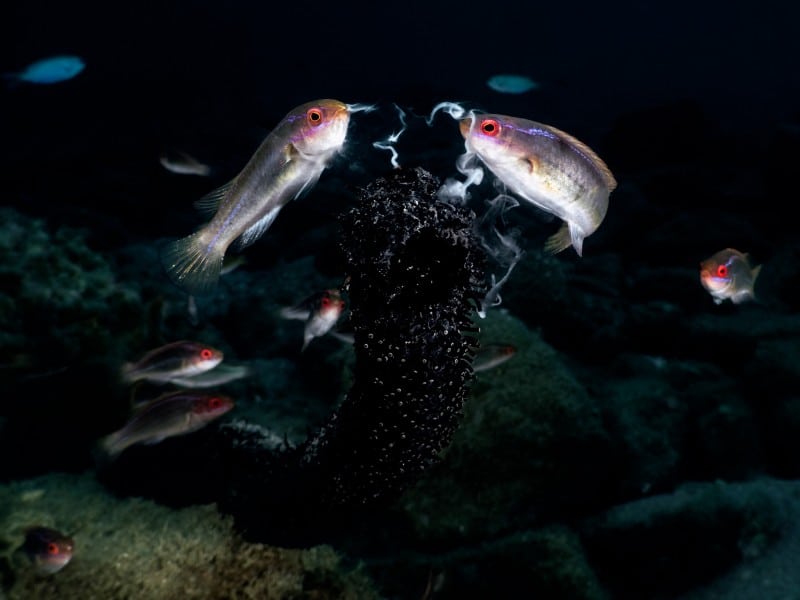
Milt Meal
Marine creatures will do almost anything for a meal—including feasting on the sperm and eggs of spawning invertebrates.
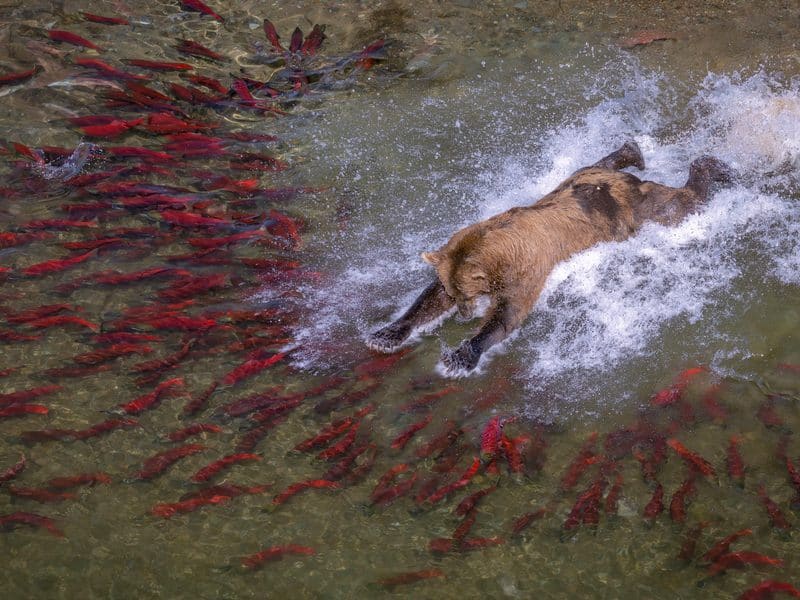
The Art of the Catch
To bulk up for winter hibernation, Alaska’s brown bears employ a range of techniques for snaring salmon.
The Wonder of a Pale Whale
A curious calf with an atypical birthday suit is a good sign for southern right whales.