
Photograph by Alexander Mustard
Story by Katie Jewett
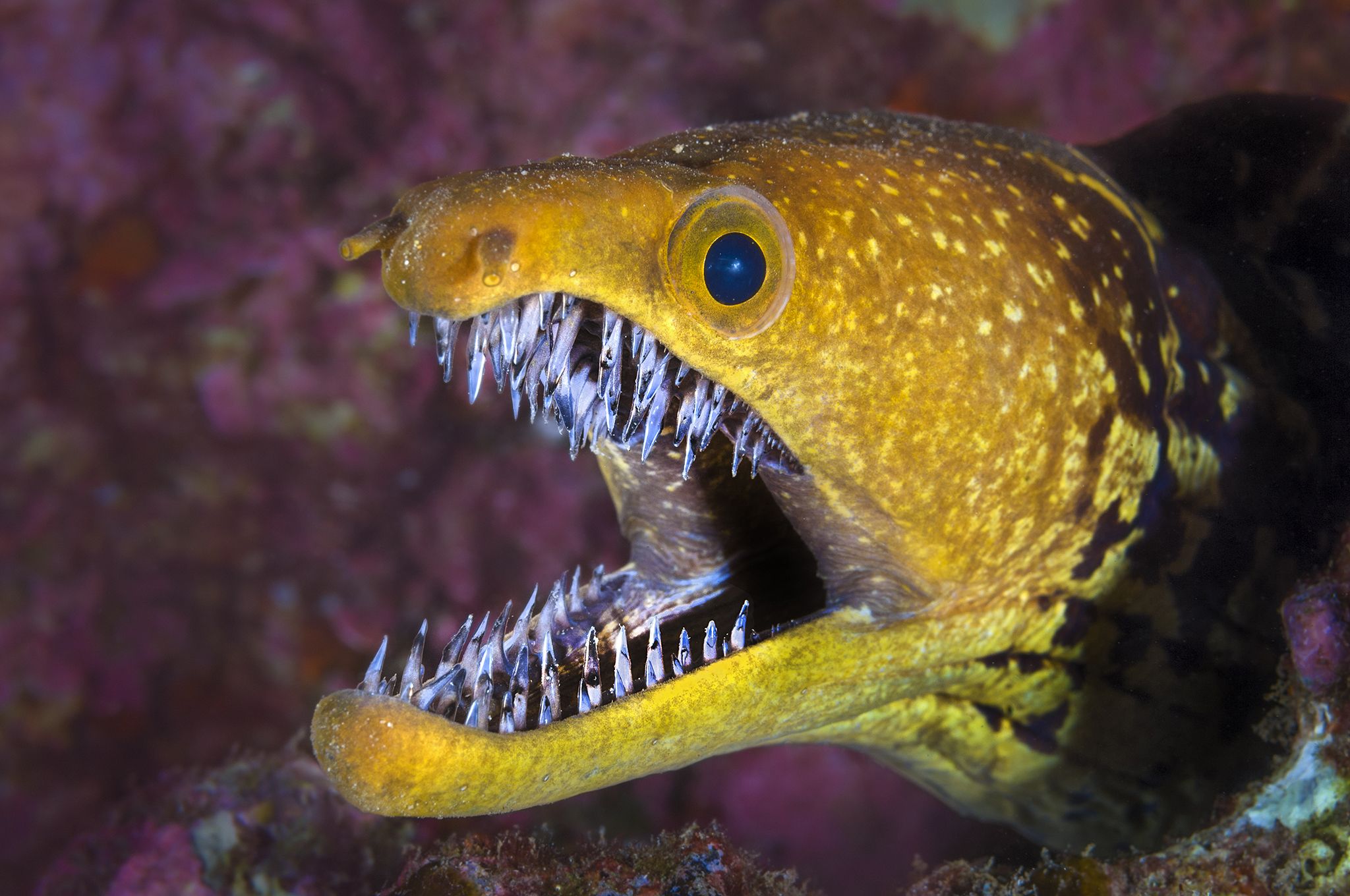
Tucked into its coral lair just off the coast of the Canary Islands, a fangtooth moray eel (Enchelycore anatina) lies in wait. While the eel’s menacing stare may strike fear into the heart of an underwater photographer, it’s the teeth of this top-level predator that really make an impression—and those are just the teeth we can see.
The fangtooth moray displays some of the most impressive teeth in the moray eel family, a group made up of some 200 toothy species. Its gaping mouth is rimmed with dagger-sharp, glass-like teeth that can measure more than 2 centimeters (almost 1 inch) in length—significantly longer than those of most morays. For obvious reasons, these are the teeth that have drawn interest from divers and photographers. Scientists, however, have focused their attention on the moray eel’s hidden weapon: a second set of jaws and teeth that enables the animal to swallow large prey in tight quarters.
Moray eels are well-adapted to life on the reef, often slinking through crevices and holes in pursuit of prey. This requires specialized adaptions: a narrow, streamlined head and serpentine body. But the physical traits that make this way of life possible can present serious challenges.
Most fish use suction to help them swallow. After latching onto an animal it wants to eat, a fish quickly opens its jaws wide to create a vacuum that pulls the prey from the mouth into the throat. With little room for such maneuvers in the tight spaces they haunt, moray eels have evolved a different solution. The moment an eel grabs a large fish, squid, or octopus with its outer jaws, a second set of jaws deep inside the eel’s throat lunges forward and sinks its curved teeth into the prey. It’s only when this inner jaw retracts, pulling the meal into the eel’s body, that the outer jaw loosens its hold. With adaptations like these, it’s no wonder this group of fishes is among the most successful in the sea.

Canary Islands
Hi, I’m Dave, the executive director of bioGraphic. (And that’s my dog, Finn.) Thanks for taking the time to read this story.
Stories like this simply don’t get produced without financial support from readers like you. bioGraphic is not backed by a private company or owned by a billionaire. It’s an independent, nonprofit magazine. And one-quarter of our annual budget comes directly from reader donations.
We need your support more than ever, as governments slash funding for conservation and scientific research, placing even more ecosystems and wildlife at risk around the world. At bioGraphic, we’re steadfastly shining a light on the threats to our planet’s incredible biodiversity. And we’re showcasing the hard work of people bravely taking action to protect at-risk species.
bioGraphic publishes environmental reporting that you can’t find anywhere else: deeply researched, trustworthy stories that are also beautiful and captivating to read. We offer an antidote to reader apathy and doom-and-gloom news by revealing the wonders of the natural world and focusing on real solutions to big problems. When you finish a bioGraphic story, we want to leave you feeling informed, delighted, and inspired.
We don’t run ads or hide our stories behind a paywall. The readers who generously support bioGraphic allow our work to remain free for everyone.
Will you help us keep telling these crucial stories?

Author

Related Articles
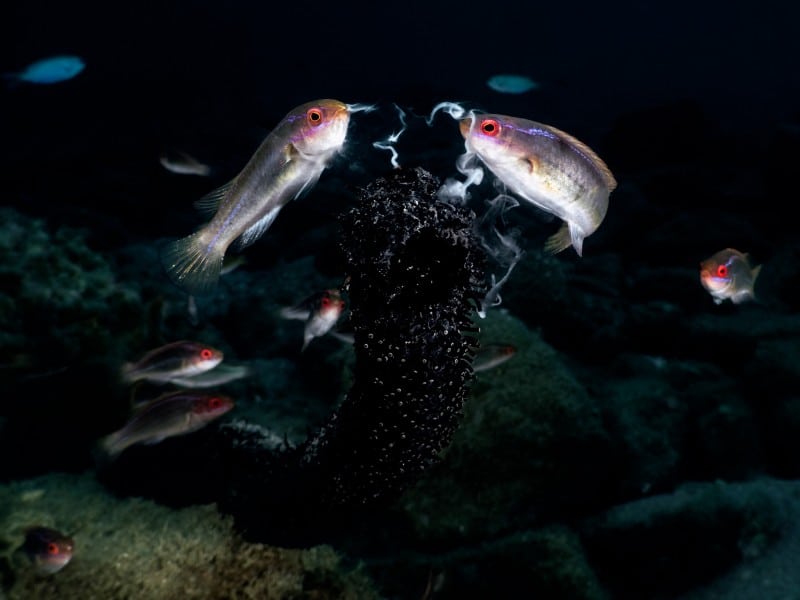
Milt Meal
Marine creatures will do almost anything for a meal—including feasting on the sperm and eggs of spawning invertebrates.
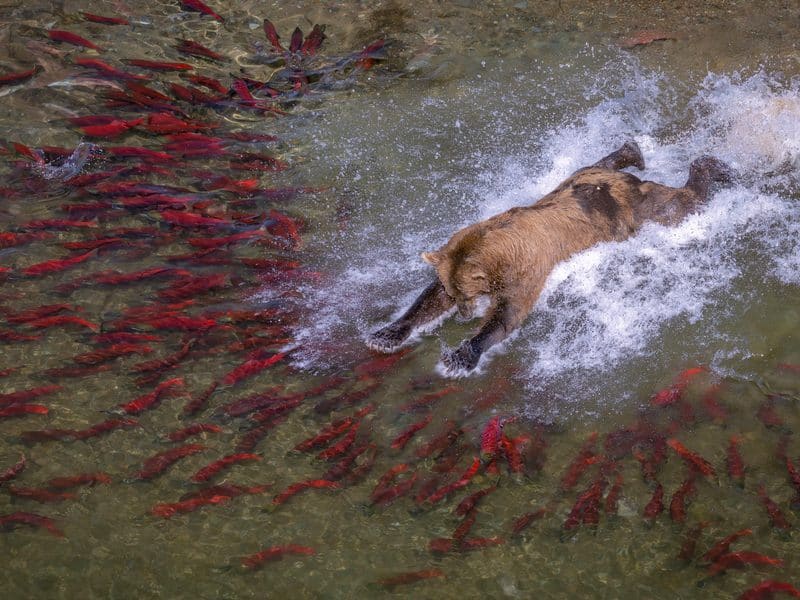
The Art of the Catch
To bulk up for winter hibernation, Alaska’s brown bears employ a range of techniques for snaring salmon.
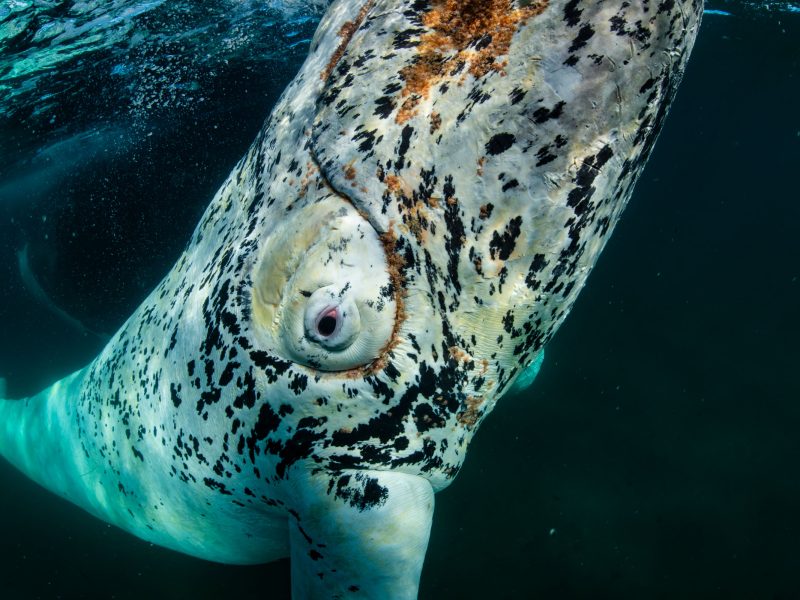
The Wonder of a Pale Whale
A curious calf with an atypical birthday suit is a good sign for southern right whales.