
Photograph by Bence Máté
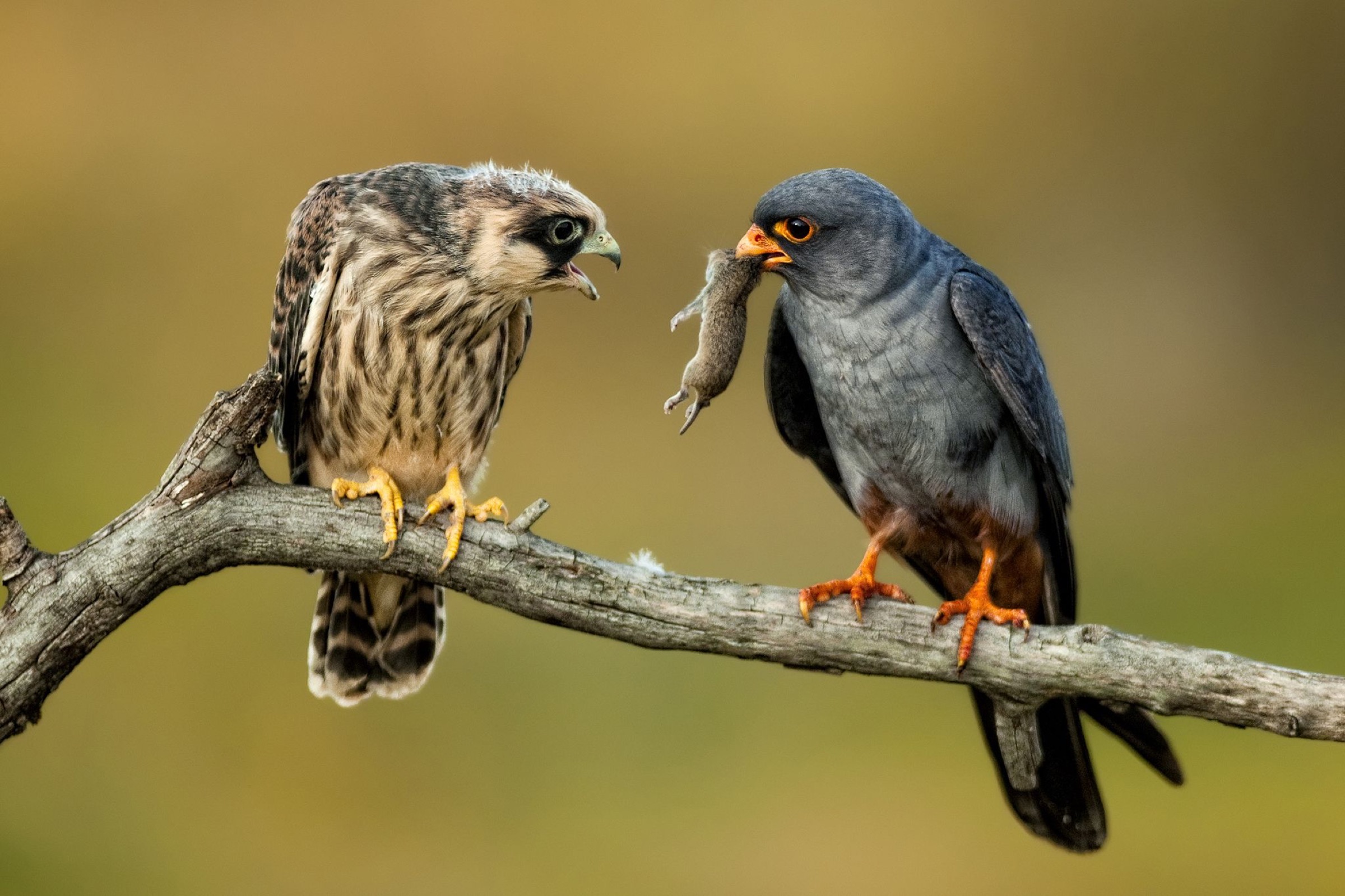
Learning to fly may come naturally for this recently fledged red-footed falcon (Falco vespertinus), but learning to catch its own prey takes significantly more practice. Fortunately, this novice hunter doesn’t have to rely exclusively on its own prowess quite yet. Even though it has already begun to venture out on its own, the juvenile still receives handouts from its parents—in this case a freshly caught vole. The hefty youngster may not look like it needs the calories; young falcons often outweigh their parents when they leave the nest. But the cushion could be critical to its survival in a few weeks, when the meal train comes to a halt.
While the deliveries last, the chick will eat well—red-footed falcons regularly bring the choicest of the prey they catch to their offspring. In a recent study, scientists from BirdLife Hungary, a non-profit conservation organization, documented that when parents of young birds catch insects, they eat the prey themselves about a third of the time. But when they catch higher-calorie vertebrates, like frogs and voles, they deliver the prey to their nests 98 percent of the time. The adults do sometimes take small commissions, however: They often eat the calorie-rich brains of their prey before bringing the bodies to their young. Despite these missing morsels, the meal that remains is more than enough to keep the chicks well fed, especially since both parents are actively involved in hunting for their offspring.
Even a high level of parental investment can’t ensure that these chicks will survive, though. Red-footed falcon populations have dwindled in recent decades throughout their breeding range, from eastern Europe to northwestern Asia. In Hungary, for example, the raptor’s numbers have dropped an estimated 50 percent since the 1980s. The International Union for Conservation of Nature now considers the species Near Threatened.
Pesticides are partly to blame, but a major cause of the species’ demise relates to the eradication and adaptability of another. Rather than building their own nests, red-footed falcons rely on the abandoned structures of other birds, most often those created by rooks (Corvus frugilegus). An eradication program launched 20 years ago to stop the crow-like bird from eating the grain in European farmers’ fields has caused rook populations in Hungary to drop by 90 percent. Logging and agriculture have also decimated the number of nesting trees available. In response, rooks have moved into city parks and urban areas where they find both nest trees and human food scraps. But red-footed falcons can’t follow suit since they rely on grasslands and forest edges to hunt.
Conservation organizations in Hungary have responded by building nesting boxes for the falcons. Thanks to the thousands of boxes they’ve deployed, one such group saw an increase in falcons from 700 mating pairs in 2003 to 1,200 pairs in 2012. The falcons have also been observed hunting in agricultural fields, demonstrating their ability to change with their surroundings. Such adaptations give researchers reason to hope that the birds’ recovery is on the right track.
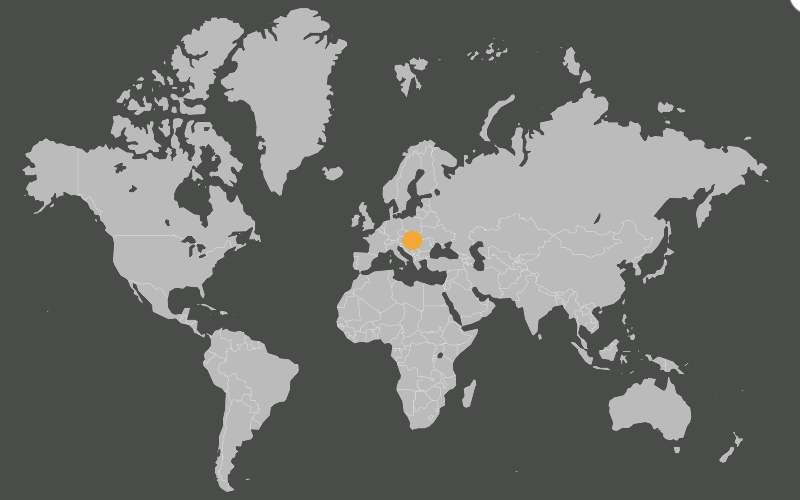
Kiskunsagi National Park, Hungary
Hi, I’m Dave, the executive director of bioGraphic. (And that’s my dog, Finn.) Thanks for taking the time to read this story.
Stories like this simply don’t get produced without financial support from readers like you. bioGraphic is an independent non-profit—we’re not backed by a private company or owned by a billionaire. One-quarter of our budget comes directly from reader donations.
bioGraphic publishes environmental reporting that you can’t find anywhere else: deeply researched, trustworthy stories that are also beautiful and captivating to read. Right now, we need your help to raise $30,000 by October 2. Every dollar will go directly to more crucial reporting projects.
Around the world, governments are slashing funding for conservation and scientific research, placing even more ecosystems and wildlife at risk. At bioGraphic, we’re steadfastly shining a light on the threats to our planet’s incredible biodiversity. And we’re showcasing the hard work of people bravely taking action to protect at-risk species.
bioGraphic offers an antidote to apathy and doom-and-gloom news by revealing the wonders of the natural world and focusing on real solutions to big problems. When you finish a bioGraphic story, we want to leave you feeling informed, delighted, and inspired.
We don’t run ads or hide our stories behind a paywall. The readers who generously support bioGraphic allow our work to remain free for everyone.
We reached our goal, but there’s time left. Will you help us smash our original goal and reach a new goal of $30,000 by October 2?

Related Articles
The Art of the Catch
To bulk up for winter hibernation, Alaska’s brown bears employ a range of techniques for snaring salmon.
The Wonder of a Pale Whale
A curious calf with an atypical birthday suit is a good sign for southern right whales.
Saying “Ah!” at the Shrimp Spa
On coral reefs, an army of tiny cleaners eat their clients’ parasites, food particles, and dead skin, boosting biodiversity in the process.
