
Saying “Ah!” at the Shrimp Spa
On coral reefs, an army of tiny cleaners eat their clients’ parasites, food particles, and dead skin, boosting biodiversity in the process.
Photograph by Alex Mustard
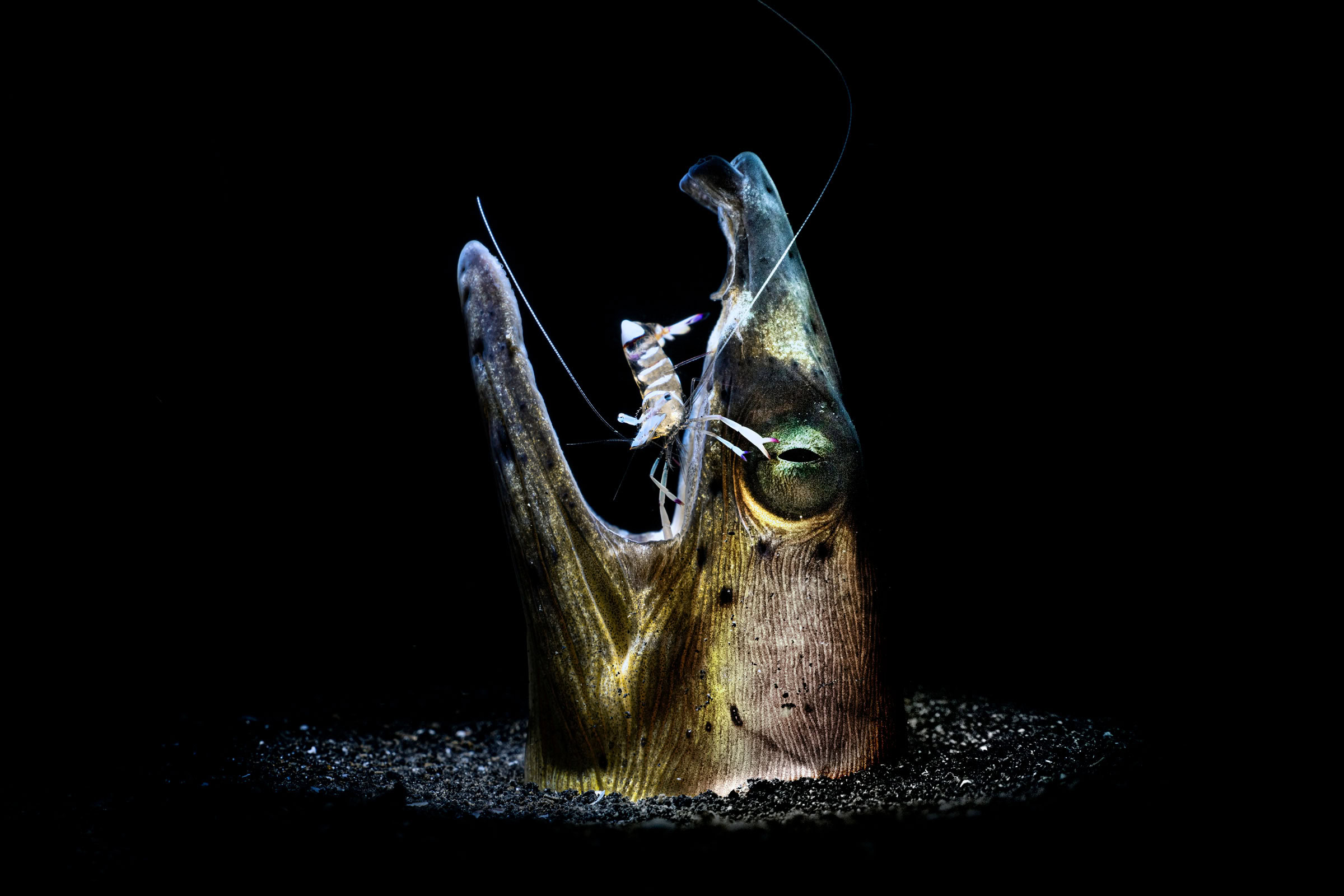
Imagine lying prone as your dentist cleans your teeth. Now imagine that your dentist is so small that she has to climb inside your mouth. Picture being tended by a similarly tiny dermatologist or pedicurist. Each practitioner disposes of the morsels they scrape from your teeth or toes or skin by eating them. And each belongs to a species that you might also like to eat, under other circumstances. These visions approximate the dynamics between marine “cleaner” species and the “clients” they serve, as seen with this tiny Holthuis’ anemone shrimp (Ancylomenes holthuisi) inside the mouth of a black neck snake eel (Ophichthus cephalozona).
Incidences of interspecies grooming have been recognized at least since the 5th century BCE, when the Greek historian Herodotus recorded his observations of a Nile crocodile allowing a bird to pick leeches from between its teeth. Since then, researchers have compiled a list of some 208 fish species and 51 shrimp species that serve as cleaners, and found that the phenomenon seems to be more common in tropical marine environments like coral reefs. Cleaners remove and eat parasites, along with damaged tissue, bacteria, and food particles from their clients. And Holthuis’ anemone shrimp, it turns out, are quite efficient at the job. Researchers working in a lab setting showed that the species removed nearly 75 percent of a specific parasite from captive surgeonfish over just two days.
But this vulnerable contact has high stakes, so both cleaner and client species rely on clear communication. Cleaner shrimp often post up in groups at an identifiable cleaning station, like a sea anemone. Some species also signal their services by clapping their chelipeds—specialized legs with claws on the end—and swaying, or by whipping their antennae back and forth. They may be more likely to do so when they’re hungry.
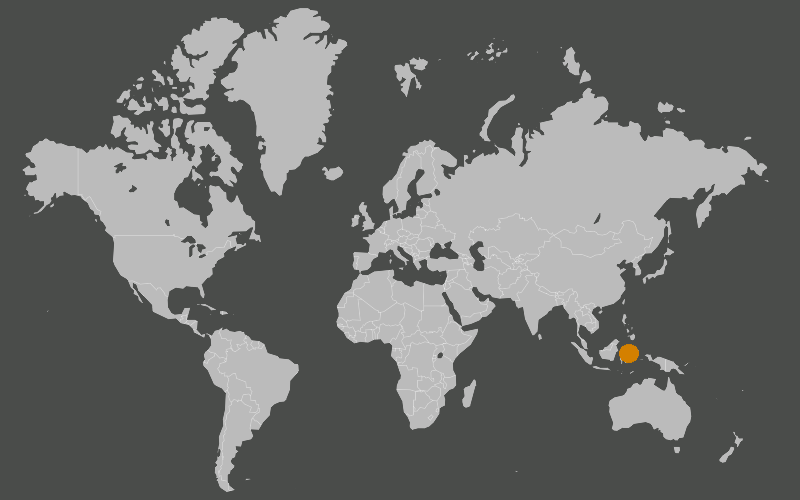
Client fish, for their part, may signal their desire for grooming by darkening their body color when visiting a station, or adopting a submissive posture, such as opening their mouths. Human divers have used similar tactics to convince shrimp to clean their teeth, hands, and feet. Marine biologist Alex Mustard, who took this photo of a snake eel emerging from the black volcanic sand of Indonesia’s Lembeh Strait, believes that snake eels initiate cleaning by poking their heads out near an anemone where cleaner shrimp are hanging out.
Clients aren’t always well behaved, however. Sometimes they chase other fish away from cleaning stations or pretend to leave, only to return to the same station for another round of grooming. And both cleaners and clients occasionally “cheat,” with cleaners eating healthy scales, skin, or mucus alongside their usual fare, and clients sometimes gobbling up cleaners.
Even so, these interactions between marine organisms appear largely beneficial. Beyond ensuring that cleaners get a square meal and clients enjoy a reduced parasite load, there is evidence that the cleanings help clients and also lower stress. Cleaning behavior may also help maintain the vibrant variety of coral reef ecosystems: In experiments, removing certain cleaner fish eventually led to a reduction of the overall diversity of fish at those reefs, including resident fish and those just passing through.
Perhaps that’s because more kinds of fish visit and thrive at reefs where they can keep themselves healthy and clean—just as more people might choose to live in a community that offers a wider variety of dental, medical, and wellness services.
Hi, I’m Dave, the executive director of bioGraphic. (And that’s my dog, Finn.) Thanks for taking the time to read this story.
Stories like this simply don’t get produced without financial support from readers like you. bioGraphic is not backed by a private company or owned by a billionaire. It’s an independent, nonprofit magazine. And one-quarter of our annual budget comes directly from reader donations.
We need your support more than ever, as governments slash funding for conservation and scientific research, placing even more ecosystems and wildlife at risk around the world. At bioGraphic, we’re steadfastly shining a light on the threats to our planet’s incredible biodiversity. And we’re showcasing the hard work of people bravely taking action to protect at-risk species.
bioGraphic publishes environmental reporting that you can’t find anywhere else: deeply researched, trustworthy stories that are also beautiful and captivating to read. We offer an antidote to reader apathy and doom-and-gloom news by revealing the wonders of the natural world and focusing on real solutions to big problems. When you finish a bioGraphic story, we want to leave you feeling informed, delighted, and inspired.
We don’t run ads or hide our stories behind a paywall. The readers who generously support bioGraphic allow our work to remain free for everyone.
Will you help us keep telling these crucial stories?

Authors

Related Articles
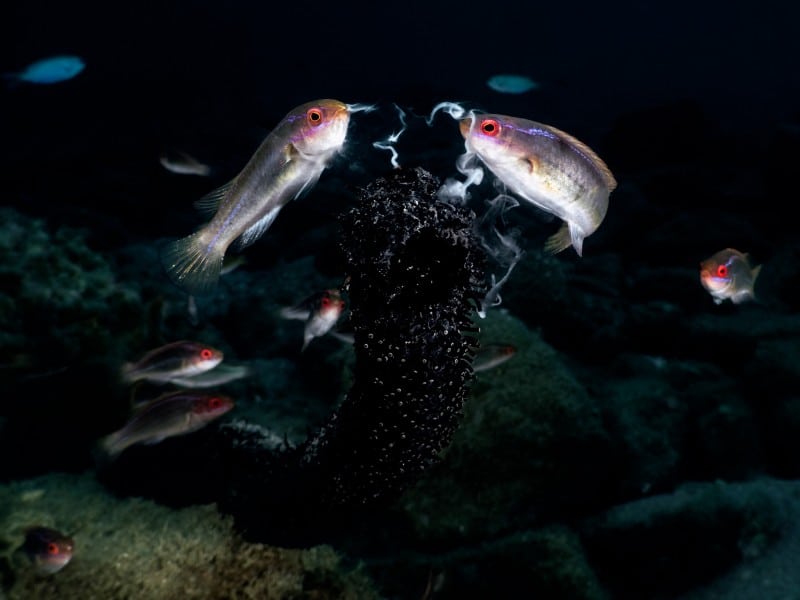
Milt Meal
Marine creatures will do almost anything for a meal—including feasting on the sperm and eggs of spawning invertebrates.
The Art of the Catch
To bulk up for winter hibernation, Alaska’s brown bears employ a range of techniques for snaring salmon.
The Wonder of a Pale Whale
A curious calf with an atypical birthday suit is a good sign for southern right whales.