
Photograph by Emanuele Biggi
Story by Krista Langlois
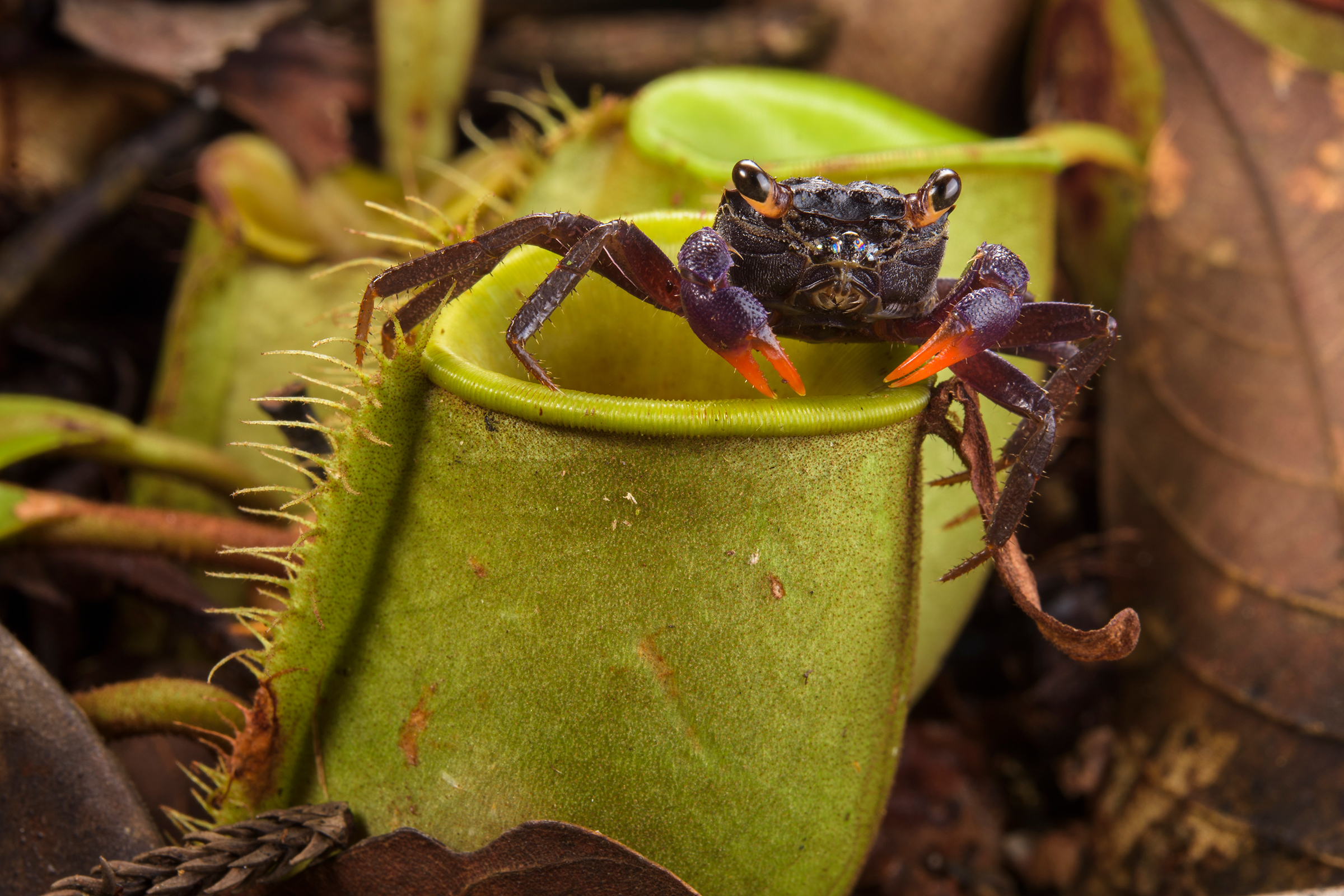
Across the tropical lowlands of Borneo and the nearby Malay Peninsula, tiny cups colored green, red, purple, and black sprout from the forest floor, each filled with deadly liquid. These vessels are actually the specialized leaves of Nepenthes ampullaria, a carnivorous pitcher plant that catches small insects and dead leaves in its maw and digests them with enzymes.
N. ampullaria lacks the sweet nectar that most pitcher plants rely on to lure their prey. Instead, this unique detritivore has evolved a more passive method of acquiring food: an open, funnel-like mouth that simply catches whatever detritus falls in. And because the plants spread by runners to form vast carpets, they catch a lot of debris, playing a vital role in keeping the jungle clean and recycling its nutrients.
But decomposing dead plants and animals is slow work, and if N. ampullaria gets stuffed too full, it can rot. That’s where a Malaysian land crab scientists have named Geosesarma malayanum comes in. These nimble scavengers are immune to the pitcher plants’ juices, allowing them to scurry in and fish out bugs to eat. Some 60 additional types of animals, from mosquitos to the black-spotted sticky frog (Kalophrynus pleurostigma), also use the pitcher plant to help them catch food, spawn, incubate their larvae, or hide from predators. In exchange, N. ampullaria doesn’t just avoid getting overstuffed—it also receives the feces the animals leave behind, which act as fertilizer. The plant digests these too, and uses the additional nitrogen, phosphorous, and other nutrients to thrive.
Other pitcher plants enjoy similarly stinky relationships with local fauna. At least three species attract Bornean tree shrews to their sticky, nectar-rich leaves, with toilet-bowl-shaped pitchers that perfectly cradle the shrews’ derrieres as the rodents enjoy the nectar. Another species employs a similar tactic with bats. Some pitcher plant enthusiasts have even coined a new term to describe these types of carnivorous plants: crapivorous.

Sarawak, Borneo
Hi, I’m Dave, the executive director of bioGraphic. (And that’s my dog, Finn.) Thanks for taking the time to read this story.
Stories like this simply don’t get produced without financial support from readers like you. bioGraphic is not backed by a private company or owned by a billionaire. It’s an independent, nonprofit magazine. And one-quarter of our annual budget comes directly from reader donations.
We need your support more than ever, as governments slash funding for conservation and scientific research, placing even more ecosystems and wildlife at risk around the world. At bioGraphic, we’re steadfastly shining a light on the threats to our planet’s incredible biodiversity. And we’re showcasing the hard work of people bravely taking action to protect at-risk species.
bioGraphic publishes environmental reporting that you can’t find anywhere else: deeply researched, trustworthy stories that are also beautiful and captivating to read. We offer an antidote to reader apathy and doom-and-gloom news by revealing the wonders of the natural world and focusing on real solutions to big problems. When you finish a bioGraphic story, we want to leave you feeling informed, delighted, and inspired.
We don’t run ads or hide our stories behind a paywall. The readers who generously support bioGraphic allow our work to remain free for everyone.
Will you help us keep telling these crucial stories?

Authors


Related Articles
Milt Meal
Marine creatures will do almost anything for a meal—including feasting on the sperm and eggs of spawning invertebrates.
The Art of the Catch
To bulk up for winter hibernation, Alaska’s brown bears employ a range of techniques for snaring salmon.
The Wonder of a Pale Whale
A curious calf with an atypical birthday suit is a good sign for southern right whales.