
Photograph by Eduardo Blanco
Story by Skylar Knight
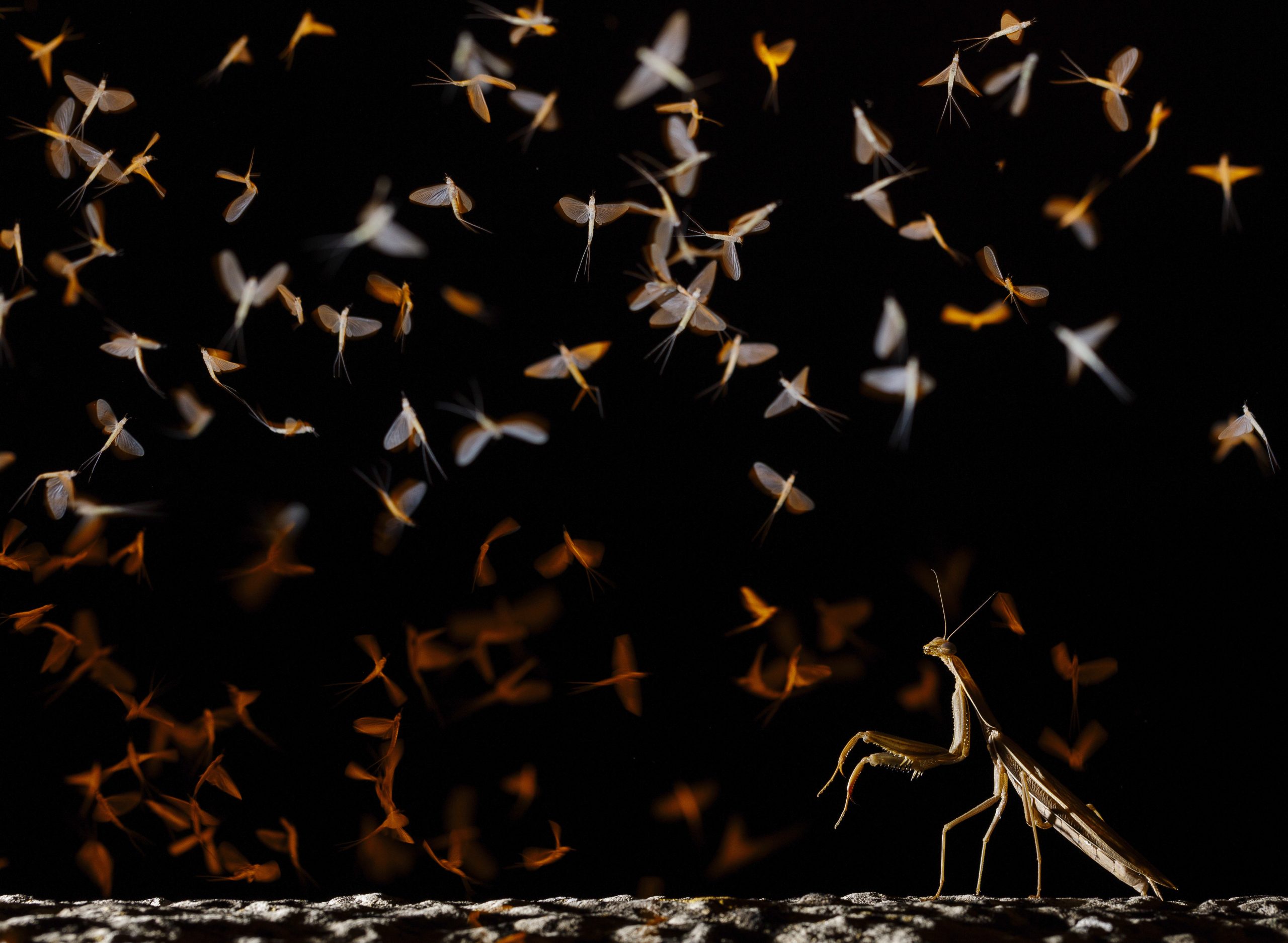
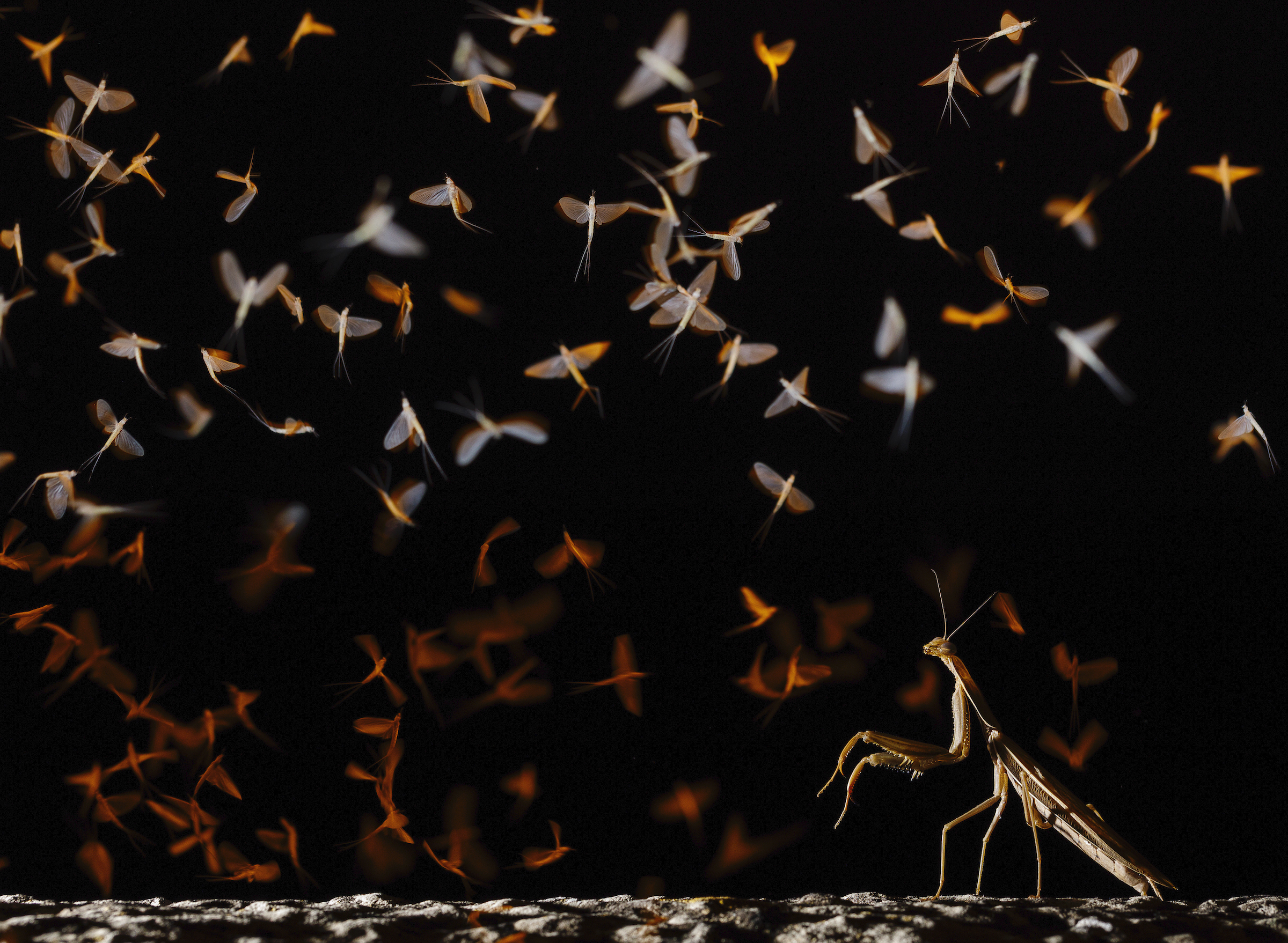
Along the western bank of the Ebro River in Tudela—a small town in northern Spain—a hungry mantis (Mantis religiosa) waits for one of the millions of recently hatched mayflies to flit within range of its raptorial legs. Given the sheer number of mayflies the odds might seem in the mantis’s favor, but the predator has just a few hours to take advantage of this frenzy, after which all of the mayflies will be gone.
This mass hatching and subsequent die-off of mayflies is part of the peculiar life cycle of these insects. After spending a year or so underwater in the relative safety of their larval stage, the mayflies emerge for just a handful of hours to mate and lay their eggs before dying. More fascinating still is the way in which they perish. Adult mayflies do not have functional mouthparts and are therefore unable to eat. Why a species would evolve to reach adulthood, reproduce, and die from starvation all in the same day remains a mystery, but what scientists do know is that mayflies are not the only animals that seem biologically programmed for a premature death. Indeed, the mantis falls into the same category.
If you know one thing about these predatory insects, it is most likely their proclivity for post-coital cannibalism. Before, after, or during sexual reproduction, the female mantis—which is usually much larger than the male—may decapitate and then devour her mate. While this behavior—known as sexual cannibalism—is relatively rare, it still happens about 30 percent of the time in some species. And just like the mayfly with its missing mouthparts, the real mystery is in the details, since even after decapitation the male mantis is still able to complete copulation. In fact, a 2016 study suggests that when sexual cannibalism does occur, reproduction tends to be more successful, with females laying larger clutches of eggs.
In recent years, researchers have started to investigate why this phenomenon, known as phenoptosis—the programmed death of an organism based on behavioral or physical characteristics—occurs. While the mantis and mayfly offer extreme examples of phenoptosis, some scientists think that understanding the process on a biochemical level could help to answer fundamental questions about why living beings—including humans—age and eventually die in the first place. For now, we will leave these existential questions to the scientists investigating them and answer a more immediate one: On this particular night, the mantis’s efforts to catch even a single mayfly before they died were unsuccessful.

Navarre, Spain
Hi, I’m Dave, the executive director of bioGraphic. (And that’s my dog, Finn.) Thanks for taking the time to read this story.
Stories like this simply don’t get produced without financial support from readers like you. bioGraphic is not backed by a private company or owned by a billionaire. It’s an independent, nonprofit magazine. And one-quarter of our annual budget comes directly from reader donations.
We need your support more than ever, as governments slash funding for conservation and scientific research, placing even more ecosystems and wildlife at risk around the world. At bioGraphic, we’re steadfastly shining a light on the threats to our planet’s incredible biodiversity. And we’re showcasing the hard work of people bravely taking action to protect at-risk species.
bioGraphic publishes environmental reporting that you can’t find anywhere else: deeply researched, trustworthy stories that are also beautiful and captivating to read. We offer an antidote to reader apathy and doom-and-gloom news by revealing the wonders of the natural world and focusing on real solutions to big problems. When you finish a bioGraphic story, we want to leave you feeling informed, delighted, and inspired.
We don’t run ads or hide our stories behind a paywall. The readers who generously support bioGraphic allow our work to remain free for everyone.
Will you help us keep telling these crucial stories?

Authors


Related Articles
Milt Meal
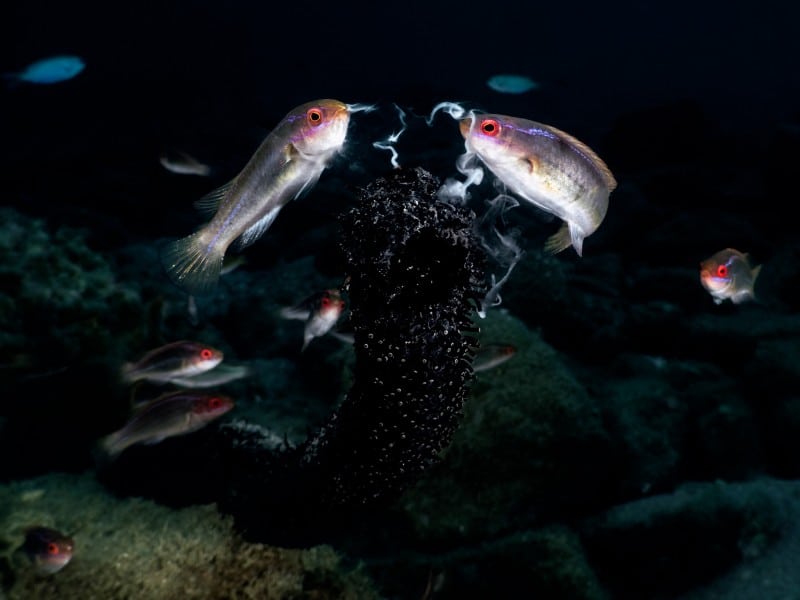
Marine creatures will do almost anything for a meal—including feasting on the sperm and eggs of spawning invertebrates.
The Art of the Catch
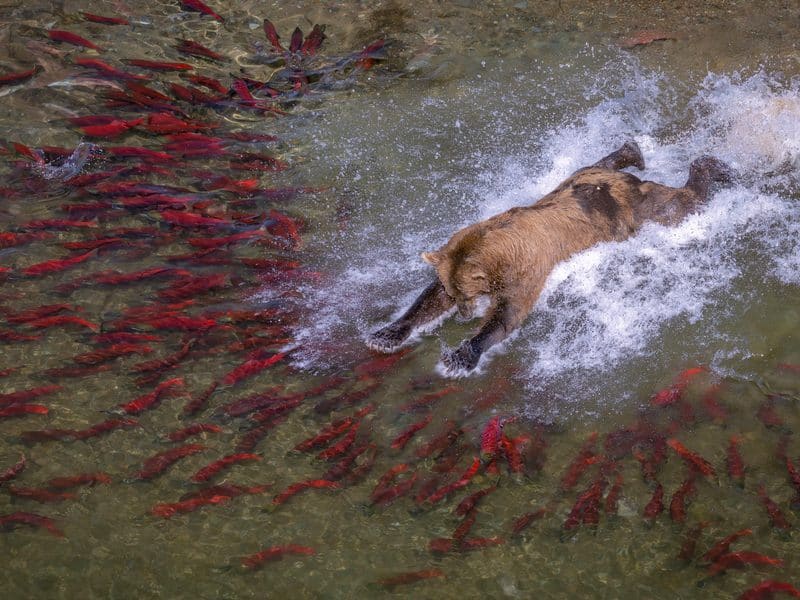
To bulk up for winter hibernation, Alaska’s brown bears employ a range of techniques for snaring salmon.
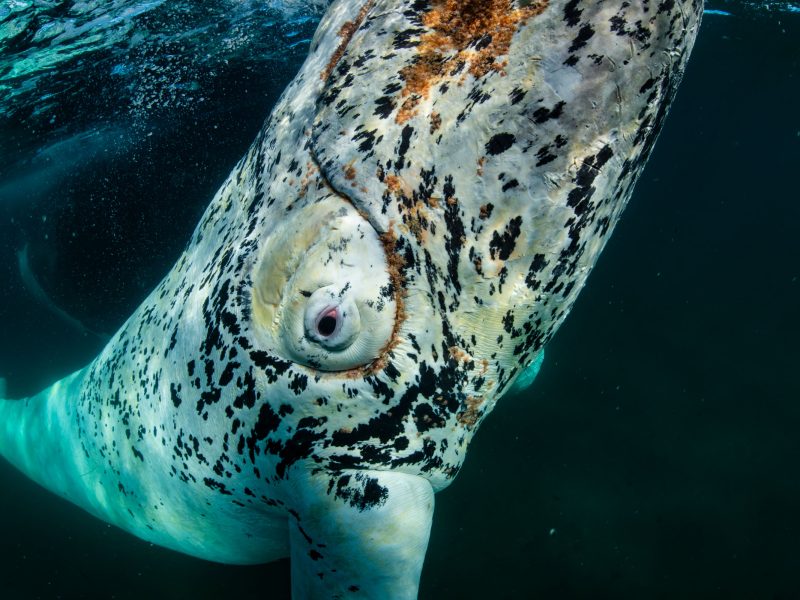
The Wonder of a Pale Whale
A curious calf with an atypical birthday suit is a good sign for southern right whales.