
Red Fish, Blue Fish
Mexican hogfish change colors—and sex—as they grow, perplexing scientists and attracting admirers.
Photograph by Alexander Mustard
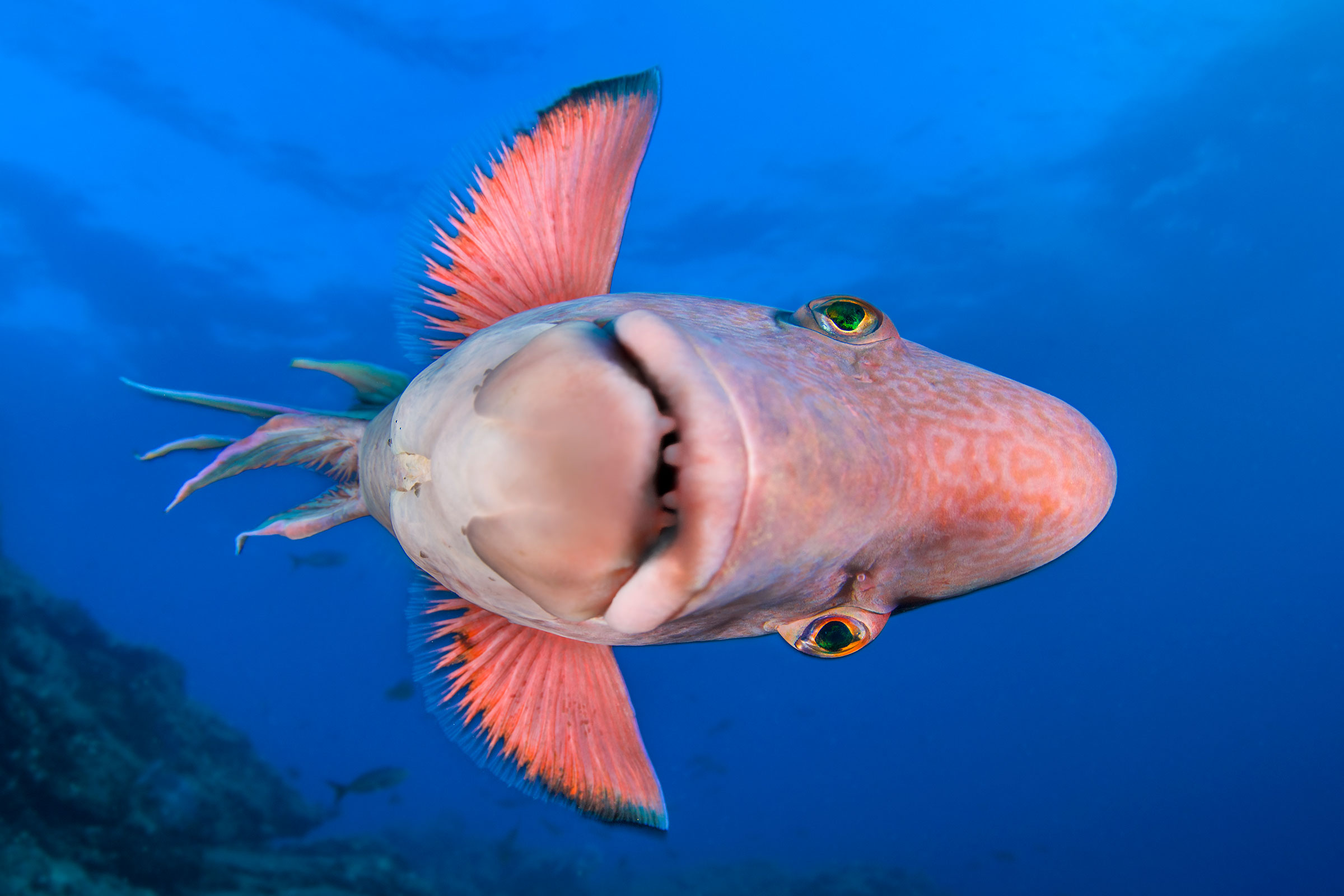
If you go for a dive in the eastern Pacific Ocean—say, the Galápagos Islands or Gulf of California—you might find yourself face to face with a Mexican hogfish (Bodianus diplotaenia). That’s what happened to photographer Alex Mustard during an expedition to Mexico’s Revillagigedo Islands, known for their rich marine biodiversity. The territorial male fish “had spotted its reflection in my lens and tipped over on its side to have a better look,” Mustard says. “This guy was definitely interested when he saw what he thought was another male.”
A species of wrasse that can weigh as much as a small cocker spaniel (about 10 kilograms, or 22 pounds) and grow a little less than a meter long, the tropical fish dwells among coral or in rocky areas down to 75 meters (246 feet). With its ample size and bright colors, it’s fairly easy to spot.
Those colors change as Mexican hogfish grow. All Mexican hogfish begin their lives as females, and some later become male, typically when they reach between 22 and 25 centimeters (8.6 to 9.8 inches) long. Juveniles are bright yellow with lines along their sides, while adult females are reddish-yellow, with a yellow tail and a pair of dotted dark stripes that run the length of their bodies, like passing lanes. Adult males, meanwhile, are largely gray with red flecks, a yellow bar running down their sides, and a bump atop their heads. The very biggest eventually turn blue. These frequent costume changes led scientists to erroneously believe for years that each hue indicated a different species.
Behind the flashy facade, no matter the color, is a mouth made for killing. The Mexican hogfish’s formidable front teeth, visible in the image above, and strong jaw give the fish its superpower: crushing prey. First it blows water into the sand with its prominent, hoglike snout to root out mollusks, crabs, and urchins. Then it clamps and crunches through its prey’s shell using powerful top-and-bottom canines.
Mexican hogfish are prey themselves—to larger fish, sharks, and also humans. Archaeological evidence shows that as far back as pre-Colombian times, people caught and ate hogfish. But they’re an acquired taste, which places them at little risk for overfishing, and the International Union for Conservation of Nature (IUCN) rates them as a species of “least concern.” A bigger threat comes from aquarium enthusiasts, drawn to their vibrant colors and lively personalities.
Scientists aren’t entirely sure why Mexican hogfish change their hue. Nor do they quite know why the fish change sex, but they think it may be in response to social conditions—for example, when a male is needed for mating. When it’s time to reproduce, the males compete for the females’ attention, performing courtship displays in leks—communal areas where males vie for mates.
These regular efforts to show up the competition suggest that Mustard’s encounter with a territorial male hogfish is unlikely to be his last. He’s glad about that. “Hogfish are definitely a favorite subject of mine,” he says. “They always seem like intelligent and adaptable fish, always up to something interesting.”

Hi, I’m Dave, the executive director of bioGraphic. (And that’s my dog, Finn.) Thanks for taking the time to read this story.
Stories like this simply don’t get produced without financial support from readers like you. bioGraphic is not backed by a private company or owned by a billionaire. It’s an independent, nonprofit magazine. And one-quarter of our annual budget comes directly from reader donations.
We need your support more than ever, as governments slash funding for conservation and scientific research, placing even more ecosystems and wildlife at risk around the world. At bioGraphic, we’re steadfastly shining a light on the threats to our planet’s incredible biodiversity. And we’re showcasing the hard work of people bravely taking action to protect at-risk species.
bioGraphic publishes environmental reporting that you can’t find anywhere else: deeply researched, trustworthy stories that are also beautiful and captivating to read. We offer an antidote to reader apathy and doom-and-gloom news by revealing the wonders of the natural world and focusing on real solutions to big problems. When you finish a bioGraphic story, we want to leave you feeling informed, delighted, and inspired.
We don’t run ads or hide our stories behind a paywall. The readers who generously support bioGraphic allow our work to remain free for everyone.
Will you help us keep telling these crucial stories?

Author

Related Articles
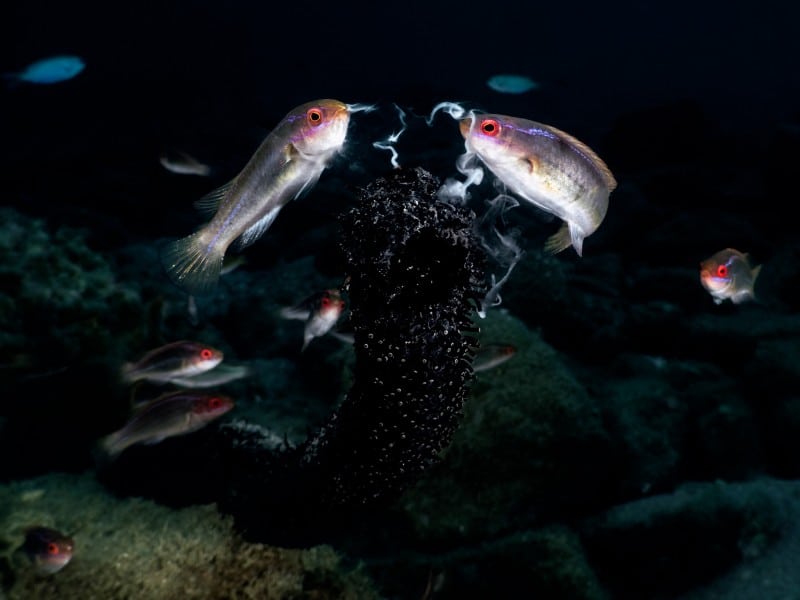
Milt Meal
Marine creatures will do almost anything for a meal—including feasting on the sperm and eggs of spawning invertebrates.
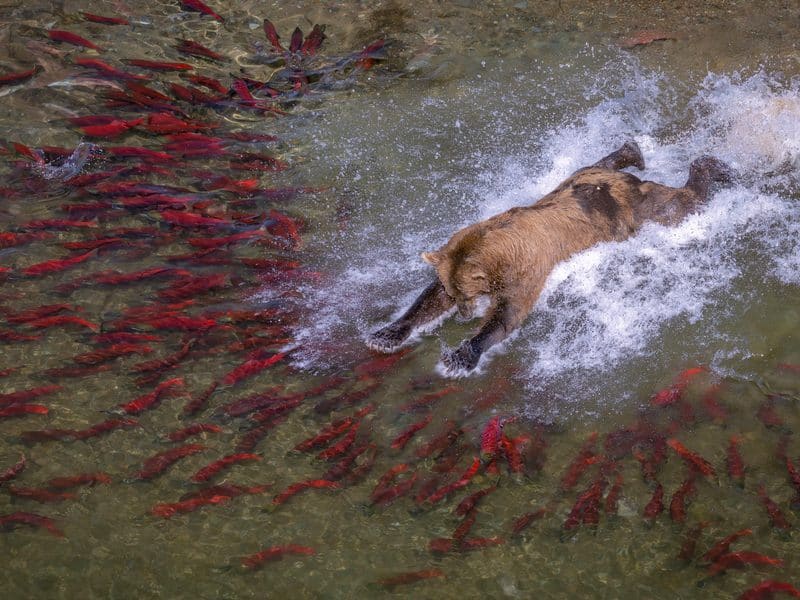
The Art of the Catch
To bulk up for winter hibernation, Alaska’s brown bears employ a range of techniques for snaring salmon.
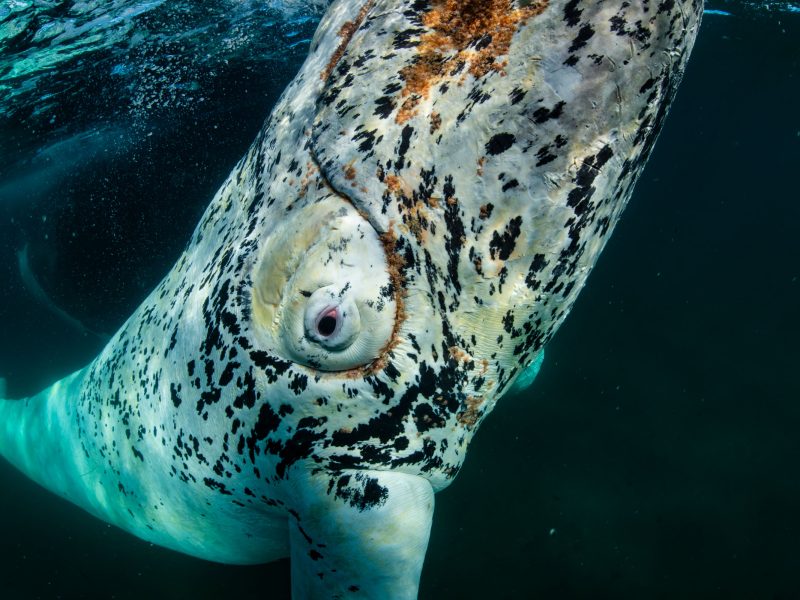
The Wonder of a Pale Whale
A curious calf with an atypical birthday suit is a good sign for southern right whales.