
Photograph by Staffan Widstrand
Story by Katie Jewett
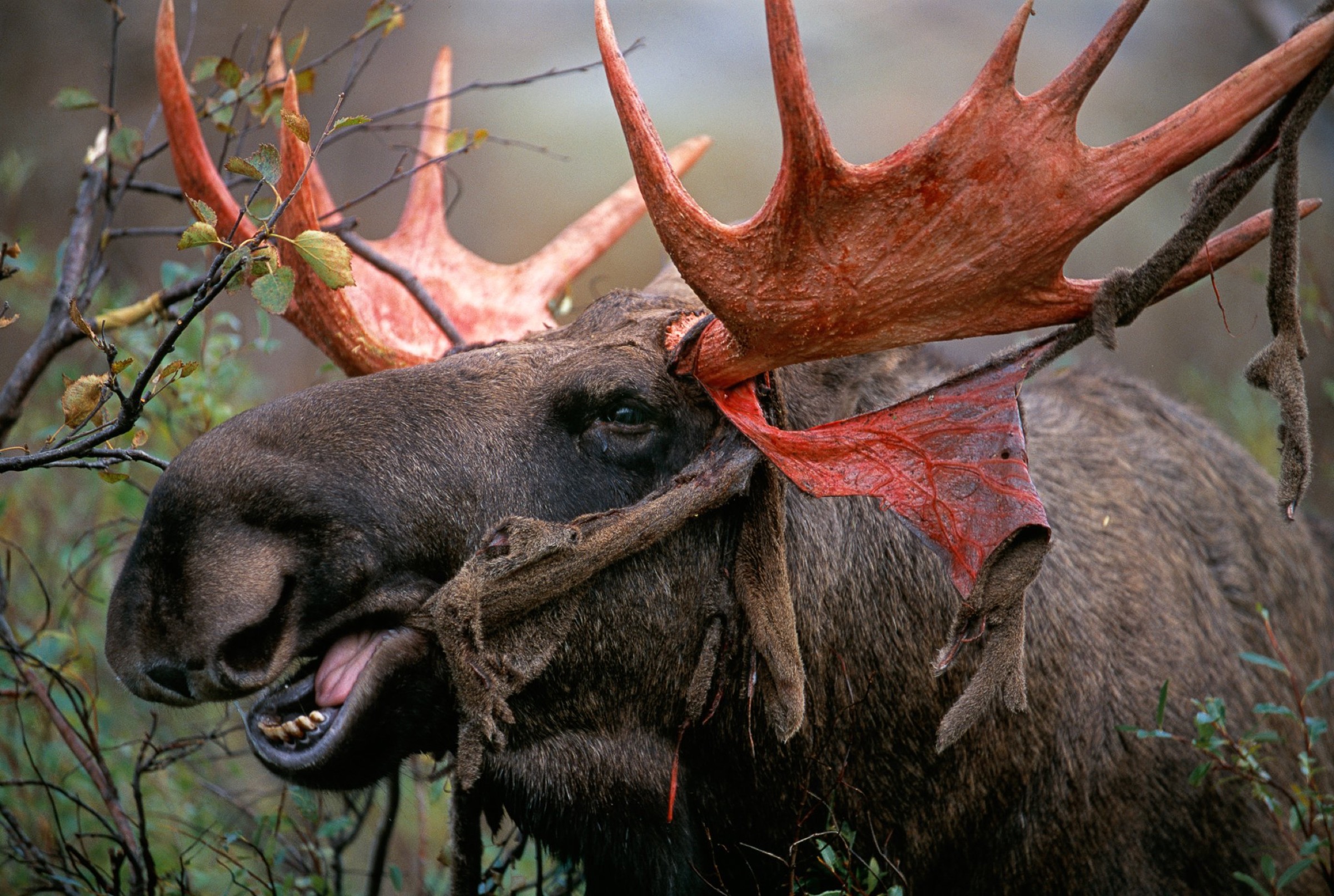
With a looming height of seven feet at the shoulder, moose (Alces alces)—or elk, as they are commonly called in Europe—are giants in their native boreal forests of Scandinavia. But these magnificent creatures haven’t always been so prominent. Hunting pressure in the 19th century nearly drove the species to extinction across the region. With moose numbers dwindling, Scandinavian governments stepped in to impose strict regulations, including a period of hunting prohibition in the late 1800s, that enabled the populations to begin their slow recovery. Today there are approximately 350,000 moose in Sweden alone, a population that supports both sustainable hunting and increasingly popular moose-watching safaris. Photographer Staffan Widstrand was trekking through Sweden’s Sarek National Park when he captured this rather grisly process: a bull moose quickly shedding, and consuming, the fuzzy encasement of its antlers known as velvet. Laced with nutrient-supplying blood vessels, this delicate tissue supports the rapid springtime growth of antlers—as much as an inch of new bone per day. Near summer’s end, the antlers begin to harden and mineralize, at which point the blood supply ceases to circulate through the velvet. Bulls then scrape their racks on nearby trees to speed the sloughing process. Widstrand says it was unclear whether this bull was merely clearing the long, tattered ribbons of velvet from his field of vision or recouping the valuable nutrients this tissue contains.
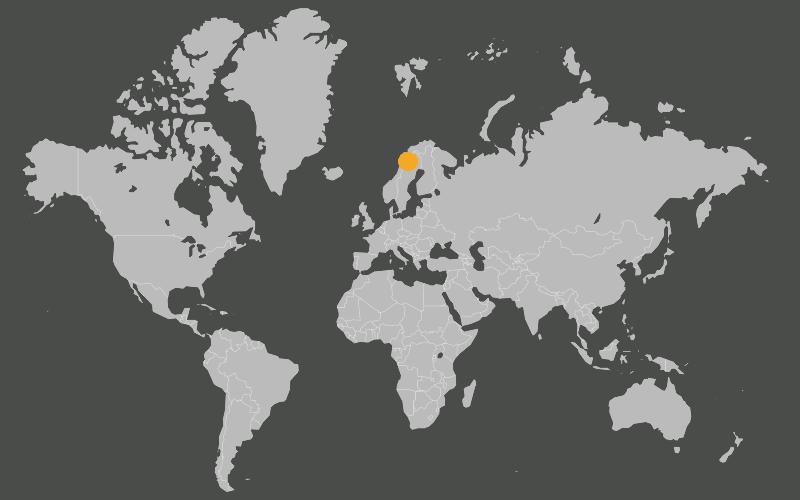
Sarek National Park, Lapland, Sweden
Hi, I’m Dave, the executive director of bioGraphic. (And that’s my dog, Finn.) Thanks for taking the time to read this story.
Stories like this simply don’t get produced without financial support from readers like you. bioGraphic is an independent non-profit—we’re not backed by a private company or owned by a billionaire. One-quarter of our budget comes directly from reader donations.
bioGraphic publishes environmental reporting that you can’t find anywhere else: deeply researched, trustworthy stories that are also beautiful and captivating to read. Right now, we need your help to raise $30,000 by October 2. Every dollar will go directly to more crucial reporting projects.
Around the world, governments are slashing funding for conservation and scientific research, placing even more ecosystems and wildlife at risk. At bioGraphic, we’re steadfastly shining a light on the threats to our planet’s incredible biodiversity. And we’re showcasing the hard work of people bravely taking action to protect at-risk species.
bioGraphic offers an antidote to apathy and doom-and-gloom news by revealing the wonders of the natural world and focusing on real solutions to big problems. When you finish a bioGraphic story, we want to leave you feeling informed, delighted, and inspired.
We don’t run ads or hide our stories behind a paywall. The readers who generously support bioGraphic allow our work to remain free for everyone.
We reached our goal, but there’s time left. Will you help us smash our original goal and reach a new goal of $30,000 by October 2?

Related Articles
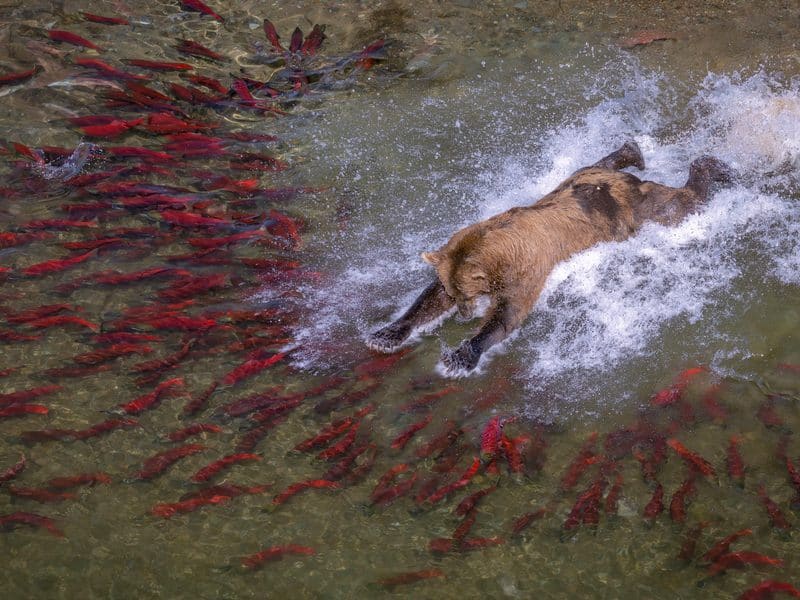
The Art of the Catch
To bulk up for winter hibernation, Alaska’s brown bears employ a range of techniques for snaring salmon.
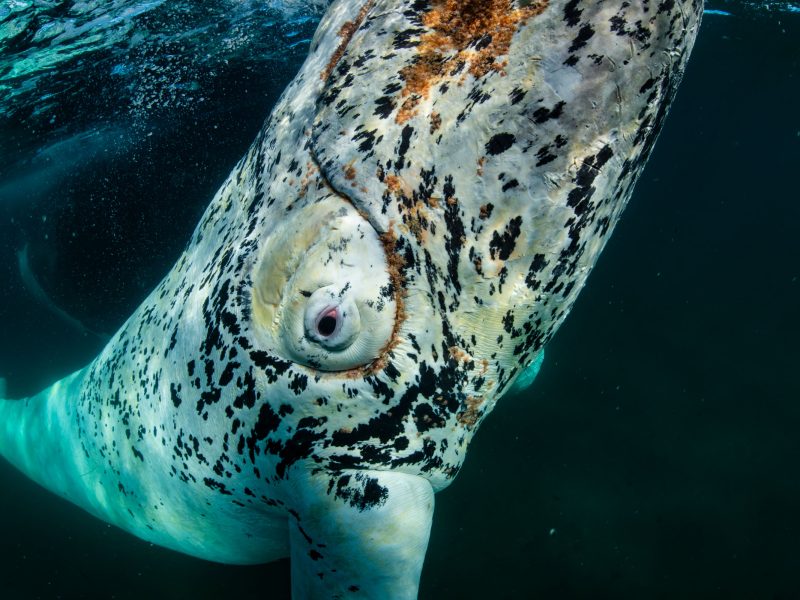
The Wonder of a Pale Whale
A curious calf with an atypical birthday suit is a good sign for southern right whales.
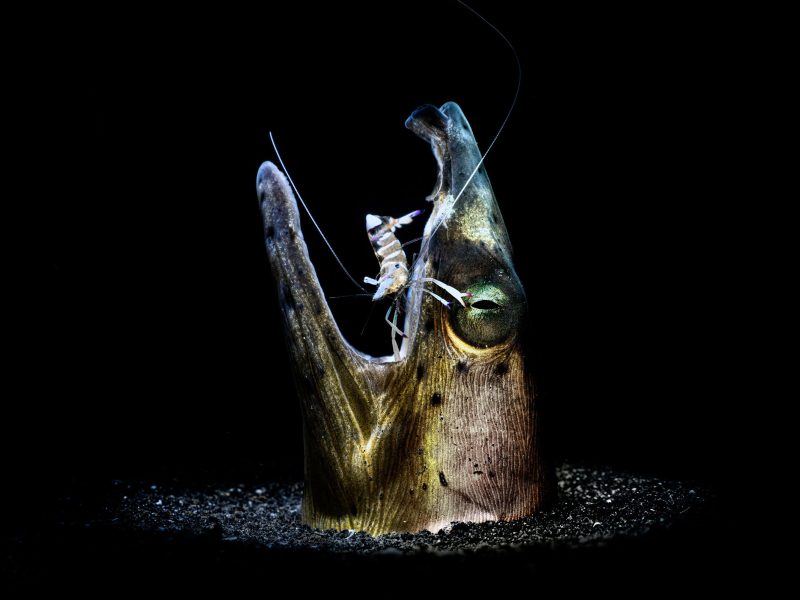
Saying “Ah!” at the Shrimp Spa
On coral reefs, an army of tiny cleaners eat their clients’ parasites, food particles, and dead skin, boosting biodiversity in the process.
