
This story is part of our special issue on the state of global conservation one year after the Trump administration enacted sweeping changes. Read the other stories at Conservation Enters a New Era.
On January 22, 2024, at the inauguration of the current Liberian president, Joseph Boakai, Liberian-American poet Patricia Jabbeh Wesley paid tribute to the West African nation’s tropical forests—one of the places where, she said, “our fathers came / centuries ago, and planted our umbilical cords / deep in the soil.”
The forests of Liberia are among the most diverse on the planet, home not only to humans and their ancestral ties but also to rare species such as forest elephants, pygmy hippopotamuses, and western chimpanzees. They’re also chronically threatened by industrial development, including illegal logging and mining. For nearly a decade, the Society for the Conservation of Nature of Liberia (SCNL)—the country’s oldest conservation organization—has recruited and trained a corps of as many as 80 eco-guards to help protect the forest. The eco-guards, all of whom live in forest communities, patrol for signs of illegal activity and share their findings with rangers from nearby national parks and forests. The work carries risks, from encounters with venomous snakes and charging elephants to the threat of violence from poachers, but eco-guards earn a salary that has enabled some to fund their children’s educations and purchase land to build homes.
In late January 2025, SCNL learned that the U.S. Agency for International Development (USAID), the eco-guards’ primary financial backer, was being dismantled by the Trump administration and that funding had been abruptly suspended. SCNL program manager Michael E. Taire, a Liberian who lives in the national capital of Monrovia, spent several days with his colleagues traveling over rough forest roads to break the news to the eco-guards, who were shocked and distraught. In one forest community, he remembers, a young woman said that if SCNL couldn’t pay her and her fellow guards, they would have to support their families by “doing what they used to do”—which, in her case, meant illegally hunting forest animals.
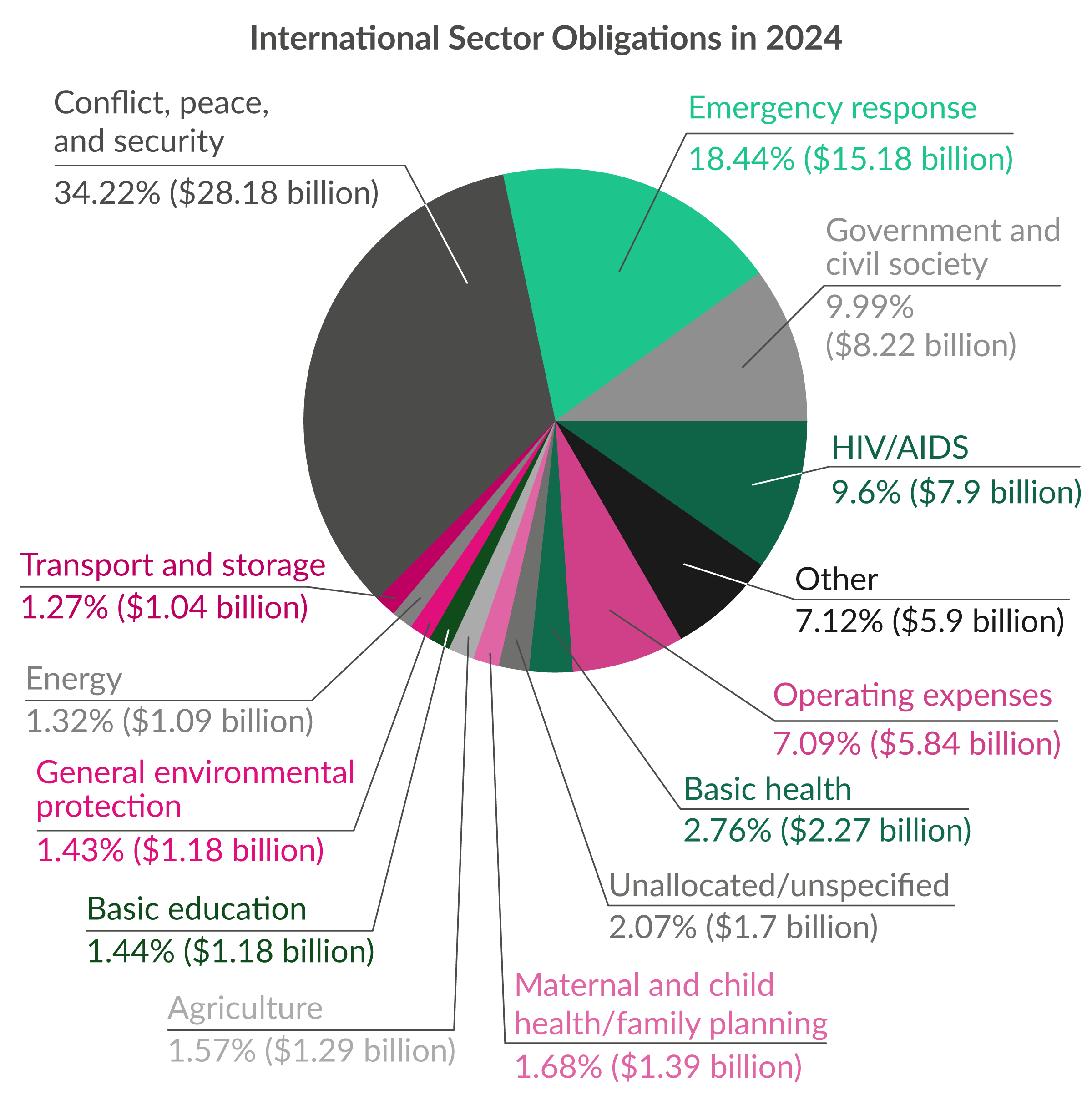
Most of the public attention on the demise of USAID has focused on its consequences for human health, and for good reason. USAID support for HIV/AIDS treatment, malaria control, and other initiatives has saved 91 million lives over the past 20 years, according to one analysis, and the cuts are estimated to have already led to the deaths of 834,000 people, more than two-thirds of them children. Liberia, which was one of the first countries to receive USAID support, lost an estimated US $290 million in support for local schools and clinics, ambulances, medical training, and other basic health and education needs in 2025. More than 2.5 percent of the country’s gross national income came from USAID—the highest percentage in the world.
These tragedies overshadow another great loss. Until early 2025, USAID was not only the world’s leading source of health aid but also one of the world’s largest backers of biodiversity protection. The agency oversaw and funded efforts to combat wildlife trafficking, protect valuable habitats, and support community-led conservation—to defend the places where, as Jabbeh Wesley describes, many Liberians feel a physical connection to their ancestors and the land.
The dismantling of USAID, along with the suspension of international conservation grants from other U.S. agencies, has endangered not only species and habitats but also the people who defend wildlife around the world. Park rangers and wildlife crime officers lost funding for salaries, training, and equipment. Efforts to address the root causes of wildlife trafficking in Africa, Asia, and elsewhere were axed, as was USAID’s forest-protection program in the Congo Basin of Central Africa, one of the agency’s largest and most enduring endeavors. Conservation organizations large and small lost tens of millions of dollars, forcing some to function with a fraction of the resources they’d expected and others to shut down programs entirely.
David Kaimowitz, a longtime advocate of community-led conservation in the Amazon Basin, Central America, and elsewhere, puts it bluntly: “We’re talking about an end to a whole era of conservation.”
Now, a year later, global leaders and local people are charting a new course—and planning for a future without U.S. support.
Photograph by Inaki Relanzon/Nature PIcture Library
On January 20, 2025, hours after U.S. President Donald Trump was sworn in for his second term, he issued an executive order freezing all federal spending on foreign development assistance. Funding for conservation work outside the U.S. was suspended, and hundreds of USAID staff around the world were placed on leave or fired.
By March, the Trump administration had terminated more than 80 percent of USAID programs, and on July 1, the agency officially closed. The Inter-American Foundation, a smaller U.S. aid agency that supported grassroots conservation in Latin America and the Caribbean, was also dismantled. (A court decision has since restored Inter-American Foundation, though its budget has been reduced by 40 percent.) International grant making by the U.S. Fish and Wildlife Service (USFWS) and the U.S. Forest Service (USFS) was halted.
Though the demolition of these institutions was uniquely sudden and chaotic, the idea that richer countries should assist their poorer neighbors has always had its detractors. In 1794, when Secretary of the Treasury Alexander Hamilton proposed that the U.S. send $15,000 in assistance to Haitians displaced by their country’s independence struggle, irate members of Congress argued that sending tax dollars abroad violated the Constitution. Hamilton got his way, though, and over the next century and a half, the U.S. responded to overseas famines, earthquakes, and wars with sporadic but substantial aid.
In 1961, President John F. Kennedy created USAID and consolidated the country’s aid efforts within it. He had called on the country to support foreign aid “because it is right,” but he and other political leaders also saw it as a necessary bulwark against communism. The details continued to be fiercely debated, with successive administrations and congressional leaders taking radically different views on whether, why, and how foreign aid should be distributed.
In the late 1980s, after scientists coined the term “biodiversity” to draw attention to the costs of species extinction, Congress began to dedicate a portion of USAID funding to saving the planet’s biodiversity. In the 1990s, the USFWS and USFS followed suit by formalizing their own international conservation programs.
USAID had previously paid little attention to environmental concerns, supporting high-input agriculture, large hydropower dams, and other initiatives with some immediate benefits but often grievous long-term effects for both people and the environment. Conservation groups based in the U.S. and Europe, for their part, had pushed to create national parks and reserves in Africa and elsewhere without regard for the people whose lives were disrupted or displaced. In response, conservationists in the global south were beginning to argue for an approach that benefited both local people and the ecosystems they depended on. Though USAID had its own history of paternalistic interventions, its staffers were trained to meet human needs. Many readily incorporated local perspectives as they began to address conservation issues.
“When I started with the agency, people still thought that to do conservation we should educate local communities,” says Cynthia Gill, who spent more than 30 years working for USAID and headed its biodiversity and forestry work before being placed on leave in early 2025. Gill says she and her colleagues tried to listen instead. As one of USAID’s leaders of Parks in Peril—which between 1990 and 2007 strengthened the management of some 45 protected areas in Latin America and the Caribbean—she strove to involve local organizations and communities that had often been excluded from park management.
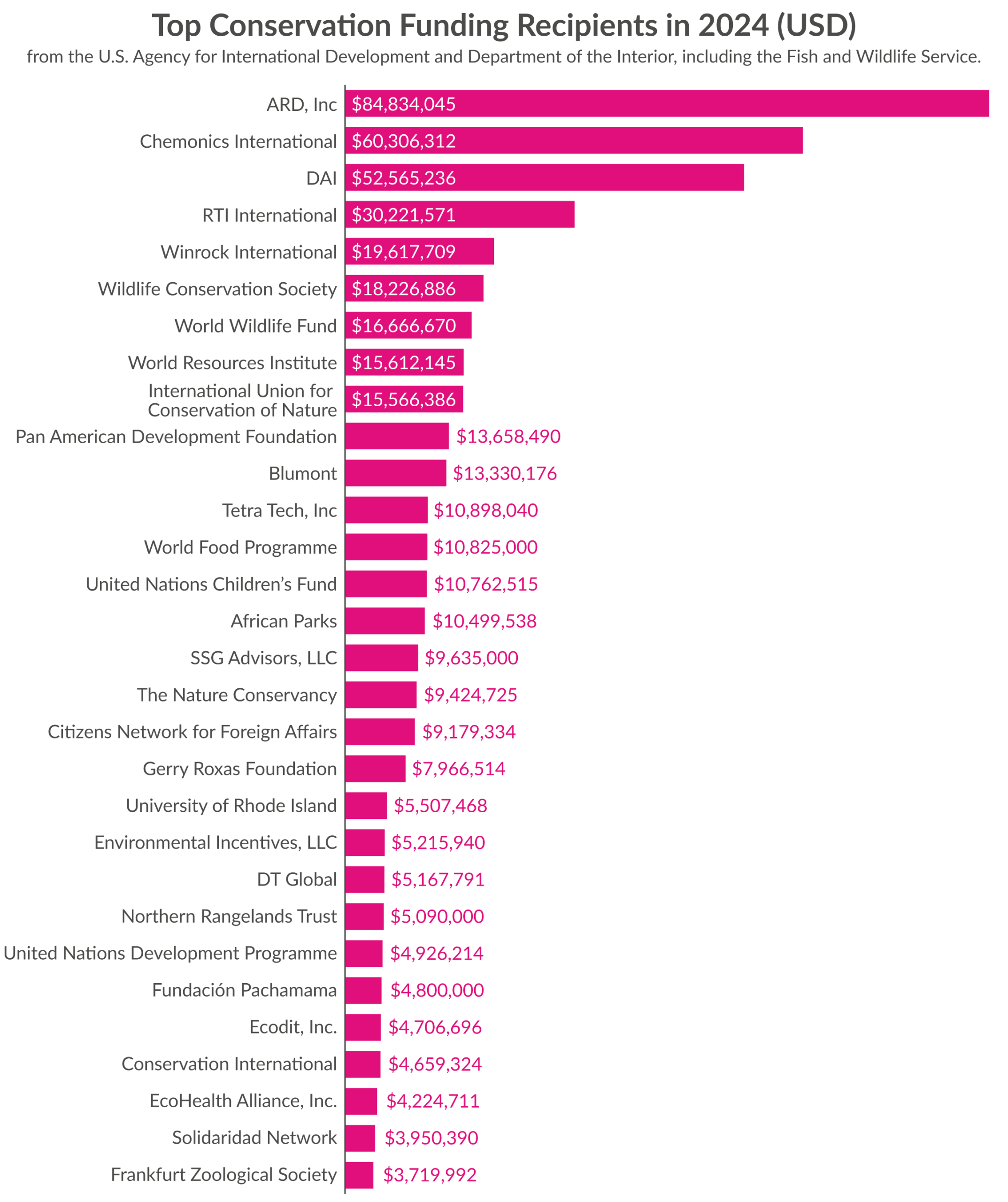
Thanks to bipartisan support for conservation in Congress, the money dedicated to biodiversity programs grew slowly but steadily through the 1990s and early 2000s. USAID invested heavily in forest conservation in the Congo Basin, which has extensive rainforests rivaled only by those of the Amazon. It supported the creation of a national park system in Gabon that used surveys by Gabonese social scientists to help determine the size and location of protected areas, in an effort to avoid impacts on local livelihoods. In Colombia, the agency funded an ambitious initiative to promote ecotourism in six regions scarred by the country’s civil war; in Nepal, agency staff and local partners spent a decade bolstering a nationwide community forestry network. USAID helped conserve tigers in Bangladesh and combat wildlife trafficking in dozens of countries including Vietnam, Malawi, Ecuador, and the Philippines; it collaborated with the Jane Goodall Institute to protect chimpanzee habitats and improve human livelihoods in Tanzania; and it invested hundreds of millions of dollars in the work of large international conservation organizations such as the Wildlife Conservation Society, the World Wildlife Fund, and The Nature Conservancy.
Still, there were critics. Opponents of foreign aid in Congress repeatedly attempted to defund or abolish USAID. International conservation professionals often faulted USAID and other U.S. agencies for bureaucratic inefficiencies, and for collaborating too closely—or not closely enough—with government officials in the countries where they worked.
Yet the U.S. government’s biodiversity initiatives led to measurable gains for species and ecosystems around the world. They also shaped modern conservation by drawing attention to the intertwined needs of people and wildlife. “So many of the things that threaten conservation have to do with poverty,” says a former USAID official, who requested anonymity to protect former coworkers. “Being able to work on conservation within a development agency, where that expertise was at arm’s reach, really helped me and my colleagues work more holistically.”
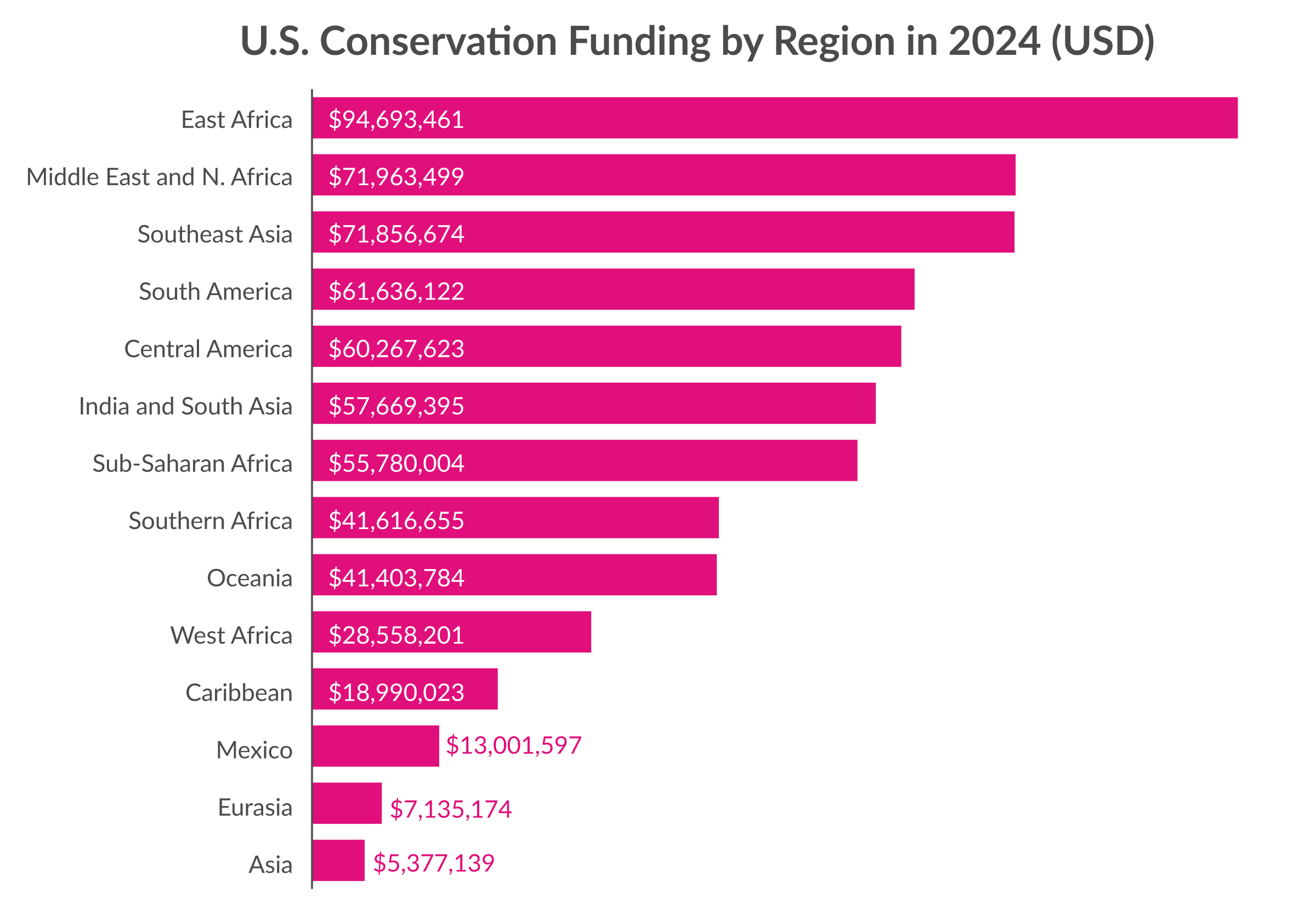
By the 2020s, Congress was approving more than $300 million for USAID biodiversity programs each year. International conservation work by the USFWS and USFS, though always more modest, grew over time as well; in 2024, these agencies received about $25 million and $20 million, respectively, for their international programs. While these figures are tiny relative to the national budget, they were enough to make the U.S. a keystone species in international conservation.
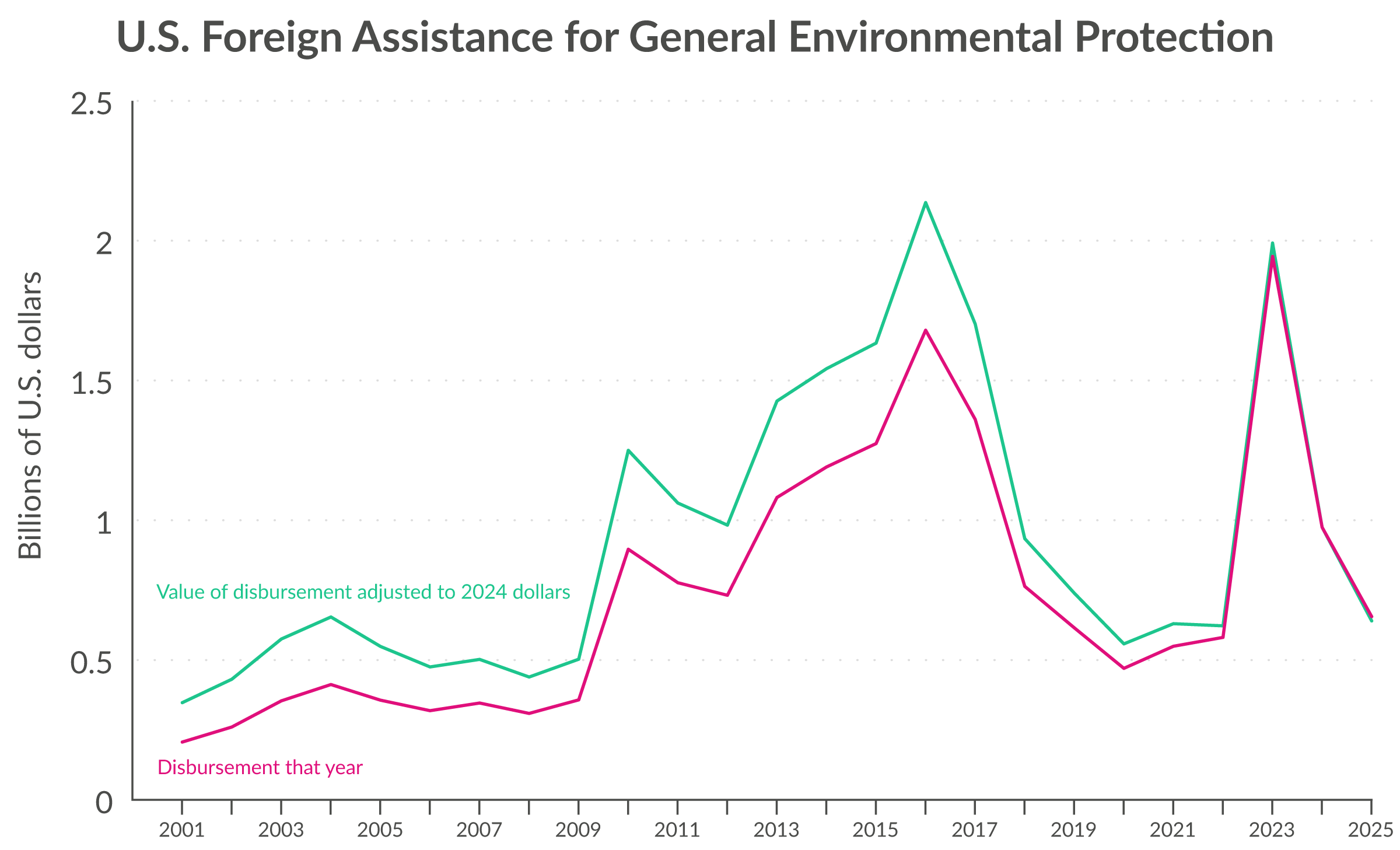
During the Biden administration, USAID director Samantha Power led the creation of a far-reaching new biodiversity policy for the agency, one that emphasized locally led development and stewardship, climate resilience, and a fuller incorporation of biodiversity protection into its work. The policy was released in December 2024—only weeks before the wrecking of USAID began.
Photograph by Karl Ammann/Nature Picture Library
So far, those on the frontlines of conservation are paying the highest price. Like the eco-guards in Liberia, park rangers and wildlife crime officers in Malawi, Tanzania, Vietnam, and elsewhere have lost their livelihoods. In Sumatra’s Leuser Ecosystem, famous for being the last place on Earth where free-living tigers, elephants, rhinos, and orangutans coexist, anti-trafficking patrols run by the grassroots organization Forum Konservasi Leuser (FKL) have lost support from the USFWS. Some community rangers have lost not only their paychecks but also critical health and education services once provided by USAID—compounding their suffering and compromising their ability to protect wildlife
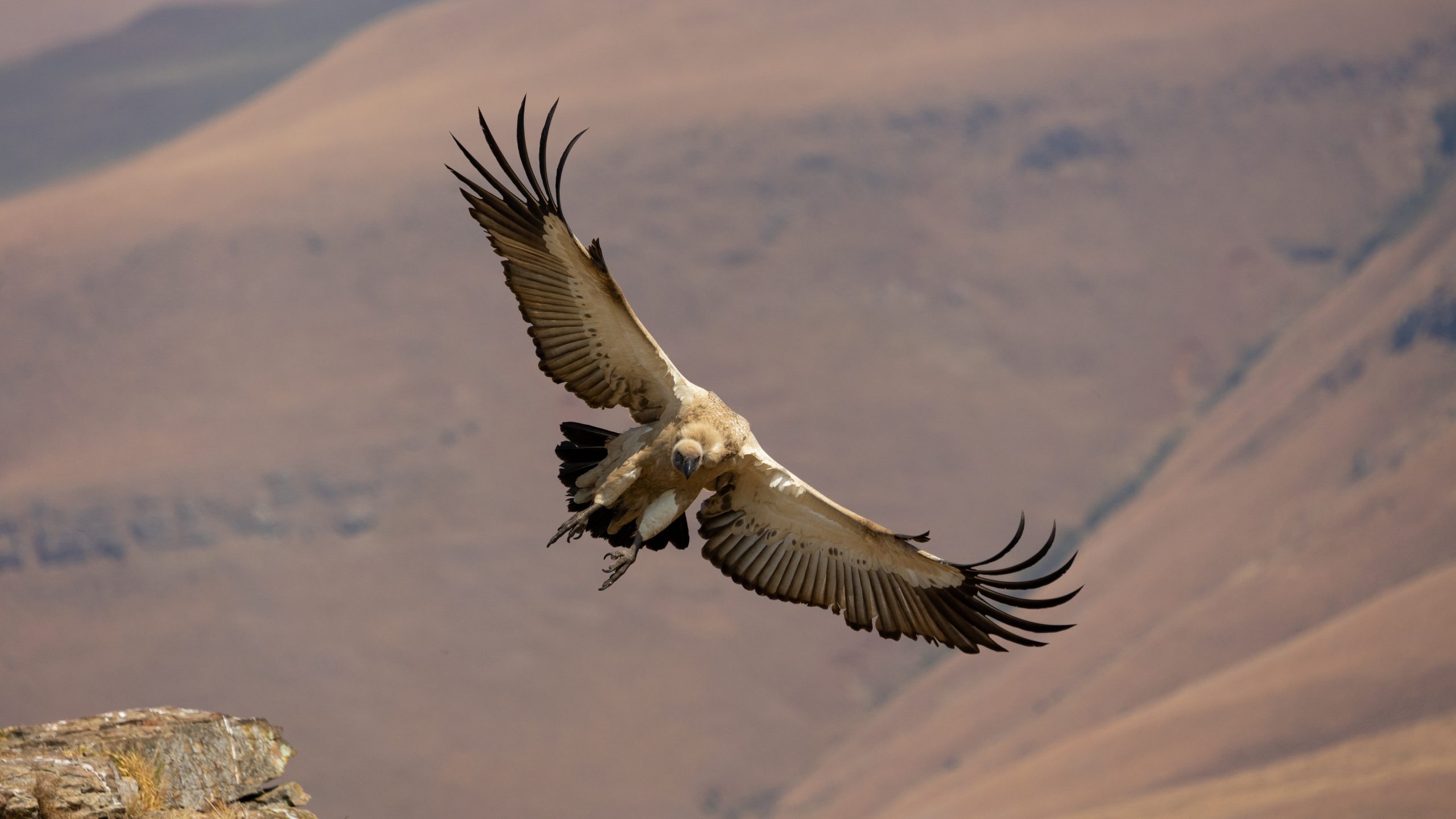
Other species are also suffering, though it’s too soon to measure the effects of the cuts on efforts to reduce poaching, trafficking, and habitat loss. In South Africa, the Endangered Wildlife Trust lost about $1.2 million, forcing it to cancel projects combating rhino poaching and monitoring Africa’s six vulture species, which are frequently poisoned by illegal hunters to prevent them from gathering around carcasses and drawing the attention of law enforcement. The continent-wide decline of vultures has led to the accumulation of carrion and food waste and may be accelerating the spread of disease.
Kishaylin Chetty, head of sustainability for the trust, says that while international and national donors stepped in to ensure that the trust did not have to immediately lay off staff, local groups funded by USAID that had partnered with the trust were less fortunate. “Certainly the impact that those [groups] and ourselves were trying to achieve has been set back,” he says. “It’s been set back a number of years, and it will be a while before we can get that traction back.”
The trust also had to shut down a project that trained dogs to identify rhino horn and other frequently smuggled wildlife products and abandon a restorative justice initiative that strove to prevent small-time wildlife traffickers from escalating their activities. Annette Hübschle, who studies issues including rhino and succulent trafficking as the chief research officer at the University of Cape Town in South Africa, emphasizes that such “soft” approaches to trafficking—those that begin to address the inequality and colonial legacies at its roots—are at least as important as ranger patrols. “You really, really need to work with communities if you want to protect rhinos and have future rhinos,” she says. “USAID was actually doing a really good job.”
Other long-term efforts have likewise faltered. In and around Sumatra’s Leuser Ecosystem, the logging of rainforests for oil palm plantations has weakened riverbanks and led to massive floods and landslides. USAID had facilitated a multiyear planning process to map high-value conservation areas and ensure that local farmers were represented, but the agency’s departure will likely allow palm oil companies to once again dominate land use planning, says Husna (many rural Indonesians don’t use surnames), an activist with a local group called People’s Conscience. “Our conservation ark is sinking,” she says.
In northern Kenya, where deep, lasting droughts worsened by climate change have decimated livestock and aggravated long-standing ethnic conflicts, the Northern Rangelands Trust had used USAID money to support community peace building. “USAID was kind of the glue, bringing people together for dialogue under the acacia trees, bringing elders and youth to the table,” says Dida E. Fayo, who grew up in the region and, until late 2025, served as the trust’s director of programs, planning, and implementation. USAID’s abrupt withdrawal after 60 years of support, he says, was chaotic. Communities lost access to health care, including treatment for HIV and tuberculosis; without a major source of food aid, they were suddenly more vulnerable to famine. Amid the fear and confusion, violence flared.
Diane Russell, an American anthropologist who has worked on natural resource management, forest protection, and community forestry for USAID in the Congo Basin since the 1980s, says the agency helped draw international attention and funding to the region’s remarkably rich remaining forests, which are home to mountain gorillas and forest elephants. It also enabled conservation to continue through extraordinarily difficult conditions. In the late 1990s, for example, when the eastern half of the Congo was occupied by forces from Rwanda and Uganda, Russell persuaded Congolese officials to allow USAID and the United Nations Foundation to continue supporting protected areas in the war zone. That was only possible, she says, “because I had USAID at my back.”
Now back in the U.S., Russell has spent the past several months trying to salvage decades of data, while also keeping in touch with her former Congolese colleagues and helping them find new jobs when she can. “When I think of the wreckage that this left behind,” she says, “the wreckage of people’s lives and their careers and their families—sometimes it’s just overwhelming.”
Photograph by David Jara Bogunya/Shutterstock
The losses will continue to mount. Yet even as conservationists mourn, says Kevin Starr of the philanthropic Mulago Foundation, they should be alert for opportunities. “The callous glee with which [the Trump] administration choked off aid is something I will never forgive or forget,” he wrote in an essay published in spring 2025. But, he continued, the era of “Big Aid”—generous spending by rich countries on health, education, and conservation abroad—is over, and funders and advocates must adapt. “Imagining a development future without Big Aid is hence the wisest—and paradoxically the most optimistic and creative approach we can take.”
While the Trump administration’s cuts have crippled many conservation organizations and forced them to cancel projects, others have found ways to carry on. The FKL is continuing its patrols by reallocating funds intended for a new field station. (The field station will have to wait.) In August, the SCNL secured short-term funding from the Rainforest Trust, a U.S.-based conservation group, to restart its eco-guard patrols. The Endangered Wildlife Trust and several other groups contacted for this story said existing donors have increased their gifts and that the news of the cuts has attracted new supporters.
“It’s been infuriating and damaging, but by no means catastrophic,” says Matt Clark, executive director of Nature and Culture International. His organization lost over $2 million of USAID and USFWS money for conservation in the Ecuadorian and Peruvian Andes but hopes to make up at least some of those losses with European government grants. Other groups formerly funded by the U.S. have also received, or hope to receive, funding from Germany, the United Kingdom, or other European governments. Norway, a longtime supporter of international forest conservation, announced a $3 billion contribution to the newly established Tropical Forests Forever Facility in November.
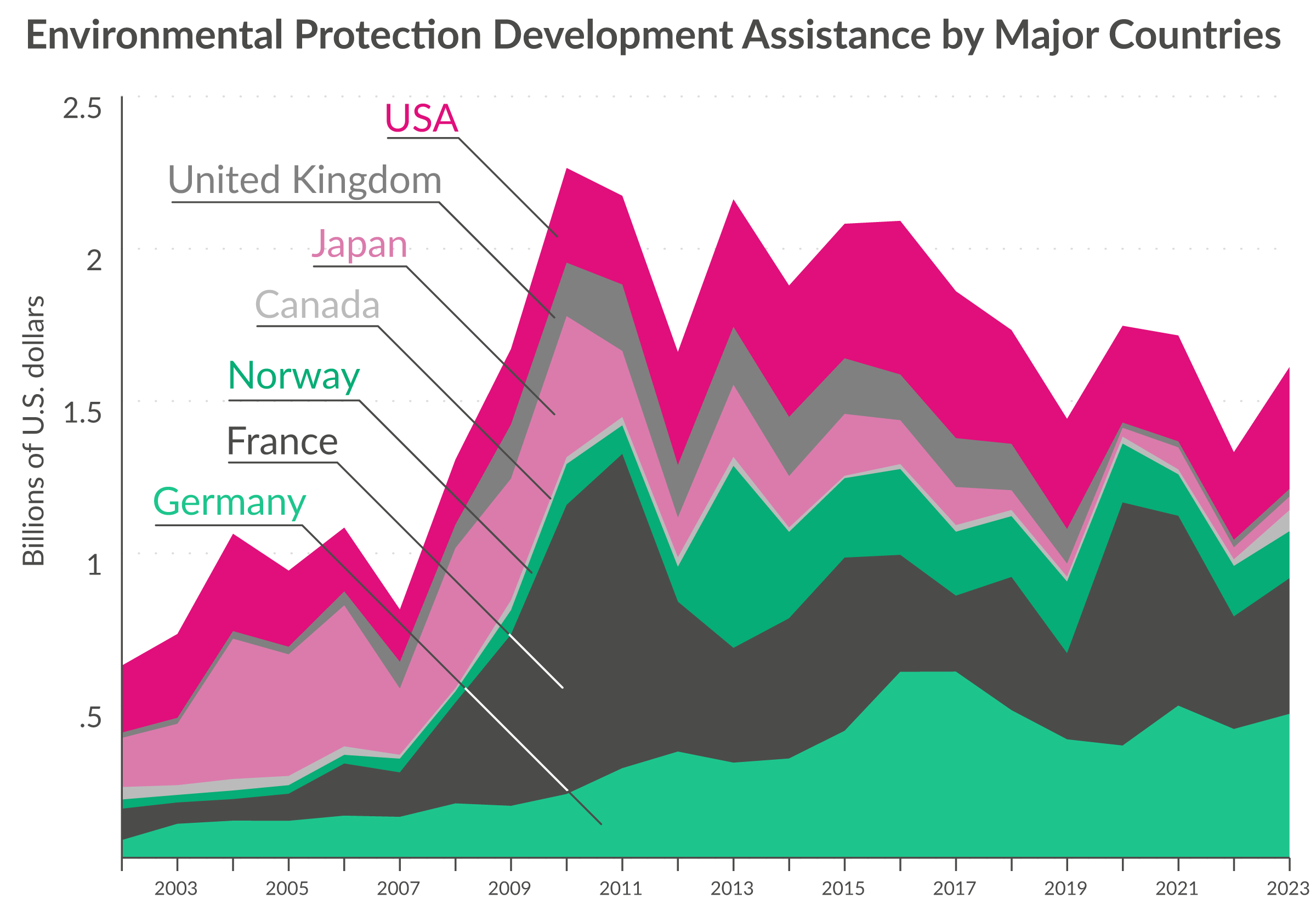
Enormous gaps remain. Michael E. Taire of the SCNL says that while the eco-guards are back at work for now, he and his Liberian colleagues are no longer able to meet with their counterparts in neighboring Sierra Leone to coordinate forest protection across the region, though he hopes that can change. And the alternative sources of funding may not last: European and U.K. governments are widely expected to reduce support for international conservation as they build up military capacity in response to the Trump administration’s hostility toward NATO. Similarly, the administration’s cuts to domestic spending mean U.S. philanthropists may be less willing to give abroad because they’re besieged with competing appeals for help at home.
James Deutsch, CEO of the Rainforest Trust, suggests that many of the effects of the cuts aren’t yet visible. “But five or 10 years from now, you’ll be starting to see them,” he says, “and people will say, ‘How could we have destroyed the capacity for longer-term success?’”
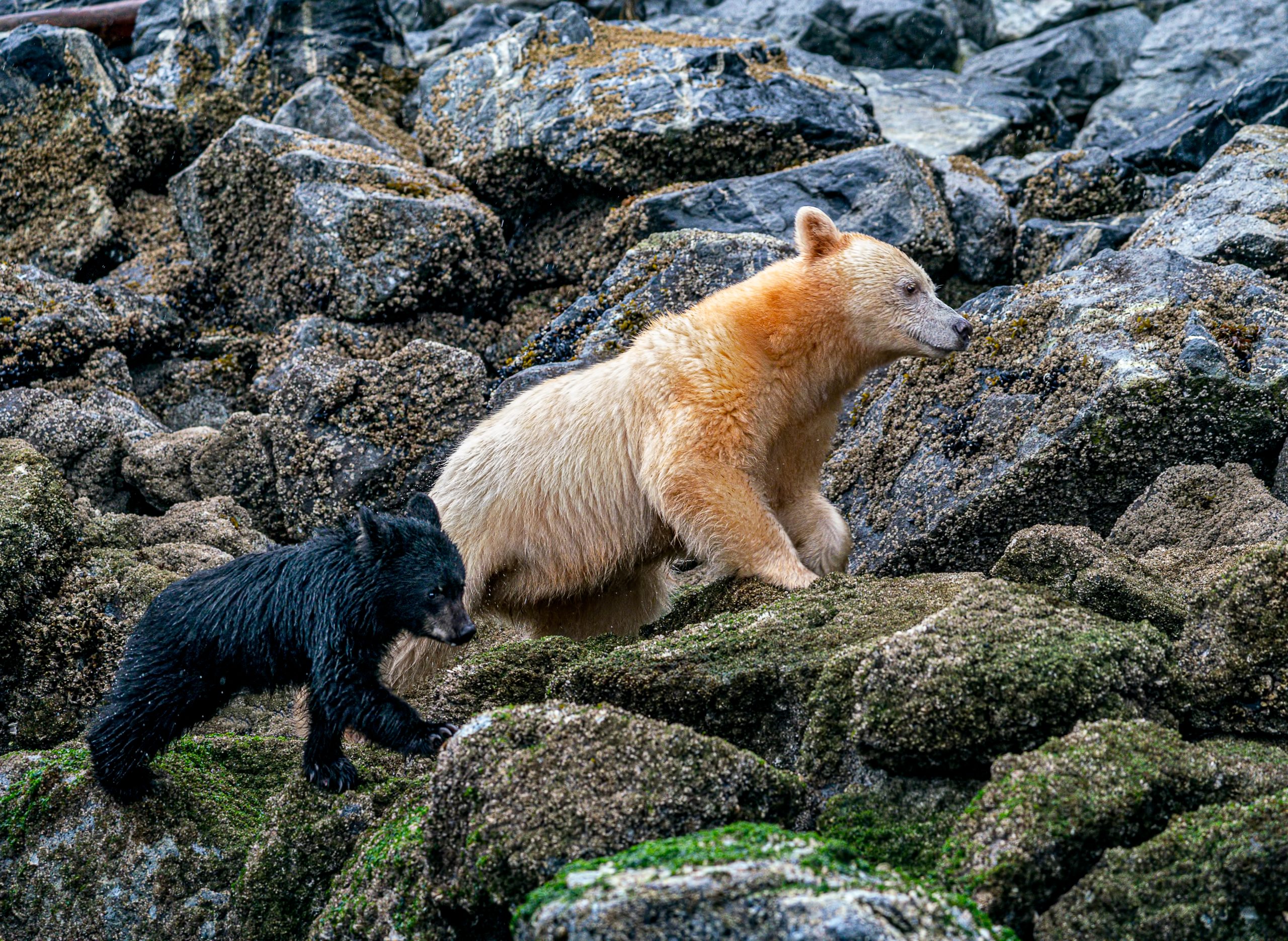
In the new era of international conservation, large organizations may turn to tools such as debt swaps and Project Finance for Permanence agreements, or PFPs, to better leverage their funds. These models are particularly useful for far-reaching, complex, and collaborative projects like those recently undertaken in the Ecuadorian Amazon and the Great Bear Sea region of coastal British Columbia.
Smaller-scale initiatives are also likely to play a more prominent role. Though they can’t protect large migratory species or extensive forests like those of the Congo Basin, they can still protect places that are biologically rich and ecologically important, and their manageable size and local relevance allow them to move nimbly toward results. Fellowships worth $100,000 from the Mulago Foundation, for instance, have helped communities in Eastern Indonesia find buyers for their forest products, supported fish farmers on East Africa’s Lake Tanganyika in raising native species instead of invasives, and provided legal training to members of Indigenous communities in Papua New Guinea so they can advocate for control of their land and water.
Some communities may be able to move beyond foreign assistance altogether, building on groundwork laid during decades of U.S. involvement. In Ethiopia, Indigenous communities that gained the right to jointly manage their ancestral lands with legal help from USAID plan to use funds raised by ecotourism and trophy hunting to continue protecting nature and pastoral livelihoods across 197,000 hectares (487,000 acres) of community conservation areas.
Even as the Trump administration axes spending on international conservation, bipartisan support persists in Congress. Just before former President Joe Biden left office in early 2025, Congress created the U.S. Foundation for International Conservation, which contributes $1 for every $2 raised by private donors. Rep. Michael McCaul, R-TX, then-chairman of the House Foreign Affairs Committee and a coauthor of the legislation, told his House colleagues that the foundation would not only protect endangered species but contribute to global stability by helping to control wildlife trafficking and illegal logging. He called it “a diplomatic investment in the U.S. foreign policy toolkit that none of our adversaries can replicate.”
The foundation has so far evaded the administration’s foreign-aid chainsaw. In the summer of 2025, Congress authorized up to $100 million for the fund during this fiscal year. In early January 2026, Congress also pushed back on the administration’s proposal to eliminate the international programs of USFWS and USFS, funding both at or near 2024 levels. The future of these programs, however, remains highly uncertain.
Photograph by Juan Manuel Borrero/Nature Picture Library
In July 2025, two former USAID staffers, Hadas Kushnir and Monica Bansal, launched an effort to collect and preserve the agency’s accumulated climate and conservation knowledge. With the help of a grant from the nonprofit Navigation Fund, they’ve reestablished contact with almost 600 former USAID employees, contractors, and grantees in 65 countries. Recently, they interviewed more than 150 additional people who worked on USAID or USAID-supported conservation and climate programs in Colombia, Peru, Kenya, Mozambique, the Philippines, Vietnam, and Bangladesh. “You’re basically hearing about the loss of everything that they cared about and loved and worked on,” says Kushnir, a conservation biologist who spent 14 years working for USAID in Washington, D.C., and Uganda. “People whose entire organizations are just decimated because USAID is gone.”
While these professionals recalled the bureaucratic burdens and other shortcomings of USAID, they said its capacity for systematic change was unparalleled. In Peru, for example, the agency’s forestry-protection work involved local communities, the private sector, and national policymakers. The agency also promoted sustainable agriculture and other legal alternatives to drug and wildlife trafficking. In the absence of such interlocking efforts, interviewees from Peru and other countries said that conservation is backsliding, illegal logging and mining are on the rise, and the pressure to migrate is increasing. “It’s hard to draw causality,” Kushnir cautions, “but everyone is saying that there’s an increase in illegal activity.”
Kushnir and Bansal are now working to identify the most promising of the agency’s interrupted environmental projects—those that “still have boots on the ground, are viable, are high quality, and have momentum,” Kushnir says. They then match these projects with private and public funders able to support them.
One of the few certainties of the new era is that conservation will continue, if only because so many realize it is a matter of survival. One of Kushnir’s interviewees was Dida Fayo, who lost his job with the Northern Rangelands Trust in October 2025 after the organization lost millions in expected support from USAID. Last April, Fayo founded a new organization, ASAL Research & Resilience Programme, dedicated to community-led climate resilience in arid and semiarid regions like northern Kenya. Fayo isn’t yet making a salary as the organization’s director, but he is determined to continue serving his home region.
“We cannot replace USAID, but we can do big things, because we, the locals, were the engine behind what USAID was doing in this region,” he says. “We have the mind, we have the goodwill, we have the integrity, and we mean well for this region, despite all its challenges.”
Dyna Rochmyaningsih reported from Sumatra.
Correction: A previous version of this article stated that the Inter-American Foundation was dismantled. A court decision has subsequently restored the foundation, though its budget has been reduced by 40 percent.
Photograph by Photo Spirit/Shutterstock
Hi, I’m Dave, the executive director of bioGraphic. (And that’s my dog, Finn.) Thanks for taking the time to read this story.
Stories like this simply don’t get produced without financial support from readers like you. bioGraphic is not backed by a private company or owned by a billionaire. It’s an independent, nonprofit magazine. And one-quarter of our annual budget comes directly from reader donations.
We need your support more than ever, as governments slash funding for conservation and scientific research, placing even more ecosystems and wildlife at risk around the world. At bioGraphic, we’re steadfastly shining a light on the threats to our planet’s incredible biodiversity. And we’re showcasing the hard work of people bravely taking action to protect at-risk species.
bioGraphic publishes environmental reporting that you can’t find anywhere else: deeply researched, trustworthy stories that are also beautiful and captivating to read. We offer an antidote to reader apathy and doom-and-gloom news by revealing the wonders of the natural world and focusing on real solutions to big problems. When you finish a bioGraphic story, we want to leave you feeling informed, delighted, and inspired.
We don’t run ads or hide our stories behind a paywall. The readers who generously support bioGraphic allow our work to remain free for everyone.
Will you help us keep telling these crucial stories?

Author

Related Articles
Trial by Fire
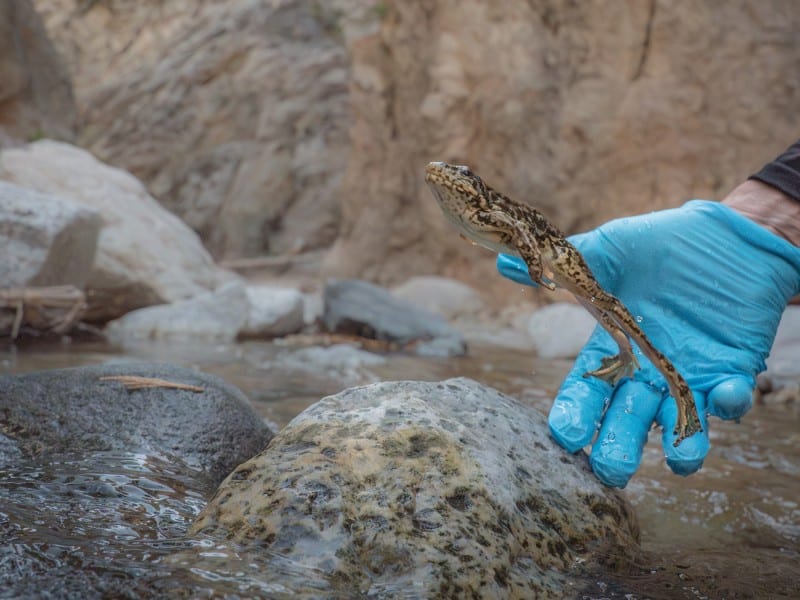
In the burn-scarred mountains of Southern California, a team of biologists fights to help an imperiled frog.
Ethiopia’s Grand Tree-Planting Plan
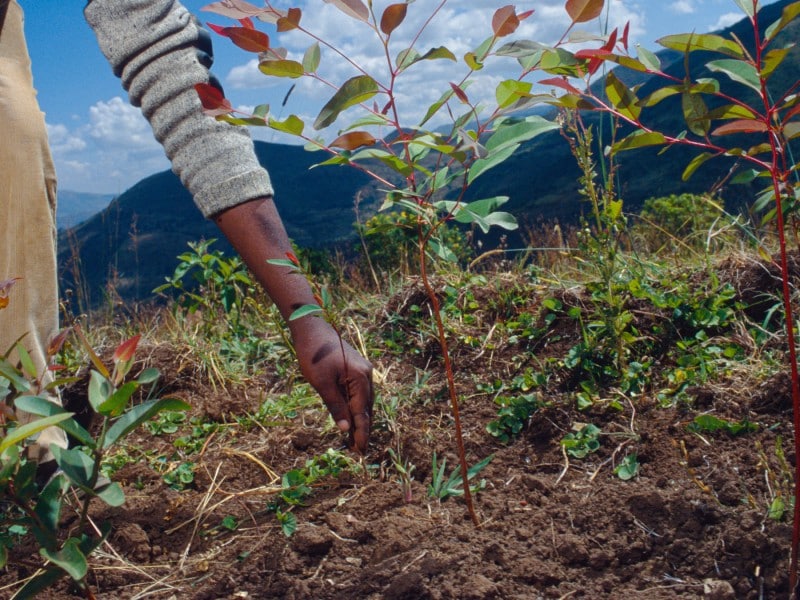
Efforts to restore lost forests often fail, but Ethiopians are betting big: planting billions of saplings to revive habitat, regenerate soil, and stabilize the land.
The Trouble with Tamarisk
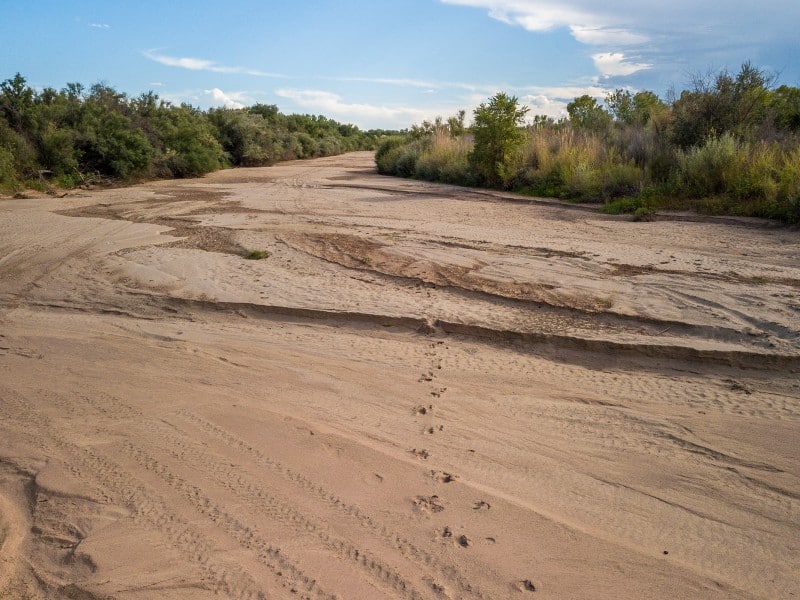
Twenty-five years ago, land managers unleashed a beetle to control an invasive tree sucking rivers dry. But water levels haven’t risen—and the real villains are still causing trouble.