
Photograph by Cyril Ruoso

High in the French Alps, on one of the first snow-melting days in early June, a European common frog (Rana temporaria) emerges from hibernation and sets out across a seemingly endless snowfield in search of a suitable pool for breeding. Its lower-elevation kin awoke months ago, making their annual springtime migration to seasonal breeding ponds under the cover of night to avoid the heat of the day. Up here, however, at elevations of more than 2,700 meters (8,850 feet), the European common frog must move during the warmer daylight hours. And despite the limb-stiffening cold—or rather, because of it—the frog needs to hop to it. It only has a short window of opportunity in which to find a mate and spawn.
Because summer on the slopes of the Alps is both fleeting and intense, these high-elevation frogs have evolved a number of traits not seen in their sub-alpine relatives: The females lay larger eggs; the eggs develop more quickly; and both the eggs and the tadpoles are more resistant to the sun’s ultraviolet radiation (they contain compounds that serve as a sort of internal sunscreen). Some adults also take measures to avoid wasting precious time in search of a mate. Although females can’t lay their eggs until the mountains’ seasonal ponds form in late spring or early summer, males often lay claim to their chosen female as early as August of the prior year, climbing onto her back and wrapping her up in a months-long embrace, known as amplexus, that lasts throughout the winter hibernation. When the snow begins to thaw, the males hitch a ride to a breeding pool on the back of their soon-to-be mate.
For photographer Cyril Ruoso, capturing this portrait of a species at the very edge of its biological limits required both a tolerance for the cold and perfect timing. “The window to observe these frogs marching across the snowy alpine plain is limited to just three or four days per year,” says Ruoso. “After that, the snow quickly melts and the landscape transforms.”

The French Alps
Hi, I’m Dave, the executive director of bioGraphic. (And that’s my dog, Finn.) Thanks for taking the time to read this story.
Stories like this simply don’t get produced without financial support from readers like you. bioGraphic is not backed by a private company or owned by a billionaire. It’s an independent, nonprofit magazine. And one-quarter of our annual budget comes directly from reader donations.
We need your support more than ever, as governments slash funding for conservation and scientific research, placing even more ecosystems and wildlife at risk around the world. At bioGraphic, we’re steadfastly shining a light on the threats to our planet’s incredible biodiversity. And we’re showcasing the hard work of people bravely taking action to protect at-risk species.
bioGraphic publishes environmental reporting that you can’t find anywhere else: deeply researched, trustworthy stories that are also beautiful and captivating to read. We offer an antidote to reader apathy and doom-and-gloom news by revealing the wonders of the natural world and focusing on real solutions to big problems. When you finish a bioGraphic story, we want to leave you feeling informed, delighted, and inspired.
We don’t run ads or hide our stories behind a paywall. The readers who generously support bioGraphic allow our work to remain free for everyone.
Will you help us keep telling these crucial stories?

Related Articles
The Art of the Catch
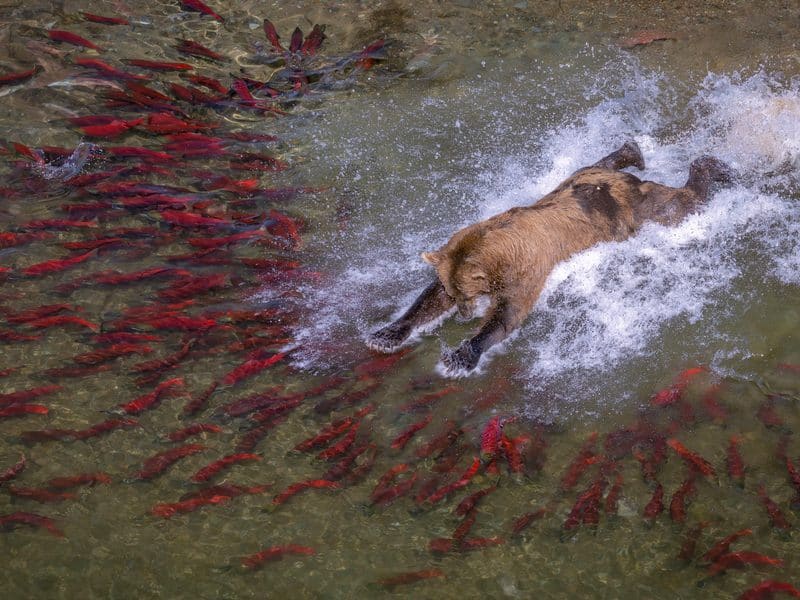
To bulk up for winter hibernation, Alaska’s brown bears employ a range of techniques for snaring salmon.
The Wonder of a Pale Whale
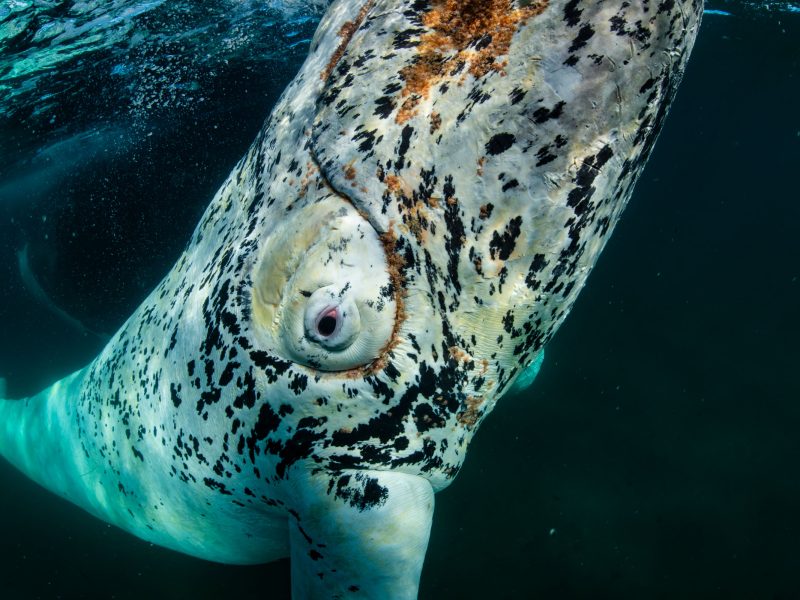
A curious calf with an atypical birthday suit is a good sign for southern right whales.
Saying “Ah!” at the Shrimp Spa
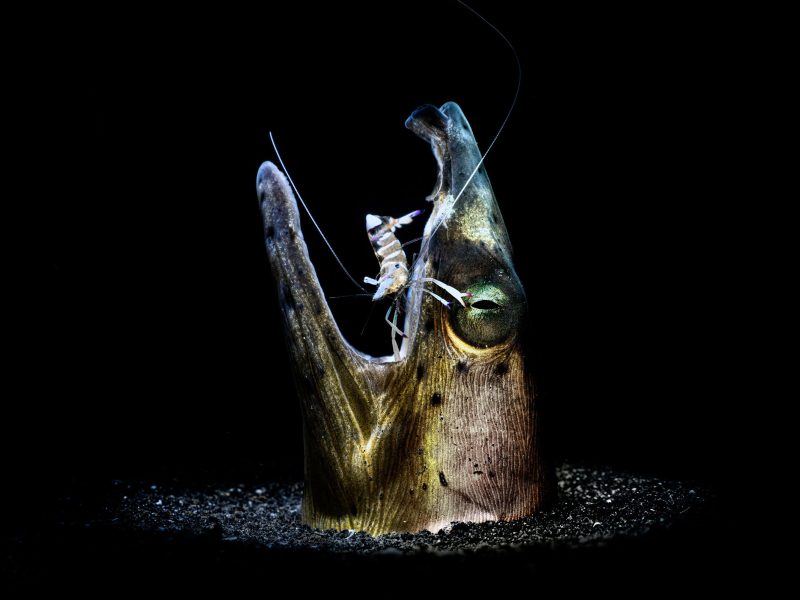
On coral reefs, an army of tiny cleaners eat their clients’ parasites, food particles, and dead skin, boosting biodiversity in the process.