
Photograph by Alex Hyde
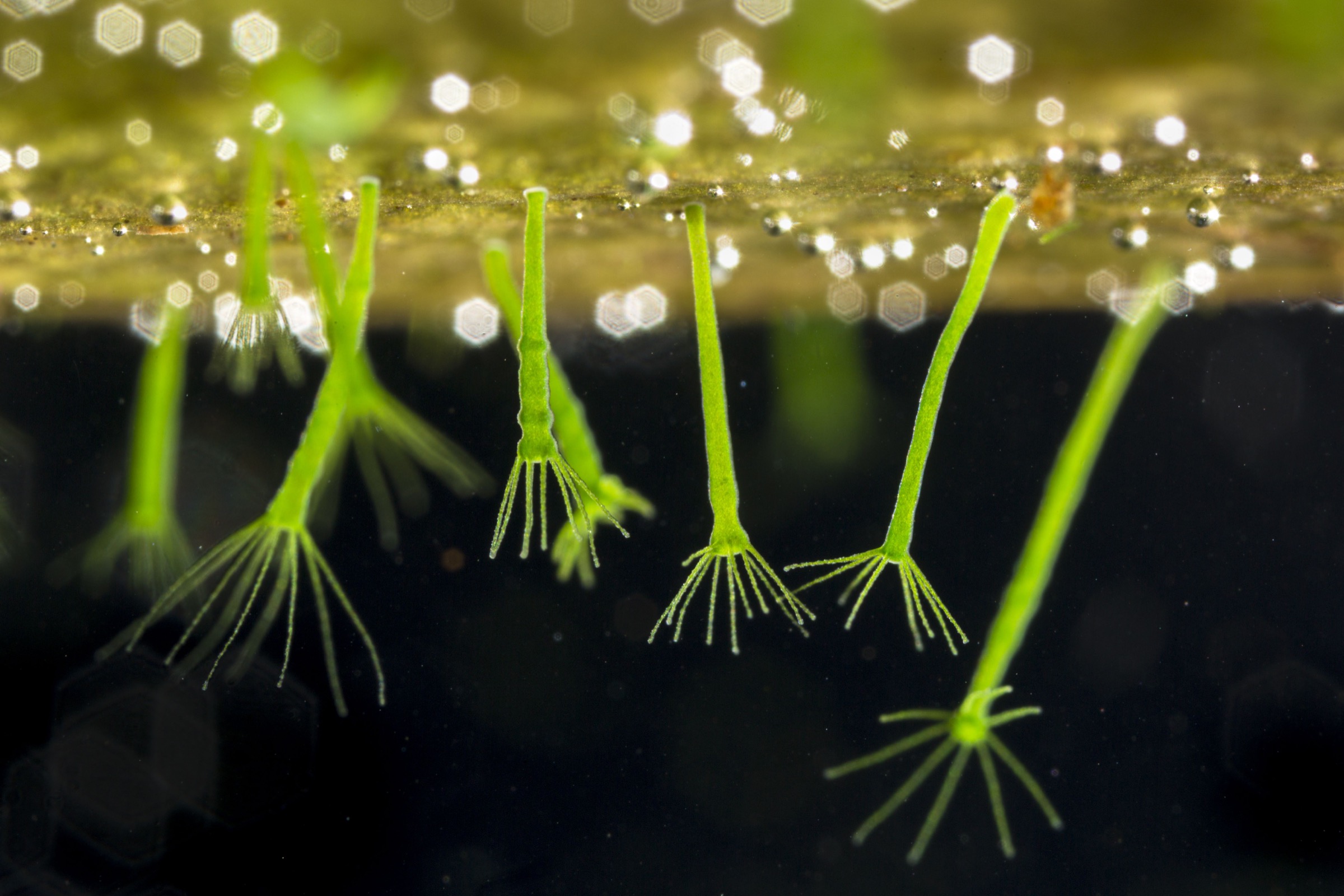
Reaching for passing plankton with glowing tendrils, these green Hydras (Hydra viridissima) are miniscule members of the phylum Cnidaria—the same group that includes jellyfish and sea anemones. Hydras make their homes in still, freshwater pools, like this one in Derbyshire, U.K., often clinging to the undersides of leaves or the stems of water plants.
While these lowly pond dwellers may not look like much, they possess a superpower.
“The thing that is special about the Hydra is that it doesn’t age,” says Daniel Martínez, a biologist at Pomona College who is a leading expert in the evolution of aging. “It could live thousands of years.”
Living beings—from ferns and ferrets to E. coli and crickets—age over time, a process of deterioration called senescence. While the rate of aging varies dramatically among species, the general rule is that the chance of mortality rises as an individual’s reproductive capacity wanes. It’s a universal and unchangeable fact of life: We all age. Or so scientists thought.
“You and I are going to age; there’s no way around it,” Martínez says, “But the Hydra doesn’t have to.”
Hydras have a very basic form—a body column, tentacles, and a foot. Critically, the vast majority of their cells are stem cells. These remain forever in the embryonic state, and can transform into any other cell type. That enables a Hydra to continuously produce new cells and to fully replace the cells in its tentacles and foot in the matter of a week or so.
Most animals, in contrast, only have these embryonic cells in the very earliest stages of their development, when they’re transforming from eggs into fully functioning beings. Once the cells have taken a form, they can’t change or regenerate. And the condition of these cells will only worsen over time—the root cause of aging.
“The process of accumulating damage that happens, for example, in our brain doesn’t happen in a Hydra. There are no old cells,” Martínez explains. “Even differentiated cells are recently differentiated cells. We as complex organisms have lost the ability to do that.”
In a 2016 study, Martínez and his colleagues studied more than 2,000 individual Hydras and were surprised to find that their mortality rate in ideal conditions remained constant: near zero.
Which is not to say that Hydras in the wild don’t die. They do—from disease, drying out, freezing, or being eaten by fish. But they don’t age. Their little green bodies remain forever young—inspiration for the quest to understand and prevent, or at least delay, our own mortality.

Derbyshire, UK
Hi, I’m Dave, the executive director of bioGraphic. (And that’s my dog, Finn.) Thanks for taking the time to read this story.
Stories like this simply don’t get produced without financial support from readers like you. bioGraphic is not backed by a private company or owned by a billionaire. It’s an independent, nonprofit magazine. And one-quarter of our annual budget comes directly from reader donations.
We need your support more than ever, as governments slash funding for conservation and scientific research, placing even more ecosystems and wildlife at risk around the world. At bioGraphic, we’re steadfastly shining a light on the threats to our planet’s incredible biodiversity. And we’re showcasing the hard work of people bravely taking action to protect at-risk species.
bioGraphic publishes environmental reporting that you can’t find anywhere else: deeply researched, trustworthy stories that are also beautiful and captivating to read. We offer an antidote to reader apathy and doom-and-gloom news by revealing the wonders of the natural world and focusing on real solutions to big problems. When you finish a bioGraphic story, we want to leave you feeling informed, delighted, and inspired.
We don’t run ads or hide our stories behind a paywall. The readers who generously support bioGraphic allow our work to remain free for everyone.
Will you help us keep telling these crucial stories?

Author

Related Articles
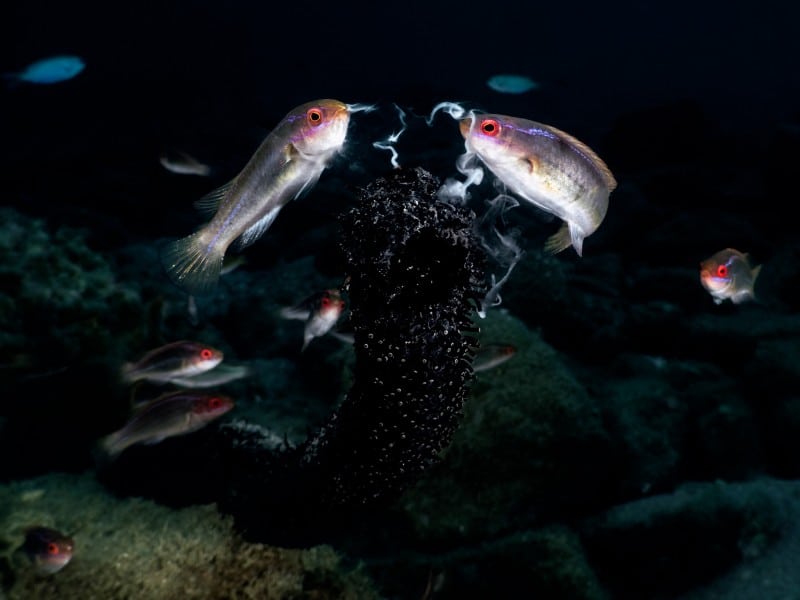
Milt Meal
Marine creatures will do almost anything for a meal—including feasting on the sperm and eggs of spawning invertebrates.
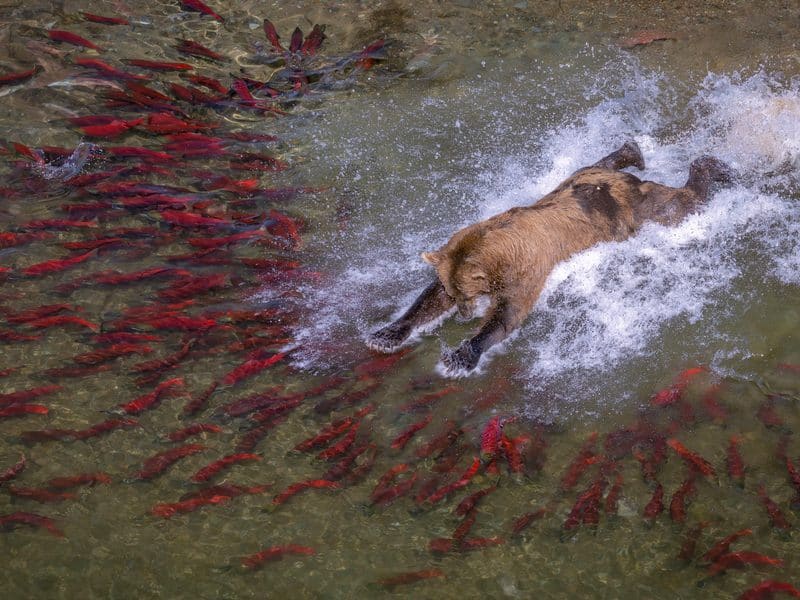
The Art of the Catch
To bulk up for winter hibernation, Alaska’s brown bears employ a range of techniques for snaring salmon.
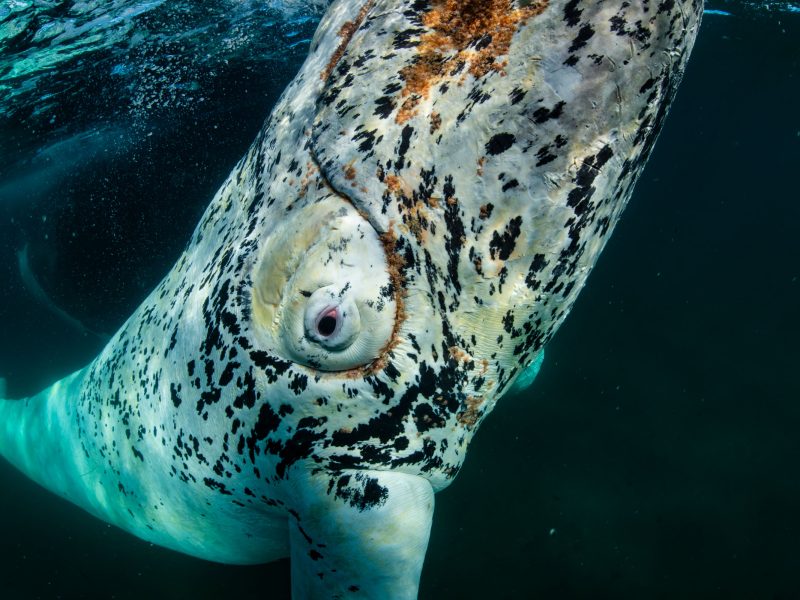
The Wonder of a Pale Whale
A curious calf with an atypical birthday suit is a good sign for southern right whales.