
Photograph by Douglas Thorne
Story by Krista Langlois
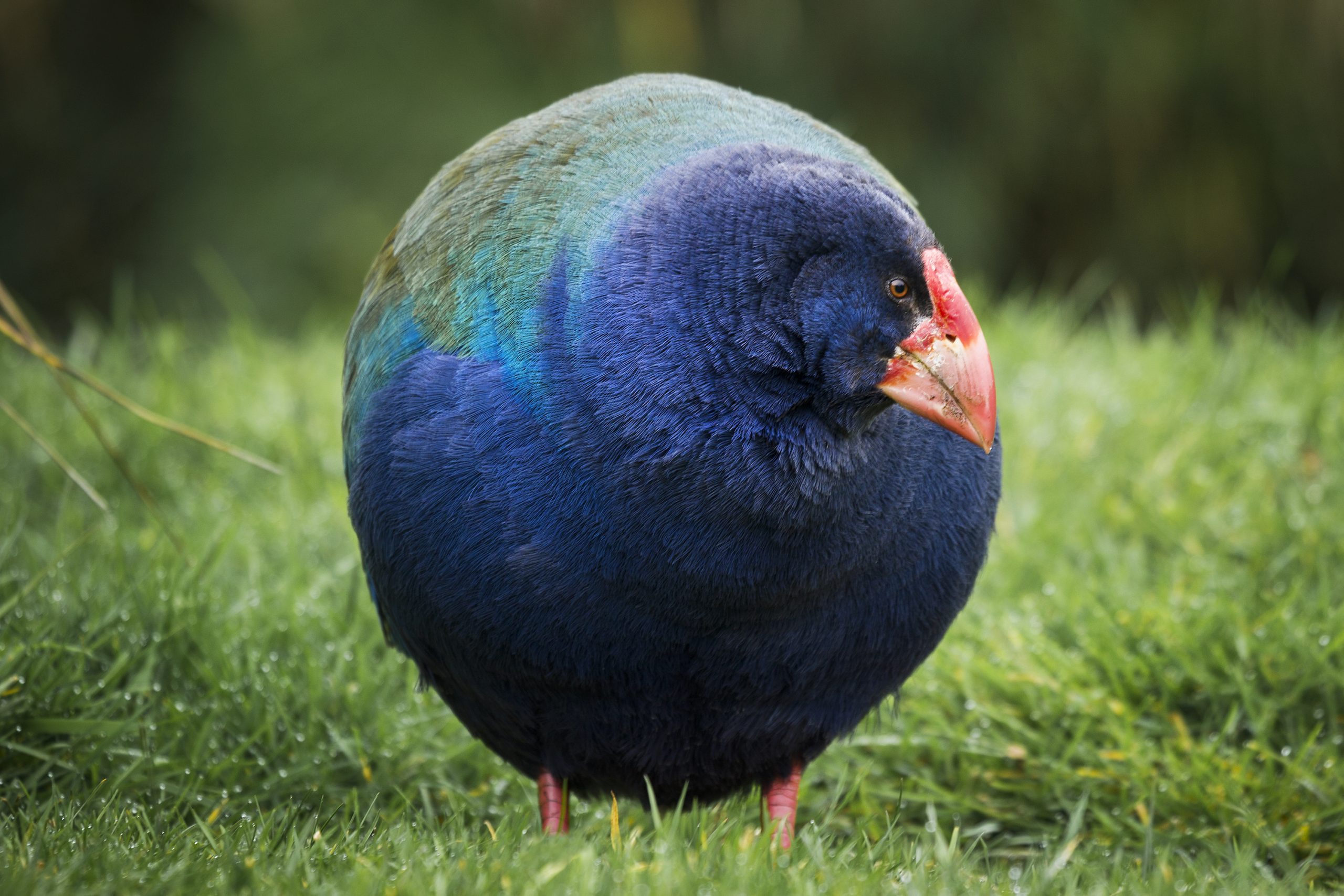
When the first Polynesian navigators pulled their canoes onto the shores of Aotearoa/New Zealand in the 13th century, they found a biological wonderland—a kingdom of birds, devoid of land mammals, that had evolved in isolation for millions of years. Tiny kiwis (Apteryx spp.) scuttled through the forest understory. Haast’s eagles (Hieraaetus moorei) large enough to carry off a human child swooped from the sky to prey on ostrich-like herbivores called moa (Dinornithiformes spp.) that manicured forests with their browsing. Parrots hopped across glaciers, penguins nested in rainforests, and rotund, peacock-colored rails known as takahē waddled through grasslands.
Early Māori hunted a few species to extinction, but enough birds remained that in 1770, a British botanist whose ship was anchored a quarter-mile offshore was awakened by the “melodious wild musick” of distant birdsong. As the British colonized the islands, however, they let loose a slew of mammals—possums for their fur, deer and rabbits for meat, stoats to control rabbits, even zebras and monkeys for no reason besides sheer curiosity and hubris. The latter two didn’t take hold, fortunately, but the others did, and mornings soon grew quieter. Predation and competition from invasive mammals drove dozens of New Zealand’s bird species to extinction.
For fifty years, the South Island takahē (Porphyrio hochstetteri, pictured above) was presumed to be among them. Although the takahē’s prehistoric ancestors had flown from Australia to New Zealand, millions of years without ground predators had shrunk its wings and enlarged its body to the size of a small turkey, rendering the bird flightless. Driven from its lowland habitat by deer that mowed down forage and stoats that preyed on eggs and chicks, takahē clung to life in the alpine, nibbling nutrient-poor tussocks, sedges, and underground rhizomes for up to 19 hours a day to survive. Still, the population kept dwindling. When a dog killed the last known takahē in 1898, the species was declared extinct.
But the tenacious takahē had a secret holdout. In 1948, a South Island physician found a remnant population living in the remote Murchison Mountains of Fiordland National Park. The discovery launched a coordinated national effort of artificial egg incubation, captive breeding, relocation to predator-free offshore islands, and other conservation measures that together brought takahē back from the brink. Around 500 now live in both fenced-in sanctuaries and protected wild sites, and Māori artists have once again begun incorporating takahē’s jewel-toned plumage into traditional bird-feather cloaks.
In August 2023, the dual recovery of Māori culture and wild takahē continued when government officials and members of Ngāi Tahu, the South Island Māori tribe, released nine breeding pairs near Whakatipu Waimāori/Lake Wakatipu. Tā Tipene O’Regan—who was among the first people to see takahē in the Murchison Mountains and helped negotiate the return of Whakatipu Waimāori land to Ngāi Tahu in 1998—set some of the birds free. Leaning on a carved wooden cane, the elder lifted the door of a wooden box and watched as a bird once thought to be extinct ran into grasslands where it hadn’t walked in a century. Even after the takahē vanished into the hills, their hoarse calls could be heard echoing across the valley—a living song once again connecting people, culture, and land.
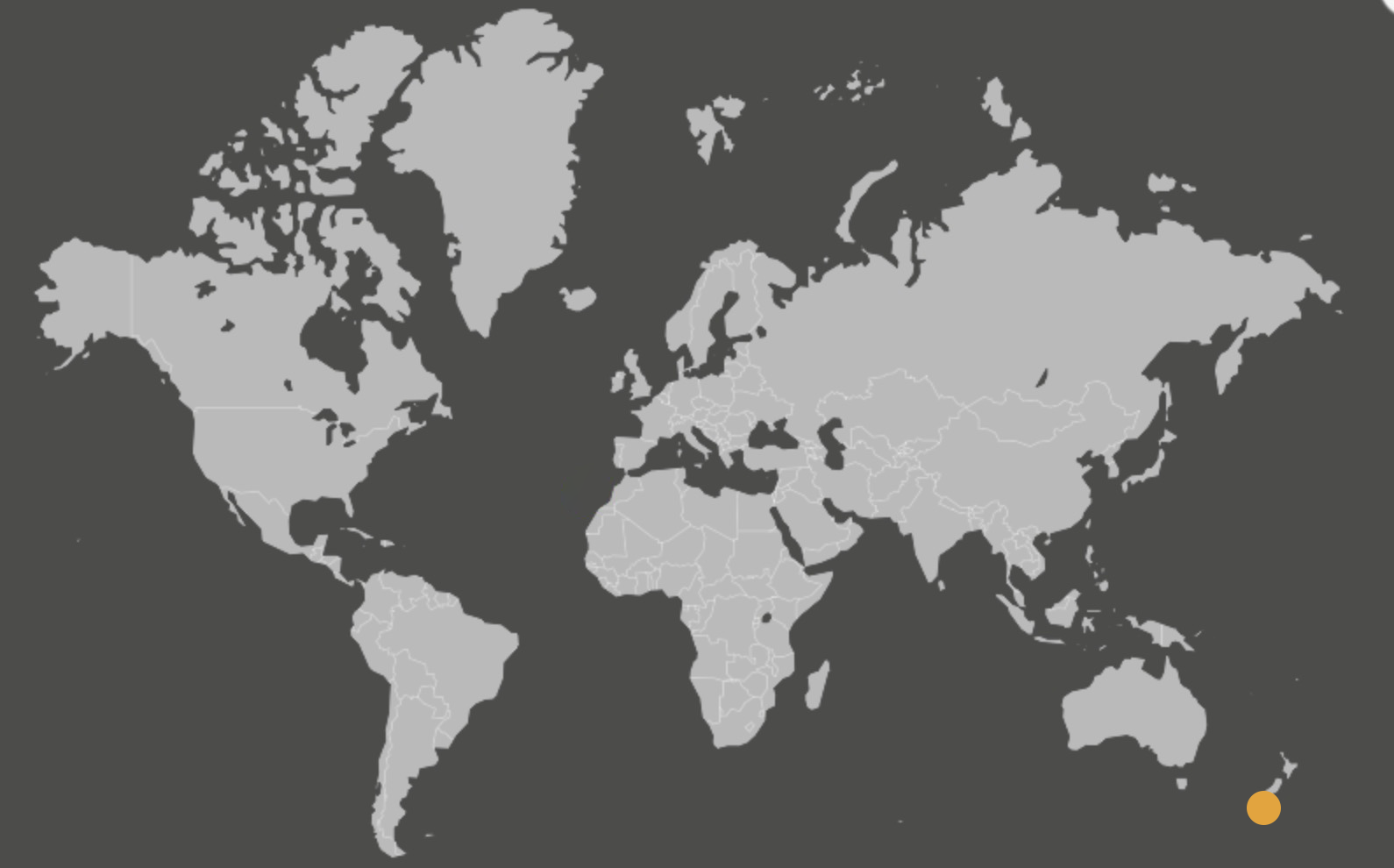
Fiordland National Park, New Zealand
Hi, I’m Dave, the executive director of bioGraphic. (And that’s my dog, Finn.) Thanks for taking the time to read this story.
Stories like this simply don’t get produced without financial support from readers like you. bioGraphic is not backed by a private company or owned by a billionaire. It’s an independent, nonprofit magazine. And one-quarter of our annual budget comes directly from reader donations.
We need your support more than ever, as governments slash funding for conservation and scientific research, placing even more ecosystems and wildlife at risk around the world. At bioGraphic, we’re steadfastly shining a light on the threats to our planet’s incredible biodiversity. And we’re showcasing the hard work of people bravely taking action to protect at-risk species.
bioGraphic publishes environmental reporting that you can’t find anywhere else: deeply researched, trustworthy stories that are also beautiful and captivating to read. We offer an antidote to reader apathy and doom-and-gloom news by revealing the wonders of the natural world and focusing on real solutions to big problems. When you finish a bioGraphic story, we want to leave you feeling informed, delighted, and inspired.
We don’t run ads or hide our stories behind a paywall. The readers who generously support bioGraphic allow our work to remain free for everyone.
Will you help us keep telling these crucial stories?

Authors


Related Articles
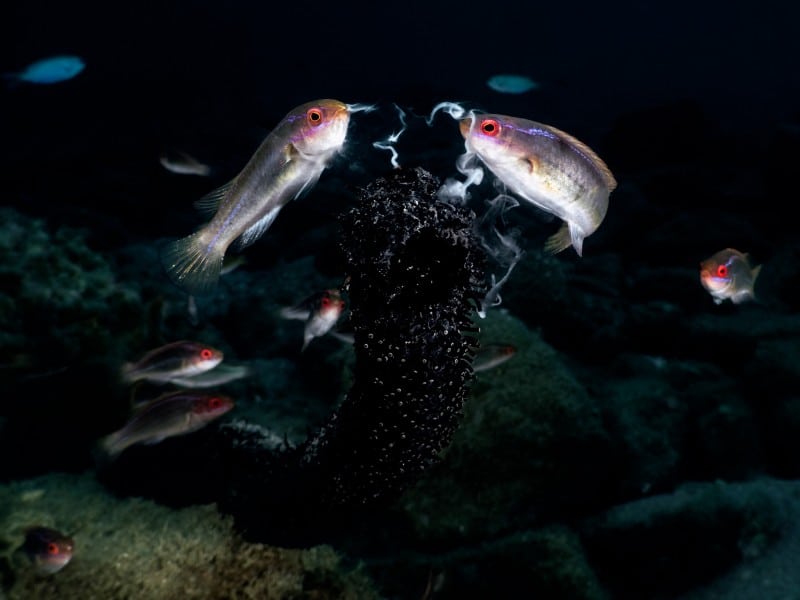
Milt Meal
Marine creatures will do almost anything for a meal—including feasting on the sperm and eggs of spawning invertebrates.
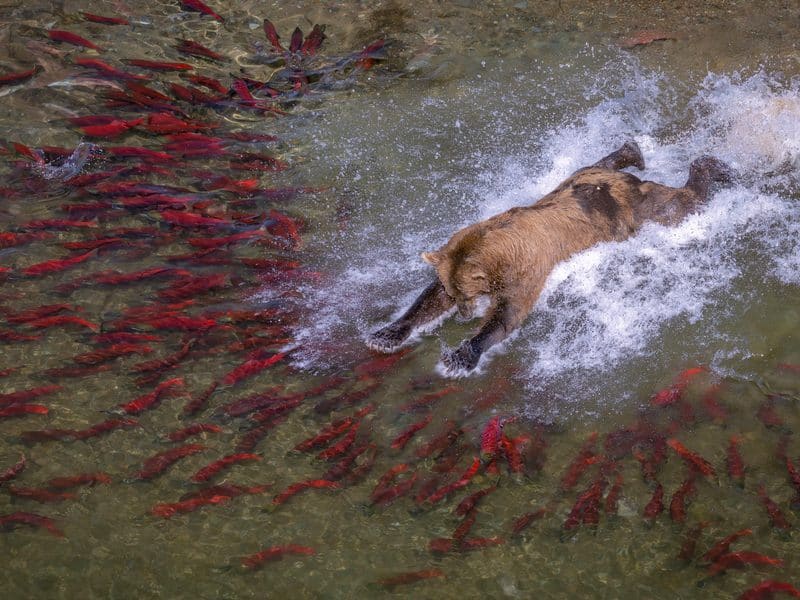
The Art of the Catch
To bulk up for winter hibernation, Alaska’s brown bears employ a range of techniques for snaring salmon.
The Wonder of a Pale Whale
A curious calf with an atypical birthday suit is a good sign for southern right whales.