
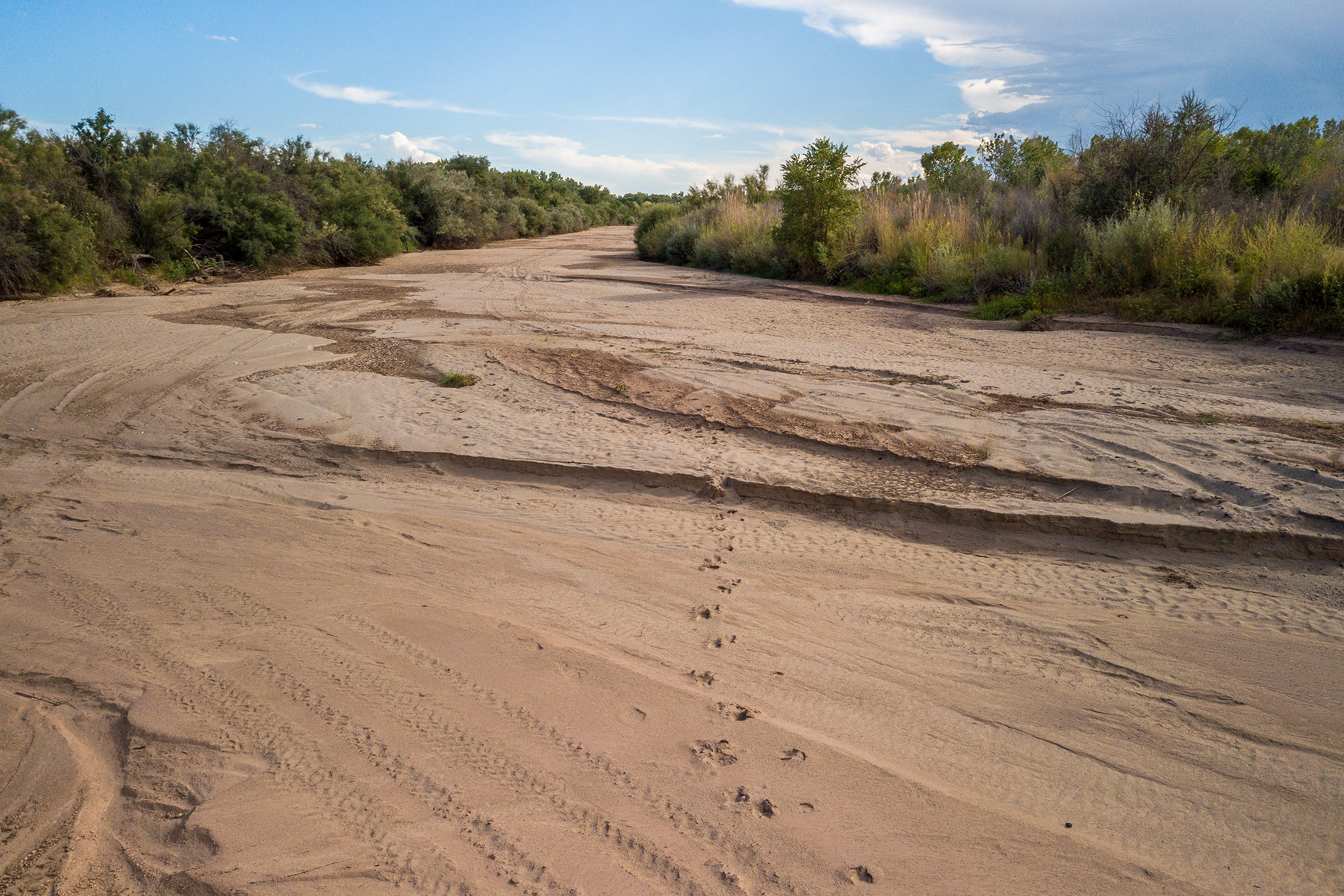
The Dolores River runs muddy and brown on this October morning, swollen by a robust autumn rainstorm. Melissa Neubaum says it’s higher than she’s seen it all year, even during spring runoff. As a restoration coordinator with RiversEdge West, a conservation nonprofit focused on waterways in the western United States, Neubaum often hikes along this particular stretch of the Dolores in southwestern Colorado to check on restoration crews, following the river as it threads through sinuous, red sandstone canyons and across a floodplain dotted with willows. After hiking for about 20 minutes, past heaps of graying deadwood, a chainsaw’s hum reaches her. “I can hear the little buzzing bees,” she jokes.
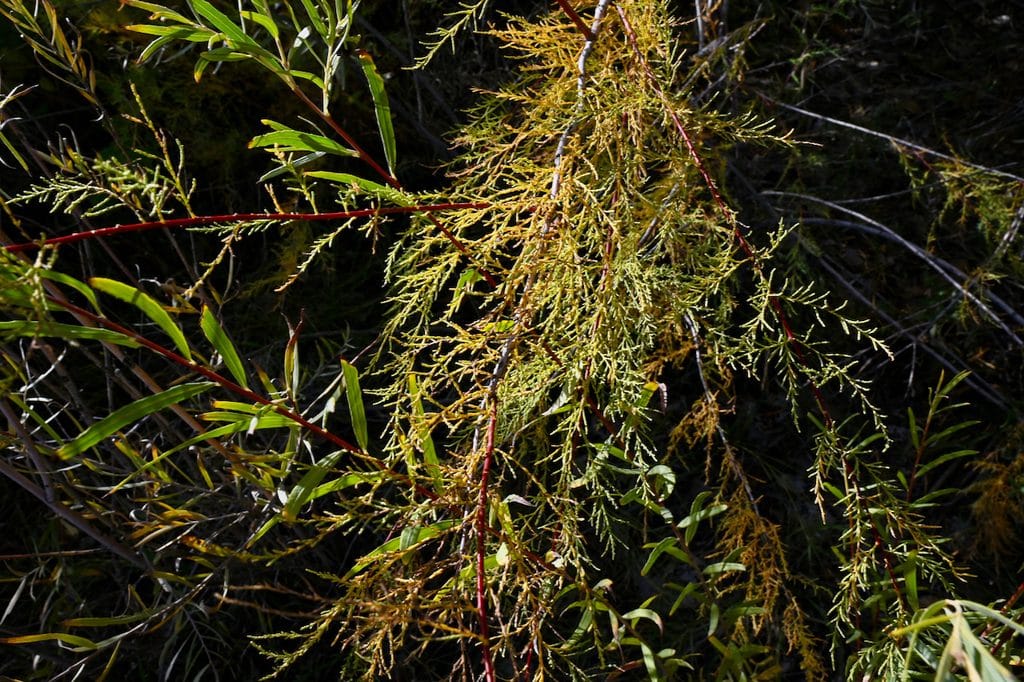
The next bend brings the work crews into sight—flashes of fluorescent safety vests, hard hats, and dusty chainsaw chaps moving through the brush. The crew is cutting tamarisk (Tamarix spp.), or saltcedar, an invasive tree that grows in prickly, nearly impenetrable thickets of red-stemmed branches topped with delicate fronds of pale, scale-like leaves. In spring, those fronds bloom into hundreds of tiny pink or white flowers that then scatter millions of seeds. Tamarisk is fast growing and incredibly tolerant of the dry, often salty soils in this part of the world, and its spread has crowded out native species and reshaped wildlife habitat and rivers. For decades, crews like this one have responded in force in an attempt to eradicate tamarisk.
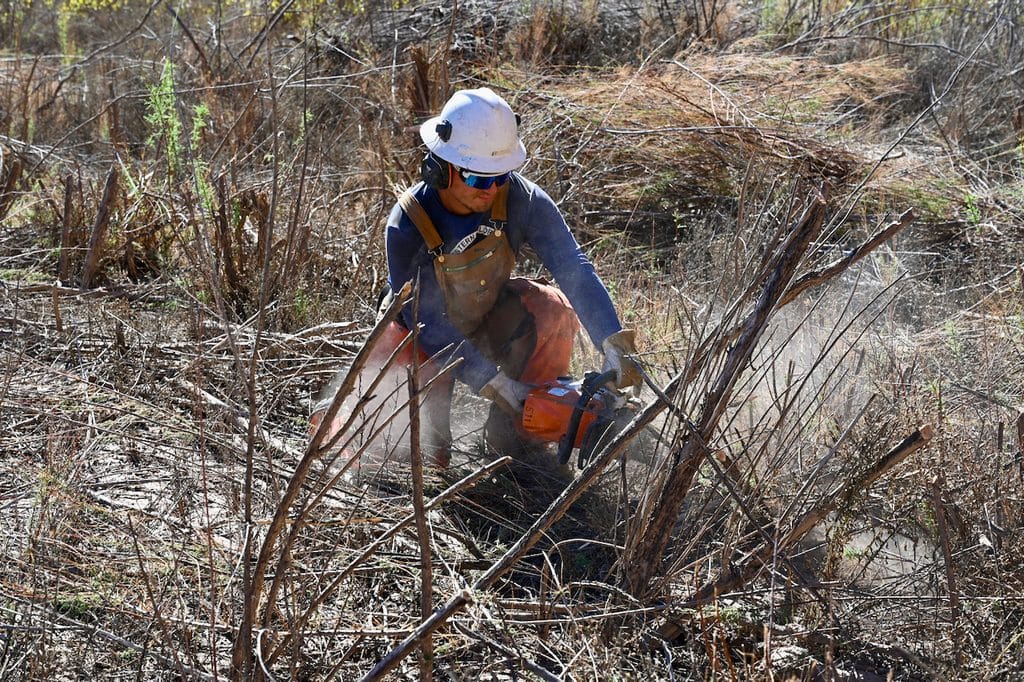
A sawyer hefts a chainsaw through the tangled trunks. Felled trees don’t topple as much as tilt into the thicket, caught mid-fall by neighboring brush. Some of the tamarisk is already dead and splinters against the chainsaws’ teeth. A crew member working as a swamper hefts the wood away and sprays herbicide on the freshly sawed stump, staining it brilliant blue. Without that treatment, the tree will resprout, Hydra-like, with clusters of new stems from a single stump.
The work is slow, hot, and tiring. Progress is celebrated in tens of hectares, and most sites require multiple treatments to succeed. And the scale of the problem is enormous. By some estimates, tamarisk covers more than 8 million hectares (20 million acres) across 17 states, from Arizona to Washington. That’s an area roughly the size of South Carolina.
“It feels daunting a lot of days,” says Neubaum, who shifted her career from wildlife biology to restoration in hopes that the wider focus could save more wildlife. The more she learned about recovering ground from a rampant invasive species, though, the more every road trip through her beloved Southwest became a reminder of all the work to be done. “This job has ruined me a little bit,” she says. Some days, it feels like all she can see is tamarisk.
Faced with more of an invasive plant than time, money, or chainsaw crews can feasibly conquer, the U.S. Department of Agriculture (USDA) in 2001 recruited another type of worker to reverse the takeover of western waterways: the tamarisk leaf beetle. Tamarisk beetles (Diorhabda spp.) evolved alongside tamarisk in Eurasia and Africa, where both are native; the insects eat nothing but the tips of tamarisk branches, weakening and sometimes killing the tree.
The idea was that introducing the beetles to the U.S. would slow tamarisk’s spread, giving native plants a chance to hold or reclaim ground. But the beetles have spread farther and faster than expected. And instead of green corridors of native vegetation, they’ve left in their wake brown, defoliated riverbanks that have sparked outrage and legal action—along with research that has changed our understanding of how to best save riparian ecosystems in the western U.S. Now, 25 years after the beetles’ initial release, science is revealing a harder and more elemental truth: The real ecological villain plaguing western waterways is far more insidious than either tamarisk or tamarisk beetles.
Photograph by RiversEdge West
Before colonization, the Colorado, Rio Grande, Dolores, and other rivers in the U.S. Southwest were dynamic, reset each spring by a rush of water from melting snow. Waterways tossed themselves across floodplains and poured into side channels, pockets, and pools. High water built or remade islands, scrubbed sand from gravel bars, and tore out trees. Cottonwoods and willows relied on these surges from runoff to germinate, and birds like southwestern willow flycatchers (Empidonax trailii extimus) moved as the plants did, feeding on insects that thrived in the mud left by retreating spring runoff.
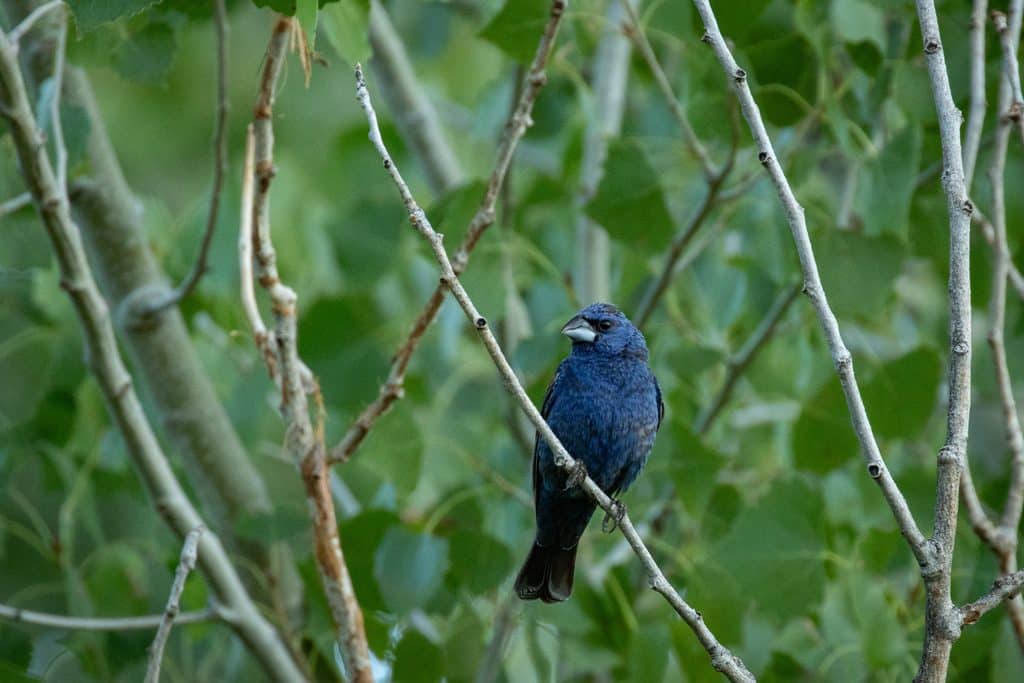
To European settlers who wanted to build towns and farms in an arid region, these finely tuned systems seemed unreliable and unruly. In the 1800s, people began planting tamarisk to stabilize streambanks, as well as for shade and windbreaks. The trees rapidly spread, creating conditions that better serve tamarisk and make it harder for native plants to survive. Tiny beads of salt form on tamarisk leaves, for example, and when the leaves fall in autumn, that salt seeps into the soil, making it saltier than many plants can tolerate. Tamarisk’s deep root systems also help lock riverbanks in place, so streams rush through a single channel and incise the riverbed, lowering the groundwater level deeper than many other plants can reach. And tamarisk are fire prone, turning riparian corridors from barriers against wildfire to conduits for it.
As the 20th century progressed, incoming settlers also built dams to harness the flow of rivers. Along with a series of water laws, policies, and diversion projects, these dams fundamentally changed when and how much water flows through the Southwest’s waterways. Many of the legal contracts doling out the region’s most precious resource overestimated how much water typically flows downstream, creating a system where every drop is measured and allocated—and leading states and municipalities to promise users more water than was actually available. Rivers were treated merely as conduits for moving water from one human user to the next, with little consideration for the river itself or its riparian ecosystems. As a result, some stretches—including of the Dolores—now run dry in the summer.
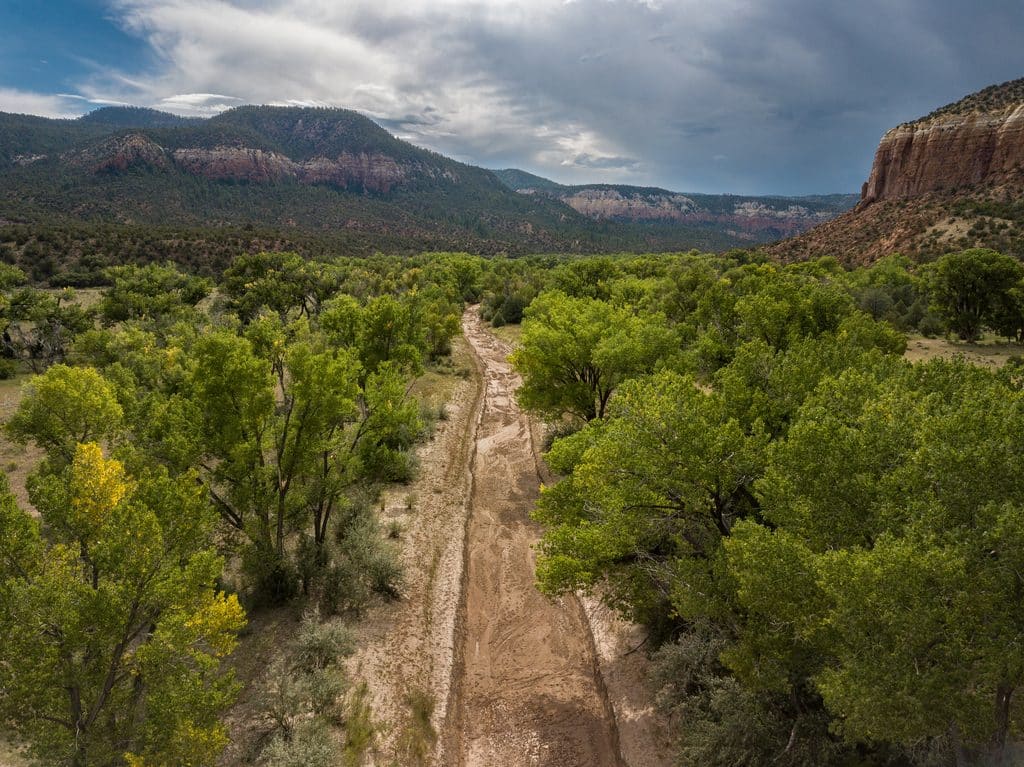
In such a tightly calilbrated system, people began to blame tamarisk for its thirst. By the 1980s, scientists were circulating an estimate that each tamarisk absorbed a stunning 757 liters (200 gallons) of water per day, in total using 3 trillion liters (800 billion gallons) more water annually than the native plants they replaced. Tamarisk had also converted diverse riparian woodlands into stands dominated by a single species. The shift limited the types of food available to wildlife, increased temperatures in crucial habitat, and buried the gravel bars native fish need to reproduce with sand.
The tamarisk beetle seemed a natural solution. The U.S. has been using biological controls, or biocontrols, to battle invasive pests and weeds on livestock ranges and agricultural land since the late 1800s, often with promising results. “It happens fairly frequently that biocontrol agents do their job and then are forgotten,” says Dan Bean, a program manager at the Colorado Department of Agriculture’s insectary in Palisade, Colorado, who helped monitor the tamarisk beetle introduction. Biocontrols also reduce pesticide use.
Biocontrols have been so successful, in fact, that public land managers and conservationists also use them for conservation and environmental projects. An introduced fungus has curbed spongy moth (Lymantria dispar) defoliation in North American forests; flea beetles (Apthona spp.) reduced the density of invasive leafy spurge (Euphorbia virgata) in northern Great Plains grasslands, allowing native plants to recover; and three natural entomological enemies of the emerald ash borer (Agrilus planipennis) may yet save billions of ash trees.
Although a few high-profile biocontrols have gone rogue and attacked native species, regulations have tightened since the 1990s, and the USDA’s Animal and Plant Health Inspection Service (APHIS) spent decades confirming that tamarisk leaf beetles would only eat tamarisk. When the agency finally approved four Diorhabda species for release in 2001, “beetles were definitely sold as this savior,” says Amanda Stahlke, assistant professor of biology at Colorado Mesa University and scientific advisor to RiversEdge West. “You would not have to do anything to save your native ecosystem—just: beetle comes through, eats the tamarisk, and ta-da, you have your native ecosystem.”
Bean was working for the USDA when the first batch of Diorhabda carinulata arrived from China and Kazakhstan to Nevada and California. It consisted of a couple thousand straw-colored, Tic Tac-sized beetles—“which isn’t actually that many,” Bean says. He and others monitored the beetles for more than a year in plastic cages before releasing them into the wild.
Bean and his colleagues had drafted measures for quantifying the beetles’ effect, like counting the number of dead branches on each tamarisk, but the beetles’ damage was so thorough that the team had to pivot to a starker delineation: whether the tree was green or brown. Tamarisk beetles spread from 5 hectares (12 acres) by the end of 2002 to hundreds of hectares in 2003, and to several thousand the year after. Scientists were shocked. The beetles hadn’t seemed like “critters that would take off,” says Tom Dudley, a researcher at the University of California, Santa Barbara who has studied tamarisk beetles for nearly two decades, now memorialized with a tamarisk beetle tattoo on his shoulder. In Asia, studies suggested that individual beetles travel only short distances—on the order of meters, Dudley says. If knocked from a tree, most drop to the ground; only “dispersers” would fly. But given a buffet half a continent wide, beetles in the U.S. began dispersing with abandon, leapfrogging across tamarisk thickets to the next untouched stand.
“When you have massive defoliation of entire areas,” Dudley says, “the choice is fly or die.”
Even with the beetles’ surprising mobility, experts expected other factors to limit their movement across the landscape. In Asia, they use light as a cue for their life cycle. When days shorten to 14.5 hours, the beetles enter diapause—a sort of hibernation in which the insects halt development—to avoid freezing to death in a surprise frost. But the beetles adapted to the limited daylight of the southwestern U.S. remarkably fast—one county weed manager in eastern Colorado reported watching beetles shift from entering diapause in early August to seeing larvae emerge in late August. Now, the beetles linger into seasons when the days are as short as 12 hours, laying eggs as late as the autumnal equinox. People often think of evolution unfolding on the scale of eons, Bean says, but “it actually happens fast, and you can measure it in a few years, not just a few millennia.”
And as the beetles swept across the western U.S., the anticipated benefits to native ecosystems didn’t follow.
Video by Christina Selby
Biologist Levi Jamison was initially skeptical of releasing a bunch of non-native insects to public lands. “My world view is, the less we mess with nature, the more natural it feels,” he says. But as he learned about the alternatives—like helicopter-sprayed herbicides that kill tamarisk along with everything else—he began wondering if the beetles might be a lesser evil.
For 13 years, the Colorado Department of Agriculture and RiversEdge West paid Jamison to follow tamarisk beetles and monitor their impacts. Each summer from 2006 to 2019, Jamison surveyed rivers—the Colorado, the Dolores, the San Juan—by boat, sometimes staying out as long as a month. He’d stop every 1.6 kilometers (1 mile) on journeys of up to 724 kilometers (450 miles) to sweep a bug net over tamarisks, count the eggs and beetles caught, and estimate the percent of defoliation and the percent to which tamarisk had recovered. He alternated weeks on the river with weeks in his truck, using map books called gazetteers to identify drainages and scattered ponds that ranchers had dug for free-ranging livestock. He often drove to the kind of remote places that require careful math on miles of gas left in the tank and distance to the next gas station. He and a handful of colleagues compiled data for a map, published by RiversEdge West, of where beetles were found. It became the main resource for scientists across agencies and nonprofits.
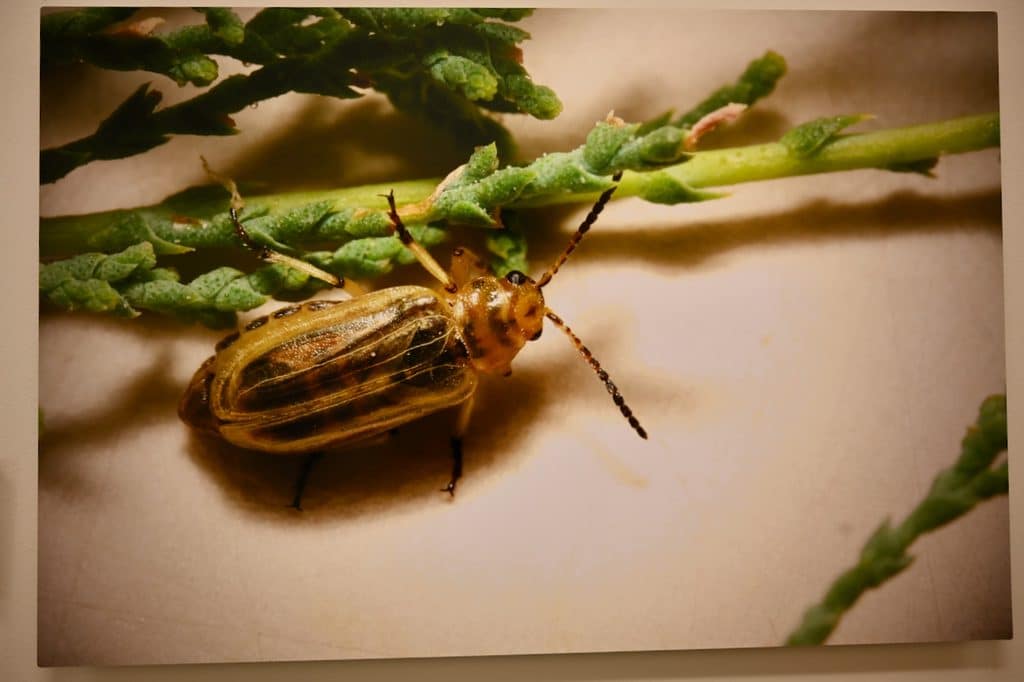
Near the tourist hub of Moab, Utah, Jamison found tamarisk beetles at rest stops and gas stations. He swept his body, equipment, and truck to avoid transporting the insects, “but tourists on the road sightseeing definitely had some of these beetles hitch rides on their cars.”
The same was true on rivers, where Jamison often spotted beetles crawling on rafts. They also moved on the wind. In the evening, when the breeze picked up, the sky would fill with a cloud of beetles. People moved the beetles on purpose, too, setting them loose on both public and private land to try to kill tamarisk.
Tamarisk beetles have since demonstrated an ability to expand their range by 40 kilometers (25 miles) per year. They’ve been found from northern Mexico to Oregon and Montana. Originally, authorities expected that after several years of beetle assault, up to 85 percent of tamarisk would die off. Although no one has been able to produce an accurate measurement due to the sheer scale of the invasion, Bean’s research suggests the die-off is far less. Rates vary, but on average, he’s found that beetles tend to cut the amount of tamarisk cover in a river’s canopy by half, with some of the trees dead and some alive but haloed with dead branches.
Yet all the dead or dying trees haven’t necessarily translated to more water in rivers—in part because tamarisk has proved less troublesome than scientists initially believed. In 2007, scientists from Oklahoma State and Texas A&M Universities scrutinized the widely cited figure that tamarisk suck up 757 liters (200 gallons) per day and found it grossly overestimated the tree’s water use. A more realistic number, they suggested, is about 122 liters (32 gallons) per day—on par with cottonwoods or willows. A field of alfalfa, meanwhile, which is widely grown in the Southwest for animal feed and largely irrigated with river water, uses up to four times as much water per year as any type of tree.
“What we understand now is that yes, Tamarix can use a lot of water. So can native vegetation,” says Anna Sher, a University of Denver ecologist who studies tamarisk and riparian restoration. Rather than causing the water shortage, tamarisk is now understood to have benefitted from all the ways people have manipulated natural water systems around the western U.S. Without those changes, tamarisk and another thorny invasive tree, Russian olive (Elaeagnus angustifolia), might have been less successful.
Plus, some native species are figuring out how to live in a world with fewer native plants and more tamarisk—including endangered southwestern willow flycatchers. These small, brownish-olive songbirds with yellowish bellies historically built their cupped nests in willows, but when tamarisk replaced willows, they began nesting in tamarisk instead. Ecologist Sean Mahoney, now with the University of North Carolina Wilmington, documented robust populations of flycatchers and other birds at Mormon Mesa, a high perch above the confluence of the Virgin and Muddy Rivers in southern Nevada. Songbird diversity in tamarisk stands, he found, was about the same as in cottonwood or willow stands.
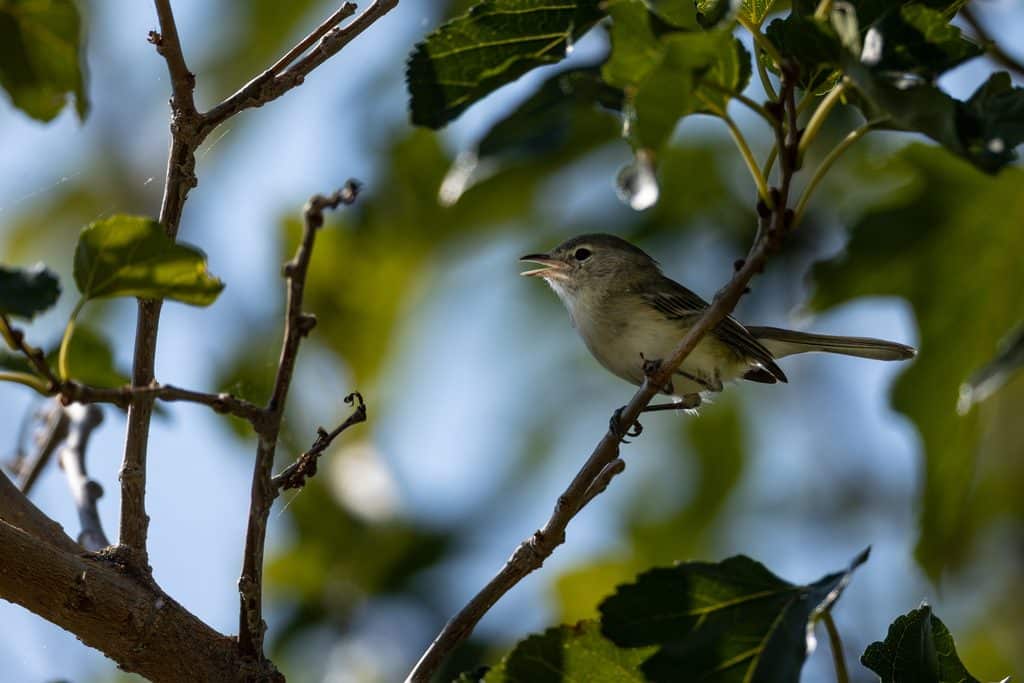
To protect birds’ nesting sites, APHIS only permitted tamarisk beetle releases at least 321 kilometers (200 miles) from known southwestern willow flycatcher populations. But in 2006, a county public works department brought beetles to the upper Virgin River, just upstream of Mormon Mesa. As the beetles munched their way toward the mesa, Mahoney watched to see what changes they might bring.
Beetles reached the mesa during a drought so bad that even tamarisk were weakened, and most of the trees died. Baby flycatchers born into nests in newly defoliated trees can overheat and die, and when a crew of environmental consultants returned to the site in 2013 and 2014 to search for flycatchers, they found none. The birds had simply vanished. Riverbanks were also hotter, less humid, and hosted fewer insects. “We often villainize introduced plants, but at least from my work, the data suggests that the animals can do okay, and they seem to be doing okay in tamarisk,” says Mahoney. “That changes, though, when the tamarisk is dead.”
By 2011, the beetles began encroaching into Arizona, toward important flycatcher habitat. As they moved south, tensions flared. “There was conflict, finger-pointing, that biocontrol was the worst thing ever in the Southwest after the damming of the rivers,” Bean says.
In 2013, the Center for Biological Diversity sued the USDA and APHIS for failing to consider the beetles’ effects on flycatchers and neglecting to do more, like planting cottonwoods and willows, to mitigate the damage. The nonprofit won its lawsuit in 2016, and the judge directed federal agencies to do more monitoring and restoration. But the federal government has since largely terminated its involvement. The USDA now threatens fines of up to $60,000 for releasing beetles, and has also stopped funding the tamarisk beetle distribution map maintained by RiversEdge West and informed by Jamison’s data.
Jamison watched all of this unfold a little heartbroken. The battle seemed to drive people—and, crucially, federal agencies and their funding—away from a more holistic approach. “The nearsighted collision of tamarisk control and southwestern willow flycatchers is they’re both very single-species focused and don’t take into account this broader ecosystem,” Jamison says. “Water is more important than any of them. The control of tamarisk or the preservation of habitat doesn’t really matter if you don’t have a river running down the center of it.”
Photograph by Christina Selby
The summer of 2025 was particularly hot and dry, even by Southwest standards. Summer rains evaporated before reaching the ground, rivers dwindled to a trickle, and reservoirs meant to store water for agriculture, cities, and power generation dropped to record-low capacity. Because tamarisk shouldered much of the blame for the region’s water problems, people had hoped that reducing tamarisk would solve those problems. It didn’t. Research has shown that what matters more for flycatchers and other birds is neither tamarisk nor willow, but water—which has become more scarce in the Southwest’s rivers due to climate change and human overconsumption, even as tamarisk cover has decreased.
John Leary, who manages restoration and geographic information systems for RiversEdge West, spent the summer hauling 5-gallon buckets of water from northwestern Colorado’s White River to dozens of seedlings of native woods’ rose, sumac, cottonwood, and buffaloberry newly planted along its banks. Now, on another October morning, it’s raining for the first time in recent memory—sweet, if temporary, relief. Even when the mud slips underfoot and raindrops fall heavy enough to force him to pull up his jacket hood, Leary says the precipitation is “so much nicer than 105 degrees [Fahrenheit] and dry.”
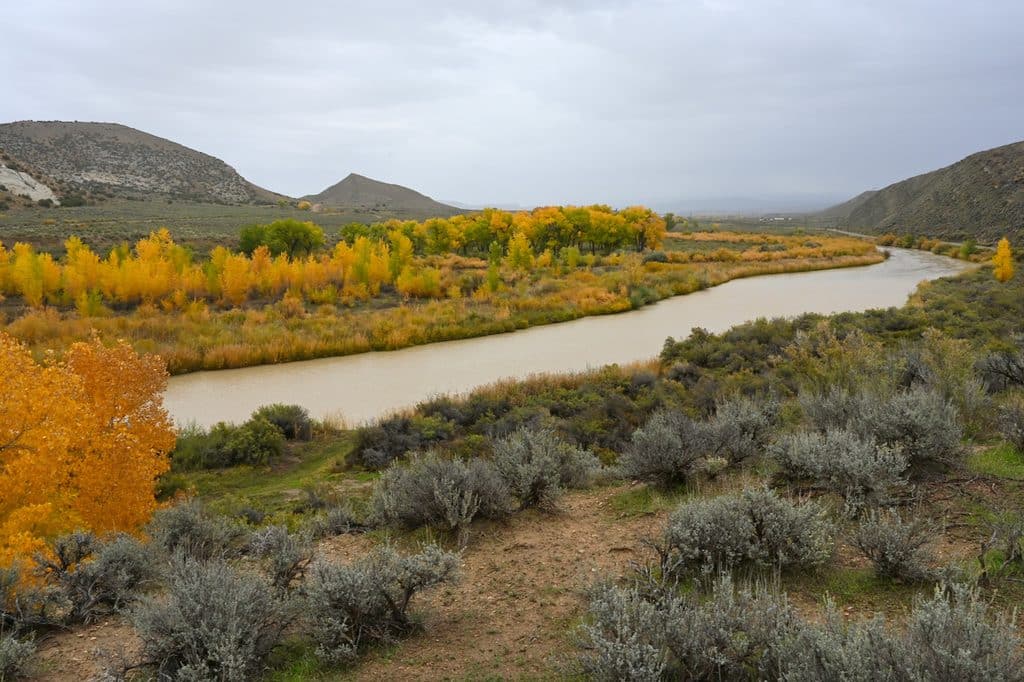
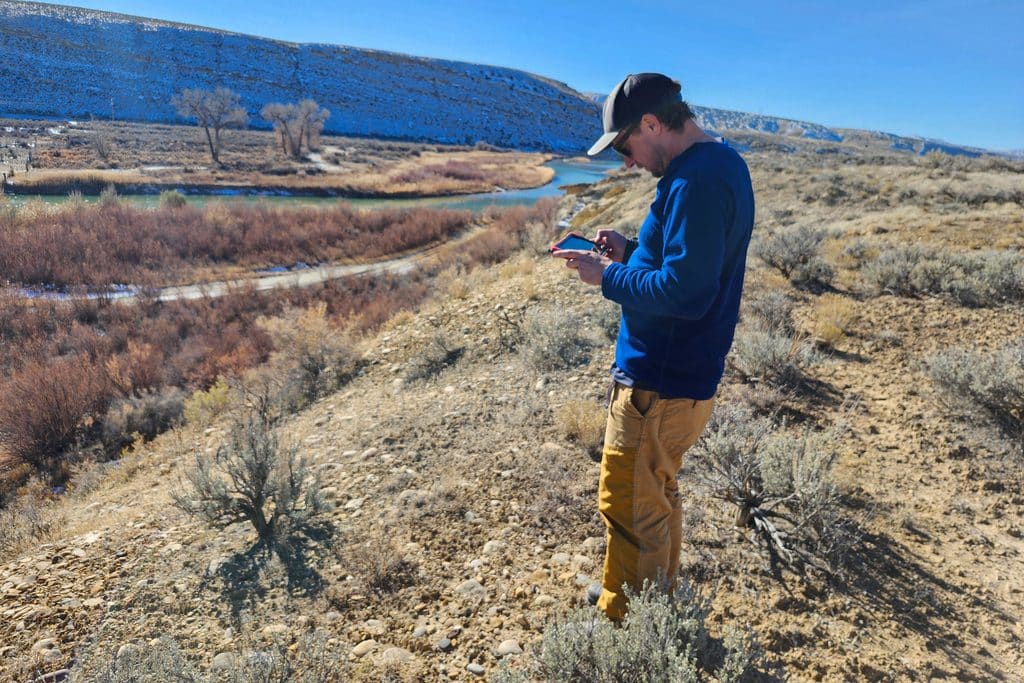
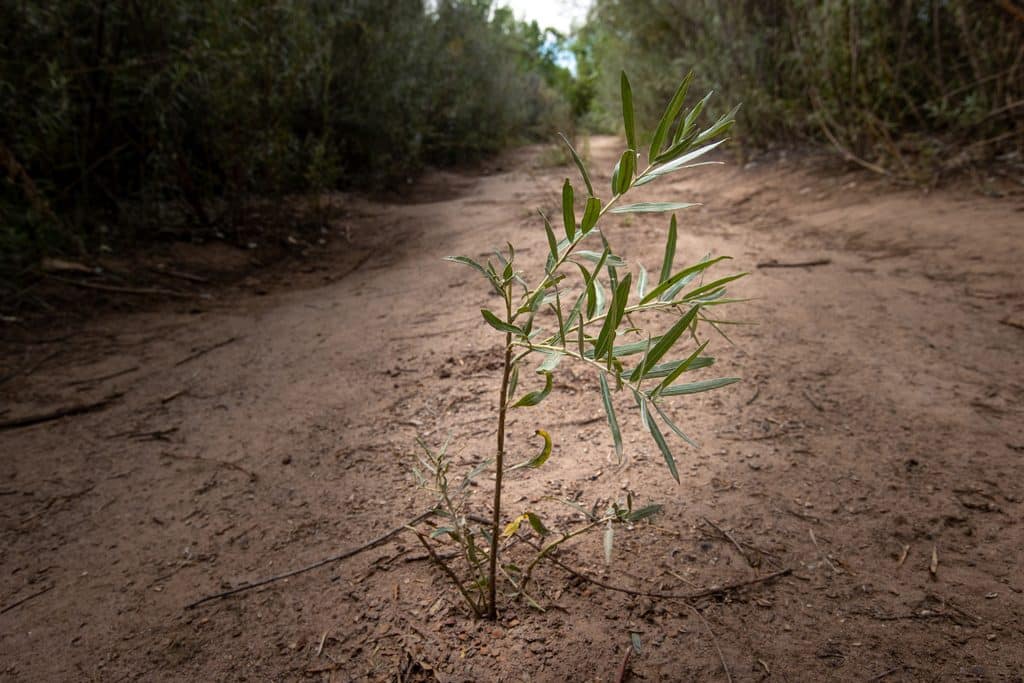
For now, the river brims and the current churns. Ducks totter overhead, crash into eddies, then flail back up and out of the water. Stumps, mulch, and scattered fronds are all that’s left of what was once a dense tamarisk thicket. In its place, a half-beaten track winds among 35 seedlings, each planted in a little hollow designed to pool water and increase the seedling’s chance of survival.
The site is more than two hours’ drive over a mountain pass with hairpin turns from where Leary lives, but he takes turns with a federal employee and someone from the nearby town to water these seedlings once a week. It’s the kind of patient, difficult work needed to prevent riverbanks from becoming a graveyard of dead tamarisk. This one small patch will likely take five summers’ worth of effort by Leary and his colleagues—first they had to clear dead trees and plant native saplings, and now they must water each by hand and kill any tamarisk that resprouts.
And then there’s the rest of the White River. Just as the scale of removing tamarisk by hand proved daunting, so is restoring the thousands of hectares mowed down by tamarisk beetles. The beetles, it turns out, were not a replacement for hard work, done by hand.
Tamarisk didn’t create the Southwest’s water woes, and removing it won’t solve them. It won’t elevate groundwater tables lowered by dams, return surface water to rivers, or restore native ecosystems. Achieving those goals will require something even harder: changing how people use water. It will mean choosing to allocate some of it expressly to rivers and ecosystems, even while farms and cities struggle to get by with less. It will mean creating flexibilities in when, where, and how water is used. It will mean restoring rivers one section at a time, one bucket of water at a time. And it will demand a combination of tactics, from masticators and chainsaws to herbicides and biocontrols.
“You can’t just either chop down trees or release the bugs and assume that all kinds of amazing things are going to happen,” says Sher, the ecologist. Among the additional steps are managing dams to release pulses of water that mimic spring floods; restoring beaver populations; and ensuring communication among nonprofits, scientists, private land owners, and county weed managers, particularly in the absence of a concerted effort by the federal government.
For all of these reasons, the White River is more inspiring than some rivers where Leary has worked. Despite one upstream dam, the river still surges with spring runoff and drops and rises with rainfall and snowmelt, flowing seasonal and temperamental as it did centuries ago. Spring floods help clear tamarisk and other exotic species, giving native plants a chance to take root. Cutting into thick stands of tamarisk and Russian olive, crews here sometimes find willows hidden within. Native plant seeds remained in the ecosystem, and without competition from tamarisk, cottonwood seedlings spring up next to the riverbank on their own.
At the third site Leary visits on this rainy morning, some tamarisk has grown back waist-high. He makes a note in his tablet. Clearing the new growth will be a project for next summer’s crew. It’s part of the process, he says: Mulch the tamarisk, watch to see what grows back, apply herbicide to resprouted branches. Keep watering the native plants. Watch for other invasives, like the Canada thistle and Russian olive trees. Years of doing this kind of work have taught him not to rely fully on any one solution.
Just as the rivers are dynamic and complex, so must be the work of restoring them. In a region already distorted by dams and diversions and development that’s now being again rearranged by climate change, Southwest rivers may never look exactly as they did centuries ago. Tamarisk probably won’t ever be eradicated completely, but restoration efforts can prevent it from tyrannically taking over riverbanks, ensuring that it’s one piece of a functioning ecosystem rather than a sole survivor. Combined with more conscientious water use, this kind of work can help bring rivers back to life—for people, for animals, and for the rivers themselves.
As Leary drives his truck away from the White River, the conversation turns to the possibility of new biocontrols to rein in tamarisk—mealybugs, moths, and midges that other countries also suffering from tamarisk invasions have begun testing. His response is an excited, “Really?” The sense is, he’d enjoy the help.
The Water Desk at the University of Colorado Boulder supported reporting for this story.
Photograph by Christina Selby
Hi, I’m Dave, the executive director of bioGraphic. (And that’s my dog, Finn.) Thanks for taking the time to read this story.
Stories like this simply don’t get produced without financial support from readers like you. bioGraphic is not backed by a private company or owned by a billionaire. It’s an independent, nonprofit magazine. And one-quarter of our annual budget comes directly from reader donations.
We need your support more than ever, as governments slash funding for conservation and scientific research, placing even more ecosystems and wildlife at risk around the world. At bioGraphic, we’re steadfastly shining a light on the threats to our planet’s incredible biodiversity. And we’re showcasing the hard work of people bravely taking action to protect at-risk species.
bioGraphic publishes environmental reporting that you can’t find anywhere else: deeply researched, trustworthy stories that are also beautiful and captivating to read. We offer an antidote to reader apathy and doom-and-gloom news by revealing the wonders of the natural world and focusing on real solutions to big problems. When you finish a bioGraphic story, we want to leave you feeling informed, delighted, and inspired.
We don’t run ads or hide our stories behind a paywall. The readers who generously support bioGraphic allow our work to remain free for everyone.
Will you help us keep telling these crucial stories?

Author

Related Articles
Ethiopia’s Grand Tree-Planting Plan
Efforts to restore lost forests often fail, but Ethiopians are betting big: planting billions of saplings to revive habitat, regenerate soil, and stabilize the land.
Death by a Thousand Dams
Tens of thousands of small barriers hamper fish recovery in the northeastern United States. But while the demolition of big dams out west gets the most attention, a similar revolution is revitalizing northeastern streams and rivers—one tiny dam at a time.
The Unwilding of Patagonia’s Pollinators
In a region synonymous with wilderness, native bumblebees are being replaced by industrial worker bees—and ecosystems are paying the price.