
Tricks of the Trunk
With their dexterous trunks, bush elephants satisfy their enormous appetites and transform the landscape.
Photograph by Sergey Gorshkov
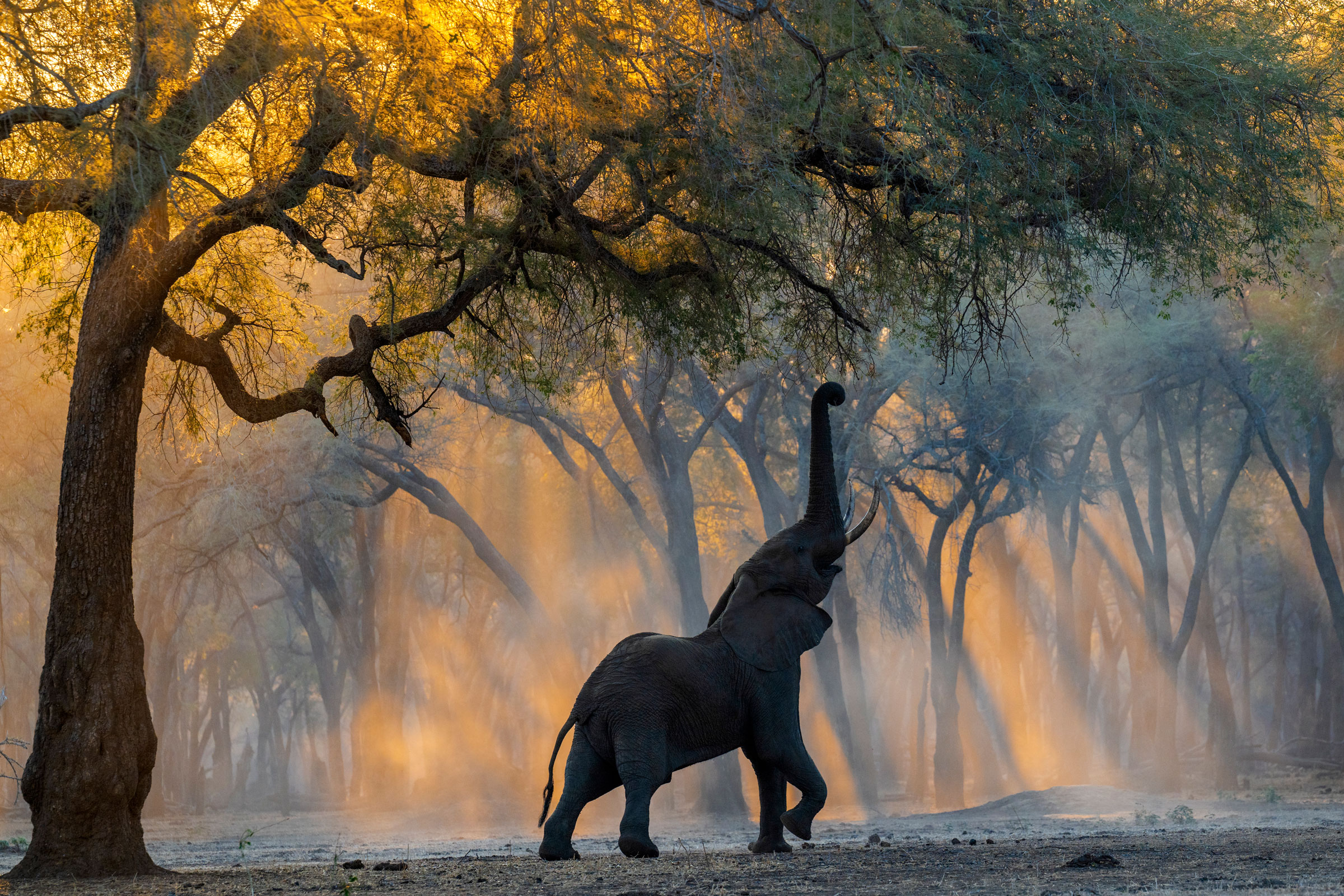
During the dry season, between May and October, Lower Zambezi National Park in Zambia receives little more than a few sips of rain. With water so scarce, wildlife congregates close to the Zambezi River, along the park’s southern border, in the mopane forests growing in the floodplain. Under the feet of the resident elephants, buffalo, antelopes, and wild dogs, the parched earth turns to dust that hangs in the air. As the sun sets, it casts the gritty plumes in a rich orange. On one particularly ethereal evening in 2024, photographer Sergey Gorshkov captured an African bush elephant (Loxodonta africana) reaching to pluck the lacy leaves and spiraling seedpods of a Faidherbia albida, also known as musangu or winter-thorn.
Bush elephants grow up to 4-meters (13-feet) tall, with trunks that can stretch another 2 meters (6.5 feet), and will balance on their sturdy hind legs to reach even higher foliage. In Lower Zambezi, “the big trees look like they were cut by a gardener from below,” says Gorshkov.
Bush elephants’ long, dexterous trunks are tipped with two finger-like projections, akin to a grabber tool, and can lift objects as heavy as a baby grand piano or as delicate as a single blade of grass. The impressive appendages contain more than 40,000 muscles, arranged in bands that allow elephants to twist and flex their trunks in any direction—like an octopus arm or human tongue—or widen their nostrils to suck up water.
With the help of those multifunctional trunks—which an animal can also use to affectionately nuzzle a relative, lift a newborn calf to its feet, or smack a misbehaving child—bush elephants consume 100 to 180 kilograms (220 to 400 pounds) of sticks, bark, grasses, fruits, and roots in a day. In their pursuit of tasty vegetation, pachyderms use their colossal schnozzes to snap branches. They also peel bark with their tusks and uproot saplings and trample brush with their powerful legs. These behaviors transform the environment, thinning the forest canopy and creating clearings where different trees, shrubs, and grasses can grow, which in turn provide habitat for other animals. As they forage, elephants also leave behind giant mounds of dung, dispersing and fertilizing seeds that regenerate plant communities.
In the 1970s, Lower Zambezi National Park contained more than 5,000 elephants, but in the decades since, animals have fallen to poaching for bush meat and the ivory trade, and have been killed in retaliation for damaging crops. Between 1997 and 2007, researchers observed the environment changing in response, with woody shrublands beginning to expand into the park’s grassland areas. The park and surrounding game management areas currently support roughly 1,000 elephants, with thousands more residing in protected areas on the opposite side of the river in Zimbabwe. The two countries have joined forces to combat illegal killings, which have declined since 2016.
Bush elephants continue to gather along the banks of the Zambezi, and during Gorshkov’s visit to Lower Zambezi National Park, he was struck by the number that shuffled through the dust each morning to drink and splash with their trunks. “It was my 61st trip to Africa, but I had never seen so many elephants in one place before,” he marvels.

Hi, I’m Dave, the executive director of bioGraphic. (And that’s my dog, Finn.) Thanks for taking the time to read this story.
Stories like this simply don’t get produced without financial support from readers like you. bioGraphic is not backed by a private company or owned by a billionaire. It’s an independent, nonprofit magazine. And one-quarter of our annual budget comes directly from reader donations.
We need your support more than ever, as governments slash funding for conservation and scientific research, placing even more ecosystems and wildlife at risk around the world. At bioGraphic, we’re steadfastly shining a light on the threats to our planet’s incredible biodiversity. And we’re showcasing the hard work of people bravely taking action to protect at-risk species.
bioGraphic publishes environmental reporting that you can’t find anywhere else: deeply researched, trustworthy stories that are also beautiful and captivating to read. We offer an antidote to reader apathy and doom-and-gloom news by revealing the wonders of the natural world and focusing on real solutions to big problems. When you finish a bioGraphic story, we want to leave you feeling informed, delighted, and inspired.
We don’t run ads or hide our stories behind a paywall. The readers who generously support bioGraphic allow our work to remain free for everyone.
Will you help us keep telling these crucial stories?

Authors


Related Articles
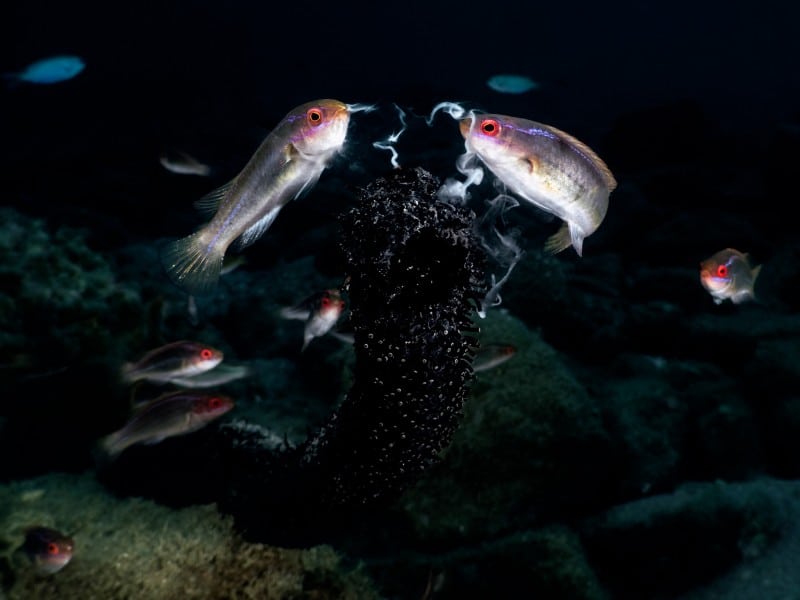
Milt Meal
Marine creatures will do almost anything for a meal—including feasting on the sperm and eggs of spawning invertebrates.
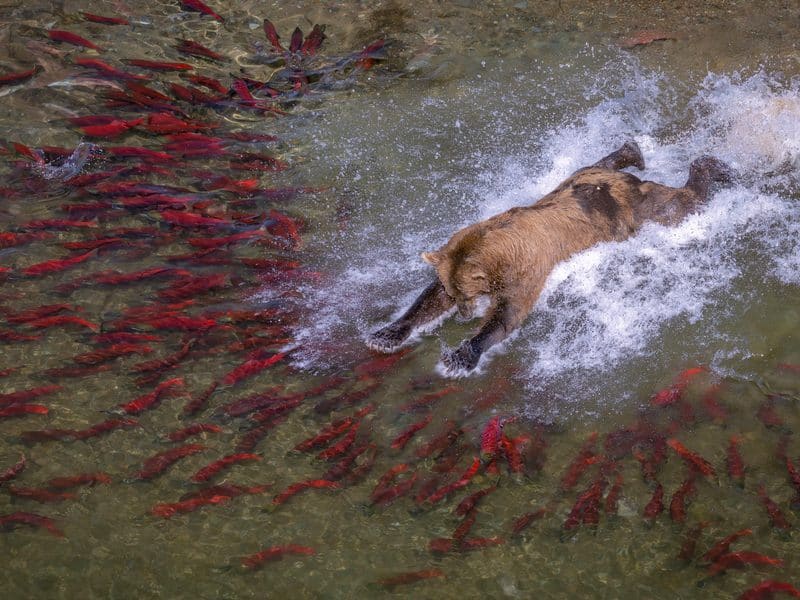
The Art of the Catch
To bulk up for winter hibernation, Alaska’s brown bears employ a range of techniques for snaring salmon.
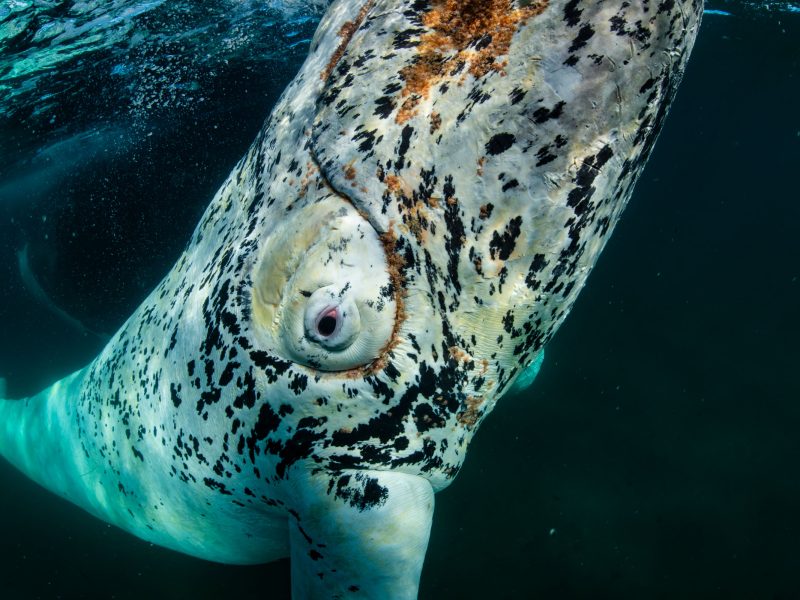
The Wonder of a Pale Whale
A curious calf with an atypical birthday suit is a good sign for southern right whales.