
Photograph by Ben Hall

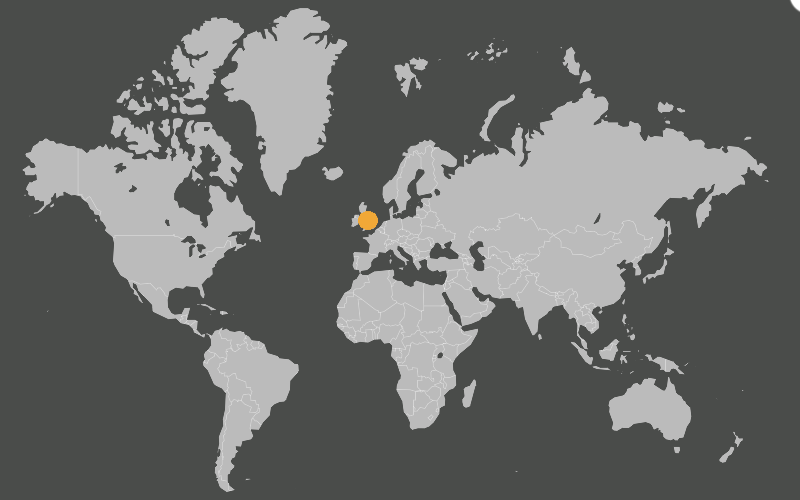
Standing practically immersed in a resplendent field of heather just west of Sheffield, England, a northern wheatear (Oenanthe oenanthe) looks right at home. But home is a transient concept for this tiny songbird. Breeding across a vast swath of the northern hemisphere and wintering in sub-Saharan Africa, the species spends almost as much time on the go as it does in any one place.
The benefits of migration are clear. While winter rages in the northern hemisphere, wheatears take advantage of the milder climate and food resources they find in eastern Africa. But these benefits come at a cost, putting some individuals nearly 15,000 kilometers (9,300 miles) from where they will eventually breed. Describing their journey by distance alone hardly does it justice. Standing between the birds and their breeding territories—and would-be mates—is the Sahara Desert, the Mediterranean, the Alps and Pyrenees, and, for some, the North Sea—not to mention countless roads, power lines, and battlefields along the way.
Yet the birds make this transit, year after year, as if programmed to do so. In a study published in 2012, scientists from the Institute of Avian Research in Germany placed geolocator tags on breeding individuals—some in Alaska and some in the eastern Canadian Arctic. They discovered that wheatears follow very different migratory paths depending on where they breed—and quite likely, where they themselves once hatched.
Birds that bred in Alaska took the longest route to and from Africa, traveling overland through Asia and Eastern Europe and across the Middle East—a three-month trip that lasted almost as long as their winter layover. Birds that bred in eastern Canada had much less ground to cover, but faced an equally daunting task. Their route included a 3,500-kilometer (2,200-mile) trans-Atlantic flight with the possibility of only a single pit stop on Greenland’s southern tip. In subsequent studies, the researchers found that nestling wheatears are instinctually inclined to move east or west depending on where they hatch—prepared from day one to follow the route their parents and countless previous generations have flown before them.
Peak District National Park, United Kingdom
Hi, I’m Dave, the executive director of bioGraphic. (And that’s my dog, Finn.) Thanks for taking the time to read this story.
Stories like this simply don’t get produced without financial support from readers like you. bioGraphic is not backed by a private company or owned by a billionaire. It’s an independent, nonprofit magazine. And one-quarter of our annual budget comes directly from reader donations.
We need your support more than ever, as governments slash funding for conservation and scientific research, placing even more ecosystems and wildlife at risk around the world. At bioGraphic, we’re steadfastly shining a light on the threats to our planet’s incredible biodiversity. And we’re showcasing the hard work of people bravely taking action to protect at-risk species.
bioGraphic publishes environmental reporting that you can’t find anywhere else: deeply researched, trustworthy stories that are also beautiful and captivating to read. We offer an antidote to reader apathy and doom-and-gloom news by revealing the wonders of the natural world and focusing on real solutions to big problems. When you finish a bioGraphic story, we want to leave you feeling informed, delighted, and inspired.
We don’t run ads or hide our stories behind a paywall. The readers who generously support bioGraphic allow our work to remain free for everyone.
Will you help us keep telling these crucial stories?

Related Articles
The Art of the Catch
To bulk up for winter hibernation, Alaska’s brown bears employ a range of techniques for snaring salmon.
The Wonder of a Pale Whale
A curious calf with an atypical birthday suit is a good sign for southern right whales.
Saying “Ah!” at the Shrimp Spa
On coral reefs, an army of tiny cleaners eat their clients’ parasites, food particles, and dead skin, boosting biodiversity in the process.
