

This story was originally published by Atlas Obscura and is reproduced here as part of the Climate Desk collaboration.
In March 2024, Deb Manley, a volunteer with Big Bend National Park, Texas, uploaded photos of a small, low-lying plant covered in silvery fuzz to the species identification app iNaturalist. The app populates a public map with observations of plants and animals, which shows how frequently species are observed in a given area and can bring the user community together to tackle tricky identifications. Manley sparked one of those puzzles when she shared her photos of the plant, which she and other park staff had encountered on a hike. Curiosity soon gave way to excitement when users realized that the plant did not match any species known to science. Not only was this the first recorded sighting on iNaturalist, it was the first recorded sighting, period.
“It’s very rare for something so different from what we know to be found,” says Isaac Lichter Marck, a plant evolutionary biologist at the California Academy of Sciences who worked on genetic analysis of the new species. Now, one year after the initial sighting, the Big Bend species has been formally described in an article published in the journal PhytoKeys and given the scientific name Ovicula biradiata. Informally, it’s become known as the woolly devil, largely because of its fur and the horn-like rays protruding from its flowers. The discovery marks the first new species found in a national park since a yellow-flowered shrub called July gold was discovered in California’s Death Valley back in 1976.

Lichter Marck explains that in order to document the woolly devil, botanists first had to apply for a permit from the park to collect samples. “They reached out to me as somebody who could help with sequencing the DNA and describing the plant in detail,” says Lichter Marck, who has expertise with North American desert daisies. The woolly devil has telltale anatomical features of Asteraceae, the daisy and sunflower family, one of the largest and most diverse families of flowering plants. “Overall, the goal was to figure out what were the relationships between this interesting plant and other known species of wild sunflowers,” says Lichter Marck. “And based on that, how should this new plant be classified? Basically trying to solve the woolly mystery.”
Researchers took close-ups of the plant’s anatomy using a scanning electron microscope that can magnify up to 40,000 times and extracted DNA from the samples, which Lichter Marck describes as an envelope of “little dried-up balls of wool.” DNA analysis corroborated one hypothesis: that the woolly devil was related to a group of sunflowers known as sneezeweeds (“Not a great common name, but they’re really beautiful plants,” says Lichter Marck). However, the woolly devil was “on an evolutionary branch on its own,” he adds. “And that meant that it was not only a new species but it actually had to be given a new name at the genus rank in order to be classified.” This makes the plant even more rare and unusual, although Lichter Marck points out that sunflowers are so diverse that a newfound genus is a bit more likely than with some other forms of life.
The chosen genus name, Ovicula, is Latin for “little sheep,” while the species name, biradiata, refers to its two flower rays. Although the woolly devil’s flower structure is unique, many of its relatives and other plants have flowers that reflect UV light to attract pollinating animals such as insects. Some scientists hypothesize that the woolly devil’s rays are similarly reflective, acting “as a landing pad for pollinators,” says Lichter Marck. But more research will need to be done to confirm details of the plant’s biology.
The more we learn about the woolly devil, the better chance we have of protecting it. Further surveys have revealed three small areas within the park where the woolly devil is locally abundant. On the one hand, says Lichter Marck, the woolly devil is found within a really well-preserved area: the national parks, which for decades have been considered secure. “But currently—and into the near future—there’s a lot of uncertainty about the sustainability of things like national parks and public lands in this country.”

Lichter Marck says that botanists are watching the woolly devil’s home range closely for rainfall, so that the next stage in its life cycle can be observed. Desert plants tend to have short reproductive cycles dependent on regular rain, which can make them especially vulnerable to climate change. As deserts grow drier, the woolly devil might be in danger of disappearing before we’ve had a chance to learn much about it. Lichter Marck points out the example of the Hawaiian kanaloa tree, discovered in 1992 and extinct in the wild shortly thereafter. Many more species are believed to disappear before they can be documented, a phenomenon known as anonymous or dark extinction.
In this sense, the wooly devil is not so unique after all—it’s one of many species in a precarious position. “There’s still a lot we need to know, just at a basic level, about these ecosystems,” says Lichter Marck. “And that we need to learn urgently, because they’re changing really quickly.”
Hi, I’m Dave, the executive director of bioGraphic. (And that’s my dog, Finn.) Thanks for taking the time to read this story.
Stories like this simply don’t get produced without financial support from readers like you. bioGraphic is not backed by a private company or owned by a billionaire. It’s an independent, nonprofit magazine. And one-quarter of our annual budget comes directly from reader donations.
We need your support more than ever, as governments slash funding for conservation and scientific research, placing even more ecosystems and wildlife at risk around the world. At bioGraphic, we’re steadfastly shining a light on the threats to our planet’s incredible biodiversity. And we’re showcasing the hard work of people bravely taking action to protect at-risk species.
bioGraphic publishes environmental reporting that you can’t find anywhere else: deeply researched, trustworthy stories that are also beautiful and captivating to read. We offer an antidote to reader apathy and doom-and-gloom news by revealing the wonders of the natural world and focusing on real solutions to big problems. When you finish a bioGraphic story, we want to leave you feeling informed, delighted, and inspired.
We don’t run ads or hide our stories behind a paywall. The readers who generously support bioGraphic allow our work to remain free for everyone.
Will you help us keep telling these crucial stories?

Related Articles
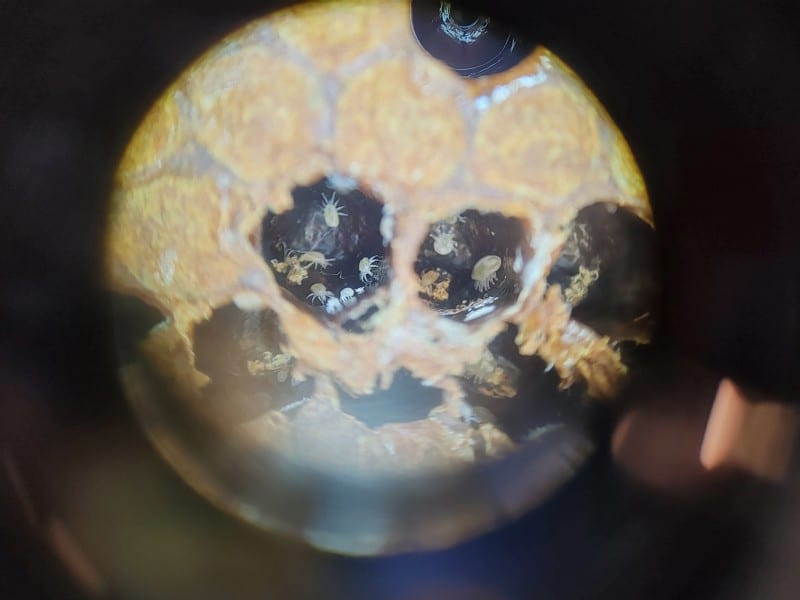
A Mite on a Bee on a Ship on the Sea Spells Trouble
Pollinator pathogens are spreading through international trade, threatening both agriculture and wild ecosystems.
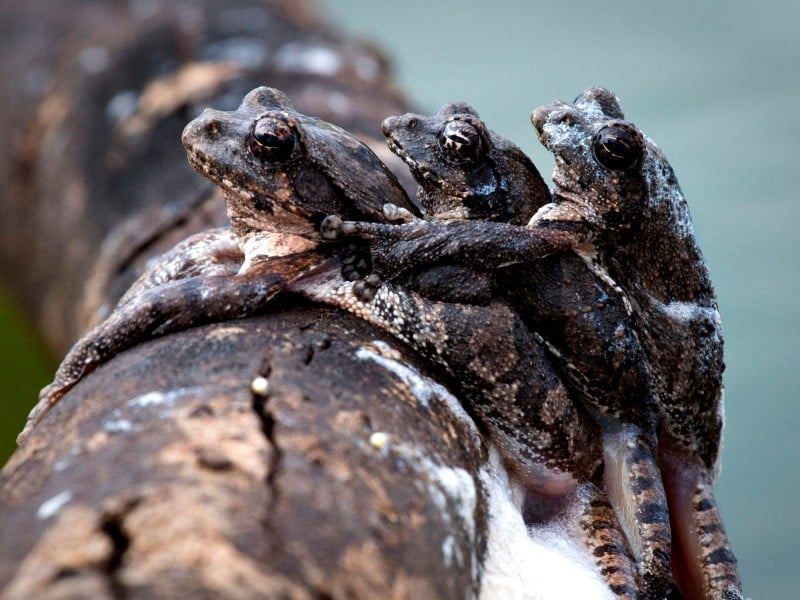
When it Comes to Frog Sex, Teamwork Makes the Dream Work
New science on gray foam-nest tree frogs hints at the evolutionary benefits of multiple sexual partners.
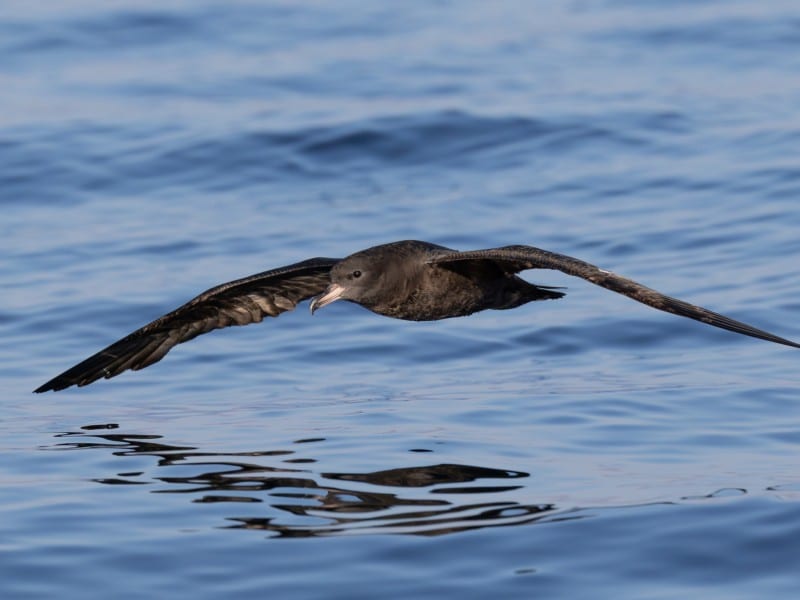
How Much Plastic Does it Take to Kill a Seabird?
For the first time, researchers uncover how eating plastic trash may impact seabirds at the population level.