
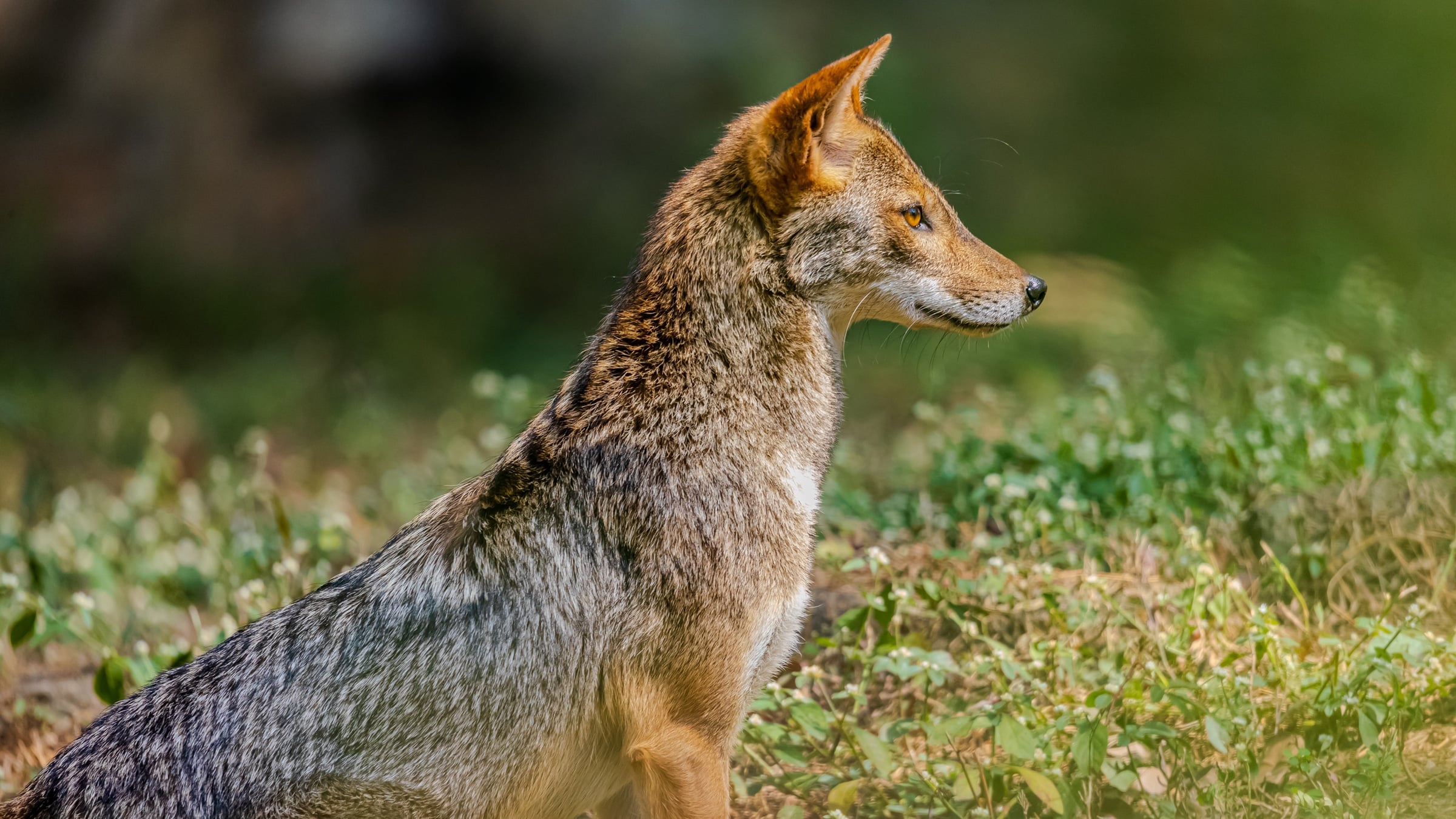
The golden jackal isn’t always the color of gold; its coat ranges from creamy beige to a rusty brown with black striations. It is, however, living in a golden age—thanks in part to the ubiquity of humans.
Native to Eurasia, golden jackals in Europe have historically been confined to the southeastern tips of the continent, mainly the Balkan countries. Over the past century, though, Canis aureus has slowly started colonizing new areas of Europe, with a steep acceleration over the past two decades. Golden jackals are expanding their range, reaching as far west as Spain and as far north as the Arctic. Scientists say the expansion represents one of the most dramatic changes in the range of a species in today’s world. New research, including genetic analysis, is revealing what’s driving the jackal’s spread and the part people play in the animal’s success.
One factor that has contributed to golden jackals’ expansion is anthropogenic climate change, which has decreased snow cover and probably revealed more suitable canid habitat. The habitat fragmentation that comes with farming and urbanization is another likely influence, since golden jackals prefer a patchy environment. The species also adapts readily to human-altered landscapes and can disperse hundreds of kilometers in search of new habitat. And, not least of all, researchers suspect that humans cleared the way for them by extirpating wolves across much of Europe in the 18th and 19th centuries.
“The fact that they did not have any competitor made it easier,” says Jennifer Hatlauf, a wildlife ecologist who manages the Golden Jackal Project in Austria.
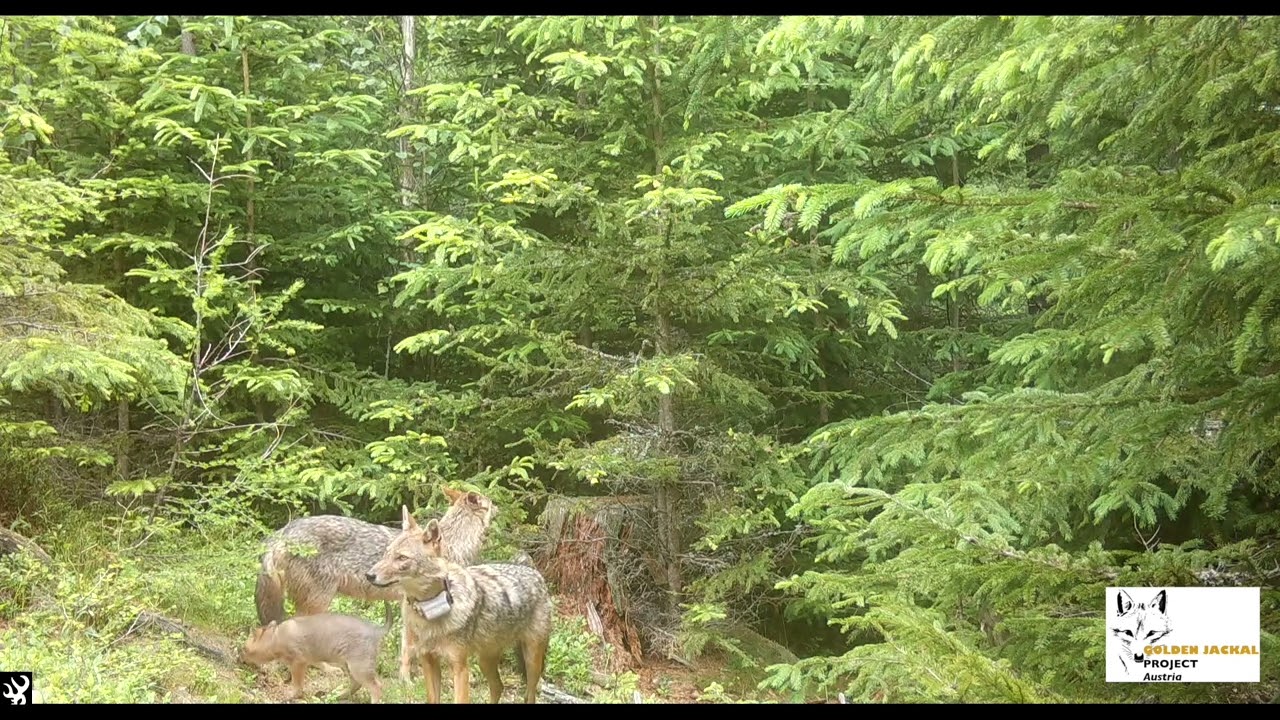
Today, researchers estimate that around 150,000 golden jackals inhabit 23 European countries, populating a range that’s 46 percent bigger than it was in 2016. But wolf populations are growing, too; Europe hosts roughly 23,000 wolves today, compared to an estimated 12,000 as recently as 2012.
To better understand how humans, a growing wolf population, and the expanding golden jackal population interact, Hatlauf and a large team of researchers collected and analyzed data on the presence of golden jackals from all around Europe between 2001 and 2017. The information mainly came from playback surveys: Researchers played a jackal call from a speaker and listened for the response of real jackals, identifying the presence of individuals. The team then paired this data with data on wolf and human presence.
Their recently published analysis shows that the presence of wolves is the main factor limiting the expansion of jackals—a result that strengthens the hypothesis that the decline of wolves in past centuries likely opened the door to the jackal expansion. The team also found that human settlements create a shield that deters wolves and offers a refuge for jackals.
The “human shield” hypothesis isn’t new. Researchers have long known that prey or smaller predators take advantage of human presence to escape large predators. For example, some bear mothers with cubs find refuge from adult male bears by moving close to human settlements, especially during the mating season, when the males would try to kill offspring. Prey animals, such as wild turkeys, also seem to find safety near human-inhabited areas.
In places where wolves are absent, the data shows, jackals tend to stay away from humans, likely to avoid deadly encounters with our species. But where wolves are rooted in the landscape, jackals remain within humans’ proximity. “The jackal is three times smaller, so there’s simply no chance for a jackal if you have a core area of wolf populations,” says Hatlauf. That same life strategy is probably going to apply in other areas that jackals will reach in the future as they expand even farther, she adds.
“The work is excellent,” says Luigi Boitani, chair of the International Union for Conservation of Nature’s Large Carnivore Initiative for Europe, who wasn’t involved in the research. The idea that the wolf’s extirpation played a role in the jackal’s expansion and that human presence shapes the relationship between the two species has long crossed scientists’ minds, Boitani says, but no one was able to prove it with actual data until now.
For wildlife researchers in Central Europe, the idea that humans have an effect on animal behavior is unsurprising, says Ursula Sterrer, a wildlife biologist at KORA, a foundation based in Switzerland focused on wild carnivores in the country, who wasn’t involved in the study. “For animals, human presence can be very influential, and for the golden jackal, we already know that this species is a bit of the winner of the modern age,” Sterrer says.
The full effects, both positive and negative, of jackals’ expansion into new ecosystems remain to be seen. “That should be a point of research in the future,” says Hatlauf.
How coexistence with humans will play out is a question mark, too. Jackals can cause significant damage to livestock, says Boitani, and in some countries jackals are already under fire. In Hungary alone, hunters shot 1,660 in 2020, but over 12,000 animals in 2021.
The latest study also shows that 75 percent of Europe, or nearly six times the jackal’s current range, is suitable for jackal colonization—suggesting the expansion is far from over. But predicting how expansion will unfold is complicated, researchers say, given the intricate relationship between jackals, humans, wolves, and many other factors at play.
“I believe that the jackal will continue to expand,” Boitani says. “It is a species that is so ecologically and behaviorally flexible, and it has such extraordinary abilities to move across the landscape that it will keep expanding, testing new areas, and suddenly appearing in places we would never have thought possible.”
Hi, I’m Dave, the executive director of bioGraphic. (And that’s my dog, Finn.) Thanks for taking the time to read this story.
Stories like this simply don’t get produced without financial support from readers like you. bioGraphic is not backed by a private company or owned by a billionaire. It’s an independent, nonprofit magazine. And one-quarter of our annual budget comes directly from reader donations.
We need your support more than ever, as governments slash funding for conservation and scientific research, placing even more ecosystems and wildlife at risk around the world. At bioGraphic, we’re steadfastly shining a light on the threats to our planet’s incredible biodiversity. And we’re showcasing the hard work of people bravely taking action to protect at-risk species.
bioGraphic publishes environmental reporting that you can’t find anywhere else: deeply researched, trustworthy stories that are also beautiful and captivating to read. We offer an antidote to reader apathy and doom-and-gloom news by revealing the wonders of the natural world and focusing on real solutions to big problems. When you finish a bioGraphic story, we want to leave you feeling informed, delighted, and inspired.
We don’t run ads or hide our stories behind a paywall. The readers who generously support bioGraphic allow our work to remain free for everyone.
Will you help us keep telling these crucial stories?

Author

Related Articles

The Traveling Museum of Palestinian Nature
A mobile museum brings conservation and biodiversity to rural communities in the West Bank.
The Curious Connection Between Bacteria, Seagrass, and Carbon
New research shows that seagrass depends on the bacteria around it—and that the antibiotics entering our oceans could disrupt that relationship.

Trees as Public Health Infrastructure
New research shows that meeting tree canopy goals could prevent more than 67,000 premature deaths in the United States.