
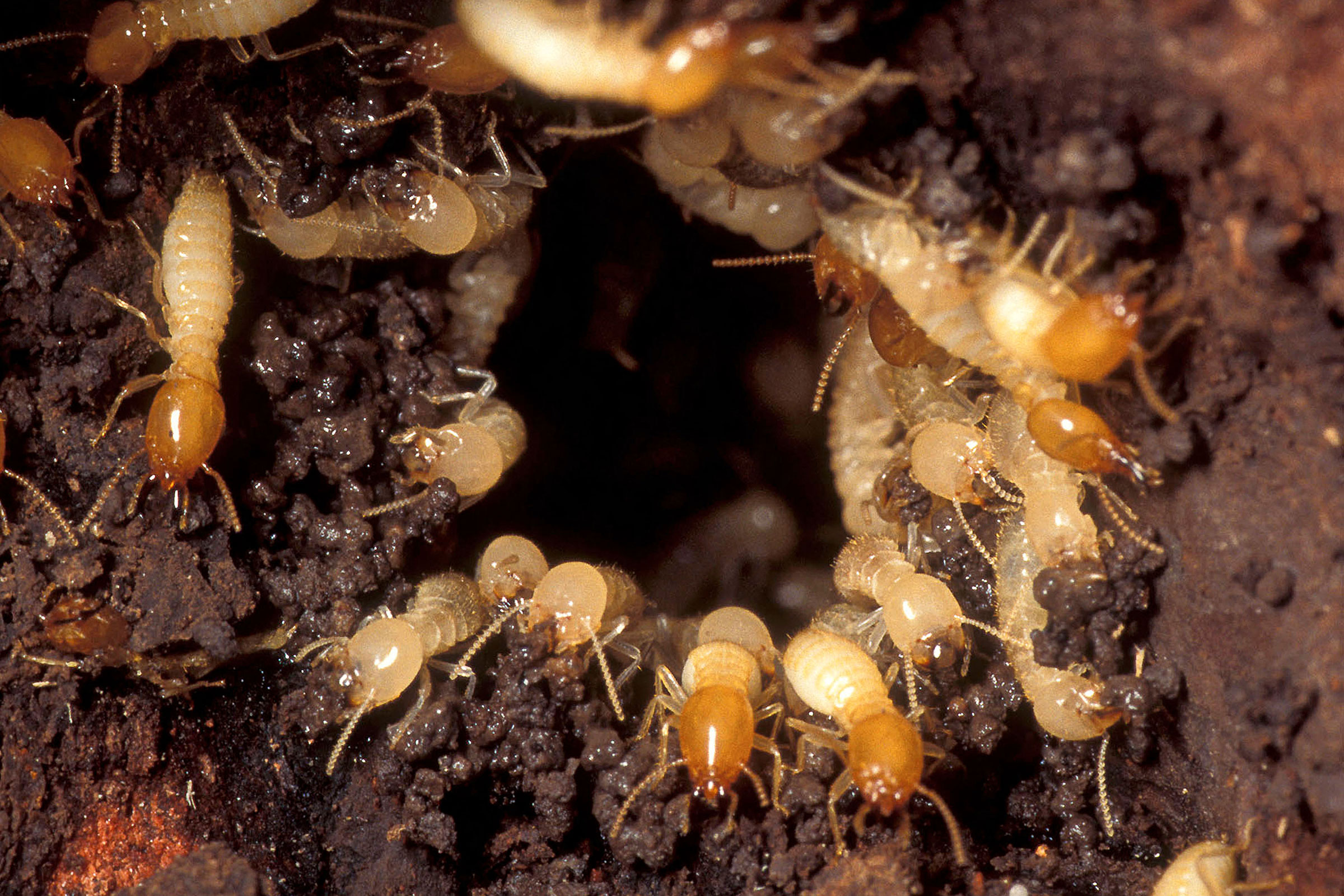
In a Fort Lauderdale, Florida, park, Thomas Chouvenc made a discovery he’d been dreading for years. It was October 2024, and inside an infested tree the entomologist and his team found wild termites that resembled—but didn’t quite match—two of the world’s most destructive species: the Formosan and Asian subterranean termites. For years, the scientists had been watching with concern as invasive Asian and Formosan termites mingled on the South Floridian landscape. With some regularity over the previous few years, the scientists had been spotting suspected hybrid termite soldiers. But finally, here it was—the thing Chouvenc hoped he’d never find: a fully established colony of Formosan-Asian termite hybrids.
Every year, Formosan subterranean termites (Coptotermes formosanus) and their Asian counterpart (C. gestroi) cause an estimated US $20 billion in damage globally. As with other termites, they have a penchant for wood. But these termites also like chewing electrical cables—a modern threat for a modern world. A hybrid version could potentially increase that threat. The hybrid colony has likely existed undetected for years, and there are probably others, says Chouvenc, a researcher at the University of Florida. It’s worrisome.
“We know C. formosanus,” says Hou-Feng Li, an entomologist at the National Chung Hsing University in Taiwan, who collaborated with Chouvenc on the termite research. “We know C. gestroi, but we have no idea what the hybrid population will be.”
Along with many other biologists, Chouvenc feels a bit blindsided by hybrid species. For a long time, scientists held firm that the boundary between species was their ability to mate and make viable offspring. But hybrids, it turns out, are everywhere. Some are a little more familiar, like the coyote-wolf hybrids first identified in the early 20th century and now so common in the northeastern United States that they go by their own name: coywolves. But others, such as the “grue jay”—half blue jay, half green jay—appear to be more recent arrivals. Birdwatchers first spotted that particular mashup in Texas in 2023. Other hybrids, like the termites, are what researchers call cryptic species, meaning they so closely resemble either parent species that only modern genetic testing can confirm their mixed ancestry.
As geneticists gain more insight into animals’ inner workings, they’re learning that the boundaries between species have always been porous. Almost a quarter of Earth’s carnivores are now known to carry genes from multiple lineages, as do 40 percent of plant families and more than half of all waterfowl. And the rate at which species are forming new hybrids appears to be accelerating. As people continue to disturb ecosystems and disrupt the climate, and as global trade carries plants and animals far from their traditional environments, previously isolated populations are being pushed together.
These newly discovered hybrids are forcing scientists to confront long-held assumptions. Where once they were dismissed as evolutionary dead ends, some scientists now see hybrids as drivers of biological change. The evidence of hybrids’ prevalence even has biologists questioning what constitutes a species.
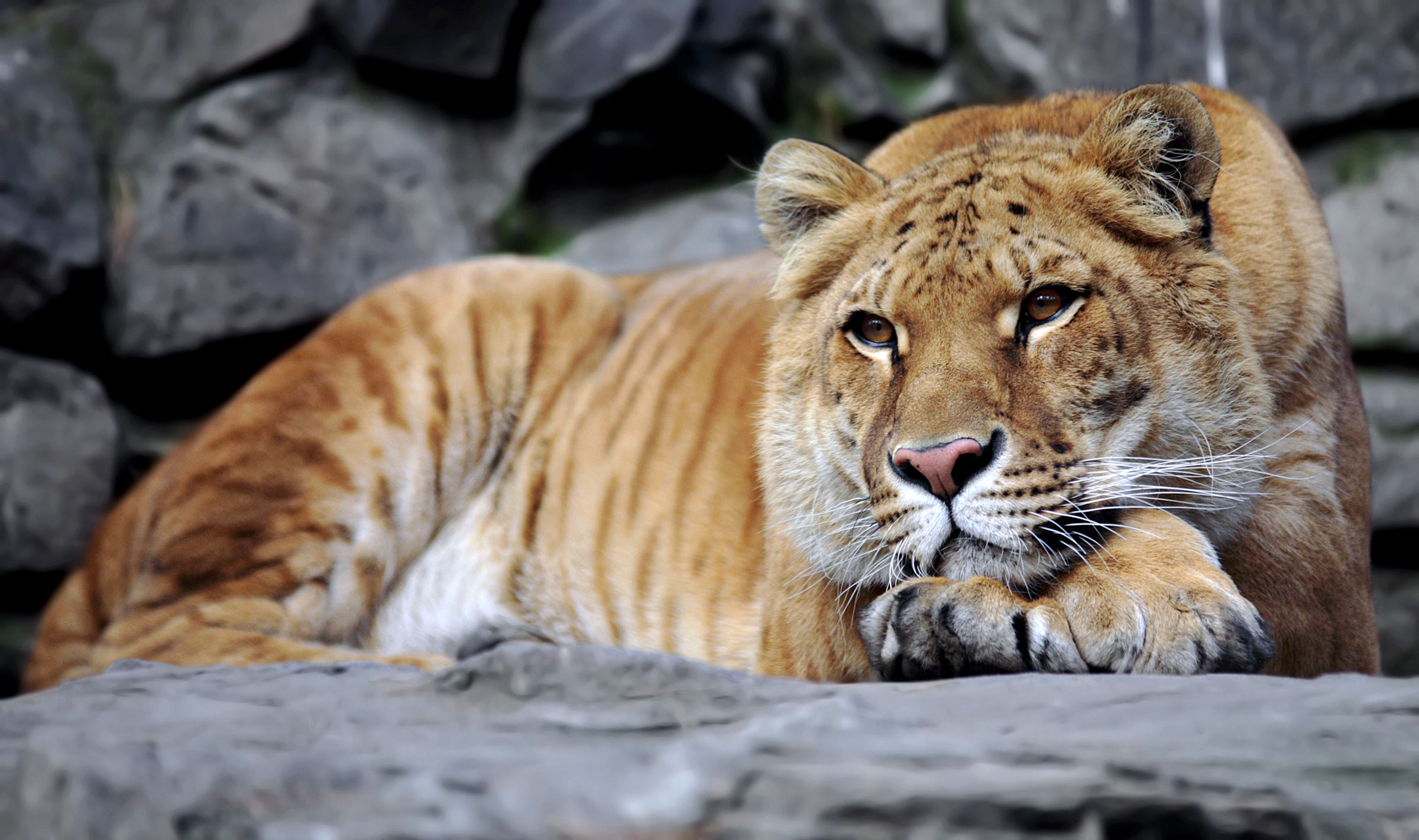
With hybrids, says Jonna Kulmuni, an evolutionary ecologist at the University of Amsterdam in the Netherlands, “you basically mush two very different genomes together, and some of the gene interactions might not work well.” Perhaps the most well-known hybrids are mules, the offspring of female horses and male donkeys. Genetic mismatches render these hybrids infertile. Incompatible genetics create issues in other hybrids, too. Ligers—a lion-tiger mix—often suffer from neurological disorders.
But not all hybrids are infertile or weak. Counterintuitively, many, like the hybrid catfish reared by farmers across the U.S., actually display so-called hybrid vigor—growing faster and bigger than either parent species.
Even in the wild, hybrids can thrive. In the western U.S., for instance, female plains spadefoot toads (Spea bombifrons) will preferentially mate with males from a different species when the weather is exceptionally dry. Their dalliances with the closely related Mexican spadefoot toad (Spea multiplicata) produce offspring that are less fertile but grow much faster than purebred tadpoles. That gives them a better chance to mature and escape before the breeding pond they were born into dries up.
Sometimes, hybrid offspring will keep mating with each other until they become distinctive enough to be considered a new species. More often, though, hybrids breed with members of one of their parent species. Over time, this dilutes their original 50:50 genetic mix. But those outside genes never really go away.
In many cases, these brief interspecies trysts can cause species to pick up powerful new abilities. The hybrid offspring of Western European house mice (Mus musculus domesticus) and Algerian mice (Mus spretus), for instance, carry a gene that makes them more resistant to warfarin, a common pesticide. Even for humans, ancient interbreeding between Homo sapiens and Neanderthals caused us to pick up genes that boosted our immune systems and helped us tolerate colder temperatures.
Hybridization can introduce already tested genes into a new genetic background, says Scott Taylor, an evolutionary biologist at the University of Colorado Boulder. “It’s like a faster way for evolution to happen.”
In a world beset by climate change, this accelerated form of evolution could help species adapt. But that resilience, says Kulmuni, can come with a price. As species merge and blend, the world’s overarching biodiversity can shrink. In Scotland, for instance, wildcats are interbreeding with domestic cats at such a clip that conservationists fear pure wildcats will disappear altogether.
“I get asked all the time: ‘Is hybridization good or bad?’” Taylor says. “And my response is: it depends.” The answer varies with the ecological context, he says, but also perspective. “If that new thing fills an ecological role that would otherwise be empty, maybe that’s good.”
That is, unless the new hybrid is so potent that it overruns entire ecosystems—which is what Chouvenc, Li, and their colleagues are so scared of with Florida’s new hybrid termites. Lab experiments show the hybrids can tolerate a wider range of temperatures than either parent species, suggesting they could adapt to a wider variety of habitats. How this plays out in the wild remains uncertain, but the possibility is putting experts on edge. As Li, the entomologist in Taiwan says, “The uncertainty makes us uncomfortable.”
Hi, I’m Dave, the executive director of bioGraphic. (And that’s my dog, Finn.) Thanks for taking the time to read this story.
Stories like this simply don’t get produced without financial support from readers like you. bioGraphic is an independent non-profit—we’re not backed by a private company or owned by a billionaire. One-quarter of our budget comes directly from reader donations.
bioGraphic publishes environmental reporting that you can’t find anywhere else: deeply researched, trustworthy stories that are also beautiful and captivating to read. Right now, we need your help to raise $20,000 by October 2. Every dollar will go directly to more crucial reporting projects.
Around the world, governments are slashing funding for conservation and scientific research, placing even more ecosystems and wildlife at risk. At bioGraphic, we’re steadfastly shining a light on the threats to our planet’s incredible biodiversity. And we’re showcasing the hard work of people bravely taking action to protect at-risk species.
bioGraphic offers an antidote to apathy and doom-and-gloom news by revealing the wonders of the natural world and focusing on real solutions to big problems. When you finish a bioGraphic story, we want to leave you feeling informed, delighted, and inspired.
We don’t run ads or hide our stories behind a paywall. The readers who generously support bioGraphic allow our work to remain free for everyone.
Will you help us raise $20,000 by October 2?

Related Articles
When it Comes to Frog Sex, Teamwork Makes the Dream Work
New science on gray foam-nest tree frogs hints at the evolutionary benefits of multiple sexual partners.
How Much Plastic Does it Take to Kill a Seabird?
For the first time, researchers uncover how eating plastic trash may impact seabirds at the population level.
Shrimp Shell Slurry to the Rescue?
A new, multistep chemical process can turn bits of organic waste into “carbon-negative” fuel, food, and construction material.
