
This story was originally published by The Guardian and is reproduced here as part of the Climate Desk collaboration.
Ingesting plastic is leaving seabird chicks with brain damage akin to Alzheimer’s disease, according to a new study—adding to growing evidence of the devastating impact of plastic pollution on marine wildlife.
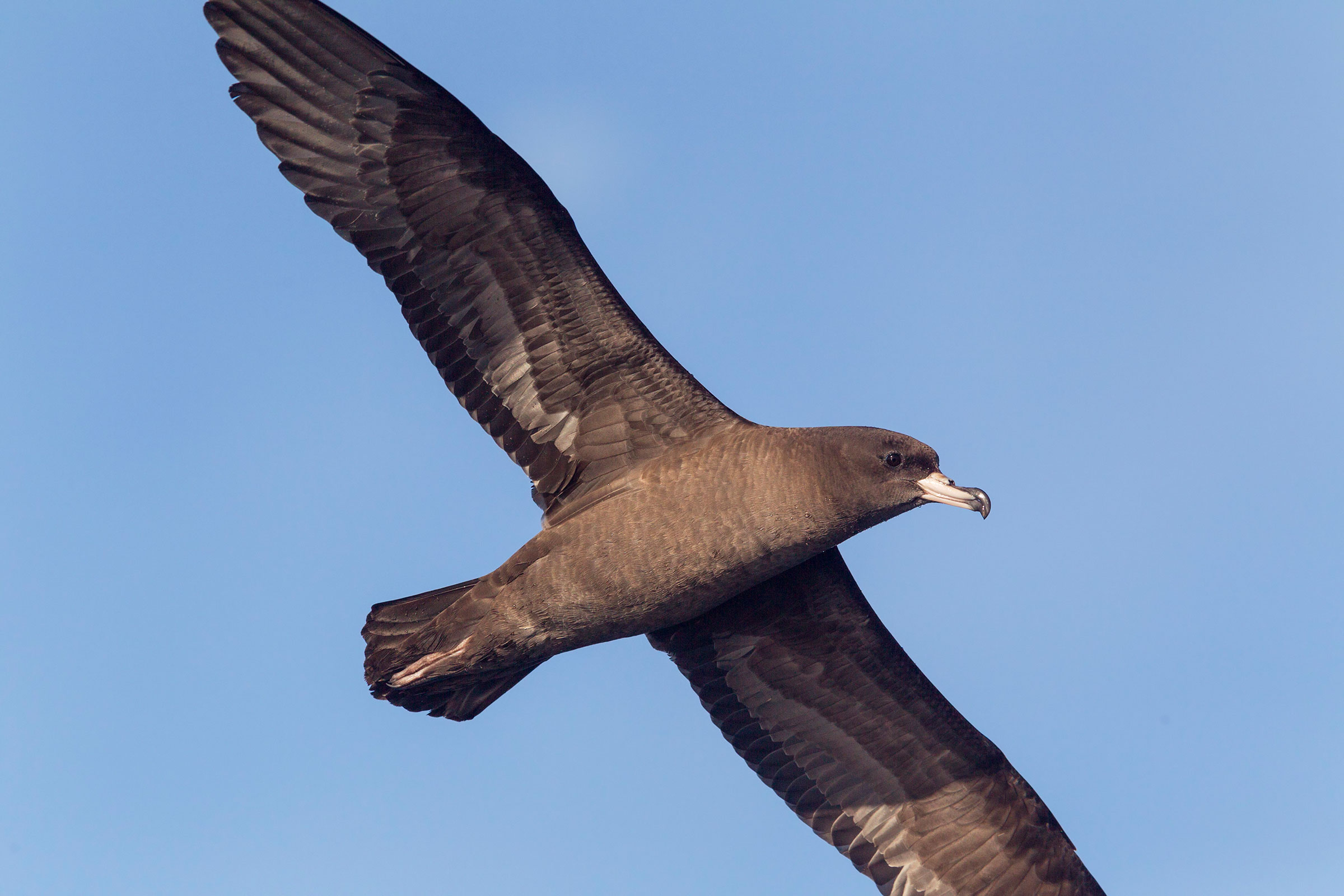
Analysis of young sable shearwaters, a migratory bird that travels between Australia’s Lord Howe Island and Japan, has found that plastic waste is causing damage to seabird chicks not apparent to the naked eye, including decay of the stomach lining, cell rupture, and neurodegeneration.
Dozens of the chicks—which spend 90 days in burrows before making their first journey—were examined by researchers from the University of Tasmania. Many had mistakenly been fed plastic waste by their parents and built up high levels of plastic in their stomachs.
Blood tests indicated that the plastic pollution had left the chicks with severe health issues, disrupting the stomach, liver, kidneys, and brain, according to the study published in the journal Science Advances.
“Plastic ingestion in seabirds is nothing new. We’ve known about it since the 1960s, but a lot of plastic research focuses on the birds that are really emaciated: they’re starving, they’re washing up on beaches and not doing too well. We wanted to understand the condition of birds that have consumed plastic but look visibly healthy,” says Alix de Jersey, a PhD candidate from the University of Tasmania’s School of Medicine, who led the study.
“[In blood tests], we found patterns of the proteins that were very similar to those in people that have Alzheimer’s or Parkinson’s disease. It’s almost equivalent to a small child having Alzheimer’s. These birds are really suffering the impacts from plastic, especially on their neuronal brain health,” she says.
Shearwaters are among the bird species most affected by plastic pollution. Previous studies have found more than 400 pieces of plastic in a single shearwater chick, with plastic sometimes accounting for 5 to 10 percent of their total body weight.
While chicks are able to vomit up some of the plastic before they migrate, researchers say the sheer quantity means it is unlikely that all birds could clear it. The young birds that were examined in the study had their stomachs pumped, so they were able to start their migrations to the Sea of Japan without any plastic waste inside.
“It’s almost a death sentence for these chicks, which is unfortunate because they do look really fit and healthy. But knowing the condition which their body is in before they’re starting their migration, it’s quite challenging to imagine that they would make it to the other end,” says de Jersey.
Previous research has found that fewer than 60 multinationals are responsible for more than half of the world’s plastic pollution, with six responsible for a quarter of that.
Hi, I’m Dave, the executive director of bioGraphic. (And that’s my dog, Finn.) Thanks for taking the time to read this story.
Stories like this simply don’t get produced without financial support from readers like you. bioGraphic is not backed by a private company or owned by a billionaire. It’s an independent, nonprofit magazine. And one-quarter of our annual budget comes directly from reader donations.
We need your support more than ever, as governments slash funding for conservation and scientific research, placing even more ecosystems and wildlife at risk around the world. At bioGraphic, we’re steadfastly shining a light on the threats to our planet’s incredible biodiversity. And we’re showcasing the hard work of people bravely taking action to protect at-risk species.
bioGraphic publishes environmental reporting that you can’t find anywhere else: deeply researched, trustworthy stories that are also beautiful and captivating to read. We offer an antidote to reader apathy and doom-and-gloom news by revealing the wonders of the natural world and focusing on real solutions to big problems. When you finish a bioGraphic story, we want to leave you feeling informed, delighted, and inspired.
We don’t run ads or hide our stories behind a paywall. The readers who generously support bioGraphic allow our work to remain free for everyone.
Will you help us keep telling these crucial stories?

Related Articles
A Mite on a Bee on a Ship on the Sea Spells Trouble
Pollinator pathogens are spreading through international trade, threatening both agriculture and wild ecosystems.
When it Comes to Frog Sex, Teamwork Makes the Dream Work
New science on gray foam-nest tree frogs hints at the evolutionary benefits of multiple sexual partners.
How Much Plastic Does it Take to Kill a Seabird?
For the first time, researchers uncover how eating plastic trash may impact seabirds at the population level.