
This story was originally published by Yale Environment 360 and is reproduced here as part of the Climate Desk collaboration.
It has always been challenging to study nocturnal birds, especially if they use camouflage to blend into their surroundings. “They are highly mobile, so they are really, really hard to study,” says Elly Knight, a University of Alberta researcher who studies common nighthawks (Chordeiles minor), a medium-size bird in the nightjar family. “Outside of traditional ecological knowledge, we don’t know much about them in the boreal forest.”
To surmount those challenges, Knight turned to a huge set of recorded wildlife sounds. It’s common these days to study animals with autonomous recording units, which federal and provincial wildlife agencies have placed throughout the southern boreal forest in northeastern Alberta, where Knight works.
Knight had access to that audio trove, but there was a catch. The amount of stored data is vast and mixed in with other sounds, so there is no practical way an expert could parse and analyze only the calls of the nighthawks. “Realistically, we are only able to do that expert analysis for 1 percent of recordings,” she says. “So there’s this other 99 percent that’s sitting there.”
To address this gap, Knight began using artificial intelligence on the giant pile of acoustic data, casting a good deal of light on the world of the nighthawks. The analysis showed where the birds lived, when they were there, and how their foraging and nesting habitats differed.
“It really opens what we can study,” Knight says. Currently, the technology reveals whether the species is present or not, “which can provide a wealth of ecological insights,” she says. But further refinement will expand the applications and efficacy, including identifying individual birds, to provide a far more detailed ecological portrait. Knight is now working on applying the same approach to a broad range of boreal bird species.
The use of AI is spreading rapidly through the field of conservation these days, bringing rapid and dramatic changes and the promise of more to come. A recent paper, for example, bore the title, “The Potential for AI to Revolutionize Conservation.” Elly Knight agrees. “It’s a paradigm shift,” she says.
Still, some scientists say that AI’s burgeoning use in this field comes with a raft of drawbacks that go beyond the technology’s widely discussed enormous consumption of water and energy. There is also concern that AI that synthesizes the vast constellation of existing information available on the web will perpetuate errors and biases by relying primarily on Western academic expertise and excluding traditional and Indigenous knowledge.
AI has also been criticized as a technological barrier to people’s direct engagement with organisms in their natural environments. “If I could wave a wand and un-invent AI, I would,” says Hamish van der Ven, a professor of sustainable business management of natural resources at the University of British Columbia and a leading critic of the spread of AI in conservation and elsewhere.
For now, though, it’s full steam ahead.
• • •
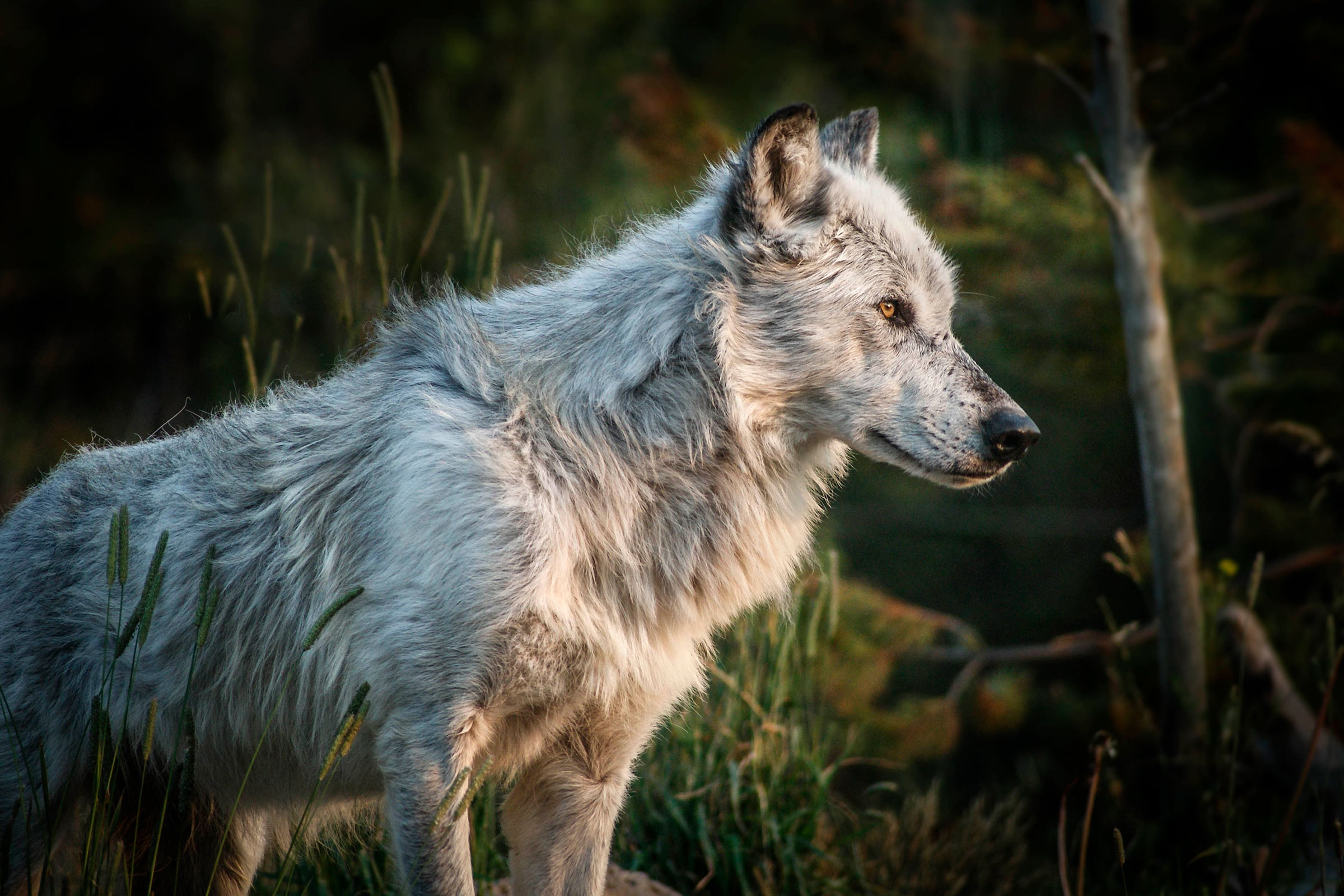
Around the world, thousands of researchers are using AI to further biological research and conservation projects. In the United Kingdom, a company called BioCarbon Engineering uses AI-equipped drones to map forests and plant seeds in the most optimal habitat, and around the globe AI tracks diseases in wildlife. In Yellowstone National Park in the U.S., Colossal Biosciences and Yellowstone Forever, the nonprofit partner of the park, just announced a project that will integrate audio and visual data to identify the acoustic fingerprint of wolves (Canis lupus)—individual howls, chorus howls, growls, barking—to noninvasively identify packs, their movements, and their behavior. The equipment can also identify the sound of gunshots, enabling a quick response to possible illegal killing of wolves.
Meanwhile, millions of images collected by individuals using nature apps like iNaturalist and eBird are contributing to the mountains of raw data that AI will go to work on.
“The bottleneck has really shifted from being hard-to-collect data to making sense of the enormous amount of data at our fingertips,” says Ali Swanson, director of nature, tech, and innovation for Conservation International. “We’re drowning in data, and one of the big challenges is making sense of the information. The advancements we’ve seen in the last three to five years have really blown the top off what is possible with AI.”
INaturalist, nicknamed iNat, is a smartphone app that anyone can use to gather photos of the world’s biodiversity, from plants to insects, birds, and mammals. The photos are immediately analyzed by AI to tell the app users what they are looking at.
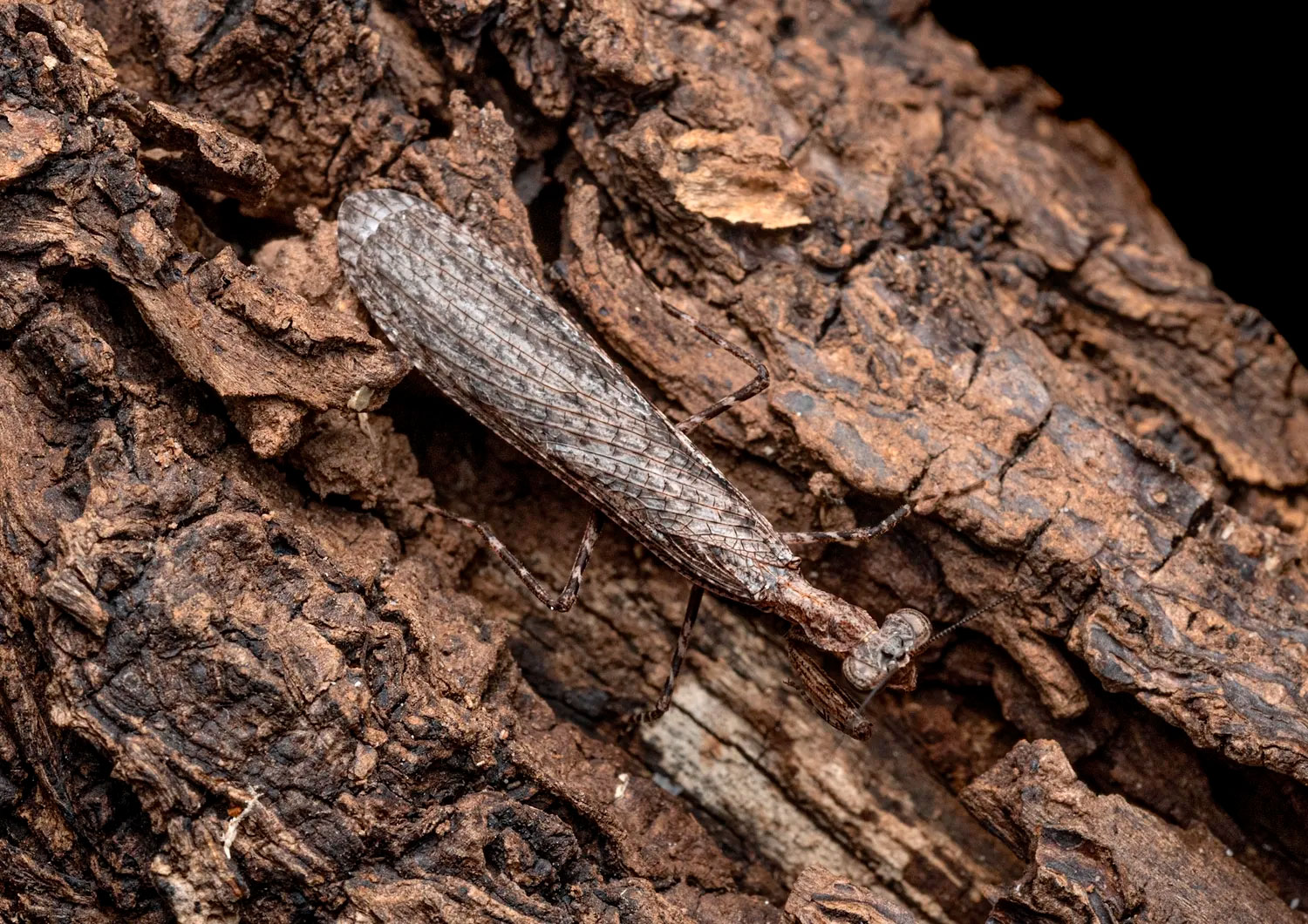
INat is a force in the world of biodiversity research. Users have rediscovered species that haven’t been seen for decades and have discovered about one new species a month. Recently an app user discovered a new species of praying mantis in Australia and named the insect Inimia nat, or iNat.
The iNat library now contains half a billion images. This data, offered to scientists for free, has been used in more than 6,000 scientific studies, with the key to this kingdom of data made possible by the speed at which AI finds and processes information from the images.
“One researcher looked at 10,000 pictures of flowering Joshua trees and ran that through an AI model to understand how climate change was impacting the phenology or morphology or changing its distribution,” says Scott Loarie, iNaturalist’s executive director. “AI is really good at looking for patterns in big messy datasets that are unstructured,” like iNat. “It’s messy because it comes from lots of volunteers, but it’s big because it comes from lots of volunteers.
“We are helping biodiversity enter the big-data world,” says Loarie. “Biodiversity is still in this world where you go to a museum and open a drawer and pull out a couple of specimens,” he says. “We have hundreds of millions of records representing one [out of every] four named species on the planet.”
AI is incredibly effective for making management decisions, says Sara Beery, an assistant professor at the Massachusetts Institute of Technology specializing in AI and conservation decision making. “Idaho Fish and Game collected two million camera trap images a year,” Beery says. It took so long to analyze the data to determine population levels that “they were making hunting quotas that were five years out of date.”
Using AI, four people can now process 18 million images, collected over a year, in a couple of weeks. “Now they are making their policies and decisions the year the data is collected,” Beery says, “which is incredibly important given how quickly everything is changing.”
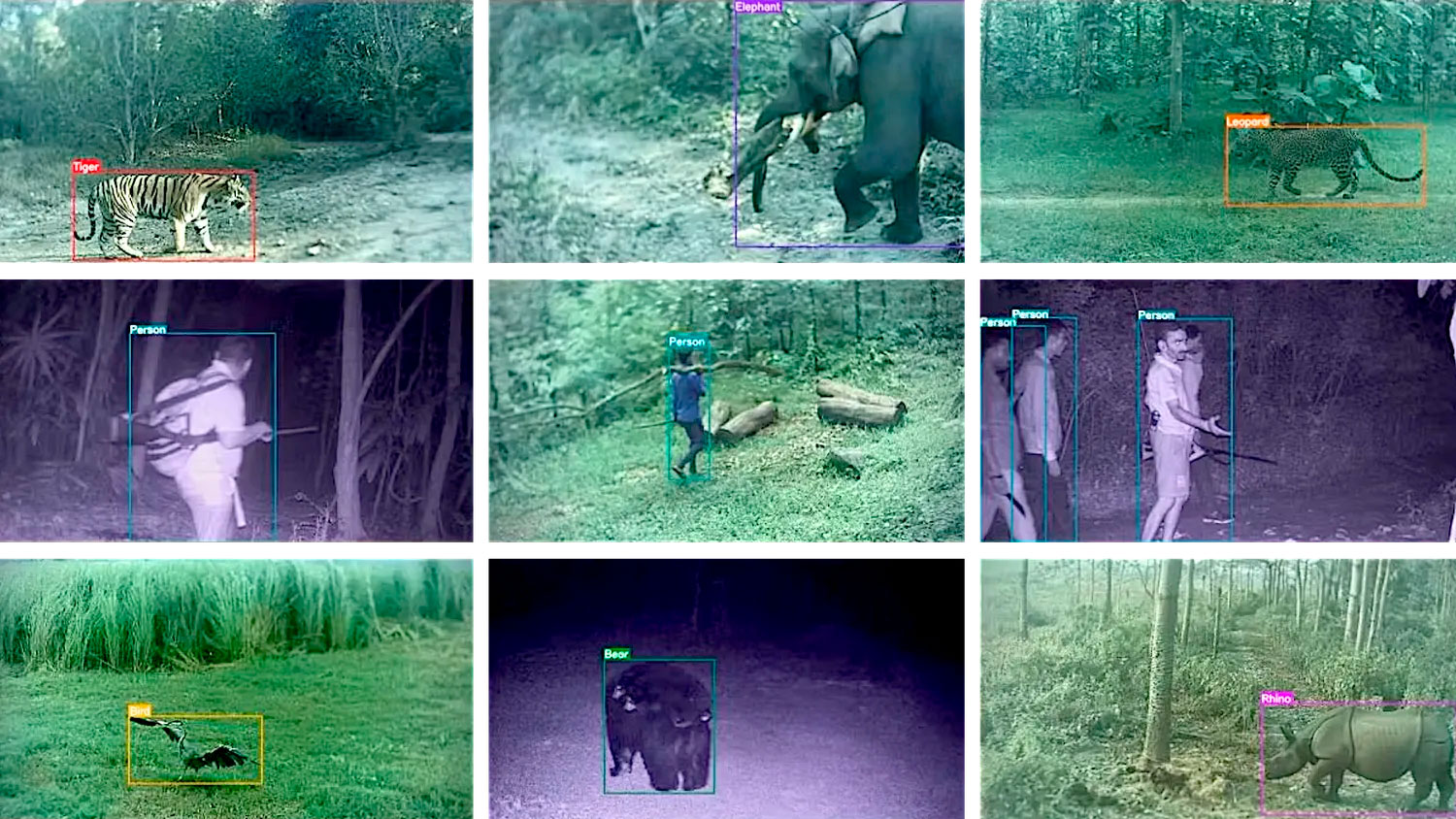
In Madhya Pradesh’s forested Kanha-Pench Corridor, TrailGuard AI camera traps are being used to protect vulnerable wildlife, including more than 300 tigers—the largest population in central India. Some 600,000 people live within this protected area, and when a tiger kills livestock here, locals sometimes retaliate against the aggressor.
Now, when a TrailGuard camera takes a photo of wildlife, it instantly identifies the species and transmits that data to forest rangers. If it’s a tiger or other predator, the rangers can quickly inform local livestock operators so that they can move their animals to safety.
Predictive modeling for conservation purposes is greatly enhanced by AI. Because it can analyze so many variables, AI can produce far more complex and accurate models of possible ecological outcomes, which can be used to guide land preservation or investments in resource protection.
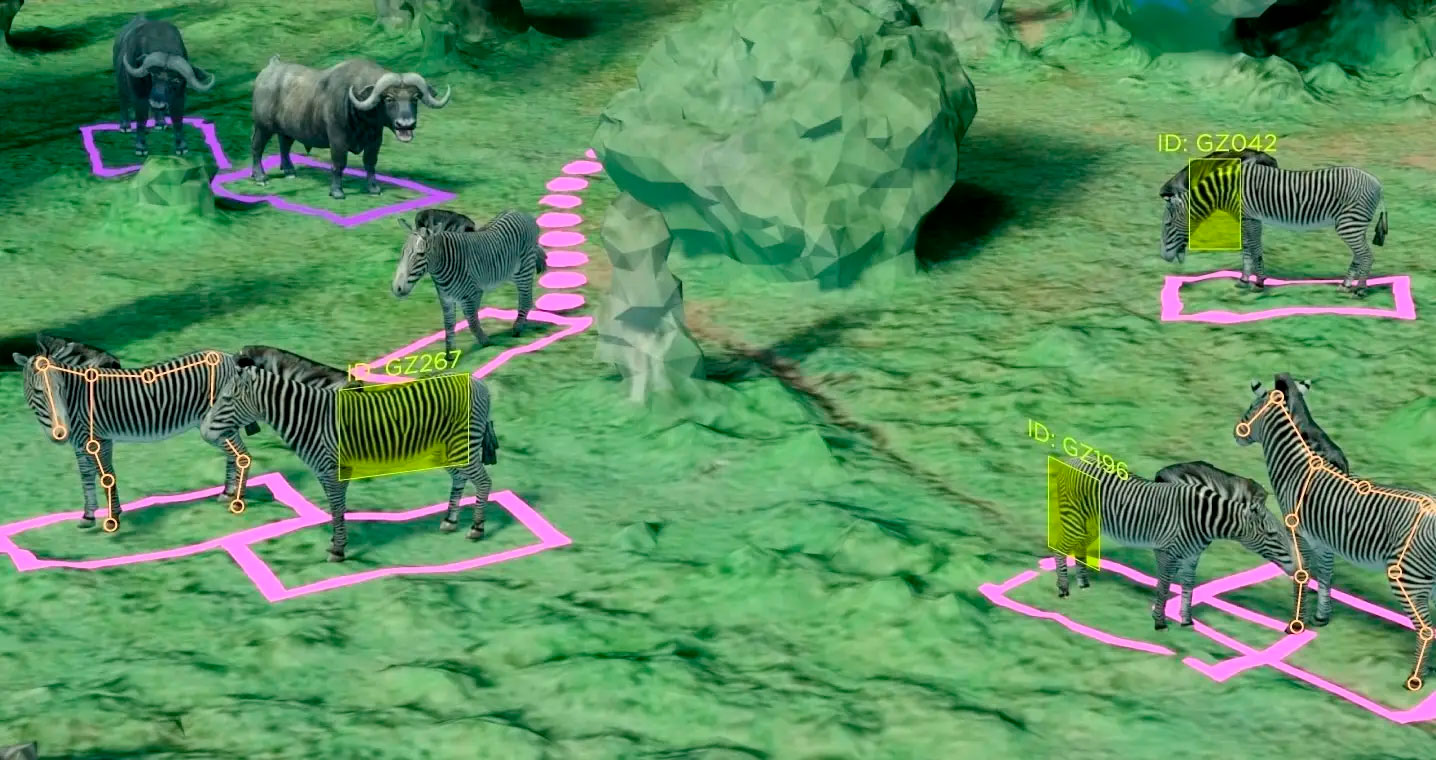
“We could integrate diverse data—like coastal elevation maps, historical storm patterns, soil hydrology, and human population density—to simulate how restored mangrove ecosystems might mitigate flood risk under different climate trajectories, and compare them to traditional engineered approaches,” says Conservation International’s Swanson.
But content produced by AI does come with some limitations, experts say. As part of a recent study, van der Ven and his students at the University of British Columbia asked AI chatbots “to describe the causes, consequences, and solutions to nine different environmental challenges,” he says. “Because it’s been trained on past data, if you ask a chatbot what should we do about biodiversity loss or climate change, you get bits of actions that have previously been attempted,” such as public education and awareness.
“Those kinds of solutions are drastically outside the scope of urgency of many different [environmental] challenges,” he notes. “There’s only so far you can get looking to the past to describe future actions, which is what large language models [the most commonly used type of AI] do.” Humans have unique problem-solving skills and will still need to make decisions.
There is also concern that because AI relies heavily on existing data from wealthy countries, where the Western mindset reigns, any answers it produces are skewed toward that perspective, and alternative approaches, such as traditional ecological knowledge, are discounted.
Some scientists believe much is lost when nature is seen only as data in a computer model. Denver Holt is a longtime owl biologist near Missoula, Montana, where he has trapped, banded, and studied long-eared owls (Asio otus) for 37 years. He has also studied snowy owls (Bubo scandiacus) in the Arctic for 33 years. “Technology is helpful,” he says. “But you can get a much better understanding of the animal and the ecosystem if you go out in the field. I know people who are modeling owls and owl habitat who have never seen an owl.”
Being in the field, he says, “we generate new ideas and new questions.” A recent paper, titled “Extinction of Experience Among Ecologists,” warned that “a decline in fieldwork could hinder scientific progress in some areas of ecology, especially those that rely heavily on direct wildlife observation, such as behavioral ecology, species inventories, and biodiversity monitoring.”
Lauding the use of AI for conservation, says van der Ven, ignores AI’s darker aspects. “There’s been a deluge of academic research on applications of AI to conservation,” he says. “But critical reflections on what are the costs to conservation in terms of what AI is being more commonly used for—things like driving conspicuous consumption, getting people to follow through to recommended links on Amazon and buying more stuff, and targeted advertising—is lacking. A lot of the environmental challenges we face today are the consequence of growth-oriented capitalism.”
Hi, I’m Dave, the executive director of bioGraphic. (And that’s my dog, Finn.) Thanks for taking the time to read this story.
Stories like this simply don’t get produced without financial support from readers like you. bioGraphic is not backed by a private company or owned by a billionaire. It’s an independent, nonprofit magazine. And one-quarter of our annual budget comes directly from reader donations.
We need your support more than ever, as governments slash funding for conservation and scientific research, placing even more ecosystems and wildlife at risk around the world. At bioGraphic, we’re steadfastly shining a light on the threats to our planet’s incredible biodiversity. And we’re showcasing the hard work of people bravely taking action to protect at-risk species.
bioGraphic publishes environmental reporting that you can’t find anywhere else: deeply researched, trustworthy stories that are also beautiful and captivating to read. We offer an antidote to reader apathy and doom-and-gloom news by revealing the wonders of the natural world and focusing on real solutions to big problems. When you finish a bioGraphic story, we want to leave you feeling informed, delighted, and inspired.
We don’t run ads or hide our stories behind a paywall. The readers who generously support bioGraphic allow our work to remain free for everyone.
Will you help us keep telling these crucial stories?

Author

Related Articles

Trees as Public Health Infrastructure
New research shows that meeting tree canopy goals could prevent more than 67,000 premature deaths in the United States.
A Mite on a Bee on a Ship on the Sea Spells Trouble
Pollinator pathogens are spreading through international trade, threatening both agriculture and wild ecosystems.
When it Comes to Frog Sex, Teamwork Makes the Dream Work
New science on gray foam-nest tree frogs hints at the evolutionary benefits of multiple sexual partners.