
Photograph by Espen Bergersen
Story by Steven Bedard

Viewed from above, these Norwegian waters look serene. But the placid surface and lazy shadows that shift in seeming slow motion belie the controlled chaos transpiring below. A dense cloud of Atlantic herring (Clupea harengus) spins like a cyclone, each fish seeking shelter amidst its neighbors as two orcas (Orcinus orca) shape and break the undulating mass. The orcas drive holes through the school’s center and slurp up herring they’ve stunned with swipes of their massive flukes. Humpback whales (Megaptera novaeangliae) patrol the edge of the cloud, periodically charging through it, mouths agape like enormous nets of baleen and flesh.
Such frenzies—some lasting only minutes and others upwards of an hour—will occur repeatedly for up to five months while the herring overwinter in shallow fjords. But it hasn’t always been this way. Before 2010, herring populations in this region spent winters farther out to sea, where they were pursued by orcas, but never encountered humpbacks. Exactly what prompted the herring schools to move closer to shore and spill into Norway’s fjords isn’t clear, but the relocation put them directly in the path of migrating humpbacks. Suddenly, all three species were in the same place at the same time, and the stage was set for some unusual, and previously undocumented, behaviors.
The relationship between orcas and humpbacks in most places and scenarios is one of conflict—orcas preying on young humpbacks, or adult humpbacks banding together to drive off the smaller predators. Here, it seems, the food resource is rich enough that it’s more productive for both mammal species to focus their efforts on the herring instead of each other. Indeed, in a study published earlier this year, researchers found that orcas and humpbacks more often than not work together to herd the fish into tight schools and systematically take their respective mouthfuls. While the orcas appear to be doing the majority of the herding, with the humpbacks serving as the opportunists, these observations demonstrate just how dynamic our oceans are—and how resilient organisms can be—in the face of changing environmental conditions.

Coast of Kvaloya, Norway
Hi, I’m Dave, the executive director of bioGraphic. (And that’s my dog, Finn.) Thanks for taking the time to read this story.
Stories like this simply don’t get produced without financial support from readers like you. bioGraphic is not backed by a private company or owned by a billionaire. It’s an independent, nonprofit magazine. And one-quarter of our annual budget comes directly from reader donations.
We need your support more than ever, as governments slash funding for conservation and scientific research, placing even more ecosystems and wildlife at risk around the world. At bioGraphic, we’re steadfastly shining a light on the threats to our planet’s incredible biodiversity. And we’re showcasing the hard work of people bravely taking action to protect at-risk species.
bioGraphic publishes environmental reporting that you can’t find anywhere else: deeply researched, trustworthy stories that are also beautiful and captivating to read. We offer an antidote to reader apathy and doom-and-gloom news by revealing the wonders of the natural world and focusing on real solutions to big problems. When you finish a bioGraphic story, we want to leave you feeling informed, delighted, and inspired.
We don’t run ads or hide our stories behind a paywall. The readers who generously support bioGraphic allow our work to remain free for everyone.
Will you help us keep telling these crucial stories?

Authors


Related Articles
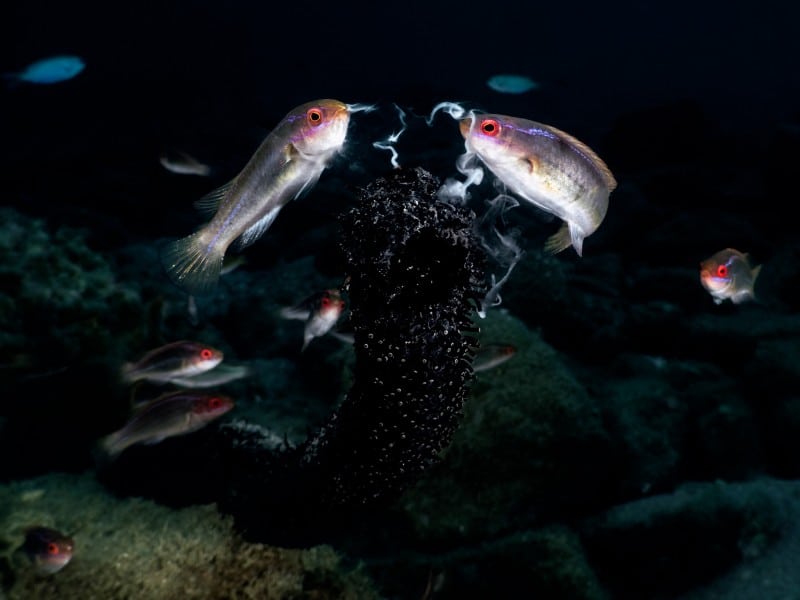
Milt Meal
Marine creatures will do almost anything for a meal—including feasting on the sperm and eggs of spawning invertebrates.
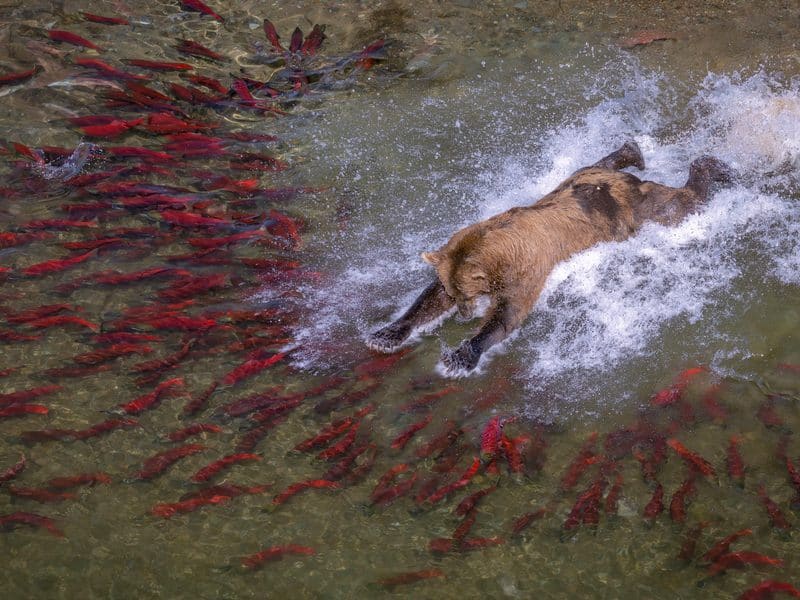
The Art of the Catch
To bulk up for winter hibernation, Alaska’s brown bears employ a range of techniques for snaring salmon.
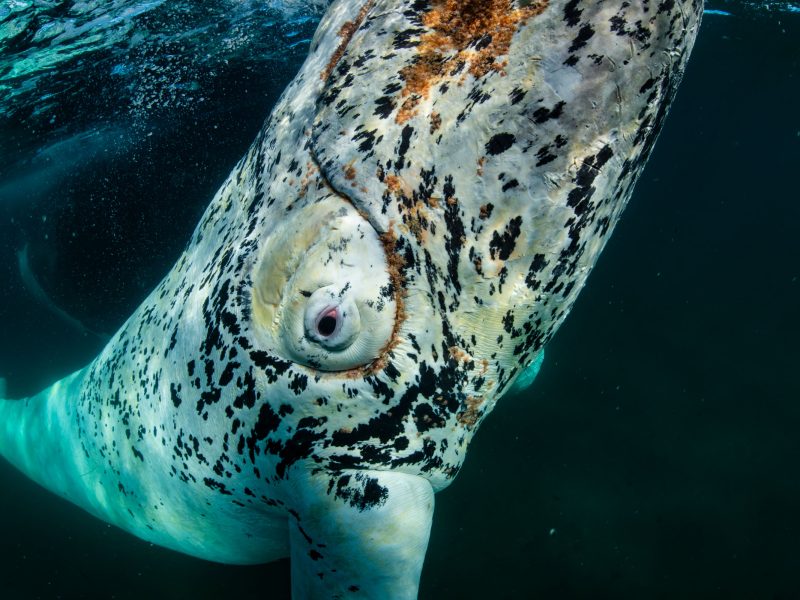
The Wonder of a Pale Whale
A curious calf with an atypical birthday suit is a good sign for southern right whales.